
Eco-Friendly Lawn Care: How to Maintain Your Lawn Sustainably
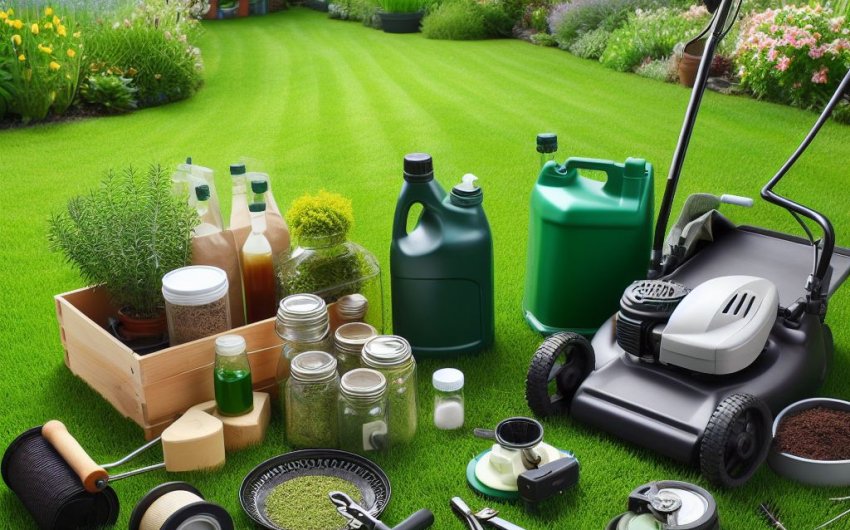
To maintain your lawn sustainably with eco-friendly lawn care, focus on cultivating healthy soil through organic amendments and proper watering, mowing high and often, and embracing natural pest and weed control methods. Selecting the right grass for your climate also minimizes the need for intensive interventions.
Why is eco-friendly lawn care important for your yard and the planet?
Eco-friendly lawn care is a holistic approach to maintaining your lawn that prioritizes ecological health, sustainability, and minimizes negative environmental impacts. Moving beyond conventional practices that often rely heavily on chemical fertilizers and pesticides, sustainable lawn care fosters a vibrant, resilient turf naturally. It matters because it protects local ecosystems, conserves resources, and creates a healthier environment for your family and pets.
What are the environmental impacts of conventional lawn care?
Many traditional lawn care practices, while aiming for a pristine green lawn, inadvertently create significant environmental problems.
- Water Pollution:
- Nutrient Runoff: Excessive application of synthetic fertilizers (especially phosphorus and nitrogen) can run off into storm drains, rivers, lakes, and oceans. This causes eutrophication, leading to harmful algal blooms, oxygen depletion, and "dead zones" that devastate aquatic ecosystems.
- Pesticide Runoff: Herbicides, insecticides, and fungicides applied to lawns can also wash into waterways, harming aquatic life and potentially contaminating drinking water sources.
- Greenhouse Gas Emissions:
- Fertilizer Production: The manufacturing of synthetic nitrogen fertilizers is an energy-intensive process, contributing to significant greenhouse gas (GHG) emissions.
- Mower Emissions: Gas-powered lawn mowers, trimmers, and leaf blowers release a mix of GHGs (CO₂, nitrous oxide) and air pollutants (volatile organic compounds, carbon monoxide), contributing to smog and climate change.
- Soil Degradation:
- Reduced Soil Life: Heavy reliance on synthetic chemicals can harm beneficial soil microorganisms and earthworms, leading to a sterile, degraded soil that becomes dependent on external inputs.
- Compaction: Frequent use of heavy lawn equipment can compact soil, reducing water infiltration and oxygen for roots.
- Loss of Biodiversity:
- Habitat Destruction: "Perfect" monoculture lawns offer little habitat or food for pollinators, birds, and beneficial insects.
- Pesticide Harm: Broad-spectrum pesticides kill beneficial insects (like ladybugs, bees, butterflies) along with pests, disrupting the natural food web.
- Water Waste: Inefficient irrigation practices (shallow, frequent watering; watering during midday) lead to significant water waste.
What are the benefits of eco-friendly lawn care for your yard?
Adopting sustainable practices transforms your lawn into a thriving, resilient ecosystem.
- Healthier Soil: Organic amendments (compost) and reduced chemical use foster a rich, biologically active soil teeming with beneficial microorganisms and earthworms. This naturally improves soil structure, drainage, and fertility.
- Stronger, More Resilient Turf: A deep, robust root system (encouraged by proper watering and soil health) makes your lawn more resistant to drought, heat stress, pests, and diseases. It becomes more self-sufficient.
- Reduced Need for Chemicals: A healthy lawn growing in healthy soil naturally outcompetes weeds and is less attractive to pests, significantly reducing or eliminating the need for synthetic fertilizers, herbicides, and pesticides.
- Improved Water Efficiency: Deep, infrequent watering and improved soil structure (from compost) mean your lawn requires less supplemental irrigation.
- Vibrant Green Color: A healthy, organically-fed lawn often achieves a deeper, more natural green color than one reliant on quick-fix chemical inputs.
- Safer for Family and Pets: Eliminating harmful chemicals makes your lawn a safer space for children, pets, and wildlife to play and explore.
- Reduced Maintenance (Long-Term): While there's an initial investment in changing practices, a healthy, self-sustaining eco-friendly lawn typically requires less intensive intervention in the long run.
Eco-friendly lawn care is a win-win: it safeguards the environment while cultivating a healthier, more beautiful, and resilient lawn that you can feel good about.
How do I build healthy soil for a sustainable lawn?
Building healthy soil is the cornerstone of eco-friendly lawn care. It’s the foundation upon which all other sustainable practices rest, transforming a dependent patch of grass into a resilient, self-sustaining ecosystem. Focusing on nurturing the soil biology is far more impactful than just feeding the grass.
Why is soil health so crucial for a sustainable lawn?
Healthy soil is the ultimate buffer against lawn problems and the engine of natural lawn vigor.
- Nutrient Cycling: A biologically active soil is teeming with microorganisms (bacteria, fungi, earthworms) that break down organic matter and convert nutrients into plant-available forms. This creates a natural, slow-release fertilization system, reducing reliance on synthetic fertilizers.
- Water Management: Healthy soil with good structure (thanks to organic matter) effectively:
- Improves Drainage: In heavy clay, preventing waterlogging and root rot.
- Increases Water Retention: In sandy soil, holding moisture for longer periods, reducing watering needs.
- Reduces Runoff: Absorbs water more efficiently, minimizing runoff and erosion.
- Disease Suppression: A diverse and robust population of beneficial soil microbes can outcompete and suppress harmful soil-borne pathogens, leading to a lawn that is naturally more resistant to disease.
- Stronger Roots: Loose, well-aerated soil allows grass roots to penetrate deeply, forming a strong, extensive root system that makes the turf more resilient to drought, heat, and foot traffic.
- Weed Resistance: A dense, healthy turf with deep roots, supported by fertile soil, naturally outcompetes many weeds.
How do I assess my soil health?
Don't guess; test your soil to understand its specific needs.
- Soil Test: This is the most important step. Send a soil sample to your local agricultural extension office for a comprehensive test. This will tell you:
- Soil pH: Essential for nutrient availability. Most turfgrasses prefer a pH between 6.0 and 7.0 (slightly acidic to neutral).
- Nutrient Levels: Reveals any deficiencies (e.g., nitrogen, phosphorus, potassium) or excesses.
- Organic Matter Content: A healthy lawn should ideally have 3-5% organic matter.
- Percolation Test (Drainage): Dig a hole 12 inches deep and fill it with water. If it takes more than 4 hours to drain, your soil has poor drainage.
- "Squeeze" Test (Texture/Organic Matter): Grab a handful of moist soil and squeeze it.
- Clay: Forms a tight ball, shiny when rubbed.
- Sand: Crumbles easily.
- Loam (Ideal): Forms a loose ball that breaks apart easily, feels somewhat crumbly and rich.
- Healthy Soil: Should have some organic matter visibly mixed in.
What organic amendments build healthy soil?
Organic amendments are the key to building a resilient soil food web.
- Compost: The ultimate soil builder.
- How: Apply a 1/4 to 1/2 inch layer of finished compost as a top-dressing to your lawn once or twice a year (spring and fall). Rake it into the grass.
- Benefits: Improves all aspects of soil health: structure, fertility, moisture retention, and microbial activity.
- Organic Fertilizers:
- How: Use fertilizers derived from natural sources (e.g., bone meal, blood meal, fish emulsion, worm castings, alfalfa meal, feather meal).
- Benefits: Release nutrients slowly as microbes break them down, feed soil life, and contribute to organic matter. A good option is Espoma Organic Lawn Food.
- Leave Grass Clippings: This is a simple, powerful practice.
- How: Use a mulching mower to leave finely chopped grass clippings on the lawn.
- Benefits: Clippings decompose quickly, returning valuable nitrogen and organic matter to the soil, naturally fertilizing the lawn. This is free, continuous composting in place.
How do I address soil compaction and aeration?
Compacted soil suffocates roots and impedes water/nutrient movement.
- Aeration: Core aeration (removing small plugs of soil) is essential for compacted lawns.
- Timing: Do this in late spring/early summer for warm-season grasses, or early fall for cool-season grasses, when the lawn is actively growing and can recover quickly.
- Equipment: Rent a core aerator or hire a professional.
- Benefits: Improves air, water, and nutrient penetration to the root zone, encourages deeper roots, and alleviates compaction.
- Topdressing with Sand/Compost: After aeration, a thin layer of sand or compost can be spread to fill the holes, further improving drainage and organic matter.
- Minimize Traffic: Reduce unnecessary foot traffic or heavy equipment on wet soil to prevent compaction.
By making soil health your top priority and implementing these organic amendments and aeration techniques, you lay the foundation for a resilient, vibrant, and sustainable lawn that thrives with minimal external inputs.
What sustainable mowing and watering practices should I adopt?
Sustainable mowing and watering practices are fundamental to eco-friendly lawn care. They directly impact the health, drought tolerance, and disease resistance of your turf, significantly reducing the need for chemical interventions and conserving valuable resources.
What are the best eco-friendly mowing practices?
How you mow your lawn has a profound impact on its health and sustainability.
- Mow High (3 inches or more):
- Why: Taller grass blades allow for deeper root growth, making the lawn more resilient to drought and stress. They also shade the soil surface, keeping it cooler and suppressing weed germination.
- Recommendation: Set your mower to its highest possible setting, usually 3 inches or more.
- Exception: Some warm-season grasses (like Bermuda) can be mowed shorter once established, but even then, higher is generally better for sustainability.
- Mow Frequently ("The One-Third Rule"):
- Why: Never remove more than one-third of the grass blade's total height in a single mowing. Removing too much at once stresses the grass, depleting its energy reserves.
- Recommendation: Mow often enough that you're only removing a small amount each time. This might mean every 4-7 days during peak growth.
- Leave Grass Clippings (Grasscycling):
- Why: This is one of the easiest and most powerful eco-friendly practices. Grass clippings decompose quickly, returning valuable nitrogen and organic matter to the soil. This acts as a natural, free fertilizer.
- Recommendation: Use a mulching mower that chops clippings finely. If clippings are too long or clumpy, rake them up to prevent smothering the turf.
- Keep Mower Blades Sharp:
- Why: Dull blades tear the grass blades, leaving ragged edges that turn brown, stress the plant, and create entry points for disease.
- Recommendation: Sharpen mower blades at least once a month or every 10-12 hours of use.
- Consider a Reel Mower:
- Why: For smaller lawns or dedicated gardeners, a reel mower (manual or powered) provides a clean, scissor-like cut that is healthier for the grass and produces zero emissions.
- Rotate Mowing Patterns: Vary the direction you mow each time to prevent grass blades from leaning in one direction and to reduce soil compaction in tire tracks.
What are the best eco-friendly watering practices?
Efficient watering conserves water and promotes a resilient lawn.
- Water Deeply and Infrequently:
- Why: This is the golden rule. It encourages grass roots to grow deep into the soil, making the lawn more drought-tolerant and resilient. Shallow, frequent watering promotes shallow roots and weed growth.
- Recommendation: Aim to apply about 1 inch of water per week, either in one single application or split into two. Allow the top 1-2 inches of soil to dry out between waterings. Use the "tuna can test" to measure your sprinkler's output.
- Water in the Early Morning:
- Why: This is the most efficient time. Temperatures are cooler, winds are calmer (reducing evaporation), and it allows grass blades to dry completely before nightfall. This is crucial for preventing fungal diseases, which thrive on prolonged leaf wetness.
- Recommendation: Water between 4 AM and 9 AM.
- Monitor Soil Moisture, Not Just a Schedule:
- Why: Watering needs vary based on grass type, soil type, and weather. Don't water on a rigid schedule.
- Recommendation: Learn to recognize signs of thirst (footprints remain, dull bluish-gray color, curling blades). Use a soil moisture meter for accuracy.
- Address Runoff:
- Why: Water running off your lawn is wasted and can carry pollutants.
- Recommendation: For slopes or compacted soil, use a "cycle and soak" method (water for 15-20 mins, wait an hour, repeat). Consider aerating to improve infiltration.
- Consider Drip Irrigation/Soaker Hoses (for specific areas): While less common for entire lawns, these are highly efficient for borders, trees, and shrubs, delivering water directly to roots.
- Rain Barrels: Collect rainwater for irrigation, reducing reliance on municipal water.
By adopting these sustainable mowing and watering practices, you nurture a robust, self-sufficient lawn that is healthier for your home and the planet.
How do I manage weeds and pests sustainably?
Managing weeds and pests sustainably is a cornerstone of eco-friendly lawn care, minimizing reliance on harmful chemical herbicides and insecticides. It involves understanding the underlying causes of infestations and promoting a balanced ecosystem that naturally keeps problems in check.
What are eco-friendly weed control strategies?
Instead of reaching for synthetic weed killers, sustainable weed management focuses on prevention and natural methods.
- Build a Dense, Healthy Lawn: This is the number one weed control strategy. A thick, vigorous lawn, supported by healthy soil and proper mowing/watering, shades the soil surface, preventing weed seeds from germinating and outcompeting any weeds that do sprout.
- How: Follow all the guidelines for building healthy soil, mowing high, and proper watering.
- Overseed: Regularly overseed your lawn with desirable grass seed to maintain density.
- Manual Removal:
- How: For individual weeds or small patches, nothing beats good old-fashioned hand-pulling, especially after rain when the soil is soft. Use a weeding tool for tap-rooted weeds like dandelions.
- Timing: Remove weeds before they go to seed to prevent future generations.
- Organic Herbicides (Spot Treatment):
- How: For tougher or more widespread weeds, consider organic herbicides with active ingredients like acetic acid (vinegar) or fatty acids. These are non-selective (they kill any plant they touch), so apply carefully as a spot treatment.
- Benefits: Biodegrade quickly and leave no harmful residues.
- Limitations: Often only kill the top growth, requiring repeated applications for perennial weeds.
- Corn Gluten Meal (Natural Pre-Emergent):
- How: Apply corn gluten meal in early spring (before soil temperatures reach 50-55°F or 10-13°C) and again in late summer/early fall. It acts as a natural pre-emergent, inhibiting the germination of many weed seeds.
- Benefits: Also provides a gentle nitrogen boost. Safe for kids and pets.
- Limitations: Does not kill existing weeds. Must be applied at the correct time. Do not apply if you plan to overseed in the same season.
- Diligent Edging/Mulching (for garden beds adjacent to lawn): Create physical barriers between your lawn and garden beds to prevent weeds from spreading. Use a thick layer of mulch in garden beds to suppress weeds.
What are eco-friendly pest control strategies?
Sustainable pest management focuses on prevention and supporting natural predators, minimizing the need for insecticides.
- Promote a Healthy Lawn: A strong, vigorous lawn is naturally more resistant to insect damage and can recover faster if pests do appear.
- How: Healthy soil, proper mowing, watering, and fertilization.
- Encourage Beneficial Insects: Many insects (ladybugs, lacewings, parasitic wasps, predatory ground beetles) naturally prey on lawn pests (aphids, grubs, chinch bugs).
- How: Plant diverse flowering plants (especially native ones) in nearby garden beds to provide nectar, pollen, and habitat for beneficials. Avoid broad-spectrum pesticides.
- Monitor Regularly: Inspect your lawn frequently for signs of pest activity (unusual discoloration, chewed grass blades, visible insects). Early detection allows for less intensive intervention. A plant disease diagnostic kit can help identify specific issues.
- Tolerate Minor Damage: A truly sustainable lawn can tolerate a small amount of pest activity. Don't aim for a sterile environment.
- Biological Controls:
- Bacillus thuringiensis (Bt): A naturally occurring bacterium effective against certain caterpillar pests (e.g., armyworms) but harmless to other organisms.
- Nematodes: Apply beneficial nematodes (microscopic worms) to the soil to control grubs and other soil-dwelling pests.
- Organic Insecticides (Targeted):
- Insecticidal Soap/Neem Oil: Use as a last resort for specific infestations (e.g., aphids, spider mites) as a spot treatment. They are contact killers and have low residual effects.
- Pyrethrins: A natural insecticide derived from chrysanthemums, used for rapid knockdown, but still kills beneficials.
- Traps: Pheromone traps can monitor pest populations, sometimes providing enough control for smaller infestations.
By adopting these eco-friendly weed and pest control strategies, you create a balanced, resilient lawn ecosystem that relies on nature's own defenses rather than synthetic chemicals, promoting a healthier environment for all.
What other sustainable practices contribute to an eco-friendly lawn?
Beyond mowing, watering, and pest control, several other practices contribute to a truly holistic and sustainable approach to lawn care. These broader strategies focus on resource conservation, biodiversity, and minimizing your overall environmental footprint.
How do I choose the right grass for my climate?
Selecting the appropriate turfgrass species is a foundational step in minimizing maintenance and environmental impact.
- Climate Zone Matching: Choose grass varieties that are well-suited to your USDA Hardiness Zone and local climate (e.g., cool-season grasses for cooler regions, warm-season grasses for warmer regions).
- Site-Specific Needs:
- Sunlight: Select grass tolerant of your specific light conditions (full sun vs. partial shade).
- Drought Tolerance: Opt for varieties known for drought tolerance (e.g., fine fescues, some Bermuda grasses, Zoysia).
- Traffic Tolerance: Consider how much foot traffic your lawn receives.
- Disease Resistance: Choose varieties with documented resistance to common local diseases.
- Native Grasses/Low-Input Alternatives: Explore native grasses or low-input alternatives that are naturally adapted to your region and require less water, fertilizer, and mowing. Examples include buffalo grass, fine fescues, or sedges.
How can I reduce my reliance on gas-powered equipment?
Minimizing fossil fuel consumption is a key aspect of eco-friendly lawn care.
- Manual Tools:
- Reel Mower: For smaller lawns, a manual reel mower is silent, emission-free, and provides a clean cut.
- Hand Shears/Weeding Tools: For trimming and weeding.
- Electric/Battery-Powered Equipment:
- Mowers, Trimmers, Leaf Blowers: Modern electric and battery-powered lawn equipment has significantly improved in performance. They produce zero direct emissions, are quieter, and require less maintenance than gas-powered tools.
- Benefits: Reduces air pollution, noise pollution, and reliance on fossil fuels.
- Reduce Lawn Size:
- Plant Flower Beds/Shrubs: Convert portions of your lawn into garden beds, native plant areas, or other landscaping features. Less lawn means less mowing and maintenance.
- Hardscaping: Incorporate patios, pathways, or decks.
How do I promote biodiversity in my lawn and garden?
A diverse ecosystem is a resilient one.
- Plant Pollinator-Friendly Areas: Dedicate sections of your yard to native flowering plants, shrubs, and trees that provide nectar, pollen, and habitat for bees, butterflies, and other beneficial insects.
- Embrace "Weeds" (Sometimes): Consider tolerating some "weeds" like clover or violets in your lawn. Clover (a legume) fixes nitrogen, reducing the need for fertilizer, and its flowers feed pollinators.
- Support Beneficial Insects: Avoid broad-spectrum pesticides, as they harm beneficial insects that naturally control pests.
- Water Features: A small bird bath or pond can attract birds and other wildlife, enriching your garden's ecosystem.
- Brush Piles/Log Piles: In a discreet corner of your yard, a small brush pile or log pile can provide habitat for beneficial insects, small mammals, and amphibians.
What are other resource conservation practices?
- Compost On-Site: Use a compost bin for all yard waste (leaves, grass clippings) and appropriate kitchen scraps. This recycles nutrients back into your soil and diverts waste from landfills.
- Rainwater Harvesting: Install a rain barrel to collect rainwater from your roof for irrigation. This reduces reliance on municipal water and is often better for plants (free of chlorine).
- Minimize Hardscaping: While hardscaping has its place, minimize extensive impervious surfaces (concrete, asphalt) which contribute to stormwater runoff and heat island effect. Use permeable pavers or gravel where appropriate.
- Use Native Plants in Landscaping: Native plants are adapted to your local climate and soil, requiring less water, fertilizer, and pest control once established.
By weaving these additional sustainable practices into your routine, you move beyond simply maintaining a lawn to actively cultivating a thriving, ecologically responsible, and beautiful outdoor space that contributes positively to the health of your home, community, and the planet.