
Essential Tools Gardening Tips and Plant Care
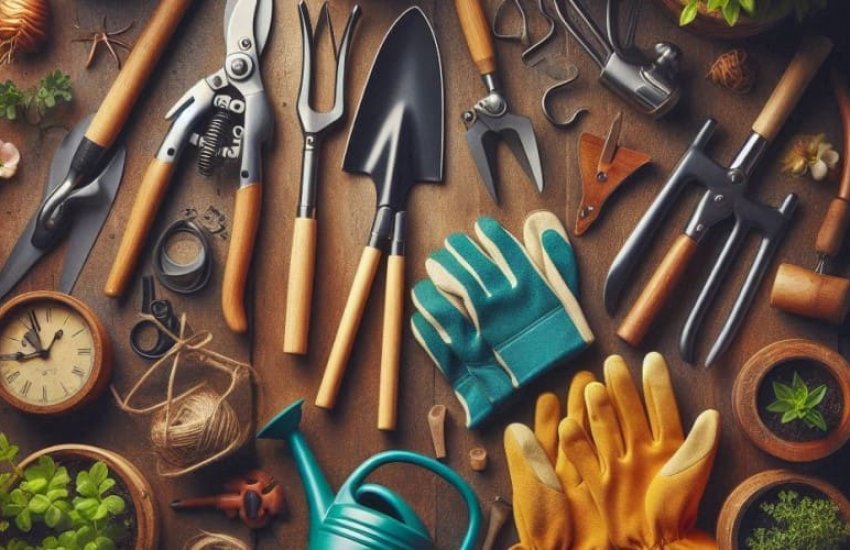
Having the right tools makes gardening simpler, more enjoyable, and much more effective. In our Essential Tools category at GardenBotany.com, you'll find practical advice on selecting, using, and maintaining the best gardening equipment—from sturdy pruners and ergonomic trowels to durable garden carts and reliable soil testers. Whether you're just starting your gardening journey or looking to upgrade your toolkit, our guides help you choose tools that save you time, reduce physical strain, and ensure your plants get the care they deserve.
Recent Posts of Essential Tools - Gardening Ideas
-

The Best Tools for Raised Bed Prep: A Comprehensive Guide
The best tools for raised bed prep primarily include a sturdy shovel or spade for filling, a garden fork or broadfork for aeration, a garden rake for leveling, and a hand trowel and hand cultivator for fine-tuning. These tools collectively enable efficient soil mixing, proper drainage, and optimal surface preparation for planting.
-
Choosing Rust-Resistant Tools for Coastal Gardens
When gardening in coastal environments, choosing rust-resistant tools is paramount due to the unique challenges of salt spray, high humidity, and damp soil. Prioritize tools made from stainless steel, chrome-plated steel, or specialized treated metals to ensure longevity and optimal performance in these corrosive conditions.
-
Your Essential Spring Tool Maintenance Checklist for Gardening
A comprehensive spring tool maintenance checklist for gardening involves thoroughly cleaning, sharpening, inspecting, and lubricating all your garden tools to ensure they are in optimal working condition for the new growing season. This proactive approach enhances efficiency, prevents plant diseases, and extends the lifespan of your valuable equipment.
-
Advertisement
-
Choosing a Garden Hose Reel or Cart: Your Ultimate Guide
Choosing a garden hose reel or cart depends primarily on your garden's size, your mobility needs, and your preferred storage method. A hose reel is ideal for stationary watering from a fixed spigot, offering compact storage, while a hose cart provides superior portability for larger properties requiring watering in multiple locations.
-
The Benefits of an Adjustable Garden Rake for Mulch Spreading
An adjustable garden rake for mulch spreading offers unparalleled versatility, allowing gardeners to precisely control the width and spacing of the rake's tines. This adaptability makes it an ideal tool for efficiently distributing various types of mulch in diverse garden settings, from wide open beds to narrow pathways and around delicate plants.
-
When to Use a Hand Cultivator vs. Fork: A Gardener's Guide
You should use a hand cultivator for shallow tasks like weeding, aerating the topsoil, and mixing amendments in confined spaces or around existing plants. A garden fork, conversely, is best for deeper soil penetration, breaking up compacted soil, turning compost, or moving larger volumes of material.
-
Why Use a Garden Dibber for Precise Planting Depth?
Using a garden dibber for precise planting depth ensures consistent and optimal conditions for seed germination and seedling establishment, directly impacting plant health and yield. Its tapered design allows for quick, uniform holes, which is crucial for efficient and successful gardening.
-
The Indispensable Benefits of Pruning Shears with a Safety Catch
Pruning shears with a safety catch are designed to securely lock the blades in a closed position, providing critical protection against accidental cuts and maintaining blade sharpness during storage and transport. The primary benefit of this feature is significantly enhanced safety for both the user and the tool.
-
The Ultimate Guide to Garden Gloves: Breathable and Waterproof
Garden gloves that are both breathable and waterproof offer superior comfort and protection, keeping your hands dry from external moisture while allowing perspiration to escape. This dual functionality is achieved through advanced material technologies, making them ideal for a wide range of gardening tasks in varying conditions.
-
The Benefits of a Garden Bucket vs. a Compost Bin
The primary benefit of a garden bucket is its convenience for temporary indoor storage of kitchen scraps, minimizing odors and pests before transfer. A compost bin, on the other hand, is designed for the actual decomposition of organic waste into nutrient-rich compost, offering a long-term, larger-scale solution for creating soil amendments.


