
Effective Bird Control for Your Garden with Hausse Owl Decoys
You step into your garden, proudly observing your ripening berries, plump tomatoes, or freshly sown seeds, only to discover unwelcome visitors. Birds, while charming, can quickly become persistent pests, pecking at your precious produce, devouring seedlings, or even building nests where they're not wanted. Protecting your hard work from feathered foragers becomes a top priority for any gardener aiming for a bountiful harvest.
While netting and noisy deterrents are options, a simpler, more aesthetic solution exists: owl decoys. These lifelike figures tap into birds' natural instincts, creating a visual deterrent that encourages them to seek easier meals elsewhere. Among the many choices, Hausse owl decoys stand out for their realistic appearance and thoughtful features designed to maximize their effectiveness. Discovering how these silent guardians can offer effective bird control for your garden can save your harvest and your sanity.
Why is Bird Control Important in a Garden?
While birds add delightful song and sometimes help with insect pest control, their presence in a garden can quickly turn from charming to detrimental. For any gardener looking to protect their investment of time and effort, bird control becomes an essential aspect of garden management. Ignoring the problem can lead to significant crop loss and frustration.
Understanding the specific types of damage birds can inflict highlights why proactive bird control is a necessary measure for a successful and productive garden.
Protecting Ripening Fruits and Vegetables
One of the most common and heartbreaking reasons for bird control in a garden is protecting ripening fruits and vegetables. Just as your produce reaches its peak sweetness and juiciness, birds can swoop in and decimate your anticipated harvest.
- Pecking Damage: Birds, especially species like robins, starlings, and sparrows, are notorious for pecking at soft, ripe fruits such as berries (strawberries, blueberries, raspberries), cherries, and grapes. A single peck can puncture the skin, making the fruit susceptible to rot, insect invasion, or simply rendering it unappetizing for human consumption.
- Partial Consumption: They rarely eat an entire fruit. Instead, they often take a few bites from many different pieces of fruit, ruining a large portion of your crop. This leads to significant waste.
- Soft Vegetables: Certain soft vegetables like tomatoes (especially cherry tomatoes), peppers, and even some squash or pumpkins can also become targets as they ripen. The damage is often similar to pecking, leaving unsightly holes or gouges.
- Timing: The problem is most acute just as fruits begin to change color and sugar content increases, making them more attractive to birds. This is precisely when you want to protect your harvest most.
Implementing effective bird control measures, such as Hausse owl decoys, is crucial for safeguarding your ripening efforts and ensuring you get to enjoy the fruits (and vegetables!) of your labor.
Preventing Seed and Seedling Damage
Beyond mature crops, birds can cause significant problems right at the beginning of your gardening season by preventing seed and seedling damage. This can lead to sparse rows, uneven growth, and the frustration of having to re-sow repeatedly.
- Seed Consumption: Newly sown seeds are a tempting, easy meal for many bird species. Birds are opportunistic feeders and will quickly learn that your freshly prepared seedbeds are a buffet. They can quickly gobble up rows of corn, peas, beans, or sunflower seeds before they even have a chance to germinate.
- Seedling Uprooting/Consumption: Even if seeds sprout, delicate seedlings are extremely vulnerable. Birds might pull them up to eat the remaining seed attached to the root, or simply peck at the tender young shoots. This leads to missing plants, stunted growth, and gaps in your rows.
- Damage to Roots: As birds peck and scratch at the soil surface to find seeds or small insects, they can inadvertently disturb the shallow root systems of young seedlings, causing them to dry out and die.
- Time and Effort Waste: Losing seeds and seedlings means wasted time, effort, and money spent on replanting. It also delays your harvest.
- Specific Susceptibility: Certain crops are more vulnerable than others. Corn, peas, beans, and sunflowers are common targets due to their large, appealing seeds.
Proactive bird control from the very start of the season is essential to give your seeds and seedlings the best chance to establish and grow into strong, productive plants.
Deterring Nesting in Undesirable Locations
While bird nests are usually a welcome sight in trees, sometimes birds choose to build their nests in undesirable locations around your home or garden, leading to potential issues. Bird control can help deter nesting in these specific areas.
- Under Eaves and Gutters: Birds, especially sparrows and pigeons, love to nest in sheltered spots under eaves, in gutters, or within attic vents.
- Problems: This can lead to clogged gutters (causing water damage), unsightly droppings on walls or patios, and potential fire hazards if nesting materials block vents. Noise from nesting and chirping can also be a nuisance.
- Under Porches/Decks: Nests under elevated structures can create similar hygiene and noise problems.
- In Garden Sheds/Outbuildings: If sheds or outbuildings are left open, birds may nest inside, leading to droppings and general mess.
- On Outdoor Furniture: Birds might attempt to build nests on rarely used patio furniture or light fixtures.
- Aggression During Nesting: Some bird species can become aggressive and territorial during nesting season, dive-bombing people or pets who come too close to their nest.
- Health Concerns: Bird droppings can carry various pathogens, raising potential health concerns if accumulation occurs in high-traffic areas.
While protecting established nests is generally recommended (and often legally protected), using bird deterrents like owl decoys before nesting season begins can effectively discourage birds from choosing these problematic spots, saving you headaches down the line.
Preventing Damage to Property
Beyond direct garden damage, large numbers of birds, particularly pigeons, starlings, or gulls, can cause significant damage to property around your home and garden structures.
- Corrosive Droppings: Bird droppings are highly acidic and can be very corrosive.
- Paint: They can etch and damage paint on cars, outdoor furniture, and house siding, leading to expensive repairs or repainting.
- Roofs and Gutters: Accumulations can clog gutters, causing water backup and potential roof damage. The acidity can also corrode roofing materials over time.
- Decking and Patios: Create unsightly stains and can make surfaces slippery and unsafe.
- Nesting Material Accumulation: Birds building nests in gutters, vents, or chimneys can create blockages, posing fire hazards (especially with dry nesting materials) or leading to water damage from blocked drainage.
- Noise: Large flocks of certain bird species can create significant noise pollution, which can be a nuisance for homeowners.
- Spread of Pests: Birds can also introduce secondary pests like bird mites, fleas, or ticks to your property, which can then spread to pets or even indoors.
Using effective bird control methods can help mitigate these various forms of property damage, protecting your home and outdoor structures from the long-term effects of bird presence.
How Do Owl Decoys Work for Bird Control?
Owl decoys are a popular and visually appealing method of bird control, leveraging birds' natural instincts to deter them from your garden or property. They tap into the innate fear many smaller birds have of predators, creating a sense of danger that encourages them to find safer foraging grounds.
Understanding the mechanisms behind how owl decoys work can help you maximize their effectiveness and get the most out of your investment in a product like a Hausse owl decoy.
Tapping into Natural Predator Instincts
The core principle behind owl decoys is tapping into natural predator instincts. Many smaller birds (like sparrows, starlings, finches, and even pigeons) recognize owls as a significant threat. Owls are apex predators in the avian world, especially nocturnal hunters of small birds and rodents.
- Visual Deterrent: The mere sight of an owl, or something that strongly resembles an owl, triggers an alarm response in potential prey birds. Their instincts tell them that a predator is present, and their survival mechanism is to flee and avoid the area.
- Flight or Fight (Flight): When birds perceive a threat, their first response is typically flight. An owl decoy capitalizes on this, prompting them to seek safer territories where they won't risk becoming a meal.
- Universal Recognition: The distinct silhouette, large eyes, and general appearance of an owl are widely recognized by most bird species as a sign of danger, across various geographies.
- Startle Effect: For some birds, the sudden appearance of a new, large "predator" in their usual foraging or nesting area can be enough to startle them away.
A well-placed owl decoy acts as a silent, ever-present sentinel, constantly reminding smaller birds that your garden is a potentially dangerous zone, rather than a safe buffet.
Mimicking Owl Features (Eyes, Size, Color)
The effectiveness of an owl decoy heavily relies on its ability to convincingly mimic key owl features. The more realistic and imposing the decoy, the stronger the deterrent effect.
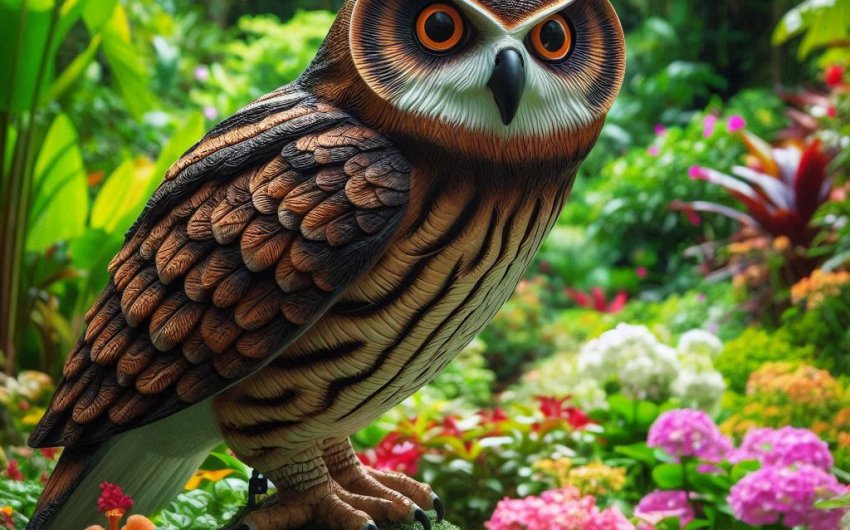
- Large, Piercing Eyes: Owls are known for their large, forward-facing eyes, which convey a sense of predatory focus. Good owl decoys, like Hausse owl decoys, feature prominent, often reflective or lifelike eyes that appear to "watch" the birds. This creates an unsettling feeling for approaching birds, making them believe they are being targeted.
- Realistic Size and Silhouette: An owl decoy needs to be appropriately sized to appear as a genuine threat. If it's too small, it won't be convincing. The overall silhouette, including the shape of the head, body, and often prominent "ear tufts," contributes to this realistic appearance.
- Natural Colors and Markings: While brightly colored birds might be startled by anything, more discerning species will be deterred by decoys that replicate the natural, often mottled brown, gray, or white plumage colors and markings of actual owls. This adds to the authenticity of the threat.
- Motion (Optional but Enhanced): Some owl decoys incorporate features like a bobble head (on a spring), rotating head (wind-powered), or even sound (a hooting sound, though this can be annoying). These elements add a sense of life and unpredictability, making the decoy more convincing and preventing birds from becoming accustomed to a static figure. A Hausse owl decoy with rotating head leverages this for enhanced realism.
By carefully mimicking owl features, a quality owl decoy creates a compelling visual illusion that instinctively drives away potential bird pests.
Visual Deterrent vs. Physical Barrier
It's important to understand that an owl decoy functions as a visual deterrent, not a physical barrier. This distinction is crucial for setting realistic expectations about its effectiveness and how to best use it in combination with other bird control methods.
- Visual Deterrent:
- How it Works: It works by scaring birds away based on their sight and instinctive fear of predators. The birds see the "owl" and perceive danger, choosing to avoid the area.
- Pros: Non-invasive, doesn't require netting or fencing, can be aesthetic, and relatively easy to set up. Safe for birds (doesn't harm them).
- Cons: Birds can become accustomed to static visual deterrents over time, reducing effectiveness. Best used with movement or rotated frequently.
- Physical Barrier:
- How it Works: A physical obstacle that literally prevents birds from reaching plants or areas. Examples include netting, cages, or row covers.
- Pros: Highly effective and reliable, as it physically blocks access.
- Cons: Can be expensive, cumbersome to install and maintain, may interfere with pollination or harvesting, can be visually intrusive. A good quality garden netting for bird protection can be effective.
- Complementary Use: Owl decoys and physical barriers are not mutually exclusive. They can be used as complementary strategies. For example, you might use an owl decoy to deter general foraging, and if a specific crop (like berries) is still heavily targeted, add temporary netting during ripening.
An owl decoy is an excellent first line of defense for broad-spectrum bird control, creating an illusion of danger that makes your garden less appealing, while physical barriers offer guaranteed protection for specific, high-value crops.
How to Maximize the Effectiveness of Hausse Owl Decoys?
While Hausse owl decoys are designed with realism and deterrent features, simply placing one in your garden might not yield long-term results. Birds are intelligent and quickly learn if a perceived threat is actually harmless. To truly maximize the effectiveness of your Hausse owl decoys, you need to trick the birds into believing the "predator" is real and active.
This involves strategic placement, regular movement, and sometimes combining with other sensory deterrents to keep the birds guessing and your garden protected.
Change Location Frequently
One of the most crucial tips for maximizing the effectiveness of any owl decoy is to change its location frequently. Birds are smart, and they quickly learn that a static, unmoving object is not a real threat.
- Why It Matters: If an owl decoy stays in the same spot day after day, birds will observe it, realize it never moves, and eventually become accustomed to its presence. They'll then ignore it and resume their foraging activities. This is called habituation.
- How Often: Move your Hausse owl decoy to a different spot in your garden every few days, ideally every 2-3 days. Even small changes in its position, facing a different direction, or moving it to a completely different part of the garden can be effective.
- Simulating Realism: Regular movement creates the illusion that the "owl" is alive, active, and unpredictable. Real owls don't sit in the exact same spot 24/7.
- Multiple Decoys: If you have multiple Hausse owl decoys, rotate them between various locations. This further enhances the unpredictable nature of the "threat."
- Consider Timing: During peak vulnerability for your crops (e.g., when berries are ripening), you might need to move them even more frequently.
Making changing location frequently a routine part of your bird control strategy is the single most important action to prevent habituation and keep your Hausse owl decoys effective.
Elevate and Place Strategically
The height and placement of your Hausse owl decoy are critical for its visibility and perceived threat level. Elevating and placing it strategically makes it more noticeable and believable to flying birds.
- Elevation:
- Higher is Better: Place your owl decoy on a raised platform, pole, or even atop a shed or tall fence post. The higher it is, the more visible it will be from above to approaching birds, mimicking a real owl perching in a tree or on a high vantage point. Aim for at least 5-6 feet high, or even taller if possible.
- Avoid Ground Level: Placing it directly on the ground often makes it less visible and less intimidating to birds flying overhead.
- Strategic Placement:
- Near Affected Areas: Position the decoy near the specific plants or areas you want to protect (e.g., near your berry bushes, vegetable patch, or fruit trees).
- Line of Sight: Ensure the decoy is clearly visible from typical bird approach paths. Avoid placing it where it will be obscured by dense foliage from your own plants or other structures.
- Open Spaces: In general, open spaces where birds feel more vulnerable are good locations.
- Angle: Angle the decoy so its "eyes" are facing the most likely direction from which birds approach your garden.
- Motion Considerations: If your Hausse owl decoy has a rotating head, ensure it's in a spot where it can catch the wind effectively to move the head, further enhancing realism.
Elevating and placing your Hausse owl decoy strategically optimizes its visual impact, making it a more convincing and persistent threat to unwanted feathered visitors.
Combine with Reflective or Auditory Deterrents
To further enhance the effectiveness of your Hausse owl decoys and combat habituation, it's wise to combine them with reflective or auditory deterrents. Engaging multiple senses keeps birds more consistently on edge.
- Reflective Deterrents:
- How they work: Bright, reflective surfaces create flashes of light as they move in the breeze, which disorients and startles birds, making them uncomfortable.
- Examples: Old CDs, aluminum pie plates, reflective Mylar strips, or commercial reflective bird scare tape.
- Placement: Hang these near your owl decoy or directly on plants. The movement and unpredictable flashes will make the area seem more dynamic and dangerous.
- Auditory Deterrents:
- How they work: Loud or startling noises, or predator calls, can frighten birds away.
- Examples: Wind chimes, motion-activated sonic deterrents that emit distress calls or predator sounds (though these can be annoying to humans too), or even simply tying old metal cans together to clang in the wind.
- Placement: Place them strategically in the garden.
- Motion: Many reflective deterrents inherently have motion from the wind, which is crucial for preventing habituation. The unpredictable movement makes the "threat" more believable.
- Why Combine?:
- Multi-Sensory Attack: Birds rely on sight and sound. By combining a visual deterrent (the owl decoy) with a reflective or auditory one, you engage multiple senses, making the threat seem more real and complex.
- Disorientation: The flashing lights and unexpected sounds can disorient birds, making them less likely to linger and assess the situation.
- Reduced Habituation: The varied stimuli prevent birds from becoming too comfortable with a single, static deterrent.
Combining your Hausse owl decoys with reflective or auditory deterrents creates a more dynamic and frightening environment for birds, significantly boosting your bird control efforts and protecting your garden more effectively.
Use Multiple Decoys
For larger gardens or more widespread bird problems, using multiple decoys is often more effective than relying on a single one. This creates a broader zone of perceived danger and makes it harder for birds to find a safe entry point.
- Broader Coverage: A single owl decoy can only effectively protect a limited area. For larger garden beds, multiple fruit trees, or a whole yard, a lone decoy might be easily circumvented.
- Increased Perceived Threat: Seeing several "predators" (even if they are decoys) scattered across a wider area enhances the sense of omnipresent danger for birds. It makes them feel like there's no truly safe spot to land and forage.
- Varying Angles: With multiple decoys, you can position them at different heights, facing different directions, and with varying types of motion (e.g., one bobble head, one rotating head, one static but frequently moved). This increases the randomness and realism of the perceived threat.
- Rotation Strategy: If you have three Hausse owl decoys, you can rotate them between different spots daily or every few days, keeping two in prominent areas and one "resting" (or being moved to a completely new, surprising spot). This makes the presence of owls even more unpredictable.
- Strategic Placement for Key Crops: Place more decoys around your highest-value or most-vulnerable crops (like ripening berries or newly sown seeds) to create an intensified protective zone.
Using multiple Hausse owl decoys provides more comprehensive coverage and a more convincing deterrent strategy, helping to keep your entire garden protected from winged invaders. You can purchase Hausse owl decoy sets for this purpose.
Other Bird Control Strategies for Comprehensive Protection
While Hausse owl decoys are a powerful tool, a truly comprehensive bird control strategy often involves combining multiple approaches. Different birds respond to different deterrents, and combining methods creates a multi-layered defense that is harder for birds to overcome.
Consider integrating these additional bird control strategies to create a formidable shield around your precious garden and property.
Netting (Physical Barrier)
For high-value crops that are particularly vulnerable to bird damage, netting remains the most reliable and foolproof physical barrier.
- How it Works: Netting physically prevents birds from accessing your plants, seeds, or fruits. If they can't get to the crop, they can't damage it.
- Best For: Berry bushes (strawberries, blueberries, raspberries), fruit trees (cherries, grapes), newly sown seedbeds, or vulnerable seedlings.
- Types of Netting: Look for durable, UV-resistant garden bird netting with mesh sizes small enough to exclude birds but large enough to not trap beneficial insects.
- Application Tips:
- Support Structure: Drape netting over a sturdy frame, stakes, or supports so it doesn't rest directly on the plants. This prevents fruit from being pushed against the netting (where birds can still peck) and allows the plants to grow freely.
- Secure Edges: Ensure the netting is securely fastened to the ground all around the perimeter to prevent birds from sneaking underneath. Use garden staples or heavy objects.
- Easy Access: Make sure you can easily lift or open sections of the netting for harvesting, watering, and pest control.
- Timely Removal: Remove netting after harvest to allow beneficial insects access and prevent it from becoming a hazard to other wildlife or your plants.
- Pros: Highly effective and reliable for specific crops.
- Cons: Can be visually intrusive, may prevent pollination (remove during flowering!), can be cumbersome to install and remove, can potentially trap small birds if not properly installed and taut.
When your harvest absolutely depends on it, netting provides a direct and impermeable physical barrier against bird damage.
Row Covers for Seedlings
For newly sown seeds and delicate seedlings, row covers offer excellent bird control while also providing protection from other pests and environmental stresses.
- How it Works: Row covers are lightweight fabrics (often spun-bonded polypropylene) that are draped over hoops or directly over plants. They create a physical barrier that prevents birds (and many insects) from accessing your young plants.
- Best For: Protecting newly sown rows of vegetables (peas, corn, beans), delicate seedlings (lettuce, spinach starts), and young transplants.
- Types: Look for lightweight garden row covers that allow light and water to pass through.
- Application Tips:
- Hoops: Use garden hoops to create a tunnel over your rows, preventing the fabric from resting directly on the plants and allowing for airflow.
- Secure Edges: Anchor the edges of the row cover firmly to the ground with rocks, soil, or pins to prevent birds from crawling underneath.
- Ventilation: On very hot days, you might need to temporarily lift the sides of the row cover for ventilation to prevent overheating, especially for heat-sensitive plants.
- Removal: Remove row covers once plants are mature enough to withstand bird damage or if they need pollination (for fruiting plants).
- Pros: Excellent bird control for seedlings, also protects from insects, light frost, and strong winds.
- Cons: Can be visually unappealing, requires installation, may need temporary removal for pollination.
Row covers provide a gentle yet effective physical barrier that protects vulnerable seedlings from bird damage and other early-season threats.
Scare Devices (Sound and Movement)
Beyond owl decoys, various scare devices that incorporate sound and movement can supplement your bird control strategy, keeping birds unsettled and away from your garden.
- Shiny, Moving Objects:
- How they work: Bright, reflective objects that move unpredictably in the wind create flashes of light and visual disturbance that disorient and startle birds.
- Examples: Old CDs (hung on strings), aluminum foil strips, reflective Mylar streamers, shiny pinwheels, or commercial reflective bird deterrent disks.
- Application: Hang them from branches, stakes, or strings around your garden beds.
- Tip: To prevent habituation, move them around frequently, just like owl decoys.
- Wind Chimes:
- How they work: Produce unpredictable sounds when moved by the wind, which can deter birds.
- Pros: Can be aesthetic and pleasant for humans.
- Cons: May not be loud or startling enough for persistent birds.
- Sonic/Ultrasonic Devices:
- How they work: Emit high-frequency sounds (ultrasonic, inaudible to humans) or distress calls/predator sounds (sonic, audible to humans) to frighten birds.
- Pros: Can cover larger areas, some are motion-activated.
- Cons: Effectiveness of ultrasonic devices is debated; sonic devices can be annoying to neighbors or yourself. Birds can become accustomed to repeated sounds.
- Scarecrows:
- Traditional: A classic visual deterrent, but must be moved and changed frequently to be effective against smart birds.
- Motion-Activated: Some modern scarecrows use motion sensors to activate spraying water or loud noises. A motion activated sprinkler bird deterrent can be effective and also waters plants!
Using a variety of scare devices in combination with owl decoys creates a dynamic and confusing environment for birds, making your garden an unpleasant place for them to linger.
Diversionary Feeding
In some cases, especially if you enjoy having birds in your yard but just want them away from specific crops, diversionary feeding can be a complementary bird control strategy.
- How it Works: You offer an alternative, attractive food source to lure birds away from your garden plants.
- Best For: Gardens where you don't want to completely exclude birds, but rather manage their foraging locations.
- Application: Place bird feeders stocked with birdseed or suet cakes in a part of your yard away from your vulnerable garden plants.
- Pros: Allows you to enjoy birds while protecting crops; can reduce direct bird damage on targeted plants if the alternative food is appealing enough.
- Cons: Can potentially attract more birds to your yard in general, which might then still discover your garden if the feeder food isn't compelling enough; requires continuous refilling of feeders. You can find many wild bird feeders to set up.
Diversionary feeding is a humane and sometimes effective strategy when aiming to redirect bird activity rather than completely eliminate it from your property.