
Best Adjustable Sprinklers for Uneven Lawns
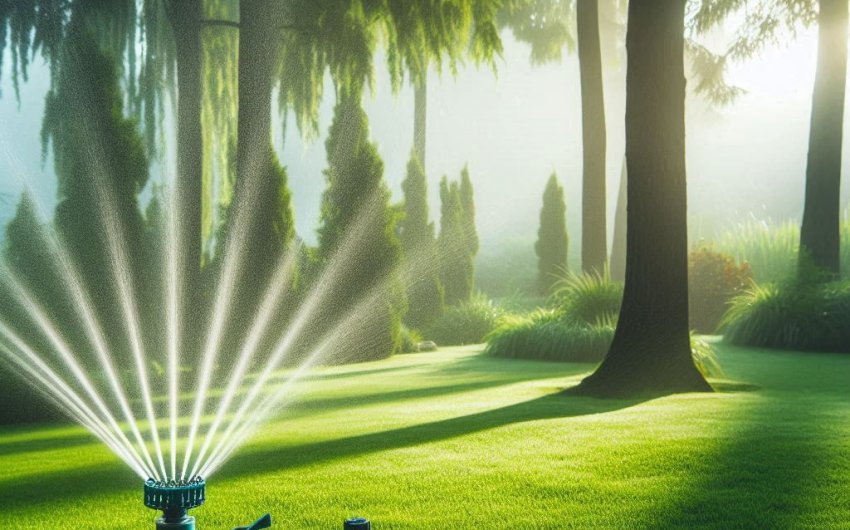
Maintaining a lush, green lawn is a goal for many homeowners, and proper watering is key to achieving it. But what happens if your lawn isn't a perfectly flat, uniform rectangle? Many yards have uneven terrain, slopes, or irregularly shaped sections. In these situations, using a standard sprinkler can lead to big problems: some areas get too much water (creating soggy spots and runoff), while others don't get enough (resulting in dry, brown patches). This imbalance wastes water and harms your lawn's health.
The solution lies in choosing the right tools: adjustable sprinklers. These versatile devices are specifically designed to tackle the challenges of uneven lawns, allowing you to customize their spray patterns and reach. By fine-tuning your watering, you can ensure every part of your lawn receives just the right amount of moisture, no matter its contours. We'll explore why adjustable sprinklers are essential for challenging landscapes, delve into the different types available, and guide you on selecting and using the best adjustable sprinklers for uneven lawns to achieve uniform, efficient watering and a truly vibrant turf.
Why are Adjustable Sprinklers Essential for Uneven Lawns?
Uneven lawns present unique watering challenges that standard sprinklers simply can't handle efficiently. Adjustable sprinklers provide the flexibility needed to overcome these obstacles, ensuring every blade of grass gets the right amount of water.
What are the Challenges of Watering Uneven Lawns?
- Runoff on Slopes: When water is applied too quickly or in too large a volume to a sloped area, it doesn't have time to soak into the soil. Instead, it runs down the slope, leading to:
- Wasted Water: The water is lost before the grass can absorb it.
- Erosion: The force of the runoff can wash away topsoil and nutrients.
- Uneven Watering: The top of the slope gets less water, while the bottom might get oversaturated.
- Puddling in Low Spots: Depressions or dips in the lawn can become collection points for water. Standard sprinklers will continuously spray into these spots, leading to:
- Soggy, Compacted Soil: Constant wetness suffocates grass roots, leading to thinning turf, yellowing, and increased compaction.
- Disease: Consistently wet conditions promote fungal diseases.
- Mosquito Breeding Grounds: Standing water creates ideal breeding sites for mosquitoes.
- Dry Spots on High Points: Raised areas or humps might not receive enough water if a sprinkler's spray pattern is fixed. The water might pass over or under them, leaving them parched.
- Missed Areas in Irregular Shapes: Standard sprinklers often create fixed circular or rectangular patterns. For irregularly shaped lawns (L-shaped, curved, or those with obstacles), fixed patterns leave dry corners or overspray onto non-lawn areas like patios or driveways.
- Wind Drift: On windy days, a standard sprinkler's spray can be easily distorted, leading to uneven watering.
How Do Adjustable Sprinklers Solve These Problems?
Adjustable sprinklers offer crucial control over the watering process:
- Customizable Spray Patterns: You can often change the angle (arc) of the spray from a narrow wedge to a full 360-degree circle. This is essential for watering odd-shaped areas without overspray.
- Adjustable Distance/Radius: You can reduce or increase the distance the water sprays, preventing overspray onto hardscapes or neighboring properties, and allowing you to target specific areas.
- Adjustable Flow Rate: Some advanced adjustable sprinklers allow you to control how quickly water is released. Applying water slowly is vital for slopes, giving the soil more time to absorb it and preventing runoff.
- Targeted Watering: You can set up multiple adjustable sprinklers to cover different zones of your uneven lawn, each fine-tuned to its specific needs (e.g., one for a sunny slope, another for a shadier flat spot).
- Efficient Water Use: By precisely applying water only where it's needed, adjustable sprinklers significantly reduce water waste, making your irrigation more efficient and eco-friendly.
For any homeowner with an uneven lawn, investing in adjustable sprinklers is a smart move that saves water, promotes lawn health, and ultimately, saves you time and frustration.
What Are the Different Types of Adjustable Sprinklers?
Adjustable sprinklers come in various designs, each offering different levels of control and best suited for particular watering challenges on uneven lawns. Understanding their mechanics will help you choose the right ones for your needs.
What are Oscillating Sprinklers?
- How They Work: An oscillating sprinkler uses a long bar with multiple nozzles that moves back and forth in an arc, creating a rectangular spray pattern.
- Adjustability:
- Arc/Range Control: Most oscillating sprinklers allow you to adjust the width of the spray and the length of the rectangular pattern. This lets you precisely define the watered area, which is great for long, narrow strips or for avoiding overspray onto sidewalks.
- Flow Control: Some higher-end models also offer a flow control knob to reduce the intensity of the spray, making them better for slopes.
- Best Use: Ideal for watering rectangular or square areas, long strips, or new grass seed (due to gentle spray). Good for moderate slopes if it has flow control.
- Limitations: Less effective for oddly shaped areas or very steep slopes without flow control. Can be affected by wind. You can find many Adjustable Oscillating Sprinklers.
What are Pulsating (Impact) Sprinklers?
- How They Work: A pulsating sprinkler (also called an impact sprinkler) sprays a single stream of water out horizontally. A spring-loaded arm then "impacts" the stream, causing the sprinkler head to rotate slightly and creating the characteristic "click-click-click" sound.
- Adjustability:
- Arc Control: Highly adjustable arc, from a narrow wedge (e.g., 20 degrees) to a full 360-degree circle. This makes them versatile for irregular shapes.
- Distance/Radius: Adjustments on the sprinkler head allow you to change the distance of the spray.
- Deflector Plate: A small deflector plate can be moved into the stream to break up the water, creating a finer spray closer to the sprinkler head.
- Best Use: Excellent for large, open areas, especially those with irregular shapes due to their adjustable arc. Good for tough, established lawns. Can be adapted for slopes by reducing distance and flow.
- Limitations: Can be noisy. The single, strong stream might cause runoff on very steep slopes if not properly adjusted for slow application. You can find effective Adjustable Pulsating Sprinklers.
What are Rotary (Gear-Driven) Sprinklers?
- How They Work: Similar to pulsating sprinklers in coverage (usually a partial or full circle), but they use a gear-driven mechanism to slowly rotate the sprinkler head, spraying multiple streams of water.
- Adjustability:
- Arc Control: Highly adjustable arc from a small angle to a full 360 degrees.
- Distance/Radius: Very precise control over the spray distance.
- Multiple Streams: The multiple streams reduce the instantaneous application rate, making them much gentler on the soil than a single-stream pulsating sprinkler.
- Best Use: Ideal for large, open lawn areas, especially those with slopes due to their low application rate (water soaks in slowly). Great for established lawns.
- Limitations: Can be more expensive than other types.
- Pop-up Rotors: Often used in in-ground irrigation systems, but stand-alone models are available.
What are Misting or Sprinkler Nozzles?
- How They Work: These attach directly to a hose or spike and create a gentle, fine mist or light spray.
- Adjustability: Often have limited adjustability in pattern, but excel at providing a very low application rate.
- Best Use: Excellent for very gentle watering of new grass seed, delicate plants, or extremely steep slopes where any direct spray causes runoff.
- Limitations: Very limited coverage area. Requires continuous monitoring.
Choosing the best adjustable sprinklers for uneven lawns often involves combining different types to handle the unique challenges of each zone in your yard.
How Do You Select the Best Adjustable Sprinkler for Your Uneven Lawn?
Choosing the right adjustable sprinkler depends on the specific challenges of your uneven lawn, including the type of slope, the shape of the area, and your budget.
What Factors Should You Consider?
- Type of Unevenness:
- Slopes: For slopes, you need a sprinkler with a low application rate (water is released slowly) to allow maximum absorption and prevent runoff. Rotary (gear-driven) sprinklers are excellent here. Oscillating sprinklers with flow control can also work.
- Low Spots/Depressions: You want to avoid overwatering these. A sprinkler with very precise arc and distance control (rotary or pulsating) that can be set to avoid constantly hitting the low spot is ideal. Or, use a sprinkler that applies water slowly.
- Irregularly Shaped Areas: Pulsating and rotary sprinklers with flexible arc adjustments (from a narrow wedge to a full circle) are best for custom-fitting water to odd shapes without overspray. Oscillating sprinklers are less ideal here.
- Water Pressure: Check your home's water pressure. Some sprinklers (especially rotors and pulsating types) require decent water pressure to perform optimally and achieve their advertised coverage. Low water pressure can result in weak spray and poor coverage. You can find a Water Pressure Gauge to check this.
- Coverage Area: Consider the size of the area you need to water.
- Small Areas/Spots: Misting nozzles, or smaller oscillating sprinklers.
- Medium Areas: Many oscillating, pulsating, or compact rotary sprinklers.
- Large Areas: Large pulsating or rotary sprinklers.
- Application Rate (Inches per Hour): This is key for slopes. Look for sprinklers that advertise a low application rate (e.g., 0.25-0.5 inches per hour) or allow you to adjust it. This is often more important than just "distance."
- Adjustability: How easy is it to adjust the arc, distance, and flow? Look for user-friendly controls. Read reviews specific to ease of adjustment.
- Durability: Choose sprinklers made from sturdy materials (metal, heavy-duty plastic) that will withstand outdoor conditions and UV exposure.
- Cost and Budget: Prices vary widely. Balance features with your budget. Remember, efficient watering saves money in the long run.
Combining Sprinkler Types:
For many uneven lawns, a single type of sprinkler won't be enough. You might need a combination:
- Use a rotary sprinkler for a large, sloped section.
- Use a smaller oscillating sprinkler with pattern control for a narrow, flat strip.
- Use a targeted pulsating sprinkler for an irregularly shaped corner.
Key Questions to Ask Yourself:
- Where does water pool? (Indicates low spots needing less water)
- Where does water run off? (Indicates slopes needing slower application)
- Where are the dry spots? (Indicates areas being missed)
- What shape is the area? (Rectangular, circular, irregular?)
By carefully assessing your lawn's specific needs and matching them to the features of different adjustable sprinklers, you can create a highly efficient and effective watering plan for your uneven lawn.
How Do You Set Up and Use Adjustable Sprinklers for Best Results?
Having the best adjustable sprinklers for uneven lawns is only half the battle. Setting them up correctly and using them efficiently are just as important for achieving a uniformly green and healthy turf.
How to Place Your Sprinklers Strategically?
- Zone Your Lawn: Divide your uneven lawn into separate watering "zones" based on light exposure, slope, grass type, and drainage. Each zone might require a different type of adjustable sprinkler or different settings.
- Overlapping Coverage: Ensure that each sprinkler's spray pattern slightly overlaps the next sprinkler's pattern (typically head-to-head coverage, where one sprinkler sprays to the next sprinkler). This prevents dry spots between sprinklers.
- Corner Placement: For rectangular areas, place sprinklers in corners (or along edges) to cover the full area effectively.
- Avoid Obstacles: Position sprinklers so their spray is not blocked by trees, shrubs, fences, or structures.
- Targeted Watering: Set the arc and distance precisely to water only your lawn, avoiding overspray onto sidewalks, driveways, or buildings. This prevents water waste and hardscape staining.
How to Adjust Sprinkler Settings for Uneven Lawns?
- Arc (Pattern) Adjustment: For pulsating and rotary sprinklers, set the arc to precisely match the shape of the area you want to water. This is crucial for irregular shapes. For oscillating sprinklers, set the left/right stop tabs to define the rectangular area.
- Distance (Radius) Adjustment: Use the distance control (often a screw or dial) to prevent overspray. You might need to reduce the distance on sprinklers closest to hardscapes.
- Flow Control (for Slopes): If your sprinkler has a flow control feature, reduce the flow rate for sloped areas. This allows water to soak in slowly, preventing runoff. This is often the most important adjustment for slopes. You may need to run the sprinkler for a longer duration to apply the desired amount of water at a slower rate.
- Trial and Error: It takes some trial and error!
- Set up your sprinkler.
- Turn on the water and observe the spray pattern.
- Make adjustments.
- Place empty tuna cans or rain gauges throughout the watering area to measure how much water each spot is receiving. Aim for even distribution.
- Adjust further until the measurements are relatively consistent.
What is the Best Time and Duration for Watering?
- Early Morning (Best Time): Always water in the early morning (before 10 AM). This minimizes water loss to evaporation, allows grass blades to dry before nightfall (reducing fungal diseases), and gives your lawn time to absorb water before the heat of the day.
- Deep and Infrequent (Duration): Aim to apply about 1 inch of water per week (including rainfall) in 1-2 watering sessions, rather than daily shallow watering. The duration needed to apply 1 inch will depend on your sprinkler type and water pressure. Use the tuna can test to find this duration.
- For slopes, you might need to run the sprinkler for multiple short cycles (e.g., three 15-minute cycles an hour apart) to allow water to soak in, rather than one long cycle that causes runoff.
What About Monitoring Your Lawn's Response?
- Observe Consistently: Regularly walk your lawn. Look for dry spots (grass dull, bluish-gray, footprints remain) or soggy spots (puddles, thin yellow grass, squishy soil). This indicates where your watering needs further adjustment.
- Adjust Seasonally: Your watering needs will change with the seasons. Reduce watering in cooler weather or during dormancy, and increase during hot, dry spells.
By meticulously setting up and using your adjustable sprinklers, you can master the art of watering your uneven lawn, leading to a uniformly vibrant, healthy, and resilient turf.
What Are Other Tips for Watering Uneven Lawns Effectively?
Beyond choosing and setting up adjustable sprinklers, a few other strategies can significantly enhance your watering efficiency and contribute to a healthier uneven lawn.
What is the Importance of Healthy Soil?
- Drainage and Retention: Soil rich in organic matter (like compost) drains better in clay soils and retains water better in sandy soils. This means the soil can absorb and hold water more efficiently, reducing runoff and dry spots.
- Deeper Roots: Healthy soil encourages grass roots to grow deeper, making the lawn more drought-tolerant and less reliant on frequent watering.
- How to Improve: Regularly top-dress your lawn with a thin layer of Organic Compost for Lawns in spring or fall.
- Aeration: Periodically Aerating Your Lawn (especially core aeration) helps break up compacted soil, allowing water and nutrients to penetrate more easily.
What About Choosing the Right Grass Type?
- Drought Tolerance: Select grass varieties that are inherently more drought-tolerant and suited to your local climate.
- Cool Season: Tall Fescue, Fine Fescue.
- Warm Season: Bermudagrass, Zoysiagrass. If establishing a new lawn or overseeding, choose Drought Tolerant Grass Seed.
- Water-Saving: Less thirsty grasses will perform better with less water, naturally compensating for some watering challenges.
How Can You Manage Rainwater Runoff?
- Downspout Extensions: Ensure your roof's downspouts direct water at least 6-10 feet away from your house foundation and away from sensitive lawn areas that might get oversaturated. You can use Downspout Extensions for this.
- Rain Barrels: Collect rainwater from your roof in Rain Barrels for later use on garden beds or less-demanding lawn areas.
- Rain Gardens: For low spots or areas with significant runoff, consider installing a Rain Garden. This is a shallow depression planted with native, water-loving plants designed to capture and absorb stormwater.
What About Smart Watering Accessories?
- Rain Sensors: For in-ground irrigation systems, a rain sensor will automatically shut off the system when it rains, preventing unnecessary watering.
- Smart Controllers: Advanced Smart Irrigation Controllers use local weather data to adjust watering schedules automatically, optimizing water use.
- Soil Moisture Sensors: These devices measure the moisture level in your soil and can communicate with smart controllers or simply tell you when your lawn actually needs water.
By combining the precision of adjustable sprinklers with these comprehensive watering strategies and soil health practices, you can successfully navigate the complexities of an uneven lawn, ensuring uniform moisture distribution, promoting vibrant lawn health, and conserving precious water.