
Can I propagate Pothos in soil instead of water?
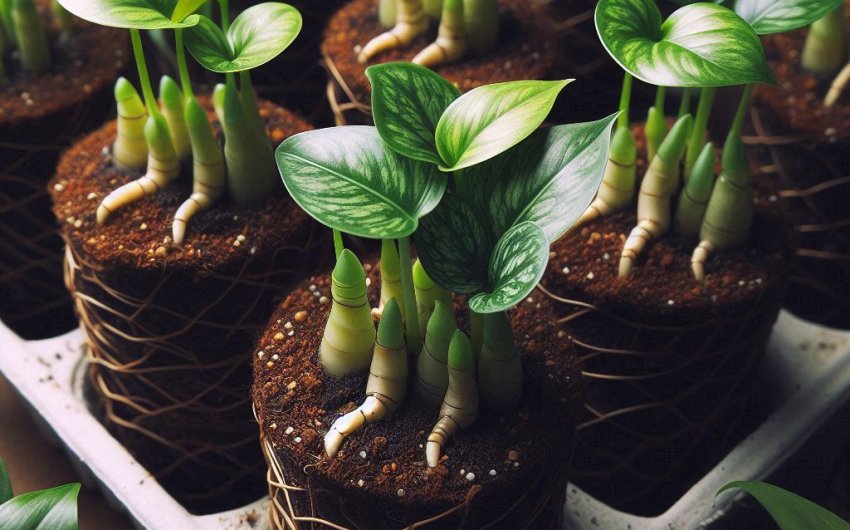
The Pothos plant (Epipremnum aureum), often called Devil's Ivy, is arguably one of the most popular and easy-to-grow houseplants. Its trailing vines and heart-shaped leaves, available in various beautiful variegations (like 'Golden', 'Marble Queen', 'Neon', 'N'Joy'), make it a staple in homes, offices, and dorms worldwide. One of its most endearing qualities is how incredibly simple it is to propagate. Most people learn to propagate Pothos by simply sticking a cutting in a glass of water and watching roots magically appear. But this leads to a common question: Can I propagate Pothos in soil instead of water?
The answer is a resounding yes! Propagating Pothos directly in soil is not only possible but, for many experienced plant enthusiasts, it's often the preferred method. While water propagation offers the satisfying visual of root growth, direct soil propagation can sometimes lead to a more robust plant with less transplant shock. Understanding the pros and cons of each method and mastering the techniques for soil propagation will open up new avenues for expanding your Pothos collection. This comprehensive guide will explore why and how to propagate Pothos directly in soil, helping you confidently grow new plants from your favorite vines.
Understanding Pothos Propagation
Pothos plants are incredibly forgiving when it comes to propagation. They belong to a family of plants (Araceae) known for their ability to root easily from stem cuttings. This is due to specialized cells that can form adventitious roots (roots that grow from non-root tissue) from their nodes.
A node is a small bump or joint on the stem where a leaf emerges and, crucially, where aerial roots or new roots can form. When taking a cutting, ensuring you have at least one node (preferably 2-3) is essential for successful rooting, whether in water or soil.
The Popularity of Water Propagation
Water propagation is famous for Pothos for a few reasons:
- Visibility: You can actually see the roots forming, which is incredibly satisfying and a great learning experience, especially for beginners.
- Less Risk of Rot (Initially): Some feel it's easier to prevent rot in water compared to potentially overwatering in soil.
- Simplicity: Just snip and stick in water.
However, water propagation isn't without its downsides:
- "Water Roots" vs. "Soil Roots": Roots that form in water are structurally different from roots that form in soil. Water roots are typically finer and more brittle. When you transplant a cutting with water roots into soil, the plant often experiences transplant shock as it has to develop new "soil roots" adapted to that environment. This can lead to a temporary halt in growth or even leaf yellowing/loss.
- Nutrient Deficiency: Water provides no nutrients, so plants propagated in water need to be transferred to soil relatively quickly once roots form.
Why Propagate Pothos Directly in Soil?
Propagating Pothos directly in soil offers several compelling advantages that make it a preferred method for many.
1. Less Transplant Shock
This is the biggest benefit. When a Pothos cutting roots directly in soil, it develops roots that are already adapted to a soil environment.
- Smoother Transition: There's no dramatic change from water to soil, which means the plant experiences much less (or no) transplant shock.
- Faster Establishment: The plant can establish itself more quickly and continue growing without the common "pause" or setback seen after moving water-rooted cuttings to soil.
2. Stronger Root System from the Start
Roots that develop directly in soil tend to be tougher, more fibrous, and better suited for nutrient and water absorption from a soil medium. This can lead to a more robust and healthy plant from the very beginning.
3. More Natural Environment
Soil is a plant's natural medium. Providing it from the start can lead to more natural and possibly quicker overall development, as the cutting doesn't have to re-adapt its root structure.
4. Space Efficiency (for multiple cuttings)
If you're propagating many cuttings, it can be cumbersome to have dozens of glasses of water around. Small pots or trays filled with soil are often more space-efficient.
5. Reduces Risk of Rot from Water Roots
While water seems foolproof, sometimes cuttings can rot in water if the water isn't changed regularly or if the cutting isn't healthy. More commonly, the "transplant shock" when moving water roots to soil can sometimes lead to those water roots rotting in the new soil environment. Direct soil propagation bypasses this.
How to Propagate Pothos in Soil: Step-by-Step Guide
Propagating Pothos directly in soil is straightforward. Here's how to do it for optimal success:
Step 1: Take Healthy Cuttings
The success of your propagation starts with healthy cuttings.
- Parent Plant Health: Choose a vigorous, healthy Pothos plant for your cuttings.
- Sterilize Tools: Always use clean, sharp pruning shears sharp pruning shears for plants or a razor blade. Sterilize them with rubbing alcohol between cuts to prevent spreading diseases.
- Where to Cut:
- Locate a healthy vine.
- Identify the nodes (the bumps where leaves and aerial roots emerge). These are crucial for rooting.
- Make your cut about 1/4 to 1/2 inch below a node.
- Each cutting should have at least one node, but ideally 2-3 nodes for better success. It's often best to remove the bottom leaf (or two) on the cutting so those nodes can be buried in the soil.
- You can make cuttings with just one leaf (and its attached node), but cuttings with 2-3 leaves tend to have more energy stored and a higher success rate.
- Remove Flowers/Buds (if any): If your Pothos has any tiny flowers or buds, pinch them off. The plant needs to focus all its energy on root development.
Step 2: Allow Cuttings to Callus (Optional but Recommended)
This step helps prevent rot, especially for sensitive plants, but Pothos is generally robust enough that it's optional.
- Callusing: After taking the cuttings, allow the cut end to dry out and form a "callus" (a dry, protective layer) for a few hours or even overnight. This seals the wound and reduces the risk of fungal or bacterial rot once planted in soil.
- Where to Place: Leave cuttings in a dry spot, out of direct sun, on a paper towel.
Step 3: Prepare Your Potting Medium
The right soil mix is crucial for successful soil propagation. It needs to be well-draining yet retain some moisture.
- Ideal Mix: A good propagating mix should be light and airy. You can use:
- A seed starting mix (often sterile and fine-textured).
- A regular houseplant potting mix amended with extra perlite for plants (25-50% perlite to improve drainage and aeration).
- A mix of coco coir and perlite is also excellent for propagation.
- Moisten the Mix: Before planting, lightly moisten the potting mix. It should be damp, like a wrung-out sponge, not soggy or dusty dry.
- Pot Choice: Use small pots (3-4 inches) with drainage holes. You can plant multiple cuttings in one larger pot or tray, just ensure they have some space between them. Small plastic nursery pots with drainage are perfect.
Step 4: Apply Rooting Hormone (Optional but Beneficial)
Rooting hormone can significantly increase your success rate and speed up root development, especially for cuttings that are a bit more challenging, but Pothos often roots well without it.
- Type: Use a powdered rooting hormone powder.
- How to Apply: Dip the cut end (the node area) of your cutting into the rooting hormone powder. Tap off any excess.
Step 5: Plant the Cuttings
- Make a Hole: Use a finger or a pencil to make a small hole in the pre-moistened potting mix for each cutting.
- Insert Cutting: Carefully insert the cutting into the hole, ensuring that at least one (preferably two) nodes are buried beneath the soil surface. This is where the roots will form.
- Gently Firm: Gently firm the soil around the base of the cutting to ensure good contact between the node and the potting mix.
Step 6: Create a Mini Greenhouse Effect (Crucial for Humidity)
This is a key step for successful soil propagation of Pothos. It helps maintain the high humidity that cuttings need to form roots before they have a working root system to absorb water from the soil.
- Cover the Cuttings:
- You can cover the entire pot(s) with a clear plastic bag, creating a small tent. Ensure the bag doesn't touch the leaves too much.
- Use a clear plastic dome or a cut-off plastic bottle placed over the cuttings.
- For larger trays, use a clear plastic lid from a nursery flat.
- Why it Works: This traps moisture, raises humidity, and reduces water loss from the leaves (transpiration), giving the cutting time to develop roots.
- Ventilation: Open the cover or plastic bag for an hour or two each day to allow for some air circulation and prevent mold buildup.
Step 7: Provide Ideal Conditions for Rooting
Once planted and covered, place your cuttings in the right environment.
Light
- Bright, Indirect Light: Place the covered cuttings in a location that receives bright, indirect light. No direct sunlight, as this can overheat the mini greenhouse and cook the cuttings. A spot a few feet back from a sunny window or near an east-facing window is ideal.
Temperature
- Warmth: Pothos root best in warm conditions. Aim for consistently warm temperatures, ideally between 70-80°F (21-27°C).
- Heating Mat (Optional): If your environment is cooler, a seedling heating mat placed under the pots can significantly speed up root development by warming the soil.
Watering
- Keep Consistently Moist: Maintain consistent moisture in the potting mix. It should stay damp, not soggy, inside the mini greenhouse. You likely won't need to water frequently while covered, as the humidity prevents rapid drying. Check every few days.
- Bottom Watering: If the top seems dry but the bottom still damp, you can bottom water by placing the pot in a shallow tray of water for 10-15 minutes to let it soak up moisture from below.
Step 8: Signs of Rooting and Acclimation
Patience is key! Rooting can take anywhere from 2-6 weeks, sometimes longer depending on conditions.
Signs of Rooting
- New Leaf Growth: This is the clearest sign of successful rooting. If your cutting starts to push out a new leaf, it means it has established a root system to support new growth.
- Resistance to Gentle Tug: After a few weeks, you can very gently tug on a cutting. If you feel resistance, it means roots have formed and are anchoring it in the soil. Be careful not to damage tender new roots.
Acclimating Rooted Cuttings
Once you see new growth and/or feel resistance to a gentle tug, your cutting has rooted! Now, you need to gradually acclimate it to normal room humidity.
- Gradual Exposure: Over the course of a week, gradually increase the time you leave the cover off the cuttings each day. Start with an hour, then a few hours, then half a day, until you can remove the cover entirely. This helps the new "soil roots" adjust to less humidity in the air.
- Monitor: Watch for any signs of wilting. If the cutting starts to droop significantly when the cover is off, put the cover back on and try again with a shorter uncovered period the next day.
- Full Potting: Once acclimated, you can continue to grow the new plant in its current small pot, or if you rooted multiple cuttings in one larger pot, you can gently separate them and pot them individually into their own small pots (4-6 inches) with standard Pothos potting mix.
Long-Term Care for Your New Pothos Plants
Once your Pothos cuttings are rooted and acclimated, treat them like mature Pothos plants.
- Light: Bright, indirect light is ideal.
- Watering: Water thoroughly when the top 1-2 inches of soil are dry. Allow excess water to drain.
- Humidity: While not as demanding as Calatheas, Pothos still appreciates average to moderate humidity (40-60%). In very dry homes, they might appreciate a pebble tray or occasional grouping with other plants.
- Fertilizing: Start fertilizing about a month after they've fully established in their new pots, using a diluted balanced liquid houseplant fertilizer every 2-4 weeks during the growing season.
- Potting Mix: A standard houseplant potting mix amended with extra perlite for drainage is perfect for mature Pothos.
Propagating Pothos directly in soil is an incredibly rewarding experience that bypasses many of the common pitfalls of water propagation. By providing the right cutting, a well-draining yet moist potting medium, and a consistently humid and warm environment, you'll soon have a thriving new generation of Pothos plants, ready to add more lush greenery to your home. It's a fantastic way to expand your collection, share with friends, and truly appreciate the resilience and generosity of these beloved houseplants.