
Codling Moth: How to Protect Your Apples and Pears
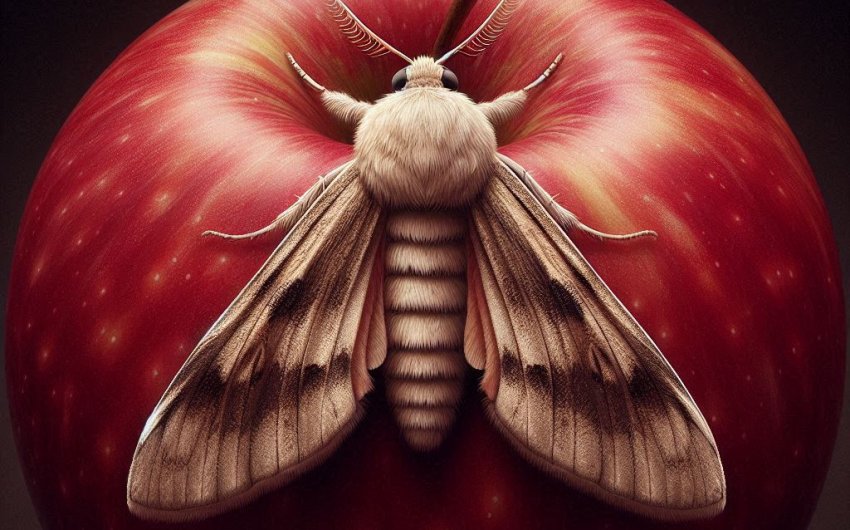
The codling moth (Cydia pomonella) is a significant pest for apple and pear growers, causing damage that can lead to significant crop loss. These small moths lay their eggs on or near the fruit, and their larvae burrow into the apples and pears, feeding on the flesh and seeds. As the larvae mature, they leave unsightly holes and internal damage, rendering the fruit inedible.
Understanding the lifecycle and behavior of the codling moth is crucial for implementing effective pest control strategies. This article will cover the characteristics of the codling moth, its impact on apple and pear trees, and various methods to manage and prevent infestations.
What is the Codling Moth?
The codling moth is a small insect native to Europe but now found worldwide. It is one of the most destructive pests of apple, pear, and walnut trees, attacking the fruit by tunneling inside to feed on the seeds. The adult moth has a wingspan of approximately 15-20 mm and is characterized by its mottled grey and brown coloration, with copper-colored markings at the tips of its wings.
Lifecycle of the Codling Moth
Understanding the lifecycle of the codling moth is essential for targeting control measures effectively. The codling moth undergoes a complete metamorphosis with four stages: egg, larva, pupa, and adult.
Egg Stage: Female codling moths lay eggs on the leaves or directly on the fruit. The eggs hatch in about 6-10 days, depending on temperature conditions.
Larval Stage: After hatching, the larvae burrow into the fruit, usually near the calyx or stem. They feed on the flesh and seeds, causing internal damage. The larval stage lasts about 3-5 weeks.
AdvertisementPupal Stage: Once the larvae have matured, they exit the fruit and pupate under the bark of the tree or in the soil. The pupal stage can last a few weeks or several months, depending on the season.
Adult Stage: Adult moths emerge to mate and lay eggs, starting the cycle anew. In warmer climates, there can be multiple generations per year, while in cooler areas, there may be only one or two.
Knowing the timing of each stage allows for better planning of control methods to disrupt the moth's lifecycle. Use insect monitoring tools to track codling moth activity and predict the optimal times for intervention.
Identifying Codling Moth Damage
Codling moth damage is most noticeable on the fruit itself, but early signs may also be found on the leaves and tree bark. Identifying the damage early is crucial to prevent the spread of the infestation.
Signs of Codling Moth Infestation
- Small holes in the fruit: As larvae tunnel into the apples or pears, they leave behind small entry holes, often surrounded by reddish-brown frass (insect excrement).
- Premature fruit drop: Infested fruits may fall from the tree before they are ripe.
- Internal damage: If you cut open an infested fruit, you will likely find tunnels running through the flesh to the core, where the larvae feed on the seeds.
Regularly inspecting your apple and pear trees for these signs can help you detect an infestation early. Use pruning shears to remove and dispose of infested fruits.
Host Plants Vulnerable to Codling Moths
While apples and pears are the primary hosts for codling moths, other fruit trees and crops can also be affected.
Apple Trees
Apple trees are the most commonly affected by codling moths, with the larvae feeding directly on the fruit. The moths are particularly attracted to early-maturing varieties, where they can complete their lifecycle before colder weather arrives.
Pear Trees
Pear trees are also susceptible to codling moth infestations, though they may not be affected as severely as apple trees. The larvae can still cause significant internal damage, making the fruit unmarketable.
Walnut Trees
In addition to apples and pears, walnut trees can also be hosts for codling moths. The larvae burrow into the nuts, damaging the kernels and reducing the quality of the crop.
Regularly monitoring these trees for signs of codling moth activity and implementing appropriate control measures can help protect your fruit harvest. Use insect traps to monitor for the presence of codling moths.
Managing and Controlling Codling Moth Infestations
Effective management of codling moth infestations requires an integrated approach that combines cultural practices, biological control, and chemical treatments. Here are some strategies for controlling codling moths and protecting your fruit trees.
1. Cultural Practices
Cultural control methods involve altering the environment to make it less favorable for codling moths.
- Sanitation: Regularly remove fallen fruit and debris from around the tree to reduce potential breeding sites for codling moths.
- Pruning: Prune the trees to improve air circulation and light penetration, which can help reduce moth populations. Use quality pruning tools for effective tree maintenance.
- Bagging fruit: Bagging individual fruits with protective covers can prevent codling moth larvae from entering. Use fruit protection bags to shield apples and pears from infestation.
2. Biological Control
Biological control involves using natural predators, parasites, or pathogens to reduce codling moth populations.
- Trichogramma wasps: These tiny wasps are natural predators of codling moth eggs. Trichogramma wasps lay their eggs inside codling moth eggs, preventing the moth larvae from hatching. Introduce beneficial insects to your garden as a biological control method.
- Entomopathogenic nematodes: These microscopic worms can be applied to the soil to target codling moth larvae. Use nematodes to control codling moth larvae in the soil.
- Bacillus thuringiensis (Bt): This natural bacterium is toxic to caterpillars but safe for other wildlife and humans. It can be sprayed on the trees during the larval stage to kill young codling moth larvae. Choose Bt-based products for targeted pest control.
3. Chemical Control
Chemical treatments may be necessary for severe codling moth infestations, particularly in commercial orchards.
- Insecticidal sprays: Use insecticides containing active ingredients like spinosad, carbaryl, or pyrethrin to control codling moth populations. Select insecticides that are approved for use on fruit trees.
- Pheromone traps: Pheromone traps release a synthetic version of the female moth’s pheromone to attract and capture male moths. This helps reduce mating and egg-laying. Set up pheromone traps in your orchard to monitor moth activity and reduce the population.
- Mating disruption: This method involves placing pheromone dispensers in the orchard to confuse male moths, making it difficult for them to find females. Use pheromone dispensers for mating disruption in large orchards.
4. Organic and Natural Remedies
For gardeners who prefer organic methods, there are several natural solutions to manage codling moth infestations.
- Neem oil: Neem oil is a natural insecticide that can disrupt the growth and development of codling moth larvae. Apply neem oil as a foliar spray during the early stages of larval development.
- Kaolin clay: This natural mineral can be sprayed on trees to create a barrier that repels moths and other insects. Use kaolin clay as a physical barrier to deter codling moths.
- Sticky bands: Applying sticky bands around the trunks of trees can trap migrating larvae and prevent them from reaching the fruit. Install sticky bands to catch codling moth larvae.
5. Using Physical Barriers
Physical barriers can help prevent codling moth larvae from reaching the fruit.
- Fruit bags: Covering individual fruits with bags can protect them from moths laying eggs on the surface. Bag fruit early in the growing season to keep codling moth larvae away.
- Tree guards: Use tree guards to prevent codling moth larvae from climbing the trunk. Apply tree guards to protect your trees from pests.
Preventing Codling Moth Infestations
Preventing codling moth infestations requires consistent monitoring and proactive measures.
1. Monitor Moth Activity
Regularly monitoring for codling moth activity can help you detect infestations early and take appropriate action.
- Set up pheromone traps: Place traps in the orchard to catch adult moths and monitor population levels. Use pheromone traps to track codling moth activity.
- Check fruits for damage: Inspect the fruit regularly for signs of codling moth damage, such as small holes or frass.
2. Maintain Good Orchard Hygiene
Proper sanitation practices are essential for keeping codling moth populations under control.
- Remove fallen fruit: Collect and dispose of any fallen fruit that may harbor codling moth larvae. Use fruit pickers to make the process easier.
- Prune infested branches: Regularly prune the trees to remove any infested branches and promote healthy growth.
3. Use Resistant Fruit Varieties
Some fruit varieties are more resistant to codling moth damage than others.
- Choose resistant apple varieties: Select apple varieties that mature later in the season, as they may experience less pressure from codling moths.
- Plant diverse fruit trees: Diversifying the types of fruit trees in your orchard can help reduce the overall impact of codling moth infestations. Look for resistant apple and pear varieties.
4. Employ Mating Disruption Techniques
Mating disruption is an effective strategy for reducing codling moth populations in larger orchards.
- Distribute pheromone dispensers: Place dispensers throughout the orchard to interfere with the moths' ability to find mates. Use pheromone disruption products to help control codling moth populations.
5. Implement Biological Control Measures
Biological control can be a sustainable and eco-friendly way to manage codling moth infestations.
- Introduce natural predators: Encourage beneficial insects, such as birds and parasitic wasps, to help control codling moth larvae.
- Apply entomopathogenic nematodes: Target larvae in the soil using nematodes to reduce the number of moths reaching adulthood.
By combining various control methods and maintaining vigilant monitoring practices, you can effectively manage codling moth populations and protect your apple and pear crops from significant damage.