
Using a Fertilizer Injector for Healthy Plants
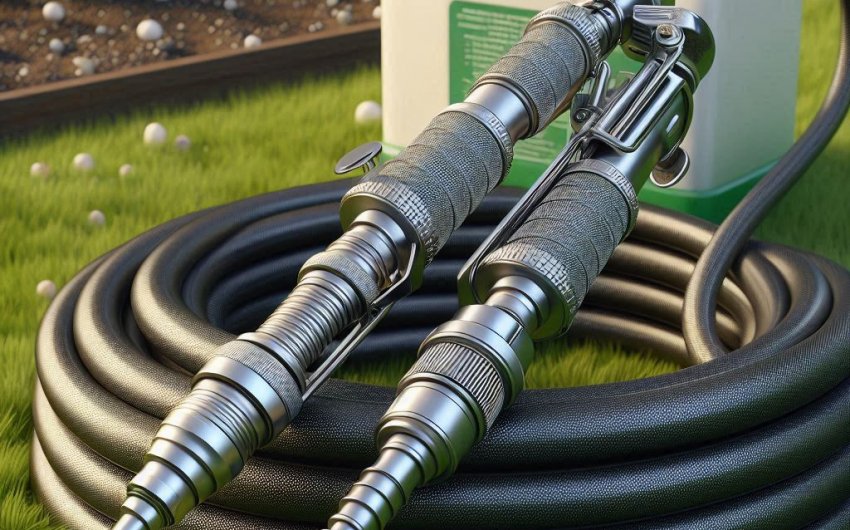
Achieving lush, vibrant, and consistently healthy plants often comes down to precise and efficient nutrient delivery. While hand-mixing liquid fertilizers in a watering can is perfectly fine for a few pots, as your garden grows, or if you manage a larger collection of plants, this method can quickly become tedious and prone to inconsistency. This is where a fertilizer injector truly shines. These clever devices seamlessly mix concentrated liquid fertilizer with your irrigation water, delivering a perfectly diluted nutrient solution directly to your plants every time you water. If you're looking to elevate your plant feeding game, save time, and ensure uniform, optimal nutrition, understanding how to use a fertilizer injector is a game-changer for cultivating healthy plants.
What is a Fertilizer Injector and How Does It Work?
A fertilizer injector, also known as a proportioner or medicator, is a device designed to precisely dilute a concentrated liquid fertilizer solution into an irrigation water stream. It ensures that every plant receives the exact amount of nutrients needed, every time you water.
What is the Basic Concept of a Fertilizer Injector?
At its core, a fertilizer injector operates on a simple principle: it "injects" a small, precise amount of concentrated fertilizer solution into a much larger volume of water flowing through your irrigation system (like a hose or drip system).
- Concentrate Tank: The injector has a separate container where you mix your concentrated liquid fertilizer solution (often called the "stock solution").
- Water Flow: As water flows through the main irrigation line, the injector senses this flow.
- Proportional Injection: Using various mechanical or hydraulic principles, the injector draws a small, consistent amount of the concentrate from the tank and mixes it into the flowing water, creating a diluted solution that is then delivered to your plants.
- Ratio/Proportion: The key is that the injection rate is proportional to the water flow. This means whether your faucet is running fast or slow, or if you have one plant or fifty, the dilution ratio remains constant, ensuring consistent feeding. This is expressed as a ratio, like 1:100 (1 part concentrate to 100 parts water) or 1:200.
What are the Different Types of Fertilizer Injectors?
While they all achieve the same goal, fertilizer injectors come in various designs, catering to different needs and scales.
- Hose-End Sprayers/Applicators:
- Description: These are the simplest and most common type for home gardeners. They attach directly to your garden hose. You fill a reservoir with concentrated liquid fertilizer, and as water flows through, it siphons and mixes the concentrate at a preset or adjustable rate.
- How it Works: Often use a venturi effect (a suction created by water flowing through a constricted area) or a simple siphon. Some have adjustable dials for different dilution ratios.
- Pros: Inexpensive, easy to use, portable, no installation required. Good for small to medium-sized gardens or individual plants.
- Cons: Less precise than inline injectors, can be difficult to get very specific ratios, often requires mixing specific fertilizers for them to work correctly, limited capacity. Not suitable for drip irrigation.
- Example: A Miracle-Gro Garden Feeder is a well-known example of a hose-end applicator.
- Inline Fertilizer Injectors (Venturi Injectors / Proportioners):
- Description: These devices are installed directly in your irrigation line (e.g., between your faucet and a drip system, or within your main garden hose setup). They don't require external power.
- How it Works: They use the pressure differential created by water flowing through the device to create suction, drawing concentrate from a separate bucket or tank. The dilution ratio is typically fixed or adjusted by changing components.
- Pros: Highly accurate, consistent dilution, can be used with drip irrigation, no moving parts (often), relatively low cost for home versions.
- Cons: Requires some basic plumbing knowledge for installation, often needs a bypass loop if you want to run plain water. The pressure drop can be a factor.
- Example: A Doser Fertigation Injector or similar venturi-style injector.
- Dosing Pumps (Proportional Dosing Pumps / Water-Powered Pumps):
- Description: These are more advanced and precise injectors, often used in commercial settings but available for larger home setups. They are typically water-powered, meaning the water flow itself drives a piston or diaphragm to accurately inject the concentrate.
- How it Works: Water pressure activates an internal motor that draws a fixed percentage of concentrate into the main water line. The injection rate is extremely precise and independent of water pressure fluctuations.
- Pros: Extremely accurate, very consistent dilution, can handle a wide range of water flow rates and pressures, excellent for large gardens or multiple zones.
- Cons: Significant upfront cost, more complex installation, may require maintenance.
- Example: Brands like Dosatron or Mazzei produce these high-end injectors.
What are the Key Components and Principles?
- Stock Solution Tank: A reservoir (often a simple bucket for smaller setups) containing the highly concentrated fertilizer mix.
- Suction Tube: A tube running from the injector into the stock solution.
- Injection Mechanism: The heart of the injector, whether it's a venturi, diaphragm, or piston, that draws and mixes the concentrate.
- Dilution Ratio: The most important specification. It tells you how much the concentrate is diluted. A 1:100 ratio means 1 unit of fertilizer concentrate for every 100 units of water. To achieve a specific final concentration (e.g., 200 ppm Nitrogen), you need to know the NPK of your fertilizer and the injector's ratio to prepare your stock solution correctly.
- Check Valve: Prevents the concentrate from flowing back into the main water line when the system is off.
Understanding these basics helps you select the right fertilizer injector for your needs and ensures you use it effectively to deliver precise nutrition to your plants.
Why Use a Fertilizer Injector for Healthy Plants?
Beyond the mechanics, the real value of a fertilizer injector lies in the tangible benefits it brings to your plants and your gardening routine.
How Does it Provide Precise and Consistent Nutrition?
- Optimal Nutrient Delivery: The most significant advantage. An injector ensures that every plant, whether at the beginning or end of your irrigation line, receives the exact, pre-determined concentration of fertilizer every time you water.
- No More Guesswork: Eliminates the variability of hand-mixing in a watering can, where one batch might be too strong and the next too weak.
- Reduced Risk of Over/Under-Fertilization: With consistent dilution, you can avoid the common problems of root burn from too much fertilizer or nutrient deficiencies from too little.
- Tailored Feeding: Allows you to precisely control the Parts Per Million (ppm) of nutrients (especially nitrogen), which is crucial for different plant growth stages (e.g., lower ppm for seedlings, higher for active growth).
- Even Distribution: Fertilizers applied through irrigation systems reach the entire root zone of the plant uniformly. This is particularly beneficial for large beds, rows of vegetables, or numerous potted plants, where hand-watering can lead to uneven distribution.
- Nutrient Availability: Delivering nutrients dissolved in water makes them immediately available for plant uptake.
How Does it Save Time and Effort?
- Automation: Once set up, a fertilizer injector automates the feeding process. You no longer need to manually mix fertilizer solutions for each watering session.
- "Fertigate" with Ease: You're essentially "fertigating" – applying fertilizer through your irrigation system – which combines watering and feeding into one effortless step.
- Reduced Manual Labor: No more carrying heavy watering cans full of mixed fertilizer around the garden. This is especially valuable for large collections of plants, hanging baskets, or extensive garden beds.
- Consistent Schedule: Encourages a regular feeding schedule without the associated hassle, meaning your plants receive timely nutrients.
What are the Benefits for Plant Health and Growth?
- Consistent Growth: Plants that receive consistent, optimal nutrition without sudden spikes or deficiencies tend to exhibit more robust, uniform, and vigorous growth.
- Stronger Plants: Well-fed plants are generally healthier and more resilient to environmental stresses, pests, and diseases.
- Improved Yield and Quality: For fruiting and flowering plants, precise and consistent feeding can lead to increased yields, larger blooms, and better quality produce.
- Prevents Nutrient Deficiencies: Regular and accurate feeding helps prevent common nutrient deficiencies that lead to yellowing leaves, stunted growth, or poor flowering.
- Root Health: By preventing over-fertilization (which causes root burn) and ensuring even distribution, an injector supports a healthier, more extensive root system.
- Less Chemical Runoff: Precise application reduces wasted fertilizer and minimizes potential runoff into waterways, making it more environmentally friendly than broadcast application of granular fertilizers.
In essence, a fertilizer injector transforms plant feeding from a chore into a highly efficient and effective process, leading directly to more vibrant, productive, and consistently healthy plants in your garden.
How to Set Up and Use a Fertilizer Injector for Home Gardens
Setting up and correctly using a fertilizer injector might seem a bit technical at first, but for most home garden models, it's quite straightforward. The key is to understand your dilution ratio and how to prepare your stock solution.
Step 1: Choose the Right Fertilizer
Not all fertilizers are suitable for injectors.
- Water-Soluble Granular or Liquid Concentrates: You must use fertilizers that are designed to dissolve completely in water.
- Granular: Choose granular fertilizers that are explicitly labeled "water-soluble" or "for fertigation." These typically dissolve rapidly and completely, leaving no residue that could clog your injector or drip emitters.
- Liquid Concentrates: These are already in liquid form and are very convenient.
- Avoid: Do not use granular fertilizers that are meant to be dry-applied or slow-release fertilizers unless they are specifically designed for dissolving in water. They will clog your system.
- Nutrient Content: Select a fertilizer with an NPK ratio appropriate for your plants (e.g., higher nitrogen for leafy greens, more balanced for general use, or specific ratios for flowering/fruiting plants). Ensure it includes essential micronutrients.
- Quality: Invest in a good quality fertilizer. Cheap fertilizers may not dissolve completely or may contain impurities.
Step 2: Determine Your Desired Dilution Rate
This is the most crucial calculation. You need to know:
- Your Injector's Ratio: This will be stated on the injector itself (e.g., 1:100, 1:200, or a dial setting for adjustable models). A 1:100 ratio means for every 100 gallons of water, 1 gallon of stock solution will be injected.
- Your Desired Final Fertilizer Concentration: This is often expressed in Parts Per Million (ppm) of Nitrogen. Common targets for continuous feeding are 50-200 ppm N, depending on the plant and stage of growth.
- The NPK of Your Fertilizer: Example: 20-10-20 means 20% Nitrogen.
Calculation Example (Simplified for home use):
Let's say your injector is a 1:200 ratio, and you're using a 20-10-20 fertilizer, and you want a final concentration of 100 ppm Nitrogen.
- Formula (approximate): Grams of fertilizer per gallon of stock solution = (Desired ppm N 100) / (% N in fertilizer Injection Ratio)
- Using our example: (100 ppm N 100) / (20% N 200) = 10000 / 4000 = 2.5 grams of fertilizer per gallon of stock solution.
Easier Approach (for hose-end and simple injectors):
- Read the Fertilizer Label: Many water-soluble fertilizers provide charts or instructions specifically for fertilizer injectors or different ppm concentrations. They might say "for 1:200 injector, mix X tablespoons per gallon of stock solution to get 100 ppm N." Always start with this information first.
- Start Weaker: If unsure, always start with a weaker solution than you think you need. You can always increase the concentration later. Over-fertilization is much harder to fix than under-fertilization.
Step 3: Prepare Your Stock Solution
- Mix in a Separate Container: In a clean bucket or reservoir, thoroughly mix your water-soluble fertilizer with water to create your stock solution.
- Dissolve Completely: Ensure all granular fertilizer dissolves completely. Stir vigorously. Undissolved particles can clog the injector or emitters. Let it sit for a bit and stir again.
- Amount: Mix enough stock solution for your watering session. Don't mix huge batches that sit for weeks, as some fertilizers can degrade over time.
Step 4: Install and Connect Your Injector
- Hose-End: Simply screw it onto your garden hose. Ensure it's tightly secured to prevent leaks.
- Inline (Venturi):
- Placement: Install it after your water source (faucet, pressure regulator) and before your irrigation system (hose, drip line, sprinkler).
- Direction: Ensure the arrow on the injector points in the direction of water flow.
- Bypass (Recommended): For inline injectors, it's highly recommended to install a bypass valve system. This allows you to easily switch between plain water (e.g., for flushing, pre-watering dry plants) and fertilized water without having to disconnect the injector.
- Suction Tube: Place the suction tube securely into your stock solution bucket.
Step 5: Begin Watering/Fertigating
- Pre-Water (Crucial!): Before applying fertilizer, always water your plants thoroughly with plain water until the soil is moist.
- Why: Applying fertilizer to dry soil can cause root burn due to high salt concentration. Moist soil allows for better absorption and distribution of nutrients, reducing stress.
- Activate Injector: Turn on your water source. If using a hose-end sprayer, select the appropriate dilution setting. If using an inline injector, open the valves to draw from the stock solution.
- Monitor: As you water, observe the color of the water coming out of your emitters or hose. It should have a faint tint from the fertilizer.
- Flush After Use (for Inline): After your desired amount of fertilizer has been applied, switch back to plain water (using your bypass) to flush the irrigation lines and the injector itself. This prevents fertilizer residue from building up and clogging components. For hose-end sprayers, run plain water through until the reservoir is empty and clean.
- Clean Up: Rinse out your stock solution bucket and injector components after each use.
Step 6: Regular Monitoring and Adjustment
- Observe Your Plants: The ultimate indicator. Are they growing vigorously? Do the leaves look healthy and green? Are there any signs of nutrient deficiency or, more commonly, over-fertilization (yellowing/browning leaf tips, stunted growth)?
- Test Run-Off (Optional but Recommended): For very precise growers, collect some runoff water from a few potted plants after fertigating. Use a TDS/EC meter to measure the Electrical Conductivity (EC), which indicates the total dissolved salts (nutrient concentration). This helps you fine-tune your stock solution concentration.
- Adjust as Needed: Based on plant response and EC readings, adjust the concentration of your stock solution (e.g., add more water to stock solution if too strong, or more fertilizer if too weak).
Using a fertilizer injector brings precision and efficiency to your plant feeding routine, leading to healthier, happier plants and saving you significant time and effort in the long run.
Troubleshooting Common Fertilizer Injector Issues
While fertilizer injectors simplify feeding, occasional issues can arise. Knowing how to troubleshoot common problems will save you frustration and ensure your plants continue to receive optimal nutrition.
Why is My Injector Not Drawing Fertilizer?
This is the most common problem and can be caused by several factors.
- No Suction:
- Clog in Suction Tube: Check the suction tube for debris, kinks, or blockages. Make sure it's fully submerged in the stock solution and not sucking air.
- Clog in Injector Body: Mineral deposits or undissolved fertilizer particles can clog the internal mechanisms of the injector. Disassemble and clean thoroughly according to manufacturer instructions.
- Insufficient Water Flow/Pressure (for Venturi): Venturi injectors require a certain minimum water flow and pressure differential to create suction. Check your water pressure and ensure there are no blockages in the main water line. For hose-end sprayers, ensure the spray pattern is set correctly (e.g., "mix" or "feed").
- Injector Installed Backwards: If it's an inline injector, check the flow direction arrow. Installing it backwards will prevent it from drawing.
- Air Leaks: Check all connections, fittings, and seals for any air leaks. Even a small leak can break the suction.
- Stock Solution Issues:
- Empty Tank: Simple but overlooked! Ensure there's enough stock solution.
- Too Thick/Viscous: Some concentrates might be too thick to be easily drawn. Dilute them a bit more in the stock solution, or warm them up slightly (if safe to do so).
- Undissolved Fertilizer: If using granular fertilizer, ensure it's completely dissolved. Undissolved particles will clog the suction tube or injector.
Why is My Fertilizer Concentration Inconsistent?
Inconsistent feeding can stress plants or lead to nutrient imbalances.
- Fluctuating Water Pressure: Significant drops or surges in water pressure can affect the draw rate of some venturi injectors. Dosing pumps are generally less affected by pressure changes.
- Air Leaks: Even tiny air leaks in the suction line or injector fittings can introduce air bubbles, leading to an inconsistent draw.
- Partially Clogged Injector: A partial clog can cause the injector to draw less concentrate than it should, leading to a weaker-than-expected solution.
- Temperature of Stock Solution: The viscosity of the stock solution can change with temperature, affecting the draw rate slightly. Try to use stock solution at a consistent temperature.
- Incorrect Dilution of Stock Solution: Double-check your calculations when preparing the concentrate. A small error here can lead to a big difference in final concentration.
What if My Emitters are Clogging?
If you're using a drip irrigation system with an injector, emitter clogging can be a common frustration.
- Undissolved Fertilizer: This is the number one cause. Ensure your water-soluble granular fertilizer is completely dissolved in the stock solution. Filter your stock solution if necessary using a fine mesh screen.
- Algae/Biofilm Buildup: Fertilizers, especially organic ones, can promote algae and biofilm growth within irrigation lines.
- Solution: Periodically flush your system with plain water. You can also run a diluted bleach solution (check compatibility with your system and plants) or a specialized irrigation cleaner through the lines after flushing.
- Sediment: Dirt or sediment in your water source can get into the system. Install a mesh filter before your injector to catch these particles.
- Mineral Buildup: Hard water can lead to mineral deposits in emitters. Regular flushing helps. Some specialized cleaners can dissolve mineral buildup.
General Maintenance Tips for Longevity
- Regular Flushing: Always flush your injector and irrigation lines with plain water after each fertilization session. This prevents residue buildup and clogs.
- Clean Stock Solution Tank: Rinse out your concentrate tank after each use.
- Periodic Disassembly and Cleaning: Follow manufacturer instructions for periodic cleaning of the injector's internal components. This might involve soaking in a mild acid solution (like vinegar for mineral deposits) or simply scrubbing with a brush.
- Store Properly: Store your injector in a clean, dry, and protected area when not in use, especially during off-season. Protect it from freezing temperatures if you live in a cold climate.
- Check Seals/Gaskets: Inspect O-rings and gaskets regularly for wear and tear. Replace them if they are cracked or brittle to prevent leaks and maintain suction.
By understanding these common troubleshooting scenarios and practicing regular maintenance, your fertilizer injector will be a reliable tool for consistent nutrient delivery, ensuring your plants remain vibrant and healthy through all stages of their growth.