
How much sunlight does an Echeveria need indoors?
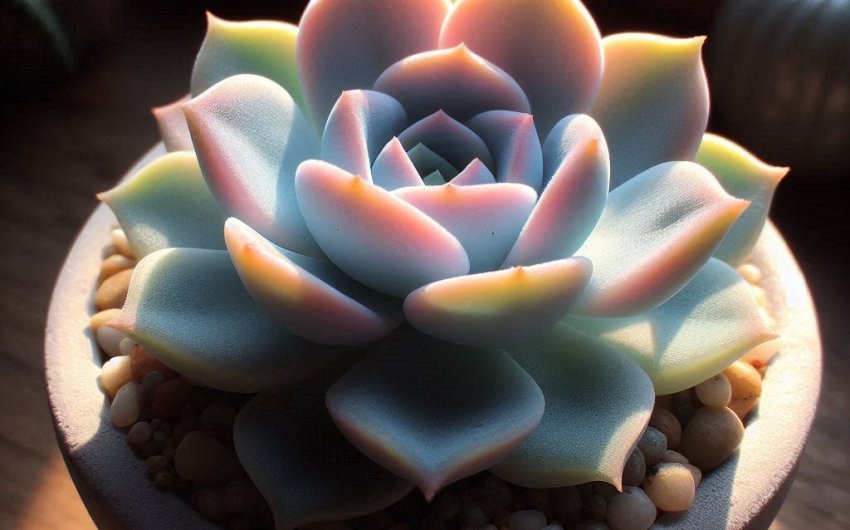
You've fallen in love with an Echeveria, haven't you? Those charming, rosette-shaped succulents with their thick, often colorful leaves are simply irresistible. They look like little living sculptures, perfect for brightening up any indoor space. While Echeverias are known for being relatively easy to care for, there's one thing they are absolutely, positively obsessed with: sunlight. Getting the light right is the single most important factor for a happy, healthy, and beautiful Echeveria indoors. If you've ever seen an Echeveria stretching tall and looking pale, you know what happens when they don't get enough. Let's talk about exactly how much sun your indoor Echeveria needs to thrive.
Why Is Sunlight So Important for Echeveria?
Echeverias are native to arid (dry) regions, mostly in Mexico and Central America, where the sun shines intensely for many hours a day. They've evolved to soak up as much of that light as possible.
What is Etiolation and How Does It Affect Echeveria?
The biggest sign that your Echeveria isn't getting enough light is a condition called etiolation. This is when the plant stretches out, becoming long and leggy, with widely spaced leaves. The rosette shape that makes Echeverias so charming disappears. The stems become thin, and the leaves might turn pale green or lose their vibrant colors. Etiolation happens because the plant is desperately "stretching" or reaching for a light source. It's not just a cosmetic issue; etiolated plants are weaker, more susceptible to pests and diseases, and generally less healthy. Unfortunately, etiolation is permanent – once stretched, the stem won't shrink back. You'll need to prune it.
How Does Sunlight Affect Echeveria Color?
This is one of the coolest things about Echeverias! Many varieties change colors – turning reds, pinks, oranges, or even deep purples – when they get enough bright sunlight. This coloring, called stress coloring or sun stressing, is actually a protective mechanism. The plant produces pigments (like anthocyanins) to shield itself from intense UV light, much like how human skin tans. This "good stress" makes the colors pop. If your Echeveria is looking dull and uniformly green, it's a strong sign it needs more light.
Does Sunlight Influence Echeveria Growth and Compactness?
Yes, absolutely. With enough sunlight, your Echeveria will grow compactly, keeping that tight rosette shape. The leaves will be plump and close together, and the overall plant will look robust. Insufficient light leads to stretched, weak growth and smaller, thinner leaves. Sunlight is the energy source that fuels all growth for your Echeveria.
How Much Direct Sunlight Does an Echeveria Need Indoors?
This is where many indoor plant owners struggle, as typical indoor light is much weaker than outdoor light.
What Does "Full Sun" Mean for Echeveria?
When you hear "full sun" for succulents like Echeveria, it means at least 6 hours of direct sunlight per day. In an outdoor setting, this is easy to achieve. Indoors, however, direct sun coming through a window is filtered and significantly less intense than outdoor sun. So, "full sun" for an Echeveria indoors needs to be translated into the brightest possible spot in your home.
Which Window Is Best for Echeveria?
The best window for your Echeveria will usually be a south-facing window.
- South-facing windows in the Northern Hemisphere (or north-facing in the Southern Hemisphere) offer the most prolonged and intense direct sunlight throughout the day. This is your best bet for providing the 6+ hours of light your Echeveria craves.
- West-facing windows can also work, as they provide strong afternoon sun, but be mindful that the afternoon sun can be very intense and might require a sheer curtain during peak summer hours to prevent scorching.
- East-facing windows offer gentle morning sun, which is good, but often not enough hours of direct light for an Echeveria to stay truly compact and colorful. You might need supplemental lighting.
- North-facing windows typically offer very little direct sunlight and are generally not suitable for Echeverias without artificial light.
No matter the window, ensure there's no obstruction outside (like a large tree or building) that blocks the light.
How Close to the Window Should My Echeveria Be?
For an Echeveria indoors, the answer is almost always: as close as possible to your brightest window. We're talking inches, not feet. Even a few feet away from a window, light intensity drops dramatically. The farther your Echeveria is from the window, the less intense the light it receives. Place it on the windowsill or on a plant stand directly next to the window.
What Are the Signs My Echeveria Isn't Getting Enough Light?
Your Echeveria is pretty good at telling you it's unhappy with its light situation. Look for these warning signs:
What Does an Etiolated Echeveria Look Like?
This is the most obvious sign.
- Stretching: The stem elongates, and the leaves become widely spaced, losing the tight rosette form. It looks like it's reaching.
- Pale color: The vibrant colors (reds, pinks, purples) fade, and the plant turns a dull or light green.
- Downward-curving leaves: The lower leaves might start to point downwards as the plant tries to expose more surface area to light.
- Overall weakness: The plant might feel fragile and easily damaged.
What if My Echeveria Looks Dull or Lacks Color?
If your colorful Echeveria varieties (like 'Perle von Nurnberg' or 'Black Prince') are losing their beautiful hues and just looking plain green, it's a clear indicator of insufficient light. Those stunning stress colors only develop with ample sun exposure.
Are Small New Leaves a Sign of Low Light?
Yes. If the new leaves that are emerging from the center of the rosette are noticeably smaller than the older leaves, it suggests the plant isn't getting enough energy from light to support robust new growth. Combined with stretching, this is a definite sign.
Can an Echeveria Get Too Much Sunlight Indoors?
While Echeverias crave sun, it is possible for them to get too much in certain indoor scenarios, leading to sunburn or scorching.
What Does Echeveria Sunburn Look Like?
Sunburn on an Echeveria typically appears as:
- Brown or black spots: These are often crisp or dry to the touch, and look like burnt patches on the leaves.
- Bleached-out patches: The color might fade to a very pale yellow or white in spots that receive too much intense, direct sun suddenly.
When Is Sunburn Most Likely to Occur Indoors?
Indoor sunburn is most likely if:
- You move the plant suddenly: If you move an Echeveria from a low-light spot directly into intense, direct sun (e.g., from a north-facing window to a south-facing one, or outside in summer without acclimatizing it), it will likely burn.
- Afternoon sun: Unfiltered afternoon sun through a west-facing window can be very intense, especially in summer.
- Magnification: Water droplets on leaves can act as tiny magnifying glasses, intensifying sunlight and causing localized burns. Always water the soil, not the leaves, or water in the evening when the sun is less intense.
How Do I Prevent Sunburn on My Echeveria?
- Acclimatize gradually: If moving your Echeveria to a brighter spot or outdoors, do it slowly over a week or two. Start with a few hours of increased light each day.
- Filter intense light: If your Echeveria is in a very hot, west-facing window in summer, consider using a sheer curtain to diffuse the most intense afternoon rays.
What if My Home Doesn't Have Enough Natural Light?
Many homes, especially those with limited south-facing windows or lots of obstructions, simply don't provide enough natural light for an Echeveria to truly thrive. This is where artificial light comes in handy.
Can I Use Grow Lights for My Echeveria?
Yes! Grow lights are an excellent solution for providing the intense, consistent light that Echeverias need indoors, especially if your natural light is insufficient. Many successful indoor Echeveria growers rely solely on grow lights.
What Kind of Grow Light Do I Need?
For Echeverias, you generally want a full-spectrum LED grow light.
- Full-spectrum: This means the light emits wavelengths across the entire visible light spectrum, mimicking natural sunlight.
- LED: LEDs are energy-efficient, long-lasting, and don't produce too much heat, making them safe for plants.
- Wattage/Intensity: The light needs to be bright enough. For a single Echeveria or a small collection, a compact, clip-on LED grow light might work. For a larger collection, you might need a stronger LED panel or bar light. Look for lights specifically marketed for succulents or high-light plants. A good option is a Barrina T5 grow light or a GE grow light bulb that you can put into a regular lamp fixture.
How Far Should Grow Lights Be from My Echeveria?
This depends on the intensity of your specific grow light. Start with the light about 6-12 inches (15-30 cm) above your Echeveria. Observe your plant for signs of etiolation (move closer) or sunburn (move farther away). Some very powerful grow lights might need to be even further away. Always follow the manufacturer's recommendations for distance.
How Long Should I Keep Grow Lights On?
For an Echeveria, aim for 12-16 hours of grow light per day. This consistent, long duration helps replicate the conditions they would experience outdoors. Using a timer is highly recommended to ensure consistency, like a BN-LINK grow light timer.
Other Factors That Influence Echeveria Health (Besides Light)
While light is paramount, other care factors play a role in your Echeveria's overall health and ability to thrive.
How Does Watering Affect Echeveria?
Proper watering is just as crucial as light. Echeverias are succulents, meaning they store water in their leaves and stems. They are extremely prone to rot if overwatered.
- When to water: Only water when the soil is completely dry. Stick your finger deep into the soil. If it feels dry, it's time to water. If not, wait. You can also use a soil moisture meter.
- How to water: Water thoroughly until water drains from the bottom of the pot. Never let your Echeveria sit in standing water.
- Bottom watering: Many succulent owners prefer bottom watering, where you place the pot in a tray of water and let the plant soak up water from the drainage holes. This encourages deeper root growth.
- Seasonal adjustment: Water less frequently in fall and winter when the plant is less active.
What Kind of Soil Does an Echeveria Need?
Echeverias absolutely require fast-draining soil. Regular potting soil holds too much moisture.
- Use a cactus and succulent potting mix: This type of soil is specifically formulated to drain quickly. Look for one that contains perlite, pumice, or coarse sand. A good option is Miracle-Gro Succulent Potting Mix.
- Add amendments: You can further improve drainage by mixing in extra perlite or pumice to a commercial succulent mix.
What Type of Pot Is Best for Echeveria?
Choose a pot with a drainage hole! This is non-negotiable for Echeverias. Terracotta pots are highly recommended because they are porous and allow the soil to dry out more quickly than plastic or glazed ceramic pots, which helps prevent root rot.
Should I Fertilize My Echeveria?
Echeverias are not heavy feeders. They generally don't need much fertilizer.
- Frequency: If you choose to fertilize, do so very sparingly, perhaps once or twice during the active growing season (spring/summer).
- Type: Use a diluted succulent-specific fertilizer or a general houseplant fertilizer at a very weak strength (e.g., quarter strength). Too much fertilizer can burn their roots.
Mastering the light requirements for your indoor Echeveria is the key to keeping it compact, colorful, and healthy. Provide it with the brightest possible spot, supplement with grow lights if needed, and pay close attention to its appearance for clues. With the right amount of sun, your Echeveria will be a stunning focal point in your home for years to come.