
How to Build a DIY Compost Bin at Home?
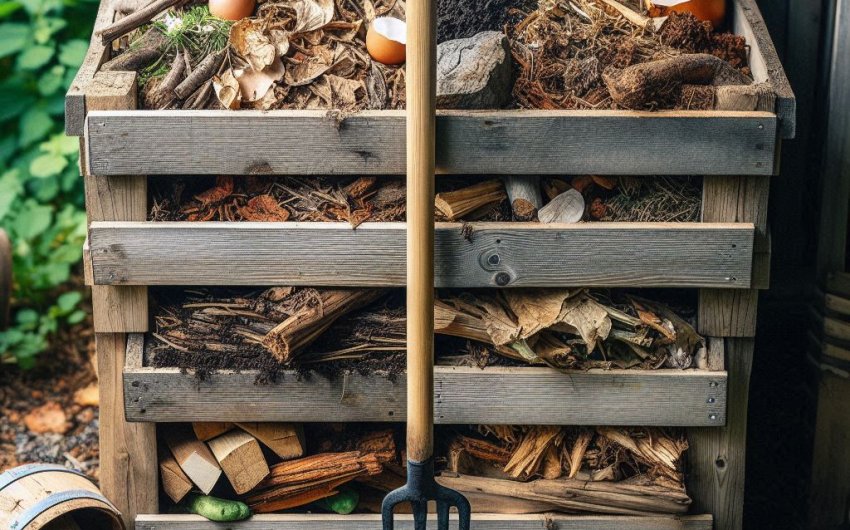
To build a DIY compost bin at home, you'll need to choose a design that fits your space and composting style, gather appropriate materials like wood or wire, and then assemble the structure to create a contained environment for organic matter to decompose into nutrient-rich compost. This project is a rewarding step towards sustainable gardening and waste reduction.
Why Build a DIY Compost Bin at Home?
Building a DIY compost bin at home is a fantastic way to transform kitchen scraps and yard waste into a valuable resource for your garden, benefiting both your plants and the environment.
- Reduces Waste: Diverts organic materials from landfills, significantly cutting down on household waste.
- Creates "Black Gold": Produces nutrient-rich compost, often called "black gold," which is a superb soil amendment for your garden.
- Improves Soil Health: Compost enriches soil with organic matter, improving its structure, water retention, drainage, and microbial life.
- Saves Money: Reduces the need to buy synthetic fertilizers and bagged soil amendments.
- Sustainable Gardening: A core practice in organic and sustainable gardening, promoting a closed-loop system in your garden.
- Customization: A DIY bin allows you to build a bin perfectly suited to your space, aesthetic preferences, and composting volume.
- Educational: A great way to learn about decomposition and natural cycles.
What Are the Best DIY Compost Bin Designs?
The best DIY compost bin at home design depends on your composting goals, available space, and budget. Each type offers different advantages.
1. Wire Mesh Bin (Simplest & Most Affordable)
- Description: A simple cylindrical enclosure made from wire mesh, easy to assemble and move.
- Pros:
- Excellent Airflow: The open mesh allows for maximum oxygen, which speeds up decomposition.
- Inexpensive: Very low material cost.
- Easy to Build: Requires minimal tools and time.
- Easy Access: Can be lifted off the pile to turn or harvest.
- Cons:
- Less Containment: Contents can spill out easily if overfilled or disturbed.
- Less Aesthetic: Not the most visually appealing option.
- Needs Frequent Watering: Dries out faster due to high airflow.
- Best For: Beginners, those with limited budget, small to medium-sized gardens, rapid composting.
2. Pallet Compost Bin (Budget-Friendly & Robust)
- Description: Constructed from repurposed wooden pallets, creating a sturdy, ventilated bin. Can be single-bay or multi-bay.
- Pros:
- Very Affordable: Pallets are often free or very cheap.
- Good Airflow: Gaps in pallets provide adequate ventilation.
- Sturdy: More robust than wire mesh.
- Expandable: Easy to add more bays for a continuous composting system.
- Cons:
- Source Caution: Need to ensure pallets are safe (HT stamped, not MB treated).
- Heavier: Less portable once built.
- Takes Up More Space: Compared to a simple wire cylinder.
- Best For: Medium to large gardens, those seeking a sturdy, eco-friendly option, multi-bay systems.
3. Wooden Slat / Lumber Bin (Classic & Attractive)
- Description: Built from new or reclaimed lumber, creating a more finished, traditional-looking bin. Can also be single or multi-bay.
- Pros:
- Durable: When built with treated lumber or naturally rot-resistant wood, can last for many years.
- Aesthetic: Can be designed to blend well with garden decor.
- Good Containment: Keeps contents tidy.
- Cons:
- Higher Cost: Lumber can be expensive.
- Requires More Tools/Skills: Involves cutting wood and more precise joinery.
- Less Airflow (if too solid): Needs gaps between slats for ventilation.
- Best For: Those prioritizing aesthetics and durability, larger composting volumes, permanent garden features.
4. Block/Brick Bin (Permanent & Very Durable)
- Description: Constructed from cinder blocks or bricks, often stacked without mortar for easy turning/access.
- Pros:
- Extremely Durable: Virtually lasts forever.
- Very Sturdy: Excellent containment.
- Good Heat Retention: Blocks help maintain pile temperature.
- Cons:
- Heavy: Difficult to move once built.
- Less Flexible: Harder to adjust size.
- Less Airflow: Requires gaps or internal ventilation shafts.
- Best For: Large-scale, permanent composting, high volume producers.
What's the Best Location for Your DIY Compost Bin?
Choosing the right spot for your DIY compost bin at home impacts efficiency, convenience, and aesthetic integration with your garden.
- Shade or Partial Shade:
- Benefit: Prevents the compost pile from drying out too quickly, especially in hot climates. A consistently moist pile decomposes faster.
- Avoid: Full, intense sun unless you're committed to frequent watering.
- Good Drainage:
- Benefit: Prevents the pile from becoming waterlogged, which leads to anaerobic (smelly) decomposition.
- Avoid: Low-lying areas where water collects.
- Convenience:
- Accessibility: Place the bin close enough to your kitchen for easy addition of food scraps and close to your garden beds for easy application of finished compost.
- Working Space: Ensure enough room around the bin for turning the compost, adding materials, and harvesting finished compost.
- Aesthetics and Odor:
- Out of Sight, Out of Mind (but not too far!): While you want it accessible, placing it slightly out of direct view from patios or main living areas can be desirable, especially during active decomposition.
- Airflow: Good airflow helps prevent unpleasant odors. If your compost bin is balanced, it shouldn't smell strongly.
- Water Source:
- Proximity to Hose: Having a water source nearby makes it easy to moisten your compost pile when it dries out.
What Tools and Materials Do You Need to Build a DIY Compost Bin?
Gathering your supplies beforehand will make building your DIY compost bin at home much smoother.
Tools (General for most bins)
- Measuring & Marking: Tape measure, pencil/marker
- Cutting: Wire cutters (for wire mesh), Saw (circular saw or hand saw for wood)
- Fastening: Drill/Driver, Staple gun (for wire mesh), Hammer (for nails), Wrench (for bolts)
- Digging (for posts): Post-hole digger, Shovel
- Safety: Work gloves, Safety glasses
Materials (Choose based on your chosen design)
1. Wire Mesh Bin
- Material: 10-15 feet of galvanized wire mesh (hardware cloth or chicken wire, at least 3 ft tall) with openings no larger than 1 inch. Look for Galvanized Wire Mesh.
- Fasteners: Zip ties, baling wire, or galvanized wire to secure the ends.
2. Pallet Compost Bin (Single Bay)
- Material: 3 or 4 wooden pallets (ensure they are "HT" heat-treated, not "MB" methyl bromide treated – check stamp).
- Fasteners: Heavy-duty zip ties, U-brackets, strong baling wire, or metal corner brackets and exterior-grade screws/bolts. You might need Heavy Duty Zip Ties.
3. Wooden Slat / Lumber Bin
- Material:
- Posts: Four (4) 4x4 or 2x4 pressure-treated lumber posts (or cedar/redwood) for corners.
- Slats: Plenty of 1x4 or 1x6 pressure-treated lumber slats (or untreated cedar/redwood for a more natural look) for the sides.
- Fasteners: Exterior-grade screws or galvanized nails.
- Optional: Small hinges for a removable front panel or door.
Step-by-Step Guides for Building Popular DIY Compost Bins
Here are detailed steps for building two popular and effective DIY compost bins at home.
Method 1: Building a Wire Mesh Compost Bin
This is the fastest and easiest way to get started composting.
- Cut the Wire Mesh: Measure and cut a piece of wire mesh (hardware cloth or chicken wire) about 10-12 feet long and 3-4 feet tall. The length determines the diameter of your bin; a 10-foot length will create roughly a 3-foot diameter bin, which is a good size for heat retention.
- Form a Cylinder: Bring the two ends of the wire mesh together to form a cylinder.
- Secure the Ends: Overlap the ends by a few inches. Securely fasten them together using heavy-duty zip ties, baling wire, or galvanized wire threaded through the mesh holes. Make sure it's sturdy enough to hold the weight of compost.
- Add a Door (Optional): You can leave one section of the wire less securely fastened, using clips or loose ties, to act as a removable "door" for turning or harvesting. Alternatively, just lift the entire cylinder off the pile for easy access.
- Place in Location: Move your finished wire bin to your chosen compost spot.
Method 2: Building a Pallet Compost Bin (3-Bay System)
A 3-bay system allows for continuous composting: one bay for new additions, one for actively decomposing material, and one for finished compost.
- Source Pallets: Find 5-7 heat-treated (HT stamped) wooden pallets of roughly the same size. Avoid "MB" (methyl bromide) treated pallets.
- Prepare the Site: Clear the chosen area of weeds and debris. Level the ground as much as possible.
- Stand Up Pallets:
- Stand two pallets upright, perpendicular to each other, to form a corner.
- Stand a third pallet parallel to the first, about 3-4 feet away, to form the second side of the first bay.
- Continue this pattern, creating two more bays. The side pallets will be shared between bays.
- Secure Pallets:
- Zip Ties/Baling Wire: The easiest method. Use heavy-duty zip ties or strong baling wire to securely fasten the pallets together at multiple points where they meet.
- Bolts/Screws: For a more permanent structure, use exterior-grade bolts with washers or long wood screws to connect the pallets. Pre-drilling can prevent splitting.
- Metal Corner Brackets: Add metal corner brackets for extra stability at the joints. You can find Metal Corner Brackets.
- Add a Removable Front (Optional): For easier turning and harvesting, you can make the front pallet of each bay removable. Instead of permanently fastening it, secure it with removable pins (e.g., metal rods inserted through drilled holes) or hooks and eyes.
How Do You Start and Manage Your DIY Compost Pile?
Once your DIY compost bin at home is built, understanding the basics of composting ingredients and process is crucial for success.
1. The "Green" and "Brown" Balance (Carbon and Nitrogen)
Compost relies on a balance of carbon-rich ("brown") and nitrogen-rich ("green") materials. Aim for roughly a 2:1 or 3:1 ratio of browns to greens by volume.
- Browns (Carbon-Rich): Provide energy for microbes and structure for air pockets.
- Examples: Dried leaves, straw, wood chips, shredded paper/cardboard, sawdust, newspaper.
- Source: Collect autumn leaves and store them for year-round use.
- Greens (Nitrogen-Rich): Provide protein for microbes and fuel rapid decomposition.
- Examples: Fresh grass clippings, fruit and vegetable scraps, coffee grounds, tea bags, garden plant trimmings.
- Source: Your kitchen waste and yard trimmings.
2. Layering Your Pile
Start your compost pile by alternating layers of browns and greens.
- Base Layer: Begin with a 4-6 inch layer of coarse browns (twigs, straw) for drainage and aeration.
- Alternating Layers: Add a 4-6 inch layer of browns, followed by a 2-4 inch layer of greens.
- Moisten: After adding each layer (or every few layers), sprinkle water to moisten the material until it's damp like a wrung-out sponge.
- Repeat: Continue layering, moistening, and adding new materials as you accumulate them.
3. Moisture Level
- Optimal: The compost pile should be consistently moist, like a damp sponge. Not soaking wet, and not bone dry.
- Check Regularly: Squeeze a handful of compost. If a few drops of water come out, it's perfect. If it's dripping, it's too wet. If no water comes out, it's too dry.
- Adjust: Add dry browns if too wet, or water if too dry.
4. Aeration (Turning)
- Why Turn? Turning introduces oxygen, which is essential for aerobic decomposition (the kind that doesn't smell). It also mixes materials and redistributes heat.
- Frequency: For faster composting, turn the pile every few days or once a week, especially when the center feels hot. For slower composting, turn monthly or simply leave it.
- Tools: A Compost Aerator Tool or a Garden Pitchfork works well.
5. What NOT to Compost (in a home bin)
- Meat, Bones, Dairy, Oils, Fats: Attract pests (rodents, flies) and can create foul odors.
- Pet Waste (Dog/Cat): Can contain pathogens harmful to humans.
- Diseased Plants: Can spread diseases to your garden.
- Weeds with Seeds: Can spread weeds if the pile doesn't get hot enough to kill seeds.
- Treated Wood: Contains chemicals.
How to Troubleshoot Common Compost Bin Problems?
Even with the best intentions, your DIY compost bin at home might encounter issues. Here's how to fix them.
Problem: Pile Smells Bad (Rotten Eggs/Ammonia)
- Cause: Too much nitrogen (greens), too much moisture, or not enough aeration. Anaerobic (oxygen-deprived) decomposition is occurring.
- Solution: Turn the pile thoroughly to introduce oxygen. Add more browns (shredded leaves, straw, wood chips) to balance the greens and absorb excess moisture.
Problem: Pile is Dry and Not Breaking Down
- Cause: Not enough moisture. Microbes need water to work.
- Solution: Water the pile thoroughly, especially when turning, until it feels like a damp sponge.
Problem: Pile is Wet and Slimey
- Cause: Too much moisture, not enough browns.
- Solution: Add more dry browns. Turn the pile frequently to dry it out and introduce air. If persistent, temporarily cover the pile during heavy rain.
Problem: Pile is Cold and Not Breaking Down
- Cause: Too small (doesn't generate enough mass/heat), not enough nitrogen (greens), or too dry.
- Solution:
- Size: Aim for at least a 3x3x3 foot pile for efficient heating.
- Greens: Add more nitrogen-rich materials (fresh grass clippings, food scraps).
- Moisture: Ensure it's damp like a wrung-out sponge.
- Turn: Turning can sometimes kickstart a cold pile.
Problem: Attracting Pests (Flies, Rodents)
- Cause: Adding meat, dairy, fats, oils, pet waste. Improperly burying food scraps. Pile is too exposed.
- Solution: Stop adding problem materials. Bury new food scraps deep within the pile. Consider a more enclosed bin design. Ensure a good brown layer on top.
How to Harvest and Use Your Homemade Organic Compost?
The ultimate reward for building a DIY compost bin at home is the rich, finished compost.
When is Compost Ready?
- Appearance: Should be dark brown, crumbly, and earthy-smelling, resembling rich soil.
- Texture: No recognizable original materials (except perhaps some slow-to-decompose twigs).
- Temperature: The pile should be cool throughout (it won't be hot when finished).
- Timeframe: Can take anywhere from 2 months (hot, active composting) to 1 year or more (passive composting).
How to Harvest
- Wire Mesh Bin: Simply lift the bin off the pile and collect the finished compost from the bottom. Put the unfinished material back in the bin to continue decomposing.
- Pallet/Lumber Bin (with removable front): Remove the front panel and shovel out the finished compost from the bottom.
- Multi-Bay Bin: Harvest from the last bay where the material has had the longest time to decompose.
How to Use Homemade Compost
- Soil Amendment: Mix 1-4 inches of compost into garden beds before planting.
- Top-Dressing: Spread a 1/2 to 1-inch layer around established plants (vegetables, flowers, trees) to slowly release nutrients.
- Potting Mix: Use compost as 1/4 to 1/2 of your homemade potting mix for container plants.
- Seed Starting Mix: Use screened compost as a component in a seed starting mix (mix with perlite/vermiculite).
- Lawn Top-Dressing: Broadcast thinly over your lawn in spring or fall for healthier grass.
- Compost Tea: Brew finished compost in water to create a nutrient-rich liquid fertilizer.
Building a DIY compost bin at home is a practical, sustainable step that empowers you to close the loop on your household waste and enhance your garden's health. It’s a rewarding project that provides endless benefits for your plants and helps you become a more self-sufficient, eco-conscious gardener.