
How to Decorate a Pergola with String Lights?
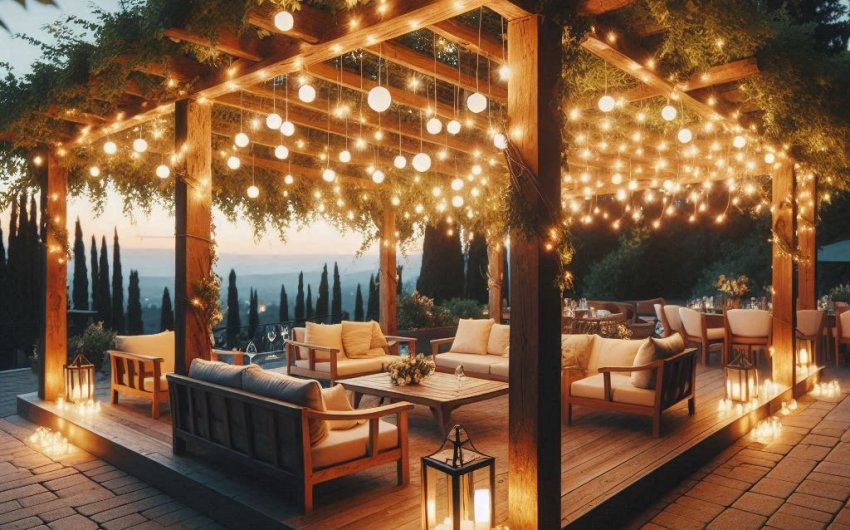
You can decorate a pergola with string lights to create a magical and inviting outdoor living space by choosing the right type of lights, planning your design pattern, and securely installing them for safety and longevity. This simple addition transforms your pergola into a glowing focal point perfect for evening enjoyment.
Why Decorate Your Pergola with String Lights?
A pergola, by its very nature, offers an inviting structure to your outdoor living area. Adding string lights amplifies its charm, transforming it from a daytime shade provider into a magical nighttime retreat. This simple addition offers a wealth of benefits that enhance both the aesthetics and functionality of your outdoor space.
Creating Ambiance and Mood
The primary reason to decorate a pergola with string lights is to create an unparalleled ambiance. The soft, warm glow of string lights instantly changes the mood of your outdoor space, making it feel cozy, intimate, and enchanting. Whether you're hosting a lively gathering, enjoying a quiet dinner, or simply unwinding after a long day, the right lighting sets the perfect tone.
Defining Outdoor Living Spaces
String lights help define specific zones within your garden or patio. By outlining the perimeter or filling the canopy of your pergola with lights, you effectively create an "outdoor room." This makes your seating or dining area feel more enclosed and purposeful, drawing guests into a warm and inviting space.
Enhancing Visual Appeal and Focal Point
During the day, a pergola is a beautiful architectural feature. At night, with string lights, it becomes a stunning focal point. The lights draw the eye, highlighting the structure and any plants or features beneath it. They add a magical sparkle that elevates your entire outdoor decor, especially during twilight hours.
Providing Functional Illumination
While primarily for ambiance, string lights also offer practical benefits. They provide subtle illumination that allows for safe navigation around your pergola, prevents trips over furniture, and enables continued enjoyment of activities like reading or dining without the harshness of floodlights. They offer a gentle glow that is easy on the eyes.
Versatility and Customization
String lights come in an incredible variety of styles, bulb shapes, and colors, allowing for extensive customization. You can choose lights that perfectly match your garden's aesthetic, from rustic farmhouse to sleek modern. Their flexible nature means you can drape, wrap, or crisscross them in countless patterns to achieve your desired look.
Boosting Property Value and Appeal
A beautifully lit outdoor space significantly increases your home's curb appeal and perceived value. Investing in a well-lit pergola shows attention to detail and creates an inviting atmosphere that prospective buyers (and your neighbors!) will admire. It turns your backyard into an extension of your living space.
What Types of String Lights are Best for Pergolas?
Choosing the right type of string light is crucial for both aesthetics and durability. Outdoor string lights are built differently than indoor ones to withstand the elements.
1. Incandescent (Traditional) String Lights
These use traditional glass bulbs that produce a warm, classic glow.
- Pros:
- Warm, authentic glow: Often preferred for their classic, nostalgic look.
- Dimmable: Many types are compatible with dimmer switches for adjustable brightness.
- Often less expensive initially.
- Cons:
- Fragile: Glass bulbs can break easily.
- Energy inefficient: Use more electricity and generate more heat than LEDs.
- Shorter lifespan: Bulbs burn out more frequently.
- Heat: Can be hot to the touch.
2. LED (Light Emitting Diode) String Lights
LED string lights are increasingly popular due to their efficiency and longevity.
- Pros:
- Energy-efficient: Use significantly less electricity, saving money on your power bill.
- Long lifespan: Bulbs last much longer than incandescent, reducing replacement frequency.
- Durable: Many have shatterproof plastic bulbs.
- Cool to the touch: Safer for proximity to plants or fabrics.
- Available in various color temperatures (warm white, cool white, RGB).
- Consider LED outdoor string lights.
- Cons:
- Higher upfront cost.
- Some older LEDs can have a slightly harsher light color (choose "warm white" or "2700K" for coziness).
3. Solar-Powered String Lights
These lights have a small solar panel that charges a battery during the day, powering the lights at night.
- Pros:
- No electricity needed: Truly wireless, no outlets required.
- Eco-friendly: Uses renewable energy.
- Automatic: Often turn on at dusk and off at dawn.
- Easy to install anywhere with good sun exposure.
- Check out solar string lights for pergolas.
- Cons:
- Dependent on sun: Performance varies with sun exposure; may not glow as brightly or for as long on cloudy days or in shaded areas.
- Brightness: Generally less bright than electric options.
- Battery life is limited and will need replacing every 1-3 years.
4. Battery-Operated String Lights
These run on standard or rechargeable batteries and are great for temporary setups or areas without sun or outlets.
- Pros:
- Ultimate flexibility: Can be placed anywhere.
- Often very lightweight and discreet.
- Good for temporary decor or accents.
- Cons:
- Battery replacement: Requires regular changes, adding to ongoing cost and waste.
- Not ideal for continuous, long-term use.
- Brightness may dim as batteries lose power.
Key Features to Look For in Outdoor String Lights
- Weatherproof/IP Rating: Look for lights explicitly rated for outdoor use. An IP rating of at least IP44 (splash-proof) is recommended. Higher is better for exposed areas.
- Wire Gauge: Thicker wires are generally more durable and less prone to tangling.
- Bulb Type: Choose shatterproof plastic bulbs (for LED) or robust glass for safety and longevity.
- Connectable Strands: Many electric string lights allow you to connect multiple strands end-to-end from a single power source, simplifying installation for larger pergolas.
- Dimmable Feature: Allows you to control the brightness to set the perfect mood. You'll need a dimmer switch for outdoor lights.
- Color Temperature: For coziness, aim for warm white (around 2200K-3000K).
How to Plan Your String Light Design for a Pergola?
Before you start hanging, a little planning goes a long way to achieve a stunning and functional result.
1. Measure Your Pergola
- Length, Width, Height: Measure all dimensions of your pergola, including the height of beams and posts.
- Path for Lights: Roughly estimate the total linear footage of lights you'll need based on your desired pattern. It's always better to overestimate than run short.
2. Choose a Power Source Location
- Outdoor Outlet: Identify where your outdoor electrical outlet is. Plan your light string length to reach it comfortably.
- Extension Cords: If an outlet is far, use a heavy-duty, outdoor-rated extension cord specifically designed for outdoor use. Ensure connections are waterproof.
- Solar Panel Placement: For solar lights, the solar panel needs to be placed in a spot that receives 6-8 hours of direct sunlight daily, even if the lights themselves are in a shadier spot.
3. Select Your Design Pattern
The way you drape or string your lights significantly impacts the final look.
- The "Zig-Zag" or "Criss-Cross" (Most Popular):
- Run strands from one side of the pergola to the opposite side, creating a series of X's or V's.
- Provides excellent overhead coverage and an even distribution of light.
- Requires more linear feet of lights.
- The "Perimeter Wrap":
- Simply wrap lights along the top outer edge of your pergola's beams.
- Defines the structure and provides a warm glow around the seating area.
- Uses less light.
- The "Straight Line" (Parallel Strands):
- Run multiple parallel strands from one end of the pergola to the other, often closer together for denser light.
- Creates a neat, uniform look.
- The "Canopy/Tent" Effect:
- Run strands from the outer edges of the pergola beams inwards, meeting at a central point or a series of central points.
- Creates a soft, tent-like ceiling of light.
- The "Weave":
- Weave lights back and forth through the lattice or crossbeams of the pergola's roof.
- Integrates the lights seamlessly into the structure.
- The "Cascading" or "Curtain":
- Drape strands vertically down from the crossbeams, creating a light curtain effect.
- Great for defining entry points or accenting specific sides.
4. Sketch Your Design
Before buying, draw a simple sketch of your pergola and the desired light pattern. This helps you visualize the final look and accurately estimate the number of strands and total length needed.
5. Consider Additional Decor
Think about how the lights will interact with climbing plants, sheer curtains, or other pergola accessories you might add.
Step-by-Step Installation Guide for String Lights on a Pergola
Once you've planned your design, installation is relatively straightforward, but safety and security are paramount.
Materials and Tools You'll Need:
- Outdoor string lights: Your chosen type and length.
- Mounting hardware:
- Cup hooks: Outdoor cup hooks are common, but ensure they are rust-resistant.
- Cable ties/zip ties: UV-resistant for outdoor use.
- Wire clips with nails/screws: Secure lines neatly.
- Screw eyes: For heavier strands or tension wires.
- Outdoor-rated staples: With a staple gun (be careful not to pierce wires).
- Ladder: For reaching high spots.
- Tape measure and pencil: For marking.
- Drill and drill bits: If using screw-in hooks or clips.
- Pliers/Wire cutters:
- Optional: Outdoor-rated extension cord, dimmer switch, timer.
Step 1: Prep Your Pergola
- Inspect the Structure: Ensure your pergola is sturdy and free of loose wood, splinters, or rough edges that could damage light cords.
- Clear Obstructions: Remove any debris or old decor.
- Plan Power: If using electric lights, identify the outlet and consider how the main power cord will reach it discreetly and safely.
Step 2: Install Mounting Points
- Mark Placement: Use your tape measure and pencil to mark where you'll place your hooks or clips. Spacing will depend on your chosen pattern and the sag you desire. For a neat look, space them every 2-3 feet (60-90 cm).
- Install Hardware:
- Cup Hooks/Screw Eyes: Predrill pilot holes smaller than the screw threads, then twist in the hooks. These are great for hanging lights with a gentle sag.
- Cable Ties/Zip Ties: Ideal for attaching light strands directly to beams or posts, especially for a "perimeter wrap" or "weave" pattern. Use UV-resistant ones.
- Wire Clips: Neatly secure cords along beams or posts.
- Outdoor Staples: Use a staple gun with insulated staples. Be very careful not to pierce the insulation of the wire, as this can create a fire hazard.
Step 3: Hang Your String Lights
- Start at the Power Source: Begin stringing your lights from the end closest to your outdoor electrical outlet or solar panel.
- Hang Methodically:
- Zig-Zag/Criss-Cross: Run the first strand from a corner post to an opposite crossbeam, secure, then bring it back to a side beam, then across again, creating the pattern. Loop the light's built-in hook or wire around your installed cup hooks.
- Perimeter/Straight: Simply follow the perimeter or beams, securing the strand as you go.
- Leave Some Slack: Don't pull the lights too taut. A gentle sag adds to the relaxed, cozy aesthetic and reduces stress on the lights and mounting points.
- Connect Strands: If using connectable strands, simply plug them together until you achieve the desired length. Ensure connections are tight and, if not weatherproof, wrap them with electrical tape for outdoors.
- Manage Excess Cord: Secure any excess power cord neatly along a post or beam to keep it tidy and prevent tripping hazards. Use cable ties or wire clips.
Step 4: Test and Adjust
- Plug In/Activate: Once all lights are hung and secured, plug them in (or ensure the solar panel is exposed to light) to test the circuit.
- Inspect and Adjust: Look for any loose spots, uneven sagging, or areas that need more light. Make adjustments as necessary.
- Install Timer/Dimmer (Optional): If using an electric system, install an outdoor timer or dimmer for convenience and mood control.
Maintaining Your Pergola String Lights
Proper maintenance ensures your lights remain safe, beautiful, and functional for many seasons.
1. Regular Cleaning
- Wipe Bulbs and Cords: Dust, pollen, bird droppings, and leaves can accumulate. Periodically wipe down bulbs and cords with a soft, damp cloth (ensure lights are unplugged first).
- Clean Solar Panels: For solar lights, keep the solar panel free of dirt and debris to ensure efficient charging.
2. Inspect for Damage
- Check Cords: Regularly inspect cords for fraying, cuts, or exposed wires. Damage can pose a fire or electrical hazard. Replace damaged strands immediately.
- Check Bulbs: Replace any burnt-out bulbs promptly to maintain a consistent glow. For LED strands where one bulb affects others, this is crucial.
- Inspect Connections: Ensure all connections between strands are tight and secure.
3. Secure Mountings
- Tighten Hooks/Ties: Check that all cup hooks, zip ties, and clips are still securely fastened. Wind and weather can loosen them over time.
- Adjust Sag: If strands start to sag excessively, re-secure them.
4. Weather and Seasonal Care
- Bring Indoors for Extreme Weather: While outdoor lights are weather-resistant, bringing them inside during severe storms, hurricanes, or extended freezing conditions can prolong their lifespan significantly.
- Winter Storage: In climates with harsh winters, it's generally best to take down, clean, and store electric and battery-operated string lights indoors. Solar lights can often remain out, but storing them ensures their longevity.
- Protect Plugs/Connections: For exposed plugs, use waterproof covers or keep connections off the ground.
Creative Enhancements for Your Pergola Lighting
Beyond just stringing lights, consider these ideas to elevate your pergola's charm.
1. Combine with Other Lighting
- Layered Lighting: Supplement string lights with other forms of outdoor lighting for a rich, multi-dimensional effect.
- Lanterns: Hang individual hanging lanterns from the beams.
- Pathway Lights: Use solar or low-voltage pathway lights around the base of the pergola.
- Uplighting: Place small spotlights at the base of the pergola posts to highlight the structure itself.
- Table Lamps: Add a small outdoor table lamp on a nearby side table.
2. Integrate with Plants
- Climbing Vines: Allow climbing plants (like wisteria, clematis, or grapevines) to intertwine with the string lights. The foliage will soften the look during the day, and the lights will peek through at night, creating an enchanting effect. Ensure vines don't become too heavy or damage the light cords.
- Potted Plants: Place large potted plants at the base of the pergola posts, extending the greenery upwards.
3. Add Fabric Elements
- Sheer Curtains: Drape sheer, weather-resistant outdoor curtains from the pergola beams. When lights are on, they'll create a soft, diffused glow and an incredibly romantic, private atmosphere. Look for outdoor sheer curtains.
- Fabric Panels: Use fabric panels or an awning over the top of the pergola. The lights beneath will create a warm, ceiling-like effect.
4. Color and Bulb Variety
- Warm White for Coziness: Stick to warm white bulbs (2200K-2700K) for that inviting, cozy glow.
- Bulb Shapes: Experiment with different bulb shapes like Edison bulbs, globe lights (G40, G50), or unique novelty shapes (stars, lanterns) to match your style.
- RGB/Color Changing (for fun): For special occasions, consider RGB string lights that can change colors to create a party atmosphere, then switch back to warm white for everyday coziness.
5. Smart Home Integration
- Smart Plugs: Connect your electric string lights to an outdoor smart plug that can be controlled via an app, voice assistant, or set on advanced schedules.
- Dimmers: Integrate a compatible outdoor dimmer to adjust brightness remotely.
Decorating your pergola with string lights is one of the most effective and visually rewarding ways to enhance your outdoor living space. By carefully selecting your lights, planning your design, and ensuring proper installation and maintenance, you can transform your pergola into a captivating and cozy retreat that extends your enjoyment of the garden long after the sun has set. This creates a truly magical atmosphere for every evening.