
How to divide and repot a snake plant?
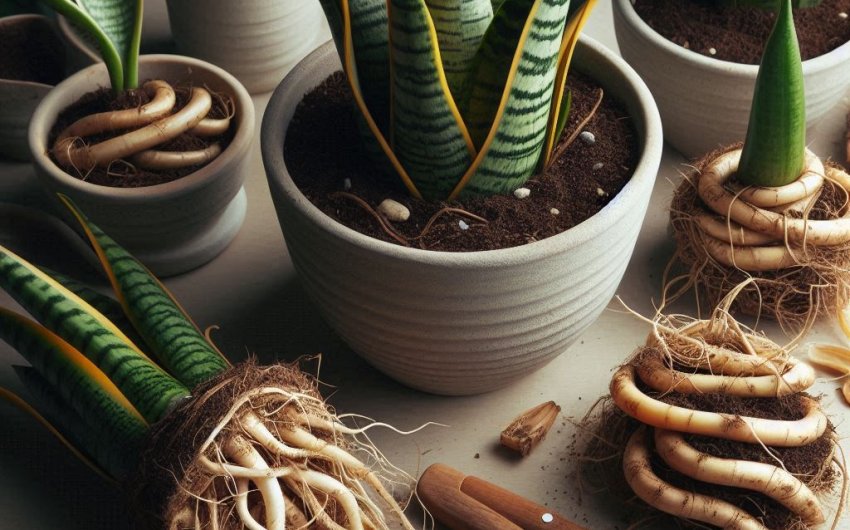
Dividing and repotting a snake plant (Sansevieria trifasciata) is a simple way to create new plants and keep your existing plant healthy. This process is best done when your snake plant has become root-bound, meaning its roots have filled the pot, or when you want to propagate new plants. The ideal time to divide is in the spring or early summer when the plant is actively growing.
To begin, gently remove the snake plant from its current pot. You might need to lay the pot on its side and carefully slide the plant out. Once out, examine the root ball. You'll notice various sections, or rhizomes, which are underground stems that store nutrients and produce new shoots. Identify natural divisions where the plant can be separated into smaller, individual plants, each with its own set of roots and at least one leaf or cluster of leaves. You can either gently pull these sections apart by hand if they are loosely connected, or use a clean, sharp knife or pruning shears to cut through the rhizomes, ensuring each division has a good root system. If you cut, allow the cut ends to callus over for a day or two in a dry, airy spot before repotting. This helps prevent rot. For repotting, choose pots that are only slightly larger than the root ball of each division – about 1-2 inches wider in diameter. Use a well-draining potting mix specifically formulated for succulents or cacti, such as Miracle-Gro Cactus, Palm & Citrus Potting Mix. Place a small amount of potting mix at the bottom of the new pot, center your snake plant division, and then fill around the roots with more mix, gently tamping it down to remove air pockets. Water lightly after repotting to help the soil settle.
When is the best time to divide a snake plant?
The best time to divide a snake plant is during its active growing season, which typically falls in spring or early summer. This period offers the plant the best chance to recover quickly from the division process and establish itself in its new pot. During these months, temperatures are generally warmer, and there is more sunlight, which encourages new root growth and overall plant vigor. Dividing in the cooler, darker months of fall or winter can stress the plant and slow down its recovery, making it more susceptible to problems like root rot or simply not thriving.
You'll know it's a good time to divide if your plant is showing signs of being root-bound. This means the roots are circling the inside of the pot, sometimes even growing out of the drainage holes. The plant might also look top-heavy, or its growth might seem to have slowed down considerably despite regular care. If you see pups (small new shoots) emerging from the soil but they're getting crowded, that's another good indicator. Planning your division during these optimal months ensures your newly separated plants have a strong start and can quickly adapt to their new environments, leading to healthy and thriving snake plants.
What tools do I need to divide a snake plant?
Dividing a snake plant doesn't require many fancy tools, but having the right ones will make the process much easier and safer for your plant. First and foremost, you'll need gloves, as the sap from snake plants can sometimes irritate skin, though it's not poisonous to touch. Next, a sharp, clean knife or a pair of pruning shears is essential for making clean cuts if you can't gently pull the divisions apart. Dull tools can crush stems and roots, making the plant more vulnerable to disease. Always sterilize your cutting tools before and after use, especially if you're working with multiple plants. You can do this by wiping them with rubbing alcohol or a bleach solution (1 part bleach to 9 parts water).
You'll also need new pots for your divisions. These should have drainage holes at the bottom to prevent waterlogging, which can lead to root rot. For potting, a trowel or small shovel is helpful for scooping and moving the potting mix. And speaking of potting mix, make sure you have a bag of well-draining soil, ideally a succulent and cactus mix. This type of soil ensures that excess water drains away quickly, which is crucial for snake plants that don't like to sit in soggy conditions. Finally, a watering can will be useful for lightly watering your newly repotted plants. Having all these items ready before you start will make the division and repotting process smooth and stress-free for both you and your plants.
How do I prepare the snake plant for division?
Preparing your snake plant for division involves a few simple steps to make the process as smooth as possible and reduce stress on the plant. First, it’s a good idea to water the plant lightly a day or two before you plan to divide it. This makes the soil a bit more pliable and easier to work with, allowing the plant to slide out of its pot more readily. However, avoid overwatering, as very wet soil can make the roots messy and harder to handle. The goal is slightly moist, not soggy, soil.
Next, find a good, clean workspace. Lay down a tarp, old newspaper, or a plastic sheet to catch any spilled soil and make cleanup easier. Gather all your tools before you begin: your chosen pots, fresh potting mix, a sharp, clean knife or pruning shears, and gloves if you prefer. Once your workspace is ready and tools are at hand, carefully remove the snake plant from its current pot. You might need to gently wiggle it, or even lay the pot on its side and tap the bottom to help loosen the root ball. Be patient and avoid yanking the plant by its leaves, as this can damage them. Once the plant is out, gently shake off any loose soil from the root ball so you can clearly see the rhizomes and root structure. This will help you identify the best places to make your divisions.
What is a rhizome and how does it relate to dividing a snake plant?
A rhizome is a special type of underground plant stem that grows horizontally, often just below the soil surface. Unlike roots, which primarily absorb water and nutrients, rhizomes function as storage organs for food and water, allowing the plant to survive harsh conditions. They also have nodes, from which new shoots (leaves) grow upwards and new roots grow downwards. In the context of a snake plant (Sansevieria), the entire plant typically grows from these interconnected rhizomes. You'll often see new "pups" or baby snake plants emerging from the soil a little distance from the main plant; these are new shoots developing from the rhizomes that are spreading outwards.
When you're dividing a snake plant, you're essentially separating these rhizomes. Each section of rhizome that you cut or break apart, as long as it has some roots attached and at least one leaf or a small cluster of leaves, has the potential to grow into an entirely new, independent snake plant. By identifying these natural divisions within the root ball, you can carefully separate them, creating multiple new plants from one mature specimen. This method, often called division propagation, is one of the most effective and quickest ways to multiply your snake plants, as each new plant already has a developed root system, giving it a head start compared to propagating from a single leaf cutting.
How do I separate the snake plant divisions?
Separating snake plant divisions is the core of the process, and it requires a bit of care to minimize stress on the plants. Once you've removed the entire snake plant from its pot and gently shaken off loose soil from the root ball, you'll be able to see the rhizomes – the thick, fleshy underground stems that connect the different parts of the plant. Look for natural breaks or points where different sections of leaves and roots emerge from the main mass.
You have two main approaches for separation:
- Gently pulling apart: If the plant isn't severely root-bound and the rhizomes are somewhat loosely connected, you might be able to gently pull the sections apart by hand. Identify a clump of leaves with its own distinct set of roots and a connecting rhizome, then carefully tug until it separates from the main plant. Try to be as gentle as possible to avoid unnecessary root damage.
- Cutting with a sharp tool: For denser, more mature, or tightly bound plants, you'll need to use a clean, sharp knife or pruning shears. Identify a section you want to separate, ensuring it has its own leaves and a healthy portion of roots attached to a rhizome. Make a clean, decisive cut through the rhizome, separating it from the rest of the plant. Always sterilize your cutting tools beforehand to prevent introducing diseases.
After separating each division, inspect them. Each new division should have at least a few leaves and a decent amount of healthy roots. If any roots look mushy or rotten, trim them off with clean shears. Some people like to let the cut ends of the rhizomes callus over for a day or two in a dry, airy place before repotting. This helps to prevent rot, especially if the air is humid or you tend to be heavy-handed with watering. This extra step isn't always necessary but can provide an added layer of protection.
What kind of potting mix should I use for repotting?
Choosing the right potting mix is crucial for the success of your newly divided and repotted snake plants. Snake plants are succulents, and like most succulents, they absolutely detest sitting in soggy soil. Too much moisture can quickly lead to root rot, which is a common killer of snake plants. Therefore, the key is to use a well-draining potting mix.
The best choice is a mix specifically formulated for succulents and cacti. These mixes, like Miracle-Gro Cactus, Palm & Citrus Potting Mix, are designed to provide excellent drainage and aeration, preventing water from pooling around the roots. They typically contain ingredients like perlite, pumice, or coarse sand, which improve drainage, along with a smaller amount of organic matter like peat moss or coco coir. Avoid using standard all-purpose potting mixes, as they tend to retain too much moisture for snake plants.
If you can't find a dedicated succulent mix, or if you prefer to make your own, you can amend a regular potting mix to improve its drainage. A good ratio is about 50% regular potting mix mixed with 50% perlite or coarse sand. Just ensure whatever you use allows water to pass through quickly, rather than holding onto it. This will ensure your snake plants remain healthy and prevent the common issue of root rot.
What size pot should I use for the divided snake plants?
Choosing the correct pot size for your newly divided snake plants is an important step that impacts their health and growth. Snake plants actually prefer to be a little bit root-bound, meaning their roots are fairly snug in the pot, rather than having too much extra space. If you put a small snake plant division into a very large pot, the excess soil will retain too much moisture for too long, significantly increasing the risk of root rot. This is because the plant's roots won't be able to absorb all the water in a large volume of soil quickly enough.
Therefore, for each division, select a new pot that is only slightly larger than its individual root ball. A pot that is about 1-2 inches wider in diameter than the root ball is usually ideal. For example, if your division's root ball is about 4 inches across, a 5 or 6-inch pot would be suitable. Ensure the new pot has drainage holes at the bottom; this is non-negotiable for snake plants to prevent water from sitting at the bottom of the pot. Using appropriately sized pots will help your newly repotted divisions establish themselves, promote healthy root development, and reduce the chance of overwatering issues.
How do I repot the snake plant divisions?
Once you have your snake plant divisions separated and your new pots ready with well-draining potting mix, it’s time to repot them. Start by placing a small layer of your succulent or cactus potting mix at the bottom of the new pot. The amount depends on the size of your division – you want to ensure the top of the root ball will be about an inch or so below the rim of the pot when the plant is settled.
Next, carefully place one of your snake plant divisions in the center of the pot. Spread out its roots gently so they are not all clumped together. Hold the plant in place with one hand while you use your other hand or a small trowel to fill in around the roots with more potting mix. Gently tap the sides of the pot or lightly press down on the soil with your fingers to settle the mix and remove any large air pockets. Avoid compacting the soil too much, as this can hinder drainage. The goal is to make sure the plant is stable and upright.
Make sure that the base of the leaves is not buried too deep; it should be at the same level it was in the original plant or slightly higher to prevent rot at the crown. Leave about half an inch to an inch of space from the top of the soil to the rim of the pot. This "headspace" allows for easy watering without overflow. Repeat this process for all your divisions. After repotting, water lightly to help the soil settle further. Avoid heavy watering for the first week or two, giving the plant time to recover from the stress of division and allowing any small root injuries to heal.
What care do newly repotted snake plants need?
Newly repotted snake plants, especially those that have been divided, need a little extra care and attention during their recovery period. The first few weeks are crucial for them to establish new roots and adjust to their new environment. After the initial light watering, it's best to hold off on heavy watering for about a week to two weeks. This allows any minor cuts or damage to the rhizomes and roots to callus over, which significantly reduces the risk of root rot. Overwatering during this delicate period is the most common mistake.
Place your newly repotted snake plants in a location that receives bright, indirect light. While snake plants are famously tolerant of low light, they will recover and grow much better in brighter conditions after division. Avoid direct, harsh sunlight immediately after repotting, as this can stress them further. A spot near a window with a sheer curtain, or a few feet away from a south-facing window, would be ideal. Keep an eye on the soil moisture. Once the initial waiting period is over, only water when the soil is completely dry to the touch, usually every 2-4 weeks depending on your climate and the pot size.
During this recovery phase, avoid fertilizing. The plant is focusing its energy on root development, and adding fertilizer can potentially burn tender new roots. Wait at least a month or two, or until you see signs of new growth, before considering a diluted, balanced liquid fertilizer if you wish. By providing proper light and cautious watering, you'll give your newly divided snake plants the best chance to thrive and produce new growth.
How long does it take for divided snake plants to grow?
The time it takes for divided snake plants to show new growth can vary, but generally, you can expect to see signs of activity within a few weeks to a couple of months. The initial period after division is spent on root development. The plant needs to establish its root system in the new potting mix before it can put energy into growing new leaves. Factors like the plant's health before division, the amount of root damage during separation, the growing conditions (light, temperature), and the specific snake plant variety can all influence this timeline.
Typically, you might not notice significant visual changes in the foliage for the first 4-8 weeks. During this time, the roots are quietly working beneath the soil surface, anchoring the plant and absorbing nutrients. Once the root system is well-established, you'll start to see new shoots or leaves emerging from the base of the plant. These new pups, often lighter in color initially, are a clear sign that your division has successfully taken root and is thriving. Be patient, continue with proper watering (only when the soil is completely dry), and provide adequate bright, indirect light. While they are famously slow growers, the division process usually kickstarts a period of more vigorous growth as the plant settles into its new, less crowded space.