
How to Make a Garden Trellis with Minimal Tools?
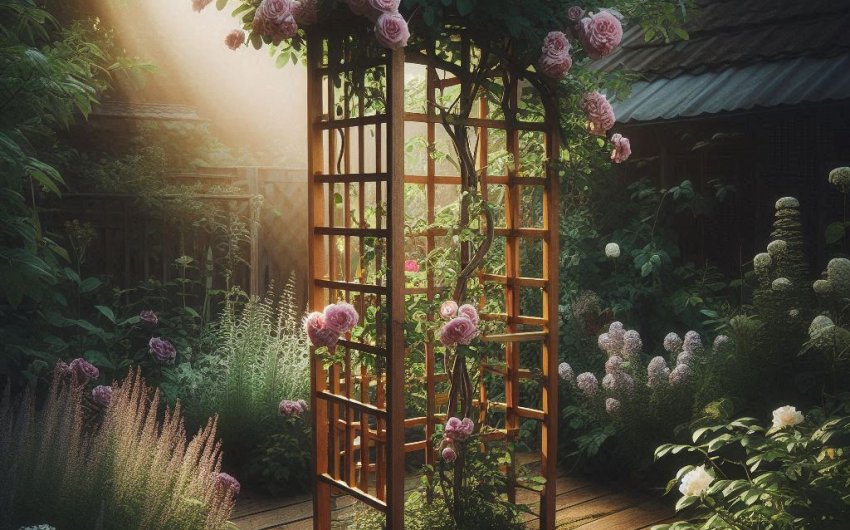
Have you ever gazed at a garden full of rambling roses, climbing beans, or vibrant clematis and wondered how they stand so tall and beautiful? The secret is often a garden trellis! A trellis is simply a support structure that helps climbing plants grow upward, providing stability and showcasing their beauty. It keeps them off the ground, improves air circulation (which helps prevent diseases), and makes harvesting easier for vining crops.
You might think building a trellis requires fancy tools and carpentry skills, but that's not true! With a few basic items you probably already have or can get cheaply, and a little bit of patience, you can create a functional and attractive garden trellis even if you’re a complete beginner. This guide will show you how to build sturdy supports for your plants without needing a workshop full of power tools.
What is a Garden Trellis and Why Do You Need One?
A garden trellis is an open framework, typically made from wood, metal, or plastic, designed to support climbing plants. Think of it as a ladder or a climbing wall for your greenery. The gaps in the framework give plant tendrils and stems something to grasp onto as they grow upwards.
Why is a trellis a garden must-have, especially for certain plants?
Support for Climbing Plants
This is the primary reason. Many plants, known as vining plants or climbing plants, don't have strong stems that can hold themselves upright. Instead, they rely on tendrils (small, grasping structures), twining stems, or clinging roots to attach to something and pull themselves skyward. Without support, these plants would sprawl on the ground, creating a messy tangle. Examples include:
- Vining Vegetables: Tomatoes, cucumbers, beans, peas, squash, and melons (especially smaller varieties).
- Flowering Vines: Clematis, morning glories, climbing roses, honeysuckle, and bougainvillea.
Improved Air Circulation
When plants sprawl on the ground, their leaves can stay wet for longer, creating a perfect breeding ground for fungal diseases like powdery mildew. A trellis lifts the foliage up into the air, allowing for better airflow and quicker drying after rain or watering. This leads to healthier plants and often higher yields.
Easier Harvesting
Imagine picking cucumbers from waist height instead of bending over and searching through dense foliage on the ground! For vining vegetables, a trellis makes harvesting much simpler and less back-breaking. The fruits are also cleaner and less likely to rot from sitting on damp soil.
Maximizing Space
In small gardens or urban spaces, growing plants vertically is a game-changer. A trellis allows you to grow more food or flowers in a smaller footprint. Instead of a squash plant taking up 20 square feet on the ground, it can climb a trellis and only use 2-3 square feet of ground space. This is essential for small space gardening.
Aesthetic Appeal
Beyond function, a trellis adds a beautiful architectural element to your garden. It can be a backdrop for stunning floral displays, a green screen for privacy, or a striking focal point. A simple wooden trellis draped with blooming vines is a classic garden image.
What Materials Can You Use for a Minimalist Trellis?
When we talk about minimal tools, we're usually thinking about materials that are easy to cut, join, and manipulate without complex machinery.
Wood (Stakes, Branches, Lattice)
Wood is a classic choice for trellises because it's natural, relatively inexpensive, and easy to work with.
- Wooden Stakes: Simple wooden stakes (like garden stakes or leftover lumber scraps) are incredibly versatile. They can be pushed into the ground and used to create various trellis designs.
- Tree Branches/Twigs: For a more rustic, natural look, use sturdy tree branches or twigs you find in your yard or local park. Look for ones that are straight enough for your design and reasonably strong.
- Wooden Lattice: Pre-made wooden lattice panels are readily available at hardware stores. They already have the open grid pattern you need for climbing. While they might require a saw for sizing, they simplify the build process greatly. You can find options like Veranda Cedar Lattice Panels.
Metal (Rebar, Fencing, Wire Mesh)
Metal is very durable and long-lasting, especially if it's galvanized (coated to prevent rust).
- Rebar: These long, ribbed steel bars (used in concrete reinforcement) are incredibly sturdy and can be pounded directly into the ground. They are excellent for strong, tall supports.
- Hog Wire/Cattle Panels: These are sturdy, pre-welded wire mesh panels with large openings. They are often used for fencing livestock but make fantastic, instant trellises. They come in large sheets and might require bolt cutters for sizing, but smaller sections can be used as is.
- Galvanized Wire: Simple galvanized wire (which resists rust) can be strung between posts to create horizontal lines for plants to climb.
- Tomato Cages: While not strictly a trellis, large, sturdy tomato cages can act as mini-trellises for many vining plants. Look for heavy-duty ones like Garden Zone Heavy Duty Tomato Cages.
Other Materials (Twine, Netting)
These are used in conjunction with a main support structure.
- Twine/Jute: Natural jute twine is biodegradable and can be strung between supports to create a climbing grid.
- Garden Netting: Plastic or nylon garden netting (often called trellis netting) can be strung vertically between posts. It's lightweight and easy to use.
What Minimal Tools Do You Need?
The beauty of these projects is that you don't need a massive toolbox. Here are the essentials:
For Measuring and Marking
- Measuring Tape: Essential for getting your lengths right. A standard Stanley PowerLock Tape Measure will do.
- Pencil or Marker: For marking cuts on wood or wire.
For Cutting
- Hand Saw: For wooden stakes or branches. A simple bow saw or hand saw will work perfectly.
- Pliers/Wire Cutters: If you're working with wire or smaller pieces of fencing. For thicker wire or hog panels, you might need bolt cutters (though for minimal tools, we'll focus on methods that avoid this).
For Joining and Securing
- Hammer: For pounding in nails or stakes.
- Staple Gun: Great for attaching netting or wire to wooden frames.
- Heavy-Duty Staples: For the staple gun.
- Zip Ties: Incredibly versatile for quickly joining materials together or attaching wire.
- Garden Twine/Jute: For tying pieces together or training plants.
- Drill (Optional but Helpful): While not strictly minimal, a cordless drill with a drill bit can make pilot holes for screws or for running twine through wood, making things sturdier. If you have one, it's a bonus.
For Installation
- Rubber Mallet or Sledgehammer: For gently tapping stakes or rebar into the ground without damaging them.
- Level (Optional): For making sure your trellis is straight. Your eye can usually do the trick for a rustic look!
How to Build Simple Trellis Designs?
Let's get to the fun part: building your trellis! Here are a few easy designs you can tackle with minimal tools.
1. The Simple A-Frame Trellis (for Peas, Beans, Cucumbers)
This classic design is super sturdy and great for vining vegetables.
Materials:
- 4-6 sturdy wooden stakes or thick branches (6-8 feet long, about 1-2 inches thick)
- Garden twine or natural jute
- Pencil, measuring tape
- Hand saw (if cutting stakes)
- Scissors or knife (for twine)
Steps:
- Cut Stakes (if needed): If your stakes are too long, use your hand saw to cut them to the desired length. For an A-frame, you'll need two pairs of equal length.
- Form the A-Frame: Take two stakes. Cross them near the top, about 12-18 inches from the top end.
- Secure the "A": Use a generous amount of garden twine to wrap tightly around the point where the two stakes cross. Wrap in an "X" pattern to really secure them. Make several wraps and tie a strong knot.
- Repeat: Do the same for your second A-frame. You'll have two "A" shapes.
- Set Up: Dig two shallow trenches or poke holes in the ground where you want your trellis to stand. Place one "A" frame in each spot, spreading the legs apart to form a stable base. The legs should be firmly pushed into the soil. The distance between your two "A" frames will be the length of your trellis (e.g., 3-6 feet).
- Connect the "A"s: Lay a horizontal stake or sturdy branch across the top, connecting the peaks of your two "A" frames. Secure it tightly with more garden twine. This provides extra stability and a top rail for plants.
- Add Horizontal Supports (Optional but Recommended): To give your plants more places to climb, tie horizontal strands of garden twine between the legs of your A-frame, every 6-12 inches up from the ground. This creates a grid-like structure.
- Plant and Train: Plant your vining plants at the base of the trellis. As they grow, gently guide their tendrils onto the twine or stakes.
2. The Teepee Trellis (for Pole Beans, Cucumbers, Small Melons)
A charming and effective solution, especially for a cluster of climbing plants.
Materials:
- 3-5 long wooden stakes or thick, straight branches (6-8 feet long)
- Garden twine
- Pencil, measuring tape
- Scissors or knife
Steps:
- Gather Stakes: Choose stakes of roughly equal length.
- Form the Teepee: Stand the stakes upright in a circle in your garden bed (about 2-3 feet in diameter at the base). Lean their tops together so they meet in the center.
- Secure the Top: Once you have a stable teepee shape, use a generous amount of garden twine to tie the tops of the stakes together very securely. Wrap tightly multiple times and tie a strong knot.
- Stabilize the Base: Push the bottom ends of the stakes firmly into the ground, ensuring they are deep enough to be stable. You can use a rubber mallet to gently tap them if the ground is hard.
- Add Horizontal Support (Optional): For extra climbing surfaces, you can spiral garden twine down the outside of the teepee, wrapping it around each stake as you go, every 8-12 inches. This creates a ladder effect for the plants.
- Plant and Train: Plant your vining plants around the base of the teepee. Guide them gently to climb the stakes and twine.
3. The Rebar and Twine Trellis (for Tomatoes, Pole Beans)
This is a very sturdy option, especially good for heavy fruiting plants like indeterminate tomatoes.
Materials:
- 2-4 pieces of rebar (6-8 feet long, depending on plant height)
- Garden twine or durable outdoor string
- Rubber mallet or small sledgehammer
- Wire cutters (optional, if you need to cut twine)
Steps:
- Install Rebar Posts: Decide where you want your trellis. For a single row, pound two rebar pieces firmly into the ground at either end of your planting area (e.g., 4-6 feet apart). Leave about 5-6 feet of rebar above ground. Use a rubber mallet or sledgehammer and wear gloves.
- Add More Rebar (for wider trellises): If your row is longer, add more rebar posts every 3-4 feet in between the end posts for extra support.
- String Horizontal Lines: Start at the bottom of one rebar post (about 6-12 inches off the ground). Tie your garden twine securely to the rebar.
- Weave the Twine: Run the twine horizontally to the next rebar post, wrap it around, and continue to the next, until you reach the end. Wrap it around the last rebar post and then run it back in the opposite direction. Continue weaving the twine back and forth, moving upward every 6-12 inches, until you reach the top of your desired trellis height. This creates a sturdy horizontal grid. You can also tie individual vertical strings from the top horizontal line down to the plants.
- Secure: Tie off the twine securely at the last rebar post.
- Plant and Train: Plant your vining plants next to the rebar posts and gently guide them to grow up the twine.
4. The Fence or Wall Trellis (for Clematis, Climbing Roses, Espalier Fruit Trees)
If you have an existing fence or wall, you can easily use it as a backdrop for a trellis.
Materials:
- Galvanized wire or strong garden twine
- Screw eyes or eye hooks (if attaching to wood)
- Masonry drill bit and anchors (if attaching to brick/concrete)
- Measuring tape, pencil
- Pliers/wire cutters
- Drill (optional, but very helpful for screw eyes/anchors)
Steps:
- Mark Placement: Decide on the pattern for your trellis. Simple horizontal lines, a grid, or a fan shape work well. Mark the points on your fence or wall where you want to attach the wire or twine.
- Install Attachments:
- For Wood: Screw in screw eyes or eye hooks at your marked points. A pre-drilled pilot hole with a small drill bit will make this easier.
- For Masonry: Use a masonry drill bit to drill holes, insert wall anchors, and then screw the screw eyes into the anchors.
- String the Wire/Twine: Thread your galvanized wire or strong garden twine through the screw eyes to create your desired pattern (e.g., horizontal lines every 12 inches). Pull the wire/twine taut before securing it.
- Secure: Wrap the wire tightly around the screw eyes or tie the twine securely with strong knots.
- Train Plants: As your climbing plants grow, gently weave them through the wire or twine, or tie them loosely to the supports using soft ties like plant ties for climbing plants.
Tips for Success with Your DIY Trellis
Even with minimal tools, a few extra tips can make your trellis project a resounding success.
Choose the Right Height
Consider how tall your plant will get. A pole bean can easily reach 6-8 feet, while a small cucumber might only need 3-4 feet. Build your trellis to accommodate the mature size of your plant.
Consider Plant Weight
Some plants, like a heavily laden tomato vine or a winter squash, can become very heavy. Ensure your trellis is sturdy enough to support the full weight. For heavier plants, thicker stakes or rebar are a better choice.
Anchor Your Trellis Securely
Wind and heavy rain can topple a flimsy trellis. Make sure the base of your trellis is well-anchored in the ground, whether by digging deep holes for posts, burying the bottom of the structure, or pounding stakes deep enough.
Provide Plenty of Gripping Points
Plants need something to grab onto. Make sure your horizontal supports (twine, branches, wires) are spaced appropriately for your plant's tendrils (usually 6-12 inches apart, closer for smaller tendrils like peas).
Train Your Plants Early
Don't wait for your plants to sprawl. As soon as you see new growth, gently guide the stems or tendrils onto the trellis. You might need to loosely tie them initially with soft ties until they start to grab on their own.
Maintenance and Durability
- Wood: Wooden trellises can rot over time. Using rot-resistant wood (like cedar or redwood) or treating pine with a non-toxic sealer (like tung oil) can extend its life. You can also pull them up at the end of the season and store them indoors.
- Twine: Natural twine will break down over the season, which is fine as it's biodegradable. You might need to replace it yearly.
- Rebar/Wire: These are very durable and will last for many years.
By keeping these simple designs and tips in mind, you can easily add vertical interest and functionality to your garden. Building a trellis with minimal tools is a rewarding project that empowers your climbing plants to reach new heights, making your garden more beautiful and productive than ever before.