
How to Use a Soil Tester for Healthier Plants?
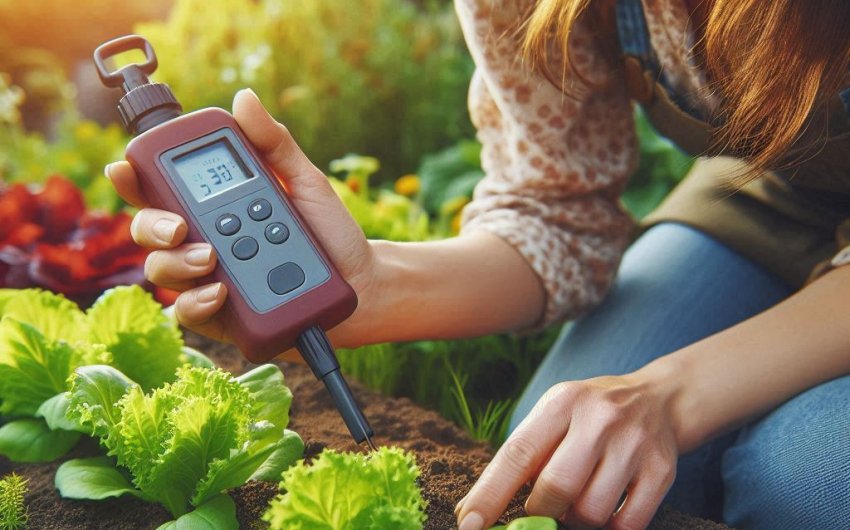
For gardeners seeking to move beyond guesswork and truly nurture their plants, understanding how to use a soil tester for healthier plants is an invaluable skill. Soil is the foundation of plant life, and its composition directly impacts nutrient availability, water retention, and overall root health. By accurately assessing key soil parameters like pH, moisture, and nutrient levels, you gain the precise knowledge needed to make informed decisions, transforming struggling plants into vibrant, thriving specimens and optimizing your garden's potential for robust growth.
What are the key parameters a soil tester measures?
To truly understand how to use a soil tester for healthier plants, it's essential to know what insights these tools provide. Soil testers measure crucial parameters that directly impact plant health, helping you tailor your care and amendments for optimal growth. These measurements move you beyond guesswork to a science-backed approach.
What is soil pH and why is it important?
Soil pH measures how acidic or alkaline your soil is, on a scale from 0 to 14.
- The Scale: A pH of 7.0 is neutral. Below 7.0 is acidic, and above 7.0 is alkaline (or basic). Most garden plants prefer a slightly acidic to neutral range, typically between 6.0 and 7.0.
- Nutrient Availability: pH is critical because it directly affects the availability of nutrients to plants.
- In very acidic or very alkaline soils, essential nutrients (like iron, phosphorus, or nitrogen) can become "locked up" and unavailable, even if they are present in the soil.
- For example, phosphorus becomes less available in very acidic or very alkaline conditions. Iron can be deficient in highly alkaline soils.
- Plant-Specific Needs: Different plants have different pH preferences.
- Acid-loving plants: (e.g., blueberries, azaleas, rhododendrons) thrive in acidic soil (pH 4.5-5.5).
- Alkaline-tolerant plants: (e.g., lavender, certain conifers) can tolerate slightly higher pH levels.
- Most vegetables and common garden flowers prefer a neutral to slightly acidic soil.
Knowing your soil's pH allows you to make informed decisions about amendments (like adding garden lime to raise pH or sulfur to lower it) to match your plants' needs.
How does moisture content impact plants?
While not strictly a chemical property, soil moisture is fundamental to plant survival, and a moisture meter helps prevent both overwatering and underwatering, two of the most common reasons plants fail.
- Hydration: Plants absorb water through their roots, which transports nutrients throughout the plant.
- Oxygen Availability: Too much moisture (soggy soil) deprives roots of oxygen, leading to root rot and plant death. Too little moisture causes wilting and stunted growth.
- Moisture Meters: A simple soil moisture meter tells you when to water, based on the actual conditions in the soil, rather than a fixed schedule or a finger test that only assesses the very top layer.
What are the primary plant nutrients measured?
Most comprehensive soil testers, especially chemical kits, measure the levels of the three primary macronutrients, often referred to as N-P-K.
- Nitrogen (N): Essential for leafy green growth and overall plant vigor. A deficiency often shows as yellowing leaves, especially older ones. Excess nitrogen can lead to lush foliage but poor flowering/fruiting.
- Phosphorus (P): Crucial for root development, flowering, and fruiting. A deficiency can cause stunted growth, purplish leaves, and poor flower or fruit production.
- Potassium (K): Promotes overall plant health, stress tolerance (drought, disease, cold), and strong stems. A deficiency might result in yellowing or browning leaf edges, stunted growth, and weak stems.
Some more advanced testers or lab tests can also measure micronutrients (like iron, magnesium, calcium) but N-P-K and pH are the most commonly tested and adjusted parameters for the home gardener. Knowing these levels helps you select the right fertilizer with the correct N-P-K ratio to address specific deficiencies.
What types of soil testers are available for home gardeners?
Navigating the options for soil testers is an important step in learning how to use a soil tester for healthier plants. For home gardeners, there are generally two main types: simpler probe-style meters for quick readings and chemical test kits for more detailed nutrient analysis. Each has its advantages and limitations.
What are probe-style (digital or analog) meters?
These are typically inexpensive, easy to use, and provide instant readings for one or more parameters.
- Moisture Meters:
- Function: Measures the water content in the soil.
- Appearance: Usually a single metal probe (5-10 inches long) with a dial or digital display.
- How it Works: Insert the probe directly into the soil. An electrical current measures the soil's conductivity, which changes with moisture levels.
- Pros: Instantaneous reading, very easy to use, no batteries often required (analog), great for preventing over/underwatering. Affordable.
- Cons: Only measures moisture, can be inaccurate if probes aren't clean, needs to be pushed deep enough.
- Example Product: Decent moisture meter for plants
- 3-in-1 or 4-in-1 Meters:
- Function: Typically measure soil pH, moisture, and light intensity. Some advanced ones might include temperature.
- Appearance: Often has two probes that are inserted into the soil and a display screen or dial.
- How it Works: Uses electrical conductivity differences between the probes to estimate pH and moisture, and a light sensor for light intensity.
- Pros: Provides multiple readings with one tool, instant results, no chemicals needed.
- Cons: Can be less accurate for pH and nutrient readings compared to chemical kits or lab tests. Readings can be affected by debris on probes or soil compaction.
- Example Product: Multi-function soil meter
What are chemical test kits?
These kits use chemical reactions to provide more precise measurements, particularly for nutrient levels.
- Function: Measure soil pH, nitrogen (N), phosphorus (P), and potassium (K) levels.
- Appearance: Typically include vials, test capsules or powders, and a color chart for comparison.
- How it Works: You take a small soil sample, mix it with water and specific reagents (chemicals) in a test tube. The mixture changes color, which you then compare to a color chart to determine the nutrient level or pH.
- Pros: Generally more accurate for pH and nutrient levels than probe meters. Provides actual nutrient content.
- Cons: More involved process, requires mixing chemicals, takes more time (minutes to hours for results), supplies are finite (you need refills), and can be slightly more expensive upfront.
- Example Product: Home soil test kit for NPK pH
What about professional lab soil tests?
While not a "tester" you own, a professional lab soil test (often through your local university extension office) offers the most comprehensive and accurate analysis.
- Function: Provides detailed reports on N-P-K, micronutrients, organic matter content, soil texture, and pH, along with specific recommendations for amendments based on your desired plants.
- How it Works: You send a soil sample from your garden to a lab.
- Pros: Highly accurate and comprehensive, expert recommendations tailored to your soil.
- Cons: Not instantaneous, typically costs more than home kits, requires waiting for results (weeks).
- Recommendation: It's often recommended to do a professional lab test every 3-5 years to get a baseline and track long-term changes, and then use home testers for more frequent spot checks and troubleshooting.
The best type of soil tester for you depends on your needs. A simple moisture meter is great for daily watering decisions. A 3-in-1 meter offers a quick overview. Chemical kits are better for nutrient levels. And a lab test provides the full picture, all contributing to your ability to use a soil tester for healthier plants.
How do I collect a soil sample for testing?
Collecting a proper soil sample is a critical first step when learning how to use a soil tester for healthier plants. An inaccurate sample will lead to misleading results, and ultimately, incorrect recommendations for your garden. Taking your time and following best practices ensures your test is as reliable as possible.
Why is a representative sample important?
- Accuracy: Your soil test results are only as good as the sample you provide. If you take a sample from just one spot, it might not accurately reflect the conditions across your entire garden or lawn. Soil conditions can vary significantly even within a small area due to previous amendments, runoff, or existing plants.
- Actionable Advice: A representative sample ensures that the recommendations you receive (whether from a home kit or a lab) are actually appropriate for the larger area you intend to manage.
How do I collect samples for different garden areas?
Don't mix soil from areas with vastly different purposes or conditions.
- Lawns: If your entire lawn receives similar treatment (mowing, watering, fertilization), you can take multiple subsamples from across the whole lawn and mix them together to form one composite sample.
- Vegetable Gardens/Flower Beds: If you have distinct beds that are treated differently or grow different types of plants (e.g., a blueberry bed with acidic soil vs. a general vegetable bed), collect separate samples for each area.
- Problem Areas: If you have a specific spot where plants are struggling, but the rest of the garden is fine, you might take a separate sample from just that problem area to investigate specific localized issues.
- Potted Plants: For individual potted plants, simply take a sample from that specific pot.
What are the steps for collecting a sample?
- Gather Tools: You'll need a clean trowel or spade, a clean bucket, and a permanent marker for labeling. Avoid using galvanized tools or buckets that might contaminate the sample with metals.
- Clear Debris: Before taking a sample, clear away any surface debris like grass clippings, mulch, leaves, or stones from the chosen spots.
- Take Multiple Subsamples: For each area you want to test, take 5-10 random "subsamples" from different spots within that area. This ensures a representative sample.
- Depth: For lawns, sample to a depth of 4-6 inches. For garden beds, go 6-8 inches deep (the root zone).
- Technique: Dig a small V-shape hole. Then, slice off a consistent core from the side of the V-shape, ensuring it's the same depth and width throughout. Place this core into your clean bucket.
- Mix Thoroughly: Once you have all your subsamples in the bucket, thoroughly mix them together to create one composite sample for that specific area. Break up any clumps.
- Prepare for Testing:
- For Home Kits: Follow the kit's specific instructions immediately after mixing. Some require fresh samples, others allow for slight drying.
- For Lab Tests: Spread the mixed soil sample out on a newspaper or tray to air-dry completely. Do not heat it or dry it in direct sun. Once dry, place the recommended amount (usually about 1-2 cups) into a clean, labeled plastic bag or the specific sample bag provided by the lab. Label clearly with the area it came from (e.g., "Front Lawn," "Veg Bed 1").
What to avoid when collecting samples?
- Contamination: Do not take samples from compost piles, old fertilizer bags, animal waste spots, or areas right next to foundations or treated wood (which can skew results).
- Too Wet/Too Dry: If the soil is waterlogged or extremely dry, it can affect the test results of some kits. Aim for moist, workable soil.
- Recent Amendments: Wait at least 6-8 weeks (or longer) after applying fertilizers, lime, or other amendments before taking a test, to allow the soil to stabilize and nutrients to distribute.
By meticulously collecting a representative soil sample, you lay the accurate foundation needed to properly use a soil tester for healthier plants, ensuring your subsequent amendments are precise and beneficial.
How do I interpret soil test results and make adjustments?
Once you've collected your soil sample and run your test (whether with a home kit or a lab), the next crucial step in learning how to use a soil tester for healthier plants is interpreting the results and understanding what actions to take. This translates raw data into practical steps for improving your garden.
How do I interpret pH readings?
Your pH reading will be a number, typically between 4.0 and 8.0 for most garden soils.
- Optimal Range (6.0-7.0): Most common garden plants (vegetables, flowers, deciduous trees, and shrubs) prefer a slightly acidic to neutral pH. If your reading falls within this range, you're in good shape.
- Acidic Soil (Below 6.0): If your soil is too acidic, some nutrients may become unavailable, and certain plants might struggle.
- Fix: To raise pH (make soil more alkaline), apply garden lime (calcium carbonate) or dolomitic lime (calcium and magnesium carbonate). Always apply at the rates recommended by your test results; over-liming can cause more problems than it solves.
- Alkaline Soil (Above 7.0): If your soil is too alkaline, other nutrients (like iron and phosphorus) might be locked up.
- Fix: To lower pH (make soil more acidic), apply elemental sulfur, aluminum sulfate, or incorporate large amounts of acidic organic matter like peat moss or pine needles. Again, apply according to recommendations.
- Patience: Adjusting soil pH takes time. It's often best to make gradual changes over several seasons rather than drastic ones in one go.
How do I interpret nutrient (N-P-K) readings?
Your test results will indicate whether your nitrogen, phosphorus, and potassium levels are low, medium, or high (or provide a specific number for lab tests).
- Nitrogen (N):
- Low N: Plants might show pale green or yellowing lower leaves, stunted growth.
- Fix: Apply a nitrogen-rich fertilizer like blood meal, fish emulsion, or a granular fertilizer with a high first number (e.g., 10-5-5).
- High N: Can lead to excessive leafy growth at the expense of flowering/fruiting, or "fertilizer burn."
- Fix: Reduce nitrogen applications, plant heavy feeders in the area, or leach with plain water.
- Phosphorus (P):
- Low P: Stunted growth, poor root development, purple tint to leaves, lack of blooms or fruit.
- Fix: Apply bone meal or rock phosphate, or a fertilizer with a high middle number (e.g., 5-10-5).
- Potassium (K):
What about other parameters (moisture, micronutrients)?
- Moisture: A moisture meter gives you an instant reading, telling you when to water, not necessarily how much to add. The meter's scale (e.g., 1-10 or dry-wet) guides your decision.
- Micronutrients: If a lab test shows deficiencies in micronutrients (like iron, zinc, manganese), choose specialized micronutrient supplements or general purpose fertilizers that include them. Often, improving overall soil organic matter through compost addition can naturally improve micronutrient availability.
How do I use the results for actionable steps?
- Prioritize: Address pH imbalances first, as they affect all nutrient availability.
- Choose Amendments: Select organic soil amendments or fertilizers that target your specific deficiencies.
- Follow Directions: Always apply amendments at the recommended rates. More is not better, and over-application can harm your plants and soil.
- Incorporate Organic Matter: Regardless of results, consistently adding compost to your garden improves overall soil health, structure, and nutrient-holding capacity, benefiting all plants.
- Re-test: Re-test your soil every 1-3 years (or after significant amendments) to monitor changes and confirm your adjustments are effective.
By accurately interpreting your soil test results and making targeted adjustments, you move beyond generic care, truly mastering how to use a soil tester for healthier plants and cultivating a thriving, vibrant garden tailored to its unique needs.