
Organizing Your Garden with a Hose Reel
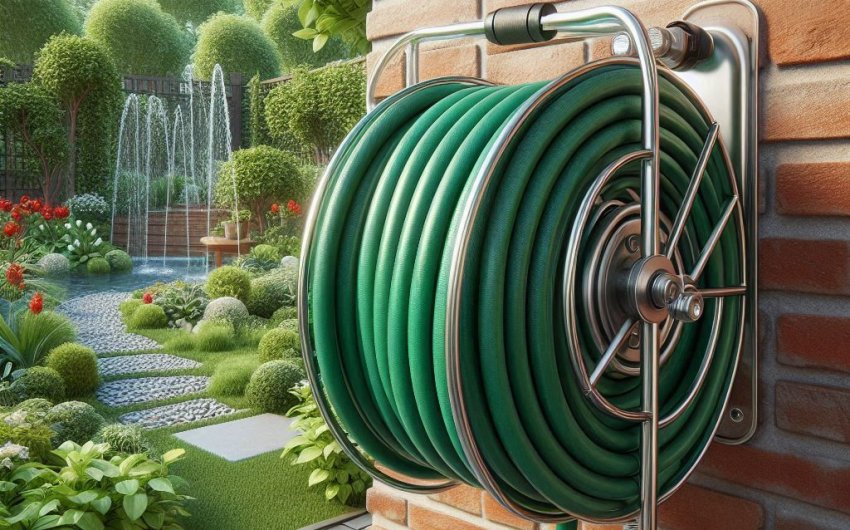
A tangled, kinked garden hose can be one of the most frustrating obstacles in maintaining a beautiful yard. It trips you up, looks unsightly, and wastes precious time. Fortunately, the solution is simple and incredibly effective: organizing your garden with a hose reel. This essential garden accessory transforms your watering routine from a chore into a breeze, keeping your hose neat, protected, and ready for immediate use. Say goodbye to messy coils and hello to a tidy, efficient outdoor space with the right hose storage solution.
Why is a hose reel essential for garden organization?
A seemingly simple tool, the hose reel offers a multitude of benefits that extend far beyond just tidiness. It’s a game-changer for anyone looking to make their gardening tasks smoother and their outdoor space more appealing.
What problems does a hose reel solve?
Think about the common headaches associated with garden hoses. A hose reel tackles them all:
- Tangles and kinks: Without proper storage, hoses easily twist and knot, cutting off water flow and wasting your time as you untangle them. A reel ensures smooth coiling.
- Tripping hazards: A coiled or sprawling hose on the ground is a significant safety risk, especially for children or the elderly. Reeling it up eliminates this danger.
- Ugly clutter: A messy hose can quickly detract from the beauty of your carefully maintained garden. A reel keeps it neatly tucked away.
- Damage to the hose: Leaving a hose exposed to direct sunlight, harsh weather, or being run over by lawn mowers shortens its lifespan. A reel protects it from the elements and accidental damage.
- Inefficient watering: When a hose is a tangled mess, you're less likely to use it as often or as efficiently as you should, leading to underwatered plants.
By addressing these issues, a hose reel makes your garden more functional, safer, and visually appealing.
How does a hose reel extend hose life?
One of the often-overlooked benefits of a hose reel is its ability to significantly prolong the life of your garden hose.
- UV protection: Continuous exposure to the sun's ultraviolet (UV) rays can degrade the rubber or PVC of a hose, making it brittle and prone to cracking. Storing it on a reel, especially one with a cover or in a shaded spot, protects it.
- Protection from physical damage: A hose left on the ground can be run over by lawnmowers, tripped on, or become brittle from extreme temperatures. Reeling it up prevents these common forms of wear and tear.
- Prevents kinking and crimping: Repeated kinking weakens the hose material at those points, leading to leaks and ruptures. A reel ensures the hose is coiled in a uniform, gentle manner, preventing these stress points.
- Reduced mildew/mold: While hoses are designed to be wet, constantly leaving them in damp, tangled piles can encourage mildew or mold growth, especially in humid climates. Proper coiling allows for better drying.
Investing in a quality hose reel is investing in the longevity of your gardening equipment.
What types of hose reels are available?
The market offers a wide variety of hose reels, each designed to suit different needs, garden sizes, and user preferences. Understanding the options will help you choose the best solution for organizing your garden with a hose reel.
What are manual crank hose reels?
Manual crank hose reels are the most common and often the most affordable type. You manually turn a crank handle to wind the hose onto the reel.
- Pros:
- Cost-effective: Generally the least expensive option.
- Durable: Fewer moving parts mean less can break.
- Full control: You control the speed and tension of the hose winding.
- Portable options: Many come as freestanding hose reels or hose carts for easy movement around the yard.
- Cons:
- Manual effort: Requires physical effort to rewind the hose, which can be tiring with long or heavy hoses.
- Requires user to guide hose: You often need to guide the hose evenly onto the reel to prevent tangles.
Examples: Liberty Garden Products hose reels, many basic wall-mounted hose reels.
What are automatic (spring-loaded) hose reels?
Automatic hose reels feature a spring-loaded mechanism that retracts the hose with a gentle tug.
- Pros:
- Convenience: Hoses retract with minimal effort, saving time and physical strain.
- Neat retraction: Often have a guiding system that ensures the hose retracts evenly.
- Always tidy: The hose is automatically put away, eliminating clutter.
- Cons:
- Higher cost: More expensive than manual models.
- More complex: More moving parts mean a greater chance of mechanical issues over time.
- Can be fast: Some retraction mechanisms can be very quick, requiring careful handling to prevent injury or hose whipping.
- Limited portability: Usually designed to be wall-mounted hose reels.
Examples: Gardena hose reels, Sun Joe hose reels.
What are electric hose reels?
Electric hose reels offer the ultimate in convenience, retracting the hose at the push of a button.
- Pros:
- Effortless operation: Ideal for those with mobility issues or very long/heavy hoses.
- Consistent retraction: Provides smooth and even coiling every time.
- Advanced features: May include remote controls or battery power.
- Cons:
- Highest cost: Significantly more expensive.
- Power source needed: Requires an electrical outlet or battery charging.
- Most complex: More parts susceptible to wear and tear.
- Usually stationary: Designed for fixed locations, typically wall-mounted hose reels.
Examples: Some Giraffe Tools hose reels or specific professional models.
What are decorative hose reels/pots?
These options prioritize aesthetics, often blending into the garden landscape.
- Hose pots: A hose pot is a decorative container (often ceramic, copper, or resin) where you simply coil the hose by hand inside.
- Decorative wall mounts: Some decorative wall-mounted hose holders combine functionality with artistic design, often made of ornate cast iron or stylish resin.
- Concealed reels: Some reels are built into garden benches or boxes, hiding the hose completely.
While they look beautiful, they usually involve manual coiling and might not be as convenient as crank or automatic models.
How do you choose the right hose reel for your garden?
Selecting the perfect hose reel involves considering several factors related to your garden's size, your hose's characteristics, and your personal preferences. Making the right choice will truly enhance organizing your garden with a hose reel.
What hose capacity do you need?
The most critical factor is ensuring the reel can accommodate the length and diameter of your garden hose.
- Hose length: Standard garden hoses range from 25 feet to 100 feet or more. Check the reel's specifications for its maximum hose capacity. Don't try to fit a 100-foot hose onto a 50-foot capacity reel.
- Hose diameter: Common diameters are 1/2 inch, 5/8 inch, and 3/4 inch. A thicker hose takes up more space on the reel. Most reels are designed for 5/8-inch hoses, but always double-check.
- Hose type: Heavier-duty hoses or expandable hoses might require a sturdier reel.
Always match the reel's capacity to your hose to ensure smooth operation and proper storage.
Where will you place the hose reel?
The location determines whether you need a stationary, portable, or hidden solution.
- Wall-mounted: Ideal if you have a consistent watering spot near a faucet, like on the side of your house or garage. They save ground space and keep the hose off the ground permanently. A wall-mounted hose reel is typically very stable.
- Freestanding/Cart: Best if you need to move the hose reel to different areas of your yard, or if you don't have a suitable wall for mounting. A hose cart with wheels offers maximum portability.
- Hidden/Decorative: For those who prioritize aesthetics, these options integrate seamlessly into the landscape, often disguised as planters or storage benches. A deck box with hose storage is a good example.
Consider accessibility to the water spigot and the reach needed for your watering tasks.
What material and durability do you need?
Hose reels are made from various materials, each offering different levels of durability and aesthetic appeal.
- Plastic/Resin:
- Pros: Lightweight, rust-proof, often affordable, available in many colors.
- Cons: Can become brittle over time with UV exposure, less durable than metal for heavy use.
- Steel/Metal (powder-coated):
- Pros: Very durable, sturdy, can handle heavy hoses, resistant to impact. Often comes in a heavy-duty hose reel format.
- Cons: Heavier, can rust if the coating chips, may be more expensive.
- Aluminum:
- Pros: Lightweight, rust-proof, durable.
- Cons: Can be more expensive, might dent more easily than steel.
- Wood:
- Pros: Natural aesthetic, blends well with gardens.
- Cons: Requires more maintenance (sealing/staining), can rot or warp over time.
Choose a material that will stand up to your local weather conditions and the frequency of use.
How do you install and set up your hose reel?
Once you've chosen the perfect hose reel, proper installation and setup are key to ensuring it functions smoothly and effectively in organizing your garden with a hose reel.
How do you install a wall-mounted hose reel?
Wall-mounted reels save space and provide a fixed, convenient watering station.
- Choose a sturdy location: Select a wall stud or solid masonry near your outdoor faucet. Avoid mounting directly into drywall or flimsy siding without proper anchors.
- Mark drill holes: Hold the reel against the wall at the desired height (usually waist to chest level for easy cranking) and use a pencil to mark the mounting holes.
- Drill pilot holes: Use a drill bit slightly smaller than your mounting screws. If mounting into masonry, use a masonry drill bit and insert appropriate wall anchors.
- Mount the reel: Secure the reel to the wall using sturdy exterior screws (ideally stainless steel to prevent rust).
- Connect leader hose: Attach the short "leader hose" (often included with the reel) from the reel's inlet to your outdoor faucet. Ensure a tight, leak-free connection.
- Attach garden hose: Connect your main garden hose to the reel's outlet.
- Wind the hose: Begin winding your garden hose onto the reel, keeping it taut and guiding it evenly across the drum.
How do you set up a freestanding hose reel or cart?
Freestanding reels and carts offer flexibility and portability.
- Assemble: Most freestanding reels or carts come with some assembly required. Follow the manufacturer's instructions carefully. You might need basic tools like a screwdriver or wrench.
- Choose location: Place the reel on a flat, stable surface near your outdoor faucet. For hose carts, ensure it's on relatively even ground for easy movement.
- Connect leader hose: Attach the leader hose from the reel to your outdoor faucet.
- Attach garden hose: Connect your main garden hose to the reel's outlet.
- Wind the hose: Start winding the hose onto the reel. For carts, ensure the wheels are locked or the unit is stable during winding.
What are important connection tips?
Leaky connections are frustrating and waste water.
- Rubber washers: Always ensure there's a rubber washer in every hose connection (faucet to leader, leader to reel, hose to reel, hose to nozzle). Replace old or worn washers.
- Tighten by hand first: Hand-tighten all connections as much as possible.
- Use pliers for extra snugness: If a connection still leaks, use channel lock pliers or a wrench to give it an extra quarter turn, but avoid over-tightening, which can strip threads.
- Teflon tape: For stubborn leaks at threaded connections, a few wraps of Teflon tape around the male threads can create a better seal.
How do you maintain your hose reel for long life?
Regular maintenance of your hose reel will ensure it operates smoothly for many years, helping you continue organizing your garden with a hose reel efficiently.
What are general cleaning and care tips?
Simple cleaning can prevent buildup and ensure smooth operation.
- Rinse off dirt: After each use, especially if the hose or reel gets muddy, quickly rinse it off with clean water.
- Wipe down: Periodically wipe down the reel's surface to remove dirt, grime, and sap.
- Check for debris: Inspect the winding mechanism, crank, and connections for any lodged dirt, leaves, or small stones that could impede function.
- Lubricate moving parts (if applicable): For manual or automatic reels with gears or bearings, a light spray of silicone lubricant might be beneficial once a season, especially if operation feels stiff. Always check the manufacturer's recommendations.
How do you prepare it for winter?
Proper winterization is crucial, especially in climates with freezing temperatures.
- Drain the hose completely: Disconnect the hose from the faucet and the reel. Stretch it out on a slight slope, allowing all water to drain out. Run water through the nozzle until only air comes out. Any water left inside can freeze, expand, and burst the hose or crack the reel's internal components.
- Disconnect from faucet: Remove the leader hose from the outdoor faucet.
- Store indoors (if possible): If your reel is detachable or portable, bring it indoors (garage, shed, basement) during freezing weather. This protects it from extreme cold and extends its life.
- Cover it (if leaving outdoors): If your reel must stay outside (e.g., a fixed wall-mounted unit), use a hose reel cover to protect it from harsh winter elements like ice, snow, and extreme cold.
When should you replace parts or upgrade?
Even with good care, parts can wear out or you might outgrow your current reel.
- Leaks: If you notice persistent leaks from the reel's internal connections, it might be a worn-out O-ring or a crack in the housing. Replacement parts might be available, or it could be time for a new reel.
- Stiff winding: If a manual reel becomes difficult to crank even after cleaning and lubrication, internal mechanisms might be worn.
- Weak retraction: For automatic reels, if the spring mechanism loses its power and doesn't retract the hose fully, it's often a sign of internal wear.
- Upgrade needs: If you purchase a longer or heavier hose, or if your watering needs change (e.g., you install an irrigation system), you might need to upgrade to a reel with a different capacity or type.
Are there clever ways to integrate a hose reel into your landscape?
Beyond just functionality, a hose reel can be part of your garden's aesthetic. Smart placement and decorative options can make it blend seamlessly into your landscape.
How can you conceal a hose reel?
For a truly tidy look, you can hide your hose reel from plain sight.
- Inside a decorative hose pot: A hose pot is designed to sit on the ground and discreetly hold a coiled hose inside. Some have a hole at the bottom for the leader hose.
- In a deck box or storage bench: Choose a deck box or storage bench that is large enough to contain your hose reel and hose when not in use. This provides dual functionality.
- Behind shrubbery: Strategically plant shrubs or tall perennials in front of a wall-mounted reel to obscure it from view without hindering access.
- Within a custom enclosure: For a more DIY approach, build a small, decorative wooden enclosure around a wall-mounted or freestanding reel to match your garden's style.
How do you choose a reel that complements your garden style?
The appearance of your hose reel can either clash or harmonize with your garden's aesthetic.
- Modern/Minimalist: Look for sleek, simple designs in dark metals (black, charcoal) or neutral plastics. An automatic wall-mounted reel with a clean housing can work well.
- Rustic/Farmhouse: Opt for cast iron, aged copper, or distressed wood designs. A metal hose cart with a vintage look or a classic cast iron hose holder can fit perfectly.
- Cottage/Traditional: Consider ornate designs, perhaps with decorative finials, or traditional green and bronze finishes. A decorative hose pot in ceramic or resin would be suitable.
Color choice also matters. Earth tones (greens, browns, grays) tend to blend in, while brighter colors can make the reel a garden accent.
Why consider multi-functional garden storage?
Some hose reels come integrated with other storage solutions, maximizing utility in a small space.
- Hose reel with tool storage: Some carts or freestanding units include small compartments or hooks for storing gardening gloves, hand trowels, or nozzles.
- Planter hose reels: Some designs incorporate a small planter box on top, allowing you to grow flowers or herbs directly on the unit, further integrating it into the garden. A planter hose reel adds a touch of charm.
These multi-functional items are excellent for compact gardens or those who appreciate clever design solutions. By selecting the right type of hose reel and integrating it thoughtfully, organizing your garden with a hose reel becomes not just a practical task, but an opportunity to enhance your outdoor living space.