
How to propagate guava trees through cuttings?
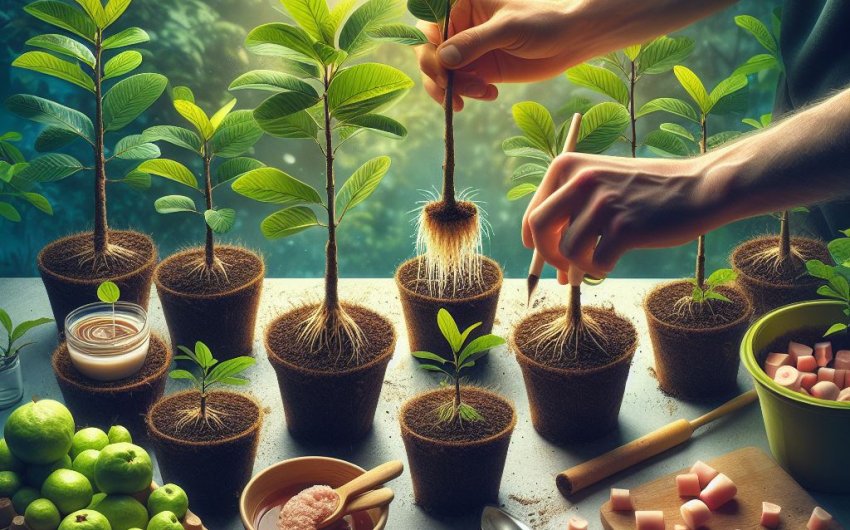
Guava trees are truly wonderful additions to a home garden, especially for those in warmer climates. They are known for their delicious, uniquely flavored fruits, which are rich in vitamins and antioxidants. Beyond their tasty produce, guava trees are also relatively easy to grow and can provide beautiful foliage and fragrant blossoms. It's no wonder that many gardeners, once they experience the joy of growing a guava, often wish to expand their collection or share them with friends.
While guavas can be grown from seed, propagating them through cuttings offers a significant advantage: it creates a clone of the parent plant. This means the new tree will have the exact same desirable traits as the original, including fruit quality, size, and disease resistance. Growing from seed, on the other hand, can result in variations and might take longer to produce fruit.
This comprehensive guide will walk you through the process of propagating guava trees through cuttings. We'll cover everything from selecting the right type of cutting and the best time to take it, to preparing the cuttings, rooting them, and caring for your new guava saplings. Get ready to multiply your guava harvest and share the bounty!
Why propagate guava trees from cuttings?
Propagating guava trees from cuttings offers several distinct advantages over other methods, making it the preferred choice for many home gardeners and commercial growers alike. Understanding these benefits will help you appreciate why this method is so popular and effective.
1. Genetic cloning (True to type)
- Identical to the parent: This is the most significant benefit. When you take a cutting from a guava tree, the new plant grown from that cutting will be a genetic clone of the "mother" plant. This means it will possess all the exact same characteristics:
- Fruit quality: The new tree will produce fruit with the same flavor, size, texture, and sweetness as the parent.
- Growth habit: It will have a similar growth rate, size, and branching pattern.
- Disease resistance: If the parent plant is resistant to certain common diseases, the clone will likely inherit that resistance.
- Maturity: The new tree will mature and begin fruiting much faster than a tree grown from seed.
- Seed variability: Guava trees grown from seed can exhibit genetic variability. This means the resulting trees might not produce fruit that is identical to the parent tree, and sometimes the quality can be inferior. You might end up with a tree that produces smaller, less flavorful, or even inedible fruit. Taking a cutting eliminates this uncertainty.
2. Faster fruiting
- Bypassing juvenile stage: Trees grown from seed have a juvenile stage where they focus on vegetative growth (stems and leaves) before they become reproductively mature enough to flower and fruit. This stage can last several years (3-5 years or more for guavas from seed).
- Accelerated maturity: Cuttings, being genetically identical to a mature plant, effectively skip much of this juvenile stage. A guava tree grown from a cutting will typically start producing fruit much sooner, often within 1-2 years after rooting, compared to the longer wait with seedlings.
3. More predictable growth
- Known traits: Since you know the characteristics of the parent plant, you can accurately predict how the new tree will grow. This is helpful for planning your garden space, knowing its mature size, and anticipating its yield.
- Consistent production: If you have a particularly high-yielding or desirable guava tree, taking cuttings ensures you can replicate that reliable production.
4. Cost-effective expansion
- Free plants: Once you have an established guava tree, propagating from cuttings is essentially free. You get new trees without having to purchase more saplings from a nursery.
- Share with others: It's an excellent way to share your favorite guava variety with friends, family, or fellow gardening enthusiasts.
While grafting is another method to ensure true-to-type reproduction, propagating guava trees from cuttings is generally more accessible and less intimidating for the average home gardener, offering a straightforward path to expanding your guava collection with predictable, delicious results.
When is the best time to take guava cuttings?
Timing is crucial when it comes to propagating guava trees from cuttings. Taking cuttings at the right time significantly increases your chances of success, as the plant's physiological state (dormancy or active growth) influences its ability to root.
1. Ideal timing for semi-hardwood cuttings
- Late spring to early summer: This is generally considered the best time to take semi-hardwood cuttings from guava trees.
- What is semi-hardwood?: Semi-hardwood cuttings are taken from stems that have partially matured during the current growing season. They are firm enough to hold their shape but are still somewhat flexible and not fully woody (like a pencil, not a broomstick).
- The bark may have begun to change color from green to a light brown or reddish tint.
- The leaves will be fully formed but not yet old and hardened.
- Why this time works:
- Active growth, but slowing: At this point, the parent plant is actively growing, providing the cuttings with energy and vigor. However, the wood has started to mature just enough to contain stored carbohydrates (sugars) that fuel root development, but it's not so hard that rooting becomes difficult.
- Warm temperatures: The warm ambient temperatures during late spring and early summer are ideal for promoting root growth once the cuttings are placed in their rooting medium.
- High humidity (often): These months often come with higher humidity, which is beneficial for reducing water loss from the leaves of the cutting before roots form.
2. Avoiding other times
- Hardwood cuttings (late fall/winter): While some plants root well from hardwood cuttings (taken when the plant is fully dormant and woody), guavas generally have lower success rates with this method. The lack of active growth and stored energy in dormant wood makes it harder for them to form roots.
- Softwood cuttings (early spring/very tender): Softwood cuttings are taken from very new, flexible growth. While they might root quickly, they are much more prone to wilting and drying out before roots can establish, as they lack the stored energy and hardened tissue of semi-hardwood. Success rates can be lower unless high humidity and constant moisture are meticulously maintained.
3. Considerations for your climate
- Tropical/Subtropical climates: In consistently warm, frost-free climates, you might have a longer window for taking semi-hardwood cuttings, potentially extending from mid-spring through late summer. The key is to look for the right stage of wood maturity on the branch.
- Temperate climates: Stick strictly to the late spring to early summer window, ensuring you give your cuttings ample time to root and establish before cooler temperatures arrive.
Observing the growth stage of your guava tree and timing your cutting collection to coincide with the semi-hardwood phase will significantly boost your success rate when propagating through cuttings.
How do you select and prepare guava cuttings?
The success of propagating guava trees from cuttings largely hinges on the careful selection and proper preparation of the cutting material. Choosing healthy, viable stems and treating them correctly will give your new plants the best possible start.
1. Selecting the right cutting material
- From a healthy parent plant: Always choose stems from a vigorous, disease-free, and pest-free guava tree that produces fruit you desire to replicate.
- Semi-hardwood growth: As discussed, the best cuttings are from semi-hardwood.
- Appearance: Look for stems that are firm and no longer floppy like new growth, but not yet fully woody and brittle. They should be from the current season's growth.
- Snap test: A good test is to bend the stem; it should snap cleanly rather than just bend or fray. The bark might have a slight brownish tint, but the interior should still be green.
- Pencil thickness: Aim for stems that are about the thickness of a pencil.
- Length: Cuttings should be approximately 6-10 inches ((15 \text{ cm} \text{ to } 25 \text{ cm})) long.
- Nodes: Ensure each cutting has at least 3-4 nodes (the points on the stem where leaves or buds emerge). Roots will typically form from these nodes.
2. Preparing your cutting tools
- Sharp and sterile: Use a very sharp knife, pruning shears, or razor blade. Sterilize your tool before making cuts and between each cutting.
- Sterilization method: Wipe the blade with rubbing alcohol (isopropyl alcohol) or a dilute bleach solution (1 part bleach to 9 parts water). This prevents transferring diseases.
3. Taking the cuttings (the cuts)
- Angle cut at base: Make a clean, diagonal cut just below a node at the bottom of your chosen stem. An angled cut increases the surface area for root formation and helps you distinguish the bottom from the top.
- Straight cut at top: Make a straight cut just above a node at the desired length (6-10 inches) for the top of the cutting.
- Timing: Take cuttings in the early morning when the plant is most hydrated.
4. Preparing the cuttings (reducing stress)
- Remove lower leaves: Carefully strip off all leaves from the lower 1/3 to 1/2 of the cutting. These leaves would be buried in the rooting medium and would rot, potentially causing fungal problems. They also lose water, which you want to minimize.
- Reduce remaining leaves (optional but recommended): If the remaining leaves are very large, you can cut them in half crosswise. This reduces the surface area for transpiration (water loss) while still allowing some photosynthesis to occur. This is especially helpful if you cannot provide high humidity immediately.
- Notch the base (optional): Some propagators like to make 2-3 very shallow vertical scratches or "notches" (about 1/2 inch long) in the bark at the very base of the cutting where roots will form. This exposes more cambium layer and can encourage rooting.
- Immediate placement in water (temporary): If you cannot prepare and plant the cuttings immediately, place their cut ends in a jar of clean water for a short period (a few hours) to keep them hydrated.
5. Applying rooting hormone (highly recommended)
- Enhances rooting: While guavas can sometimes root without it, using a rooting hormone significantly increases your success rate and encourages stronger, faster root development. A powdered rooting hormone like Clonex Rooting Hormone Powder is effective.
- Application:
- Dip the bottom 1-2 inches (2.5-5 cm) of the prepared cutting into the rooting hormone powder.
- Tap off any excess powder. You want a thin, even coating, not a thick clump.
- Why it works: Rooting hormones contain auxins, plant hormones that stimulate cell division and root initiation.
With carefully selected and properly prepared cuttings, you're now ready for the rooting phase, giving your new guava trees the best chance to establish.
What is the best rooting medium for guava cuttings?
Choosing the right rooting medium is crucial for the successful propagation of guava cuttings. The medium needs to provide stability, good drainage, excellent aeration, and consistent moisture without becoming soggy. Heavy garden soil or dense potting mixes are generally not suitable.
Ideal qualities of a rooting medium
- Excellent Drainage: Prevents waterlogging, which suffocates cuttings and promotes rot.
- Good Aeration: Allows oxygen to reach the forming roots, which is essential for healthy root development.
- Moisture Retention: Holds enough moisture to keep the cutting hydrated while it develops roots.
- Sterile/Disease-Free: Reduces the risk of fungal diseases or bacterial infections that can kill vulnerable cuttings.
- Low Nutrients: Cuttings don't need nutrients at this stage; they focus on root development. High nutrient levels can actually inhibit rooting.
Recommended rooting media options
Here are some of the best choices, often used individually or in combinations:
Perlite:
- Description: Lightweight, white, porous volcanic rock.
- Pros: Provides excellent drainage and aeration. It's sterile and pH neutral.
- Cons: No nutrient content. Can be dusty. Very lightweight, so cuttings can sometimes wobble until rooted.
- Usage: Can be used 100% or mixed with other components. A large bag of perlite is a must-have.
Coarse Sand:
- Description: Horticultural-grade coarse sand (not fine play sand or builder's sand).
- Pros: Excellent drainage, good stability for cuttings.
- Cons: Can be heavy. Needs to be thoroughly washed to remove fine particles.
- Usage: Often mixed with peat moss or perlite.
Sphagnum Peat Moss / Coco Coir:
- Description: Peat moss is decomposed sphagnum moss. Coco coir is a sustainable alternative made from coconut husks.
- Pros: Excellent moisture retention while still providing some aeration. Lightweight.
- Cons: Peat moss is acidic (needs to be neutralized for some plants, but fine for guavas if mixed). Can compact over time if used alone.
- Usage: Often used as a component in a mix.
Vermiculite:
- Description: A mica mineral that expands when heated.
- Pros: Excellent moisture retention and aeration. Sterile. Provides some trace minerals.
- Cons: Can become a bit waterlogged if overwatered.
- Usage: Can be used 100% or mixed.
Recommended rooting mix combinations
Using a mix often provides the best balance of properties:
- 50% Perlite + 50% Sphagnum Peat Moss (or Coco Coir): A classic and highly effective mix. Provides excellent drainage, aeration, and moisture retention.
- 50% Coarse Sand + 50% Sphagnum Peat Moss (or Coco Coir): Another good option, slightly heavier than perlite mix.
- 100% Perlite or Vermiculite: Can be very effective, especially if you plan to pot up quickly once roots form. Requires careful monitoring of moisture.
Preparing the rooting pots
- Pots with drainage holes: Always use pots with plenty of drainage holes. This is non-negotiable to prevent soggy conditions and rot.
- Size: Small pots (2-4 inches / 5-10 cm) are ideal for individual cuttings, or you can use a larger tray to accommodate multiple cuttings.
- Cleanliness: Ensure all pots are clean and sterile before use to prevent disease.
- Moisten the medium: Before inserting cuttings, thoroughly moisten your chosen rooting medium. It should be damp like a wrung-out sponge, not soaking wet.
By using a well-chosen and properly prepared rooting medium, you'll create the optimal environment for your guava cuttings to form healthy roots, setting them on their way to becoming new guava trees.
How do you root guava cuttings?
Once your guava cuttings are selected, prepared, and your rooting medium is ready, it's time for the exciting step of rooting them. This phase requires patience and consistent attention to environmental conditions.
1. Inserting the cuttings
- Make holes: Use a pencil or a small stick to make a small hole in the moistened rooting medium in each pot. The hole should be deep enough to accommodate the bottom 1-2 inches ((2.5 \text{ cm} \text{ to } 5 \text{ cm})) of the cutting.
- Insert carefully: Gently insert the prepared guava cutting (with rooting hormone applied) into the hole. Be careful not to wipe off the rooting hormone.
- Firm the medium: Gently firm the rooting medium around the base of the cutting to ensure good contact between the stem and the medium. Avoid pressing too hard, as you still want good aeration.
- Spacing: If using a larger tray, space cuttings so their leaves don't touch, allowing for good air circulation.
2. Providing humidity (crucial for success)
- Why it's important: Cuttings don't have roots to absorb water, so they rely on high humidity to reduce water loss through their leaves (transpiration). High humidity is perhaps the most critical factor for successful rooting of guava cuttings.
- Methods for increasing humidity:
- Plastic bag method: This is a very effective and simple method for home gardeners. After inserting cuttings, place each pot (or the entire tray) inside a clear plastic bag. Inflate the bag slightly and seal it (or use a twist tie) to create a mini-greenhouse effect. Make a few small holes in the bag for minimal air exchange.
- Humidity dome: If you're propagating many cuttings, a clear plastic humidity dome placed over a propagation tray is ideal. A standard seed starting humidity dome can work.
- Humidifier: If you have a dedicated growing area, a room humidifier can maintain high ambient humidity.
- Misting (supplemental): Lightly mist the leaves of the cuttings once or twice a day to keep them hydrated, especially if you can't maintain continuous high humidity with a dome/bag.
3. Light and temperature
- Bright, indirect light: Place your pots or trays in a location that receives bright, indirect light. Avoid direct, scorching sunlight, which can overheat the mini-greenhouse environment and stress or cook the cuttings.
- Warm temperatures: Maintain a consistent temperature between 70-85°F ((21-29^\circ\text{C})). Warmer temperatures generally promote faster root development. If your ambient temperature is lower, a heating mat placed under the pots can be very beneficial, especially for bottom heat.
4. Monitoring moisture and airflow
- Consistent moisture: Keep the rooting medium consistently moist, but never soggy. If using the plastic bag method, you might not need to water often (check weekly), as condensation will recycle moisture. If not using a sealed environment, check the medium daily.
- Airflow (briefly): If using a sealed plastic bag or humidity dome, briefly open it for 15-30 minutes once a day or every other day. This provides fresh air and helps prevent fungal diseases from developing in the stagnant, humid environment. Look for any signs of mold.
5. Patience and checking for roots
- Timeframe: Rooting can take time. For guava cuttings, it typically takes anywhere from 4 to 8 weeks, but can sometimes take longer. Don't be discouraged if you don't see immediate results.
- Signs of rooting:
- New leaf growth: The most exciting sign! If you see new, healthy leaves emerging from the top of the cutting, it's a strong indication that roots have formed.
- Gentle tug test: Very gently tug on the cutting. If you feel resistance, it means roots have started to anchor it in the medium. Do this sparingly, as disturbing roots can harm them.
- Visual confirmation (careful): If using clear pots, you might see roots emerging through the sides.
Once your cuttings show clear signs of rooting, they are ready for the next stage: hardening off and potting up.
How do you harden off and pot up new guava saplings?
Successfully rooting guava cuttings is a major milestone, but the journey isn't over yet! The delicate new saplings need a careful transition from their humid rooting environment to the regular conditions of your home or garden. This process is called hardening off, followed by potting up.
1. Hardening off (gradual acclimatization)
- Why it's important: Your newly rooted cuttings have been living in a very humid, stable environment, protected from fluctuating temperatures and direct wind. Suddenly exposing them to drier air and harsher conditions would cause severe shock, leading to wilting, leaf drop, and potentially death. Hardening off gradually acclimates them.
- Process (if using a humidity dome or bag):
- First few days: Start by opening the humidity dome or plastic bag for increasing periods each day. Begin with 1-2 hours on the first day, gradually increasing the time over a week.
- Next few days: After a few days, prop open the bag or dome permanently, but still keep it covering the plants.
- Final step: After about a week of increasing exposure, remove the bag or dome entirely.
- Environmental considerations: During hardening off, keep the plants in a location with bright, indirect light and stable temperatures. Avoid direct sun or strong drafts.
- Misting (optional): During the hardening off period, you can lightly mist the foliage a couple of times a day to help ease the transition.
2. Potting up the new guava saplings
Once your cuttings have successfully hardened off for about a week and are showing robust new leaf growth (a strong sign of a healthy root system), they are ready to be potted up into their first permanent pots.
- Choose the right pot:
- Size: Select a pot that is only slightly larger than the current root ball of your new sapling, typically a 4-6 inch ((10 \text{ cm} \text{ to } 15 \text{ cm})) diameter pot. Going too large can lead to overwatering.
- Drainage holes: Absolutely essential! Ensure the pot has sufficient drainage holes. Terracotta pots can be a good choice for guava as they promote airflow and drying.
- Cleanliness: Use a clean pot to prevent disease.
- Prepare the potting mix:
- Well-draining, slightly rich mix: Now that the plant has roots, it will need a potting mix that is slightly richer in nutrients than the rooting medium, but still offers excellent drainage and aeration.
- Recommended mix: A good mix would be: 2 parts high-quality potting soil (e.g., FoxFarm Ocean Forest Potting Soil) + 1 part perlite + 1 part coarse sand or bark chips. This provides nutrients, drainage, and aeration.
- Potting process:
- Add a layer of your new potting mix to the bottom of the chosen pot.
- Carefully remove the rooted cutting from its rooting medium. Be extremely gentle to avoid damaging the fragile new roots. You can often tip the pot and gently slide the root ball out.
- Place the sapling in the center of the new pot, ensuring the top of the root ball is at the same level as the new soil. Do not bury the stem deeper than it was in the rooting medium.
- Gently backfill around the roots with the new potting mix, lightly firming it to ensure good contact and remove air pockets.
- Water thoroughly: Give the newly potted sapling a good, deep watering until water drains from the bottom. This settles the soil.
3. Initial care after potting up
- Bright, indirect light: Keep the newly potted sapling in bright, indirect light for a few weeks as it adjusts. Gradually introduce it to more direct sunlight if it's a full-sun variety.
- Consistent moisture: Keep the soil consistently moist but never soggy. Allow the top inch or two to dry out between waterings.
- Fertilizing (wait): Do not fertilize immediately after potting up, as the new potting mix usually contains enough nutrients. Wait about 4-6 weeks, or until you see strong signs of new growth, before starting a very diluted fertilizing regimen during the growing season.
- Patience: Continue to be patient and observe your new guava saplings. They will gradually grow stronger and begin to put out more vigorous new growth as their root systems develop.
By following these careful steps for hardening off and potting up, you'll successfully transition your rooted guava cuttings into healthy, thriving young guava trees, ready to grow and eventually produce delicious fruit!