
Why Are the Leaves of My Rubber Plant Turning Yellow?
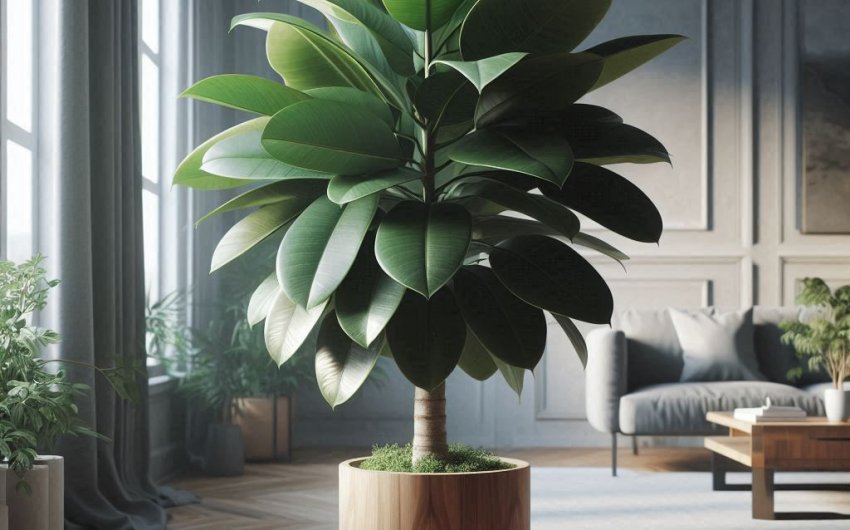
The Rubber Plant (Ficus elastica) is a true classic in the world of houseplants, celebrated for its striking, glossy leaves and statuesque presence. Whether you have a dark green 'Burgundy,' a variegated 'Tineke,' or a vibrant 'Ruby,' a healthy Rubber Plant is a joy to behold. So, it can be quite alarming to suddenly notice its once-perfect leaves turning yellow. This common issue can make any plant parent worry, prompting the immediate question: Why are the leaves of my Rubber Plant turning yellow?
Yellowing leaves are your Rubber Plant's way of telling you that something in its environment or care routine isn't quite right. It's a distress signal, and thankfully, once you understand the potential causes, you can usually take steps to fix the problem and help your plant regain its lush, green glory. From too much water to not enough light, several factors can contribute to this color change. Let's explore the most common culprits and how to restore your Rubber Plant's health.
Is Overwatering the Culprit for Yellow Leaves?
When the leaves of your Rubber Plant start turning yellow, overwatering is by far the most common culprit. This is the number one mistake new and even experienced plant owners make, and it's a silent killer for many houseplants, including the resilient Rubber Plant. Understanding how overwatering affects your plant is crucial to correcting the issue.
How Does Too Much Water Cause Yellowing and What Are the Signs?
Too much water causes yellowing because it leads to a lack of oxygen in the soil, which in turn causes root rot. Here's the breakdown:
- Oxygen Deprivation: Plant roots need oxygen to "breathe" and function properly, absorbing water and nutrients. When the soil is constantly soggy, the air pockets in the soil become filled with water, depriving the roots of oxygen.
- Root Decay: Without oxygen, the roots effectively "drown" and begin to rot. They turn soft, mushy, and often black or brown.
- Inability to Absorb: Once the roots are compromised by rot, they can no longer absorb water or nutrients, even though they are surrounded by moisture. The plant essentially starves and dehydrates, despite being overwatered.
- Leaf Yellowing: The plant's leaves, particularly older or lower leaves, turn yellow as the plant tries to conserve energy by shedding parts it can no longer support. This yellowing often progresses to browning, and then the leaves eventually drop off.
Signs of Overwatering in a Rubber Plant:
- Yellowing leaves, often starting from the bottom of the plant: This is the classic symptom. The yellowing might be even across the entire leaf or start at the edges.
- Leaves feeling soft or mushy: Instead of firm and turgid, the leaves might feel limp and somewhat waterlogged to the touch.
- Stunted growth or no new growth: The plant might stop putting out new leaves, or any new growth will be small and weak.
- Black or brown spots on leaves: These spots can indicate fungal infections (like leaf spot disease) that thrive in overly wet conditions.
- Foul smell from the soil: If the soil smells sour or rotten, it's a strong indicator of root rot.
- Pests: Fungus gnats, tiny flying insects, are attracted to constantly moist soil. Their presence can be a sign of overwatering.
- Wet soil for too long: The soil stays consistently wet, even days or a week after watering.
How to correct overwatering:
- Check Soil Moisture: Before watering, always stick your finger 2-3 inches deep into the soil. Only water if the soil feels dry at that depth.
- Ensure Drainage: Make sure your pot has drainage holes! If it doesn't, repot immediately into a pot with holes. Never let your Rubber Plant sit in standing water in a decorative saucer.
- Proper Potting Mix: Use a well-draining potting mix. Standard potting soil can often be too dense. A good mix for a Rubber Plant should include perlite or orchid bark to improve drainage and aeration. A general houseplant potting mix that offers good drainage, such as FoxFarm Ocean Forest Potting Soil, is a good starting point.
- Allow to Dry Out: If you suspect overwatering, stop watering immediately and let the soil dry out thoroughly. If root rot is severe, you might need to repot, trimming off any mushy, rotten roots before planting in fresh, dry soil.
By mastering the "drench and dry" watering method and ensuring proper drainage, you can eliminate overwatering as a cause of yellow leaves and help your Rubber Plant thrive.
Is Underwatering the Cause of Yellow Leaves?
While overwatering is the more common enemy of the Rubber Plant, underwatering can also be a cause of yellow leaves. It's less frequent to completely stunt a Rubber Plant from thirst, but consistent neglect or simply not providing enough moisture can certainly lead to stress, visible as discolored foliage.
How Does Insufficient Water Affect Leaf Color and What Are the Clues?
Insufficient water affects leaf color because the plant lacks the necessary hydration to maintain its cell structure and perform vital functions like photosynthesis. Water transports nutrients throughout the plant, and without it, these processes slow down or stop.
- Dehydration: When the plant doesn't get enough water, its cells lose turgor (firmness), and the leaves become limp. Prolonged dehydration causes leaf tissue to die off.
- Nutrient Transport: Water is the vehicle for nutrients. If there's not enough water, nutrients cannot be transported efficiently to all parts of the plant, leading to deficiencies in newer growth, or the plant sacrificing older leaves to support new ones.
- Leaf Drop: As a defense mechanism, the plant will shed older leaves to conserve moisture and energy for its core survival. These leaves often turn yellow before browning and falling off.
Clues of Underwatering in a Rubber Plant:
- Yellowing leaves, often starting from the bottom of the plant: Similar to overwatering, but the texture is different.
- Leaves feeling dry and crispy, not mushy: Unlike overwatered leaves, underwatered leaves will feel brittle or stiff, and might even curl inwards.
- Edges of leaves turning brown and crispy: This is a classic sign of dehydration.
- Stunted new growth: New leaves might be small, crinkled, or fail to unfurl properly.
- Soil pulling away from the edges of the pot: The potting mix will be bone dry and might have shrunk away from the pot's sides.
- The pot feels very light: When you lift it, it will be noticeably lighter than when freshly watered.
- Overall drooping: The plant might look generally droopy, but the leaves won't feel waterlogged.
How to correct underwatering:
- Check Soil Moisture Regularly: Get into the habit of checking the top 2-3 inches of soil before watering. Don't wait until the plant is visibly drooping.
- Water Thoroughly: When you do water, provide a good, deep soak. Water slowly and evenly until water flows out of the drainage holes.
- Bottom Watering (for severe dryness): If the soil is extremely dry and has pulled away from the pot, it can be hard to rehydrate with top watering (water might just run through). Place the pot in a shallow tray or basin of water for 30 minutes to an hour, allowing the plant to soak up water from the bottom. Make sure to remove it from standing water afterwards.
- Increase Frequency (if needed): In warmer months or very bright conditions, your Rubber Plant will need more frequent watering. Adjust your schedule based on the drying time of your soil.
By finding the right balance and being consistent with your watering, you can prevent dehydration stress and keep your Rubber Plant's leaves a healthy, vibrant green.
Is Light Exposure the Problem?
Beyond watering, light exposure is a crucial environmental factor that significantly impacts your Rubber Plant's health and can be a reason why its leaves are turning yellow. While Rubber Plants are often sold as adaptable indoor plants, they do have specific light preferences that, if not met, can lead to stress and visible symptoms like yellowing foliage.
How Does Too Much or Too Little Light Affect Leaves?
Both too much and too little light can stress a Rubber Plant, leading to yellowing leaves, though the specific signs might differ.
Too Little Light:
- Impact: Rubber Plants need bright, indirect light to thrive. In low-light conditions, they can't photosynthesize (produce food) efficiently. This lack of energy production causes the plant to become stressed, and it may start shedding older leaves to conserve energy.
- Signs:
- Yellowing of lower, older leaves: These leaves often turn uniformly yellow before dropping. The plant is essentially sacrificing older foliage it can no longer support in an effort to push energy into remaining parts.
- Leggy growth: Stems become stretched out and spindly, with leaves spaced far apart, as the plant reaches for more light.
- Loss of variegation (for variegated varieties): If you have a 'Tineke' or 'Ruby', the beautiful pink, red, or cream colors will fade, and the leaves will become more uniformly green.
- Slowed or stopped growth: The plant won't put out new leaves, or they will be very small.
- Solution: Move your Rubber Plant to a brighter location. An ideal spot is near a large window that receives plenty of bright, indirect light throughout the day. A south- or west-facing window with sheer curtains to diffuse harsh direct sun is often perfect. If natural light is insufficient, consider supplementing with a grow light. A full-spectrum LED grow light, like the SANSI Grow Light Bulb, can provide the necessary intensity.
Too Much Light (Sunburn/Scorching):
- Impact: While they love bright light, direct, intense afternoon sun, especially through a window, can be too harsh for a Rubber Plant and can actually burn its leaves.
- Signs:
- Yellowing patches or bleached spots on leaves: These spots might eventually turn brown and crispy. This typically appears on the parts of the leaves directly exposed to the strongest sun.
- Leaves looking faded or washed out: The vibrant green or variegation might appear dull.
- Curling leaves: Leaves might curl inwards as a protective mechanism against excessive light.
- Solution: If your Rubber Plant is in a spot with direct, unfiltered afternoon sun, move it slightly back from the window or use a sheer curtain to diffuse the light. Morning sun is generally gentler and usually not a problem.
Finding the right balance of light is crucial. A consistently well-lit environment, without direct scorching sun, will help prevent yellowing leaves and encourage your Rubber Plant to maintain its healthy, vibrant appearance.
Are Nutrient Deficiencies or Fertilization Issues at Play?
Beyond water and light, your Rubber Plant needs a balanced diet of essential nutrients to maintain its vibrant green foliage. If its leaves are turning yellow, nutrient deficiencies or improper fertilization could definitely be at play. Plants, like us, require certain building blocks to grow and stay healthy.
How Do Lack or Excess of Nutrients Cause Yellowing?
Both a lack and an excess of nutrients can lead to yellowing leaves, each indicating a different type of problem for your Rubber Plant.
Lack of Nutrients (Deficiency):
- Impact: When your plant doesn't get enough of a particular nutrient, it can't produce enough chlorophyll (the green pigment) or other vital compounds for healthy growth. This often happens if the plant hasn't been fertilized in a long time, or if the potting mix is old and depleted.
- Signs:
- General yellowing of older leaves (especially lower ones): This is often a sign of nitrogen deficiency. Nitrogen is a mobile nutrient, meaning the plant will move it from older leaves to support new growth, causing the older leaves to yellow.
- Yellowing between the veins (interveinal chlorosis), while veins remain green: This can indicate a magnesium or iron deficiency.
- Stunted growth and smaller new leaves: The plant lacks the building blocks to grow vigorously.
- Solution: Fertilize your Rubber Plant regularly during its active growing season (spring and summer). Use a balanced liquid houseplant fertilizer (e.g., 5-5-5 or 10-10-10 N-P-K ratio). Always dilute the fertilizer to half strength or even quarter strength to prevent chemical burn. A general purpose houseplant fertilizer like Miracle-Gro Indoor Plant Food is usually sufficient. Reduce or stop fertilizing in fall and winter when the plant's growth slows down.
Excess Nutrients (Over-fertilization):
- Impact: While it might seem counterintuitive, too much fertilizer can be just as harmful as too little. Excess salts from fertilizer can build up in the soil, "burning" the roots (called fertilizer burn) and making it difficult for the plant to absorb water, even if the soil is moist. This is a form of chemical stress.
- Signs:
- Yellowing of leaves, often accompanied by brown, crispy edges or tips: This is a classic sign of fertilizer burn.
- White crust on the soil surface or pot rim: This indicates salt buildup.
- Wilting and drooping leaves: Even with adequate watering, the plant can't absorb moisture.
- Stunted growth or sudden collapse: In severe cases, the plant can die quickly.
- Solution: If you suspect over-fertilization, immediately flush the soil thoroughly. Place the pot in a sink or tub and slowly pour a large volume of plain water through the soil (at least 2-3 times the volume of the pot) to wash away excess salts. Repeat this flushing process a few times over a week or two. Then, hold off on fertilizing for a month or two. When you resume, use a weaker dilution.
Regularly refreshing your potting mix (repotting every 1-2 years) also helps prevent nutrient depletion and salt buildup. By providing the right amount of nutrients at the right time, you can prevent deficiencies and excesses, keeping your Rubber Plant's leaves healthy and green.
Are Temperature, Humidity, or Potting Issues the Problem?
Sometimes, the cause of yellowing leaves on your Rubber Plant might not be directly related to watering, light, or nutrients, but rather to the overall environment or its home within the pot. Temperature fluctuations, low humidity, or incorrect potting issues can also put stress on your plant, leading to discoloration.
How Do Environmental Stress and Potting Choices Impact Leaf Health?
Temperature Fluctuations and Cold Drafts:
- Impact: Rubber Plants are tropical plants, preferring stable, warm temperatures. Sudden drops in temperature, prolonged exposure to cold drafts (from open windows in winter, air conditioning vents, or even moving the plant from a warm store to a cold car), or temperatures consistently below their ideal range ((18^\circ \text{C}) to (29^\circ \text{C}) or (65^\circ \text{F}) to (85^\circ \text{F})) can stress the plant.
- Signs:
- Yellowing and dropping of leaves, often suddenly: This can be a dramatic reaction to a shock.
- Leaves turning pale or looking generally unhealthy.
- Solution: Place your Rubber Plant in a spot where temperatures are consistent and drafts are minimal. Avoid placing it directly next to external doors, drafty windows, or air conditioning/heating vents. If you're moving it in cold weather, ensure it's well-wrapped for transport.
Low Humidity:
- Impact: As tropical plants, Rubber Plants appreciate higher humidity. Standard indoor humidity, especially in dry winter months when heating systems are on, can be too low for them. While direct yellowing from low humidity is less common, it can lead to stress, which then contributes to other problems or makes the plant more susceptible to pests.
- Signs:
- Crispy, brown leaf edges or tips: This is a more common sign than full yellowing directly from low humidity.
- Overall dull appearance.
- Increased susceptibility to spider mites, which thrive in dry conditions.
- Solution: Increase humidity around your plant. You can use a humidifier near your plant, group plants together to create a microclimate, or place the pot on a pebble tray (a tray filled with pebbles and water, ensuring the pot doesn't sit directly in the water). Regular misting provides only a temporary, minor boost in humidity but can help with dust.
Potting Issues (Incorrect Size or No Drainage):
- Impact: We discussed drainage holes earlier, but it's worth reiterating. A pot without drainage holes will inevitably lead to waterlogged soil and root rot, causing yellow leaves. Similarly, an incorrect pot size can cause issues.
- Pot too large: Holds too much soil and moisture, increasing the risk of overwatering and root rot.
- Pot too small (root-bound): If the roots have completely filled the pot and are circling, the plant can't absorb enough water or nutrients, leading to yellowing, stunted growth, and general decline.
- Signs:
- No drainage holes: Water sits stagnant.
- Roots growing out of drainage holes: Indicates the plant is root-bound.
- Plant looks unstable or disproportionately small for its pot (too large a pot).
- Solution: Always use a pot with drainage holes. If your plant is root-bound, repot it into a container that is only one or two sizes larger. Use a well-draining potting mix. If your plant is in too large a pot and struggling, you might consider carefully repotting it into a slightly smaller, more appropriate size with fresh soil, especially if it's suffering from overwatering.
By carefully assessing and adjusting these environmental and potting factors, you can significantly reduce stress on your Rubber Plant, helping to prevent yellowing leaves and ensure its long-term health and vibrancy.