
How to Use a Rain Gauge for Efficient Watering?
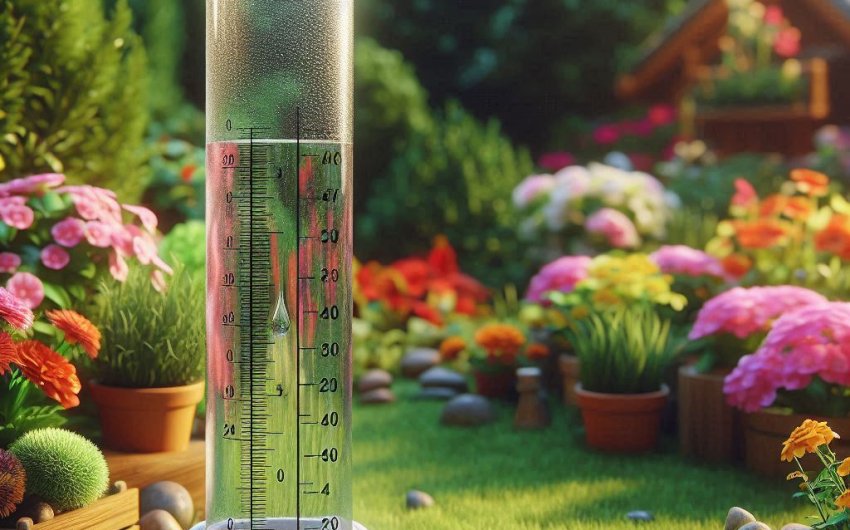
Learning how to use a rain gauge for efficient watering is one of the simplest yet most effective ways to conserve water, save money, and ensure your plants thrive. Many gardeners and homeowners rely on guesswork or a fixed schedule when watering their lawns and gardens, often leading to overwatering or underwatering. A rain gauge provides concrete data on actual precipitation, empowering you to make informed decisions and prevent your plants from becoming thirsty or, worse, suffering from root rot due to excessive moisture.
What is a Rain Gauge and Why is it Essential for Smart Watering?
A rain gauge is a simple instrument used to measure the amount of liquid precipitation (rain, hail, sleet, snowmelt) over a specific period. It's a fundamental tool for anyone serious about efficient watering.
- Function: It collects rainfall and provides a reading, usually in inches or millimeters, indicating how much rain has fallen.
- Simplicity: Most rain gauges are passive devices with no moving parts, making them durable and easy to use.
- Accuracy: While weather stations provide regional data, a rain gauge in your yard tells you exactly how much rain your specific microclimate received, which can differ significantly from a nearby weather station's reading.
- Cost-Effective: Rain gauges are inexpensive tools that can save you significant money on your water bill by preventing unnecessary irrigation.
Why is a Rain Gauge Essential for Smart Watering?
Prevents Overwatering: This is perhaps the biggest benefit. Most lawns and gardens are overwatered, leading to:
- Root Rot: Excessive moisture suffocates plant roots, leading to decay and plant death.
- Disease: Constantly wet conditions favor the development and spread of fungal diseases.
- Nutrient Leaching: Excess water washes away valuable soil nutrients.
- Waste: Overwatering wastes precious water and money. A rain gauge helps you avoid watering when nature has already done the job.
Prevents Underwatering: It helps you identify when your plants do need water, even if you thought they didn't. You'll know precisely how much rain fell, so you don't underestimate your garden's needs during dry spells.
Tailors Watering to Actual Needs: Plants don't need water on a fixed schedule. Their needs vary based on recent rainfall, temperature, humidity, wind, and soil type. A rain gauge helps you factor in the crucial "recent rainfall" component.
Promotes Deeper Root Growth: Knowing exactly how much water (rain + irrigation) your plants received encourages you to water deeply when you do irrigate. This promotes stronger, deeper root systems that are more resilient to drought and stress.
AdvertisementEnvironmental Stewardship: Conserving water is a critical environmental practice. A rain gauge empowers you to be a more responsible water user.
What Are the Different Types of Rain Gauges?
Rain gauges come in various designs, each with its own advantages.
1. Standard (Cylindrical) Rain Gauges:
- Description: The most common and affordable type. It's a simple cylinder with a measuring scale.
- How it Works: Rain collects directly into the cylinder, and the water level is read from the scale. Often made from clear plastic.
- Pros: Inexpensive, easy to read, widely available. A basic rain gauge is perfect for most gardeners.
- Cons: Can evaporate easily if left out, susceptible to overflowing in heavy rain (if small). Some have wider top funnels to increase accuracy, pouring into a narrower internal tube.
2. Tipping Bucket Rain Gauges:
- Description: More sophisticated, often used in weather stations. It has a small seesaw-like bucket that "tips" when a specific amount of rain (e.g., 0.01 inches) has collected.
- How it Works: Each tip triggers a magnetic switch, which can be connected to a data logger or digital display.
- Pros: Can be automated for continuous logging, good for remote monitoring, very accurate. Often part of digital weather stations.
- Cons: More expensive, requires power (for digital versions), mechanical parts can wear out.
3. Siphon Rain Gauges:
- Description: A less common type that uses a siphon mechanism to empty a collection chamber once it fills to a certain level, allowing for continuous measurement without emptying.
- Pros: Can measure continuously without manual emptying.
- Cons: More complex, less widely used for home gardening.
4. Direct Read Rain Gauges (Wedge or Cone):
- Description: Simplistic gauges, often wedge-shaped or conical, with a scale marked on the side.
- Pros: Very inexpensive, easy to find, often visually appealing.
- Cons: Less accurate than standard cylindrical gauges, especially for small amounts of rain or heavy downpours that might splash out.
5. Automated/Wireless Rain Gauges:
- Description: These are essentially digital tipping bucket gauges that transmit data wirelessly to an indoor console or even a smartphone app.
- Pros: Convenience, historical data logging, alerts.
- Cons: Most expensive, requires batteries. A wireless rain gauge offers modern convenience.
For most home gardeners focused on efficient watering, a standard cylindrical or tipping bucket rain gauge is perfectly adequate and highly recommended.
Where is the Best Place to Install My Rain Gauge for Accurate Readings?
Proper placement is crucial for accurate rainfall measurements. A poorly placed rain gauge will give you misleading data.
Open Area:
- Goal: The gauge must be placed in an open area, away from anything that might block rainfall or cause splash-in.
- Avoid: Trees, buildings, fences, walls, tall shrubs, or anything overhead that could block rain or cause water to drip into the gauge.
- Why: These obstructions can create a "rain shadow," leading to an under-reading, or cause "splash-in" from large drops falling off leaves, leading to an over-reading.
Height:
- Recommendation: Mount the rain gauge at a height of about 3-5 feet (0.9-1.5 meters) off the ground.
- Why: This height helps prevent splash-in from ground-level surfaces and minimizes obstruction from low-growing plants, while still being accessible for reading and emptying.
Level Surface:
- Goal: The top opening of the rain gauge must be perfectly level.
- How: Use a small spirit level when mounting it.
- Why: If the gauge is tilted, it will give an inaccurate reading (either too high or too low depending on the tilt).
Away from Sprinklers:
- Crucial: Ensure the rain gauge is not in the path of your irrigation sprinklers. The goal is to measure natural rainfall only.
Easy Access:
- Convenience: While accuracy is paramount, choose a location that is reasonably easy to access for reading and emptying the gauge regularly.
Secure Mounting:
- Stability: Mount the gauge securely on a sturdy post, fence post, or dedicated stand. It should not wobble or be easily knocked over by wind or curious animals. A rain gauge mounting pole can be helpful.
How Do I Read and Record Rainfall Data from My Gauge?
Reading your rain gauge is straightforward, but consistent record-keeping turns raw data into actionable watering decisions.
1. Reading the Gauge:
- Frequency: Check your rain gauge regularly, ideally after every significant rainfall event, or at least once every 24 hours during rainy periods.
- Level Reading: Read the water level at eye level to avoid parallax error (where the reading appears different depending on your viewing angle).
- Units: Most home rain gauges measure in inches and fractions of an inch (e.g., 0.1, 0.25, 0.5 inches).
- Empty After Reading: After noting the reading, empty the rain gauge immediately. This ensures the next rainfall event is measured accurately from zero. If you don't empty it, you'll be measuring cumulative rainfall, which can also be useful, but for daily watering decisions, fresh readings are best.
2. Recording the Data:
- Simple Log: Keep a simple notebook, a whiteboard, or a spreadsheet to record your daily or event-based rainfall.
- What to Record:
- Date
- Time of reading
- Amount of rainfall (e.g., 0.75 inches)
- Any relevant notes (e.g., "heavy downpour," "light drizzle all day").
- Digital Options: If you have a digital or wireless rain gauge, it may automatically record data for you, often providing graphs and historical trends.
3. Understanding the Data:
- Cumulative Rainfall: Over time, you'll see how much rain your garden receives weekly or monthly.
- Deficit/Surplus: Compare the actual rainfall to the recommended watering needs of your plants (see below). This will clearly show if your garden is in a rain deficit (needs watering) or surplus (doesn't need watering).
How Do I Use Rain Gauge Data to Make Smart Watering Decisions?
This is where the rubber meets the road! Interpreting your rain gauge readings to inform your irrigation schedule.
1. Know Your Plants' Water Needs:
Different plants have different water requirements.
- Lawns: Most established lawns need about 1 inch of water per week during their active growing season (including rainfall).
- Vegetables: Many vegetables, especially fruiting ones (tomatoes, peppers, squash), are thirsty and may need 1-1.5 inches per week.
- Perennials/Shrubs: Needs vary widely. Many established perennials can tolerate less, while newly planted ones need consistent moisture.
- Drought-Tolerant Plants: Succulents, cacti, and many native plants need very little supplemental water once established.
2. Track Weekly Rainfall:
- Method: At the beginning of your watering week (e.g., Sunday morning), empty your rain gauge. Throughout the week, record any rainfall.
- Example: If your lawn needs 1 inch of water per week:
- If you get 0.75 inches of rain during the week, you'll only need to provide an additional 0.25 inches with irrigation.
- If you get 1.25 inches of rain, you might not need to water at all that week.
- If you get 0 inches, you'll need to provide the full 1 inch.
3. Measure Your Sprinkler Output:
You need to know how long it takes your irrigation system to deliver the required amount of water.
- Test: Place several empty, straight-sided cans (like tuna cans or cat food cans) randomly within the area covered by your sprinklers.
- Run Sprinklers: Turn on your sprinklers for a fixed amount of time (e.g., 15 minutes).
- Measure: After 15 minutes, measure the water depth in each can and calculate the average.
- Calculate: Divide the desired amount of water (e.g., 1 inch) by the average water collected in your cans. Multiply by 15 minutes to find out how long you need to run your sprinklers to deliver 1 inch.
- Example: If your cans collected 0.25 inches in 15 minutes, and your lawn needs 1 inch, then you need to run your sprinklers for 4 x 15 minutes = 60 minutes.
- Adjust per Zone: Repeat this test for each irrigation zone, as flow rates can vary.
4. Adjust Watering Based on Data:
- The Golden Rule: Only water when your plants need it, and then water deeply.
- Using Rain Gauge:
- If your rain gauge shows you received sufficient rain (e.g., 1 inch for your lawn), skip irrigation that week.
- If you received less than needed, make up the difference with your irrigation system based on your sprinkler output test.
- If you received very little or no rain, proceed with deep irrigation.
- Visual Cues: Always combine rain gauge data with visual cues from your plants. Even with adequate rain, extreme heat or wind can cause plants to dry out faster and show signs of thirst.
- Lawn: Grass blades may dull in color, curl, or retain footprints for longer than usual.
- Garden Plants: Leaves may wilt slightly, or soil may appear parched.
What Are Other Tips for Efficient Watering in the Garden?
A rain gauge is one excellent tool, but it fits into a broader strategy for water conservation.
Water in the Morning:
- Why: Watering in the morning minimizes water loss due to evaporation (compared to midday) and allows foliage to dry before nightfall, reducing the risk of fungal diseases (compared to evening watering).
Deep, Infrequent Watering:
- Benefit: Encourages deeper root growth, making plants more resilient to dry spells and less reliant on frequent surface watering. Short, frequent watering promotes shallow roots and thatch.
Use Mulch:
- Material: Apply a 2-4 inch layer of organic mulch (like wood chips, shredded bark, straw, or compost) around plants in garden beds and vegetable patches.
- Benefit: Mulch significantly reduces water evaporation from the soil surface, suppresses weeds (which compete for water), and moderates soil temperature.
Improve Soil Health:
- Organic Matter: Amend your soil regularly with compost. Healthy soil rich in organic matter acts like a sponge, holding onto moisture and nutrients much more effectively than poor soil. This means you'll need to water less.
- Aeration: For lawns, annual aeration can improve water penetration into compacted soil.
Targeted Watering:
- Drip Irrigation/Soaker Hoses: For garden beds, vegetable gardens, and established trees/shrubs, consider using a drip irrigation system or soaker hoses. These systems deliver water directly to the plant roots, minimizing waste from evaporation and runoff.
- Avoid Overhead Sprinklers: While fine for lawns, overhead sprinklers for garden beds can lead to more evaporation and wet foliage, which increases disease risk.
Group Plants by Water Needs:
- Hydrozoning: Design your garden by grouping plants with similar water requirements together. This allows you to water specific zones efficiently without overwatering drought-tolerant plants or underwatering thirsty ones.
Choose Drought-Tolerant Plants:
- Native Plants/Xeriscaping: Incorporate plants native to your region or other drought-tolerant plant varieties into your landscape. Once established, these require minimal supplemental water.
Repair Leaks:
- Check Regularly: Inspect hoses, sprinklers, and irrigation systems for leaks or breaks. Even small leaks can waste significant amounts of water over time.
By diligently learning how to use a rain gauge for efficient watering and combining this simple tool with other smart watering practices, you can cultivate a healthier, more beautiful garden while significantly reducing your water consumption and environmental impact.