
Toxic Houseplants for Cats: Avoid These Harmful Plants
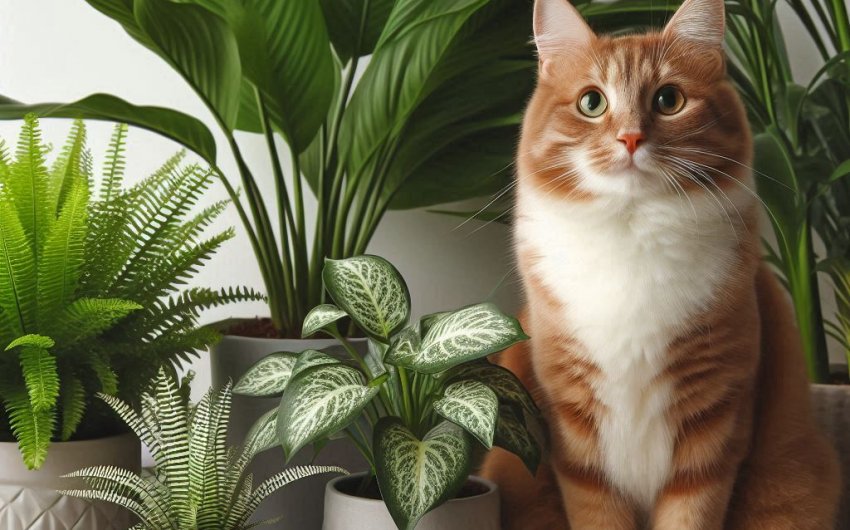
Bringing the beauty of nature indoors with houseplants is a wonderful way to brighten your home, purify the air, and add a touch of tranquility. However, if you share your living space with curious feline friends, this green dream can quickly turn into a potential hazard. Cats are naturally inquisitive creatures, often drawn to new textures and enticing leaves, and a nibble on the wrong plant can lead to serious health issues. Protecting your beloved companion means knowing which common houseplants pose a risk and making informed choices about your indoor greenery. This guide will help you identify some of the most common and potentially toxic houseplants for cats, understand the dangers they pose, and learn how to create a safer environment for your furry family members.
Why Are Cats Attracted to Plants?
It might seem like your cat is just trying to destroy your decor, but there are several reasons why they might be drawn to nibble on your houseplants. Understanding this behavior can help you manage the risk.
Natural Instincts
Cats are natural hunters and explorers. Even domesticated house cats retain many of their wild instincts. Plants offer:
- Texture: The varying textures of leaves and stems can be appealing to a cat's mouth.
- Play: Dangling leaves or swaying branches can trigger a cat's play drive, making them bat at, pounce on, and inevitably, chew the plant.
- Enrichment: For indoor cats, plants can offer a form of environmental enrichment, providing something new and interesting to interact with in their confined space.
Dietary Needs (or Misconceptions)
- Digestion: Some theories suggest cats chew on plants to aid digestion or to induce vomiting to get rid of hairballs or indigestible material. While grass is a common outdoor choice for this, indoor plants might be a substitute.
- Nutrients: Less commonly, cats might seek out certain nutrients they're missing from their diet, though a well-balanced cat food usually provides everything they need.
Boredom or Stress
A bored or stressed cat might resort to destructive behaviors, including chewing on houseplants, as a way to relieve tension or seek attention. Ensuring your cat has plenty of toys, scratching posts, and mental stimulation can help. You can find many cat toys for boredom online.
What Makes a Plant "Toxic" to Cats?
The term "toxic" can cover a wide range of effects, from mild irritation to life-threatening conditions. Different plants contain different types of harmful compounds.
Calcium Oxalate Crystals (Irritants)
Many common houseplants, especially those in the Araceae family, contain insoluble calcium oxalate crystals. These are tiny, sharp, needle-like crystals found throughout the plant.
- How they work: When a cat chews on the plant, these crystals are released and pierce the tissues in the mouth, throat, and digestive tract.
- Symptoms: Immediate and intense burning or irritation of the mouth, tongue, and lips. This often leads to drooling, pawing at the mouth, vomiting, difficulty swallowing, and a decreased appetite.
- Severity: While typically not fatal, the irritation is very painful and can cause swelling that affects breathing.
Cardiac Glycosides (Heart Toxins)
These are very dangerous compounds that can affect the heart's function.
- How they work: They interfere with the electrical signals that control heartbeats, leading to irregular heart rhythms.
- Symptoms: Nausea, vomiting, diarrhea, weakness, lethargy, and potentially severe cardiac issues (slow, fast, or irregular heartbeat) that can be fatal.
- Severity: Highly toxic, even small amounts can be deadly.
Saponins (Gastrointestinal Irritants)
Saponins are soap-like compounds that can cause gastrointestinal upset.
- How they work: They irritate the lining of the digestive tract.
- Symptoms: Vomiting, diarrhea, lethargy, and sometimes excessive drooling.
- Severity: Usually cause mild to moderate digestive upset, but large ingestions can be more serious.
Alkaloids (Neurotoxins/Various Effects)
This is a broad group of nitrogen-containing compounds with diverse effects, often impacting the nervous system.
- How they work: Can interfere with nerve signals, muscle function, or other bodily processes.
- Symptoms: Can range widely from digestive upset, lethargy, and tremors to seizures, paralysis, and respiratory depression, depending on the specific alkaloid.
- Severity: Can range from mild to extremely severe and fatal.
Other Compounds
Plants can also contain resins, tannins, essential oils, and other compounds that can cause various toxic reactions.
Top Toxic Houseplants to Avoid if You Have Cats
Here's a list of common houseplants that are known to be toxic to cats. This is not an exhaustive list, but it covers many popular choices.
1. Lilies (Lilium spp. and Hemerocallis spp. - Daylilies)
Danger Level: EXTREMELY HIGH - Potentially FATAL
- Description: This includes true lilies (like Easter Lily, Tiger Lily, Asiatic Lily, Oriental Lily) and Daylilies. They are known for their large, often fragrant, trumpet-shaped flowers.
- Toxic Parts: All parts of the plant are highly toxic, including the pollen, petals, leaves, and even the water in a vase containing cut lilies.
- Toxins: Unknown compound (nephrotoxin) that causes kidney failure.
- Symptoms: Within hours, vomiting, lethargy, and loss of appetite. These initial symptoms may lessen after 12-24 hours, giving a false sense of recovery, but irreversible kidney damage is occurring. Within 3-7 days, severe kidney failure, dehydration, and death.
- Action: If you suspect your cat has ingested any part of a lily, seek emergency veterinary care IMMEDIATELY. This is a true emergency. Even a small taste or grooming pollen off their fur can be deadly.
2. Sago Palm (Cycas revoluta)
Danger Level: EXTREMELY HIGH - Potentially FATAL
- Description: A popular plant with stiff, dark green, palm-like fronds. Often used as an indoor ornamental plant.
- Toxic Parts: All parts are toxic, especially the seeds (nuts) and the trunk.
- Toxins: Cycasin (a neurotoxin and hepatotoxin).
- Symptoms: Vomiting, diarrhea, black tarry stools, lethargy, weakness, liver damage (jaundice, abdominal fluid accumulation), seizures, liver failure, and death.
- Action: Emergency veterinary care is crucial. Very high fatality rate even with treatment.
3. Dumb Cane (Dieffenbachia spp.)
Danger Level: MODERATE to SEVERE (local irritation, potential breathing issues)
- Description: Popular for its large, attractive leaves, often variegated with cream or yellow.
- Toxic Parts: All parts.
- Toxins: Insoluble calcium oxalate crystals.
- Symptoms: Immediate and intense oral irritation, burning, pain, drooling, pawing at the mouth, vomiting, difficulty swallowing, swelling of the mouth/throat (can lead to breathing difficulty).
- Action: Rinse mouth with cool water (if safe). Contact vet immediately, especially if swelling is observed.
4. Pothos (Epipremnum aureum)
Danger Level: MILD to MODERATE (local irritation)
- Description: Also known as Devil's Ivy. A very common vining plant with heart-shaped leaves, often variegated.
- Toxic Parts: All parts.
- Toxins: Insoluble calcium oxalate crystals.
- Symptoms: Oral irritation, drooling, vomiting, difficulty swallowing. Usually not life-threatening but very uncomfortable.
- Action: Monitor, offer milk or tuna water to help soothe. Contact vet if symptoms persist or are severe.
5. Philodendron (Philodendron spp.)
Danger Level: MILD to MODERATE (local irritation)
- Description: A large genus of plants with many varieties, from vining to upright. Often confused with Pothos.
- Toxic Parts: All parts.
- Toxins: Insoluble calcium oxalate crystals.
- Symptoms: Similar to Pothos and Dieffenbachia: oral irritation, drooling, pawing at mouth, vomiting, difficulty swallowing.
- Action: Monitor, offer milk/tuna water. Contact vet if severe.
6. Peace Lily (Spathiphyllum spp.)
Danger Level: MILD to MODERATE (local irritation)
- Description: Known for its glossy green leaves and white "flowers" (which are actually modified leaves called spathes).
- Toxic Parts: All parts.
- Toxins: Insoluble calcium oxalate crystals.
- Symptoms: Oral irritation, drooling, pawing at mouth, vomiting, difficulty swallowing.
- Action: Monitor, offer milk/tuna water. Contact vet if severe.
7. Elephant Ear (Colocasia, Alocasia, Xanthosoma spp.)
Danger Level: MODERATE to SEVERE (local irritation)
- Description: Large-leaved tropical plants with elephant ear-shaped leaves.
- Toxic Parts: All parts.
- Toxins: Insoluble calcium oxalate crystals.
- Symptoms: Similar to Dieffenbachia: intense oral irritation, drooling, vomiting, swelling of the mouth/throat that can cause breathing issues.
- Action: Rinse mouth with cool water (if safe). Contact vet immediately if swelling is observed.
8. Aloe Vera (Aloe barbadensis miller)
Danger Level: MILD to MODERATE (gastrointestinal upset)
- Description: A succulent plant known for its medicinal gel.
- Toxic Parts: The latex layer (outer skin and yellow sap) of the leaf. The gel itself is not toxic.
- Toxins: Saponins and anthraquinones.
- Symptoms: Vomiting, diarrhea, lethargy, tremors (rare).
- Action: Monitor. Contact vet if symptoms are severe or persistent.
9. Asparagus Fern (Asparagus setaceus)
Danger Level: MILD to MODERATE (gastrointestinal upset)
- Description: A delicate, feathery plant often used in hanging baskets. Not a true fern.
- Toxic Parts: Berries are most toxic, but foliage can also cause issues.
- Toxins: Saponins.
- Symptoms: Vomiting, diarrhea, abdominal pain, skin irritation (from contact with sap). Repeated exposure can cause dermatitis.
- Action: Monitor. Contact vet if symptoms are severe.
10. ZZ Plant (Zamioculcas zamiifolia)
Danger Level: MODERATE (local irritation and gastrointestinal upset)
- Description: A popular, low-maintenance plant with waxy, dark green leaves.
- Toxic Parts: All parts.
- Toxins: Insoluble calcium oxalate crystals.
- Symptoms: Oral irritation, drooling, vomiting, diarrhea.
- Action: Monitor. Contact vet if severe.
11. Snake Plant (Sansevieria trifasciata)
Danger Level: MILD to MODERATE (gastrointestinal upset)
- Description: Also called Mother-in-Law's Tongue. Known for its stiff, upright, sword-like leaves.
- Toxic Parts: All parts.
- Toxins: Saponins.
- Symptoms: Nausea, vomiting, diarrhea, depression.
- Action: Monitor. Contact vet if severe.
12. Oleander (Nerium oleander)
Danger Level: EXTREMELY HIGH - Potentially FATAL
- Description: Often grown outdoors in warm climates, but sometimes brought indoors. Has long, narrow leaves and fragrant flowers (pink, white, red).
- Toxic Parts: All parts are highly toxic, including smoke from burning it.
- Toxins: Cardiac glycosides.
- Symptoms: Nausea, vomiting, severe diarrhea, irregular heart rate, weakness, collapse, and death.
- Action: Emergency veterinary care immediately. Extremely dangerous.
13. Autumn Crocus (Colchicum autumnale)
Danger Level: EXTREMELY HIGH - Potentially FATAL
- Description: A bulb that looks similar to true crocus but blooms in autumn.
- Toxic Parts: All parts, especially the bulb.
- Toxins: Colchicine (an alkaloid).
- Symptoms: Vomiting, diarrhea (often bloody), shock, multi-organ damage (bone marrow suppression, liver, kidney damage), respiratory failure, and death.
- Action: Emergency veterinary care immediately. Extremely dangerous.
14. Azalea/Rhododendron (Rhododendron spp.)
Danger Level: HIGH - Potentially FATAL
- Description: Flowering shrubs often used outdoors but sometimes brought indoors, especially smaller varieties or cuttings.
- Toxic Parts: All parts.
- Toxins: Grayanotoxins.
- Symptoms: Vomiting, diarrhea, hypersalivation, weakness, tremors, abnormal heart rate and rhythm, low blood pressure, coma, and death.
- Action: Emergency veterinary care immediately.
What to Do if Your Cat Eats a Toxic Plant
Even with the best precautions, accidents can happen. Knowing what to do in an emergency is vital.
1. Stay Calm
Panicking won't help your cat. Take a deep breath.
2. Remove the Cat and the Plant
Immediately separate your cat from the plant to prevent further ingestion.
3. Identify the Plant
If you don't know the name, take a clear photo of the plant (leaves, flowers, stems, any berries) or collect a sample. This information is crucial for the vet or poison control center.
4. Contact a Professional IMMEDIATELY
Do not wait for symptoms to appear. The sooner you act, the better the outcome.
- Your Veterinarian: Call your vet or the nearest emergency veterinary clinic.
- Pet Poison Control Hotlines:
- ASPCA Animal Poison Control Center (APCC): 1-888-426-4435 (consultation fee may apply)
- Pet Poison Helpline: 1-855-764-7661 (consultation fee may apply)
5. Provide Information
Be prepared to give the following details:
- The exact name of the plant (or a detailed description/photo).
- What part of the plant was ingested (leaves, stem, flower, berry)?
- How much was ingested (even an estimate helps)?
- When it happened (time elapsed)?
- Your cat's breed, age, weight, and any existing medical conditions.
- Any symptoms you've observed.
6. Do NOT Induce Vomiting Unless Directed by a Vet
Never try to make your cat vomit unless specifically instructed to do so by a veterinarian or poison control. It can be dangerous and cause more harm depending on the toxin and your cat's condition.
Creating a Cat-Safe Indoor Garden
Having cats doesn't mean you can't have plants! You just need to be mindful and proactive.
1. Choose Only Non-Toxic Plants
The easiest and safest solution is to only bring cat-safe houseplants into your home. There are many beautiful options available.
Popular Cat-Safe Houseplants:
- Spider Plant (Chlorophytum comosum) - Often a favorite for cats to bat at, but non-toxic.
- Boston Fern (Nephrolepis exaltata 'Bostoniensis')
- Areca Palm (Dypsis lutescens)
- Christmas Cactus (Schlumbergera bridgesii)
- Polka Dot Plant (Hypoestes phyllostachya)
- African Violet (Saintpaulia spp.)
- Orchids (Phalaenopsis spp. - most common types)
- Friendship Plant (Pilea involucrata)
- Prayer Plant (Maranta leuconeura)
- Haworthia (Haworthia spp. - a succulent)
- Baby Tears (Soleirolia soleirolii)
When in doubt, always check with a reliable source like the ASPCA toxic and non-toxic plant list before purchasing a new plant.
2. Provide a "Sacrificial" Plant
Offer your cat a safe plant that they are allowed to chew on.
- Cat Grass: Grow your own cat grass (a mix of wheat, oat, barley, or rye grasses) in a cat grass growing kit or a pot. This provides a safe, appealing alternative.
- Catnip/Catmint: Some cats respond strongly to catnip, which can provide a safe outlet for their chewing instincts.
3. Place Plants Out of Reach
This is easier said than done with a nimble cat, but try to place toxic plants where your cat absolutely cannot access them.
- High Shelves: Install shelves high up where cats can't jump.
- Hanging Baskets: Use macrame plant hangers from the ceiling.
- Closed Rooms: Keep toxic plants in rooms that cats are not allowed to enter.
- Terrariums/Cloches: For small plants, consider keeping them inside a closed terrarium or under a glass cloche.
4. Deterrent Methods
If you must have a mildly toxic plant, you can try to deter your cat.
- Bitter Sprays: Spray leaves with a pet-safe bitter apple spray for cats. Many cats dislike the taste. Reapply regularly.
- Unpleasant Textures: Place pinecones, aluminum foil, or double-sided tape on the soil surface to make it less appealing for digging or jumping into.
- Citrus or Coffee Grounds: Cats generally dislike the smell of citrus peels or coffee grounds. You can scatter these on the soil surface (replace regularly).
5. Educate Yourself and Others
- Learn Plant Names: Know the botanical and common names of all your houseplants.
- Inform Visitors: If you have friends or family bringing you plants, make sure they know you have cats and the plant must be non-toxic.
- Don't Rely on Just Online Lists: Always cross-reference with multiple reputable sources (like university extension sites or the ASPCA) as plant toxicity information can sometimes vary.
Being a responsible pet owner and a plant lover requires diligence, especially when it comes to toxic houseplants for cats. By proactively choosing cat-safe plants, understanding the risks, and knowing what steps to take in an emergency, you can create a harmonious home where both your beloved feline companions and your flourishing greenery can coexist safely. Prioritizing your cat's health ensures that your indoor garden remains a source of joy, not worry.