
Maximizing Space: Compact Designs for DIY Outdoor Compost Bins
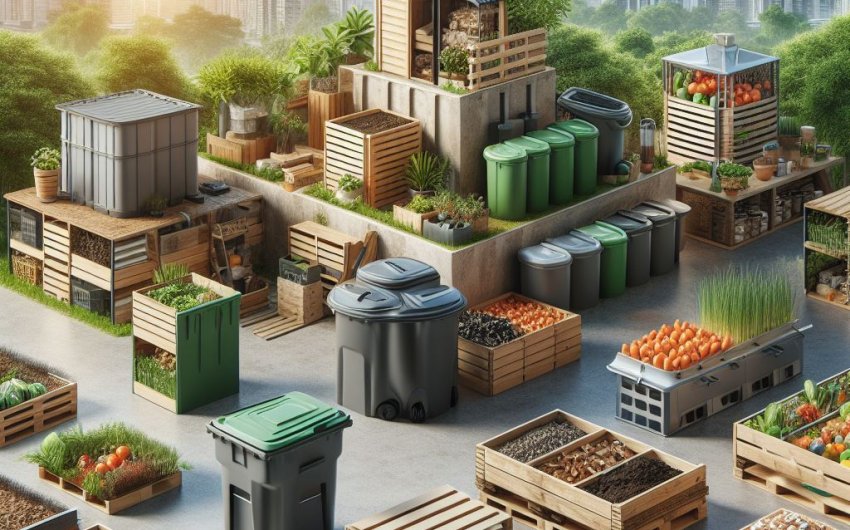
For maximizing space in any garden, compact designs for DIY outdoor compost bins are essential for efficiently recycling organic waste. Focusing on vertical structures like stacking bins, pallet towers, or even repurposed garbage cans allows you to create nutrient-rich compost without sacrificing valuable garden footprint.
Why are compact DIY compost bins essential for small gardens?
Compact designs for DIY outdoor compost bins are absolutely essential for small gardens because they enable efficient composting without consuming precious ground space. These innovative solutions empower gardeners to recycle organic waste, create valuable soil amendment, and practice sustainable gardening, even in the most confined areas.
Benefits of compact DIY compost bins for small gardens:
- Space Maximization: Utilizes vertical space, narrow corners, or small patio areas, making composting feasible in urban, suburban, or balcony gardens.
- Cost-Effective: DIY construction often uses repurposed or inexpensive materials, making composting accessible on a budget.
- Environmental Impact: Diverts kitchen scraps and yard waste from landfills, reducing methane emissions and promoting sustainability.
- Produces Valuable Resource: Creates nutrient-rich compost (black gold) to enrich garden soil, improve plant health, and reduce the need for purchased fertilizers.
- Aesthetic Appeal: Compact designs can be built to blend seamlessly into a small garden or even become an attractive, functional feature.
- Easy Access: Often designed for easy access for adding materials, turning, and harvesting.
- Reduced Odor (with proper management): Good design, especially with aeration, helps prevent unpleasant smells.
- Hands-on Hobby: The process of composting is a rewarding and educational experience.
What are the easiest compact DIY compost bin designs for beginners?
For beginners looking to build compact designs for DIY outdoor compost bins, the easiest options prioritize simplicity, readily available materials, and minimal construction effort. These designs are perfect for quickly setting up an efficient system, even in small spaces, requiring basic tools and skills.
Easiest compact DIY compost bin designs:
- Drilled Plastic Storage Bin:
- Description: A large plastic tote with numerous holes drilled for aeration and drainage.
- Materials: Large plastic storage tote with lid (18-30 gallon), power drill with 1/2 to 1-inch bit.
- Pros: Very inexpensive (often already owned), lightweight, easily moved, secure lid for rodent control.
- Cons: Requires manual turning (shaking or rolling for small bins), can get too wet without proper management.
- Best for: Small batches, indoor/outdoor worm composting (vermicomposting), beginner.
- Wire Mesh Cylinder:
- Description: A simple cylinder formed from a roll of wire mesh.
- Materials: Chicken wire or hardware cloth (10-12 ft x 3 ft), wire cutters, heavy-duty gloves.
- Pros: Extremely budget-friendly, excellent aeration, easy to turn (unfasten and re-form), lightweight.
- Cons: Not rodent-proof (unless using 1/4" hardware cloth), less aesthetically refined.
- Best for: Quick setup, temporary, small to medium piles.
- 3-Sided Pallet Lean-To Bin:
- Description: Three wooden pallets forming a "U" shape, leaning against an existing sturdy wall or fence.
- Materials: 3 HT-stamped wooden pallets, heavy-duty zip ties or screws/nails.
- Pros: Often free materials, excellent airflow, very quick to build, sturdy.
- Cons: Relies on a backdrop, needs careful pallet sourcing.
- Best for: Small to medium backyards, next to a garage or fence.
- Stacked Tire Composter:
- Description: 3-5 old tires stacked on top of each other.
- Materials: Old tires (check local recycling for free ones).
- Pros: Free, excellent heat retention for hot composting, very sturdy.
- Cons: Visually heavy, tires can be difficult to manage, some concerns about rubber leaching (though studies suggest minimal).
- Best for: Hot composting, rustic aesthetic, areas where aesthetics aren't paramount.
How do stackable and tiered compost bins maximize space vertically?
Stackable and tiered compost bins are ingenious compact designs for DIY outdoor compost bins that expertly maximize space vertically. By layering composting chambers, they allow you to process organic waste efficiently in a small footprint, ideal for intensive composting in limited areas.
How stackable/tiered bins maximize vertical space:
- Tiered Systems (e.g., Stacking Plastic Composters, Wooden Tiers):
- Concept: Multiple individual composting chambers are stacked on top of each other. The bottom chamber collects finished compost, while upper chambers hold newer material.
- Materials: Can be built from repurposed plastic tubs (drilled with holes) or constructed with wooden frames and mesh bottoms for each tier.
- Pros: Allows for easy harvest of finished compost from the bottom, maintains consistent moisture, good for small spaces.
- Cons: May not aerate as well as open bins (requires more manual turning), can be visually heavy.
- Best for: Vermicomposting (worm bins), small batch composting where you want finished compost readily available. You can purchase stackable compost bins.
- Tower Composters (e.g., Stacked Pallets with Smaller Top):
- Concept: A base made from a pallet or two, with a narrower or modified upper structure creating a chimney-like effect for aeration.
- Materials: Multiple pallets, possibly dismantled and rebuilt.
- Pros: Excellent aeration, larger capacity than single-pallet bins without a huge footprint.
- Cons: Requires more construction, can be visually imposing.
- Best for: Active composting with good airflow, in small to medium backyards.
- Tumbling Composters (DIY Barrel Composters):
- Concept: A barrel (often repurposed plastic) mounted on a frame that allows it to be rotated or "tumbled."
- Materials: Large plastic barrel (food-grade), wooden or metal frame, bolts/pipes for mounting, drill.
- Pros: Very easy to turn (just spin the barrel), excellent aeration (when tumbled), contained (good for rodent proofing), fast decomposition.
- Cons: Requires more advanced DIY skills for the frame, can be heavy when full, limited capacity per tumble.
- Best for: Fast, active composting in a very small space, where frequent turning is desired. A DIY compost tumbler kit can assist.
- Vertical Pocket/Wall Composters (Less Common for Raw Composting):
- Concept: While popular for growing plants, these are less common for active composting of raw scraps due to drainage and turning challenges. However, they can be used for "leaf mold" (decomposed leaves) or cured compost storage.
- Materials: Fabric or plastic wall planters.
- Pros: Minimal footprint.
- Cons: Not ideal for hot composting, difficult to manage the wetness of raw food scraps.
How do repurposed garbage cans or barrels become compact compost solutions?
Repurposing garbage cans or barrels offers surprisingly effective and compact designs for DIY outdoor compost bins, turning discarded items into robust composting solutions. These sturdy vessels are ideal for containing organic waste in small spaces, provided they are modified correctly for essential airflow and drainage.
How repurposed garbage cans/barrels become compost solutions:
- Repurposed Garbage Can (Upright Composter):
- Materials: 1 metal or plastic garbage can with a sturdy lid (30-50 gallon). Power drill with 1/2 to 1-inch bit. Optional: Bricks or wood blocks for elevation.
- Construction:
- Drill numerous (30-50+) 1/2-inch to 1-inch holes all over the sides and bottom of the can for aeration and drainage.
- Elevate the can on bricks or wood blocks to ensure airflow beneath the drilled bottom.
- Secure the lid tightly (you may need a bungee cord for plastic lids) for rodent control.
- Pros: Very compact, contained (good for urban areas), excellent rodent proofing (especially metal cans), inexpensive (often already owned).
- Cons: Turning can be hard (need a compost aerator tool), capacity is limited.
- Best for: Small backyards, patios, batch composting, areas with rodent concerns.
- Repurposed Plastic Barrel (for Tumbling Composter):
- Materials: 1 food-grade plastic barrel (55 gallon), lumber/metal for a frame, metal pipe/rod, bolts, power drill, jigsaw/hole saw.
- Construction (Advanced DIY):
- Thoroughly clean the barrel. Drill numerous aeration/drainage holes in the sides.
- Cut a large opening (e.g., 18x12 inches) on one side for loading/unloading, creating a hinged door.
- Drill a larger hole through the exact center of each end of the barrel for the central pipe/rod.
- Construct a sturdy wooden or metal frame to hold the barrel horizontally, allowing it to spin freely on the central pipe/rod.
- Pros: Very easy and efficient turning (just spin), fast decomposition due to frequent aeration, fully contained (rodent proof).
- Cons: Requires more advanced DIY skills for the frame, higher initial effort.
- Best for: Active, fast composting in small to medium spaces, where frequent turning is desired.
- Cut-Down Barrel (Two Open Bins):
- Materials: 1 food-grade plastic barrel, jigsaw.
- Construction: Carefully cut the barrel in half lengthwise. Drill drainage holes in the bottom of each half.
- Pros: Creates two open, half-barrel bins (one for active, one for curing). Good capacity, relatively easy to turn.
- Cons: Not rodent proof, larger footprint.
- Best for: Moderate composting needs, rustic aesthetic.
How do I manage a compact compost bin for fast, efficient results in a small space?
Managing a compact DIY outdoor compost bin for fast, efficient results in a small space requires diligent attention to the core principles of composting. Even with compact designs, active management of ingredients, moisture, and aeration is crucial to produce nutrient-rich compost quickly.
Key management tips for fast, efficient composting in small spaces:
- Maintain the 3:1 Carbon-to-Nitrogen Ratio ("Browns" to "Greens"):
- Why: This balance is vital for microbial activity and prevents odors.
- How: Aim for roughly three parts brown material (dried leaves, shredded cardboard, straw) to one part green material (kitchen scraps, fresh grass clippings). Layer them as you add.
- Small Space Tip: Store a bag of shredded leaves or cardboard next to your bin to easily add browns with each green addition.
- Keep it Moist (Like a Wrung-Out Sponge):
- Why: Microbes need water to decompose. Too dry, it slows; too wet, it gets smelly.
- How: The pile should feel consistently damp, not soggy. Add water when turning if dry. Add more browns if too wet. Cover the bin to prevent drying out or waterlogging. Use a soil moisture meter for deep checks.
- Ensure Good Aeration (Turn Regularly!):
- Why: Oxygen is crucial for fast, odor-free, aerobic decomposition.
- How: Turn your compost pile frequently. For compact bins, this often means using a compost aerator tool regularly or physically rolling/shaking the bin (for plastic bins). Tumblers just need a spin.
- Impact: Turning speeds up decomposition and prevents odors.
- Chop Ingredients into Smaller Pieces:
- Why: Smaller pieces have more surface area for microbes, accelerating decomposition.
- How: Chop kitchen scraps, shred leaves (small leaf shredder or lawnmower), cut up plant stems.
- Bury Food Scraps Deeply:
- Why: Prevents odors and deters pests (rodents, flies), especially important in small urban spaces.
- How: Always add fresh kitchen scraps to the center of the pile, then cover immediately with a layer of "browns."
- Avoid Prohibited Items:
- Why: Meat, dairy, oily foods, pet waste, diseased plants, and weeds with seeds attract pests and/or cause problems.
- How: Stick to approved compostable materials.
- Monitor Temperature (Optional):
- A compost thermometer helps you track internal temperature. A hot pile (120-160°F or 49-71°C) means active decomposition.
- Harvest Regularly:
- Why: Once compost is dark, crumbly, and earthy-smelling, it's ready. Removing finished compost makes space for new material.
What are common troubleshooting tips for compact DIY compost bins?
Even with the best compact designs for DIY outdoor compost bins, issues can arise that require troubleshooting. Knowing how to identify and fix these common problems ensures your composting efforts remain efficient, productive, and odor-free, preventing frustrations in your small space.
Common compost bin troubleshooting tips:
- Compost Pile Smells Bad (Ammonia or Rotten Eggs):
- Cause: Too much nitrogen ("greens"), not enough oxygen (needs turning), or too wet.
- Solution:
- Add "browns": Mix in shredded leaves, straw, or shredded cardboard.
- Turn/Aerator: Mix the pile thoroughly to aerate it.
- Dry out: If too wet, spread it out slightly for a few hours.
- Compost Pile Isn't Heating Up / Decomposing Slowly:
- Cause: Not enough nitrogen ("greens"), too dry, not enough mass (pile too small), or lack of aeration.
- Solution:
- Add "greens": Mix in fresh grass clippings, coffee grounds, or fresh kitchen scraps.
- Add water: Moisten the pile until it's like a wrung-out sponge.
- Increase size: If possible, add more materials to build critical mass.
- Turn/Aerator: Mix to introduce oxygen.
- Chop: Ensure materials are chopped into smaller pieces.
- Compost is Attracting Pests (Rodents, Flies, Ants):
- Cause: Adding prohibited items (meat, dairy, oils), exposed food scraps, or lack of rodent proofing.
- Solution:
- STOP adding prohibited items.
- Bury scraps: Always bury new kitchen scraps deep within the pile's center, covered by browns.
- Rodent proof: Ensure your DIY outdoor compost bin has a secure lid and rodent-proof lining (e.g., 1/4-inch hardware cloth), especially crucial in compact urban settings.
- Turn aggressively: A hot, active pile is less attractive to pests.
- Trap (if necessary): For existing rodents, use traps outside the bin.
- Compost is Too Dry / Dusty:
- Cause: Not enough moisture.
- Solution: Add water when turning until it reaches the wrung-out sponge consistency.
- Compost is Too Wet / Slimy:
- Cause: Too much moisture, not enough "browns," or lack of aeration.
- Solution:
- Add "browns": Mix in shredded leaves, straw, or shredded cardboard.
- Turn/Aerator: Mix the pile thoroughly to aerate it and help it dry.
- Improve drainage: Check if the bin's location has good drainage underneath.
- Ants in the Compost:
- Cause: Often attracted to dry, high-carbon materials or small food particles.
- Solution: Moisten the pile (ants don't like wet conditions). Turn the pile to disrupt their nests.
- Flies in the Compost:
- Cause: Exposed food scraps or too much fresh "green" material on the surface.
- Solution: Bury all new kitchen scraps deeply. Add a layer of "browns" after adding greens. Turn the pile.
Maximizing space with compact designs for DIY outdoor compost bins is a rewarding way to practice sustainable gardening, even in the smallest of areas. By choosing the right design, managing ingredients and conditions effectively, and troubleshooting issues as they arise, you can consistently produce nutrient-rich compost that will supercharge your garden.