
How Do I Fix Nutrient Deficiencies in My Potted Plants?
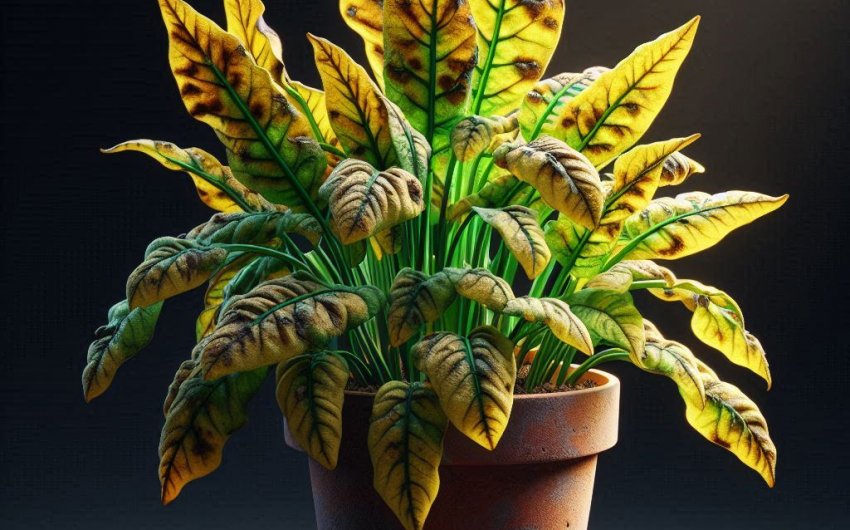
There’s nothing quite as disheartening for a plant parent as seeing a once-thriving potted plant start to look lackluster. Leaves might turn yellow or brown, growth can slow to a crawl, or flowers might simply refuse to bloom. While light, water, and humidity are often the first culprits we suspect, a hidden hunger might be the real problem: nutrient deficiencies. Just like us, plants need a balanced diet to stay healthy and vibrant, and in the confines of a pot, their food supply can easily become depleted.
Understanding the signs of nutrient deficiencies in potted plants and knowing how to correct them is a fundamental skill for any successful indoor gardener. It’s about being a detective, reading the subtle clues your plant provides, and then offering the precise nourishment it needs to bounce back. From the essential macronutrients that form the building blocks of growth to the trace micronutrients that enable vital processes, each element plays a critical role. Let's delve into the ultimate guide to identifying and fixing nutrient deficiencies, ensuring your potted plants always have the full, balanced meal they deserve.
What Are Plant Nutrients and Why Are They Essential?
Before we can fix nutrient deficiencies in potted plants, it's important to understand what plant nutrients are and why they're so vital for plant life. Think of plant nutrients as the vitamins and minerals plants need to grow, just like humans need vitamins and minerals to stay healthy. Plants can't move around to find their food, so they rely on their roots to absorb everything they need from the soil.
The Role of Essential Plant Nutrients:
Plants need 17 essential nutrients for healthy growth, which are generally divided into two groups: macronutrients and micronutrients.
Macronutrients: These are the nutrients plants need in larger quantities.
- Nitrogen (N): The "growth" nutrient. It's crucial for leafy green growth, stem development, and is a key component of chlorophyll (what makes plants green and performs photosynthesis).
- Function: Promotes strong vegetative growth.
- Phosphorus (P): The "flower and root" nutrient. It's essential for root development, flowering, fruiting, and overall energy transfer within the plant.
- Function: Supports healthy roots, flowers, and fruits.
- Potassium (K): The "health and hardiness" nutrient. It helps with overall plant vigor, disease resistance, water regulation, and enzyme activation.
- Function: Boosts plant health, resilience, and stress tolerance.
- Calcium (Ca): Important for cell wall formation, strong stems, and root tip growth.
- Magnesium (Mg): A central component of chlorophyll, essential for photosynthesis.
- Sulfur (S): Involved in protein synthesis and chlorophyll formation.
- Nitrogen (N): The "growth" nutrient. It's crucial for leafy green growth, stem development, and is a key component of chlorophyll (what makes plants green and performs photosynthesis).
Micronutrients: These are nutrients plants need in smaller, trace amounts, but they are still absolutely critical for vital plant functions.
Advertisement- Iron (Fe): Essential for chlorophyll formation and photosynthesis.
- Manganese (Mn): Involved in photosynthesis and nitrogen metabolism.
- Zinc (Zn): Important for enzyme activity and growth regulation.
- Copper (Cu): Involved in photosynthesis and respiration.
- Boron (B): Crucial for cell wall formation, pollination, and sugar transport.
- Molybdenum (Mo): Needed for nitrogen metabolism.
- Chlorine (Cl): Involved in photosynthesis and water balance.
- Note: Hydrogen, Oxygen, and Carbon are also essential but are absorbed from air and water.
Why Potted Plants are Prone to Deficiencies:
- Limited Soil Volume: Unlike plants in the ground, potted plants have a finite amount of soil. Once the nutrients in that small volume are used up, they're gone.
- Leaching: Every time you water your potted plants, especially when water drains from the bottom, some nutrients are washed out (leached) from the soil. This is why regular fertilizing is important.
- Root Bound: As plants grow, their roots can fill the pot, becoming "root bound." This means there's less soil per root, leading to faster nutrient depletion and less space for roots to absorb what's available.
- Soil Degradation: Over time, potting mix breaks down. Its organic components decompose, and its ability to hold nutrients and moisture changes.
Understanding these basics will help you spot the specific symptoms of nutrient deficiency and choose the right steps to nurse your potted plants back to health.
How Do You Identify Specific Nutrient Deficiencies in Potted Plants?
Diagnosing nutrient deficiencies in potted plants is a bit like being a plant detective. Different deficiencies often show up as specific symptoms on different parts of the plant. Learning these visual clues is key to providing the right "medicine."
It's important to remember that these symptoms can sometimes overlap with other issues like overwatering, underwatering, pest infestations, or disease. Always rule out those common problems first.
Common Macronutrient Deficiencies:
- Nitrogen (N) Deficiency:
- Symptoms: The most common sign is a general yellowing of older, lower leaves (called chlorosis). The yellowing often starts at the tip and moves inward. Overall growth will be stunted and slow, and new leaves may be small.
- Why: Nitrogen is a mobile nutrient, meaning the plant can move it from older leaves to newer, actively growing parts. So, older leaves sacrifice their nitrogen to support new growth.
- Solution: Fertilize with a balanced fertilizer balanced houseplant fertilizer or one with a higher first number (N, for Nitrogen).
- Phosphorus (P) Deficiency:
- Symptoms: Leaves may turn a darker green, bluish-green, or even purplish (especially on the undersides of leaves or along veins). Growth will be severely stunted, and plants may fail to flower or produce fruit.
- Why: Phosphorus is also mobile, so symptoms appear on older leaves first.
- Solution: Use a bloom-booster fertilizer bloom-booster fertilizer with a higher middle number (P, for Phosphorus).
- Potassium (K) Deficiency:
- Symptoms: Yellowing along the edges of older leaves (often called "leaf scorch" or "burnt edges"). The edges may also turn brown or crispy. Plants may seem weak, easily wilt, or be more susceptible to disease.
- Why: Potassium is mobile, so symptoms show on older leaves first.
- Solution: Use a balanced fertilizer or one with a higher third number (K, for Potassium).
- Magnesium (Mg) Deficiency:
- Symptoms: Yellowing between the veins of older leaves (interveinal chlorosis), while the veins themselves remain green. Leaves may become brittle.
- Why: Magnesium is mobile.
- Solution: Apply a foliar spray of Epsom salts Epsom salts for plants (1 teaspoon per quart of water) or add to soil.
- Calcium (Ca) Deficiency:
- Symptoms: Affects new growth (immobile nutrient). New leaves may be distorted, stunted, curled, or have brown spots. Growth points (tips of stems) may die back. Blossom end rot on fruits like tomatoes.
- Why: Calcium is an immobile nutrient, meaning the plant cannot move it from old tissue to new.
- Solution: Use a calcium supplement plant calcium supplement or ensure your fertilizer contains calcium.
Common Micronutrient Deficiencies:
- Iron (Fe) Deficiency:
- Symptoms: Yellowing between the veins of new, younger leaves (interveinal chlorosis), while the veins remain green. Can look similar to Magnesium deficiency but affects new growth.
- Why: Iron is an immobile nutrient.
- Solution: Use a chelated iron supplement chelated iron supplement or an acidic fertilizer, as iron is more available in acidic soil. Often a pH issue, as iron becomes unavailable in alkaline soil.
- Manganese (Mn) Deficiency:
- Symptoms: Similar to iron, interveinal chlorosis on new leaves, but often with more pronounced spotting or streaks.
- Why: Manganese is immobile.
- Solution: Use a micronutrient mix plant micronutrient mix or manganese supplement.
- Zinc (Zn) Deficiency:
- Symptoms: Stunted growth, small and often distorted leaves, sometimes with yellowing between veins.
- Solution: Use a micronutrient mix.
By observing your plant closely and comparing symptoms, you can narrow down the potential deficiencies and provide targeted treatment for your potted plants.
What Are the Main Causes of Nutrient Deficiencies in Potted Plants?
Even if you buy a high-quality potting mix and use fertilizer, nutrient deficiencies in potted plants can still occur. Understanding the underlying causes is key to truly fixing the problem, rather than just treating the symptoms. It's often more about how the plant accesses nutrients than a simple lack of them.
1. Depleted Potting Mix:
- The Problem: Commercial potting mixes come with a certain amount of nutrients, but these are finite. As your plant grows and you water it, the nutrients are either used up by the plant or washed out (leached) with drainage water.
- How it Happens: This is the most common cause for plants that have been in the same pot for a year or more without regular feeding.
- Solution: Regular fertilization during the growing season and repotting into fresh potting mix every 1-2 years.
2. Incorrect Fertilization:
- Under-fertilizing:
- The Problem: Not fertilizing at all, or not fertilizing frequently enough, especially for fast-growing plants or those in bright light.
- How it Happens: The plant simply doesn't get enough "food" to support its growth.
- Solution: Follow a consistent fertilization schedule during the active growing season (spring and summer), using a balanced houseplant fertilizer houseplant fertilizer.
- Over-fertilizing:
- The Problem: While seemingly counterintuitive, too much fertilizer can also lead to deficiency symptoms. Excess fertilizer salts can build up in the soil, damaging roots (causing "fertilizer burn") and making it harder for the plant to absorb water and existing nutrients.
- How it Happens: Applying too much fertilizer, too frequently, or at too strong a concentration.
- Solution: If you suspect over-fertilization, flush the soil with plain, room-temperature water. Water slowly until water drains from the bottom, then repeat this process several times to rinse out excess salts. Then, adjust your fertilizing regimen to a lower concentration or less frequent application.
3. Improper Soil pH:
- The Problem: The pH level of the soil affects how available nutrients are to the plant. Even if a nutrient is present in the soil, if the pH is too high (alkaline) or too low (acidic) for that particular nutrient, the plant's roots cannot absorb it.
- For example, iron and manganese become less available in alkaline (high pH) soils.
- How it Happens: Using the wrong type of water (e.g., very hard, alkaline tap water over time) or specific soil amendments can shift pH.
- Solution: Most potted plants prefer a slightly acidic to neutral pH (6.0-7.0). Use a soil pH test kit soil pH test kit to check. Adjust pH if necessary by using a dilute solution of lemon juice or vinegar to lower pH, or tiny amounts of lime to raise it. It's often easier to simply repot with fresh, appropriate soil.
4. Poor Drainage and Root Health:
- The Problem: If the potting mix is too dense, compacted, or the pot lacks drainage holes, water sits in the root zone. This deprives roots of oxygen, leading to root rot.
- How it Happens: Rotting roots cannot absorb water or nutrients, leading to symptoms that mimic underwatering or nutrient deficiency. The problem isn't a lack of nutrients but the inability to absorb them.
- Solution: Ensure your pots always have drainage holes. Use a well-draining potting mix specific for houseplants. Allow the top soil to dry out between waterings. If root rot is severe, repotting and pruning rotten roots is necessary.
5. Root Bound Plants:
- The Problem: When a plant's roots completely fill the pot, they become a dense mass with very little soil. This significantly limits the volume of soil available to hold water and nutrients.
- How it Happens: Plants grow!
- Solution: Repotting the plant into a slightly larger pot with fresh potting mix. This gives roots more space to grow and access nutrients.
By identifying the root cause of the deficiency, you can implement a targeted and effective solution to revive your potted plants.
What Are the Best Ways to Correct Nutrient Deficiencies?
Once you've identified a nutrient deficiency in your potted plant, taking corrective action is the next step. The approach often involves a combination of immediate relief and long-term prevention.
1. Fertilize Appropriately:
This is the most direct way to fix a nutrient deficiency.
- Choose the Right Fertilizer:
- General Deficiency: Start with a balanced liquid houseplant fertilizer balanced liquid houseplant fertilizer. This provides all macronutrients and often a good range of micronutrients.
- Specific Deficiency: If you're confident about a specific deficiency (e.g., Nitrogen or Phosphorus), you can use a fertilizer with a higher ratio of that particular nutrient (e.g., higher N for yellowing leaves, higher P for lack of blooms).
- Micronutrient Mix: If you suspect a micronutrient deficiency, look for a micronutrient supplement plant micronutrient supplement that contains chelates (these are forms of micronutrients that are more easily absorbed by plants).
- Dilution is Key: Always dilute liquid fertilizers to half or quarter strength for regular feeding, especially when correcting a deficiency, to avoid shocking the plant or causing fertilizer burn.
- Application:
- Water Before Fertilizing: Always water your plant thoroughly with plain water before applying fertilizer. This prevents root burn.
- Apply to Moist Soil: Apply the diluted fertilizer solution to the moist soil.
- Follow Schedule: Fertilize during the active growing season (spring and summer). Reduce or stop in fall and winter.
2. Repotting with Fresh Soil:
- Revitalize the Medium: If your plant hasn't been repotted in a year or two, or if the soil looks degraded and compacted, repotting is essential. Fresh potting mix fresh potting mix comes pre-loaded with nutrients and provides optimal structure for aeration and drainage.
- Address Root Bound Issues: If your plant is root-bound, repotting into a slightly larger pot (1-2 inches wider) gives roots more space to spread out and access fresh nutrients. Gently loosen circling roots before repotting.
- Improve Drainage: Use a well-draining potting mix for your specific plant type. For most houseplants, a mix amended with perlite or orchid bark is ideal. Ensure your pot has drainage holes.
3. Adjust Soil pH (If Necessary):
- Test First: Only adjust soil pH if a soil pH test kit soil pH test kit indicates it's outside the ideal range for your plant (usually 6.0-7.0 for most houseplants).
- Lowering pH (making it more acidic):
- Organic Option: Add a very dilute solution of white vinegar (1-2 tablespoons per gallon of water) or a very dilute solution of lemon juice to your watering can. Apply sparingly over several waterings.
- Acidifying Fertilizers: Some fertilizers are designed to subtly acidify the soil over time.
- Raising pH (making it more alkaline):
- This is less common for houseplants. You can add tiny amounts of garden lime or wood ash, but be very cautious as it's easy to overdo it.
- Repotting is Easier: For most houseplant owners, adjusting pH in a small pot can be tricky. Often, repotting into fresh, appropriately formulated potting mix is a simpler and more effective solution.
4. Improve Drainage and Watering Practices:
- Correct Drainage: If poor drainage is causing root problems (and thus nutrient absorption issues), ensure your pot has adequate drainage holes. If it doesn't, repot into a container that does.
- Allow to Dry Out: Adjust your watering schedule to allow the top few inches of soil to dry out between waterings. This ensures roots get enough oxygen.
- Deep Watering: Always water thoroughly until water drains from the bottom, flushing out old water and any accumulated salts.
By applying these corrective measures, focusing on both immediate nutrient supply and long-term soil health, you can effectively fix nutrient deficiencies in your potted plants and help them regain their vigor and beauty.
How to Prevent Future Nutrient Deficiencies in Potted Plants?
Preventing nutrient deficiencies in potted plants is far easier than trying to fix them once they appear. It's all about proactive, consistent care that provides a stable, nutrient-rich environment for your plant's roots. Building a healthy routine now will save you headaches later.
1. Consistent Fertilization Schedule:
- Regular Feeding is Key: This is the most direct way to replenish nutrients lost through plant growth and watering.
- Active Growing Season Only: Fertilize your potted plants consistently during their active growing season (typically spring and summer) when they are actively producing new leaves, stems, or flowers.
- Reduced Strength: Use a balanced liquid houseplant fertilizer houseplant fertilizer diluted to half or quarter strength for most routine applications. It's safer to under-fertilize slightly than to over-fertilize.
- No Winter Feeding: Avoid fertilizing in the fall and winter months when most houseplants enter a period of slower growth or dormancy.
2. Regular Repotting:
- Fresh Soil, Fresh Nutrients: Potting mix breaks down over time, losing its structure and nutrient content. Repotting into fresh potting mix high-quality potting mix every 1-2 years replenishes essential nutrients and improves soil aeration and drainage.
- Address Root Bound: Repotting also gives root-bound plants more space to grow and access new resources. When roots are too dense, they can't absorb effectively.
- Choose the Right Size: Only go up one pot size (e.g., from a 6-inch to an 8-inch pot) to avoid overpotting, which can lead to excess moisture and root rot.
- Timing: Repot in spring or early summer when the plant is actively growing.
3. Use High-Quality, Well-Draining Potting Mix:
- Start Right: Don't skimp on your potting mix! A cheap, heavy mix is often the root (pun intended!) of many problems.
- Optimal Structure: Use a well-draining potting mix well-draining potting mix that is light, airy, and contains amendments like perlite, orchid bark, or coarse sand. This ensures proper aeration and prevents waterlogging.
- Species-Specific: Some plants have very specific needs (e.g., succulents, orchids, ferns). Use mixes tailored for them if applicable.
4. Proper Watering Techniques:
- Deep and Thorough: Always water until water drains from the bottom of the pot. This ensures the entire root ball is hydrated and helps flush out accumulating salts.
- Allow to Dry Out: Allow the top few inches of soil to dry out between waterings. This promotes oxygen availability to roots and prevents constantly soggy conditions that suppress nutrient absorption and encourage root rot. A soil moisture meter soil moisture meter can help.
- Empty Saucers: Never let your potted plant sit in standing water.
5. Monitor Soil pH:
- Maintain Balance: While most commercial potting mixes are designed for common houseplants, long-term watering with very hard or alkaline tap water can gradually shift soil pH.
- Occasional Check: Consider doing an occasional soil pH test soil pH test kit, especially if plants start showing signs of micronutrient deficiencies (like iron chlorosis), which are often pH-related. For most houseplants, pH adjustments are rarely needed if you repot regularly with fresh, quality mix.
6. Consider Organic Amendments (Optional but Beneficial):
- Slow-Release Nutrients: Mixing in a small amount of worm castings worm castings or a slow-release granular organic fertilizer when repotting can provide a continuous, gentle supply of nutrients.
- Boost Microbial Activity: These amendments also encourage beneficial soil microbes, which help make nutrients available to plants.
By adopting these proactive strategies, you can ensure your potted plants consistently receive the full spectrum of nutrients they need, leading to vigorous growth, vibrant foliage, and abundant blooms without the stress of deficiency symptoms.