
Identifying Houseplant Vines: A Visual Guide
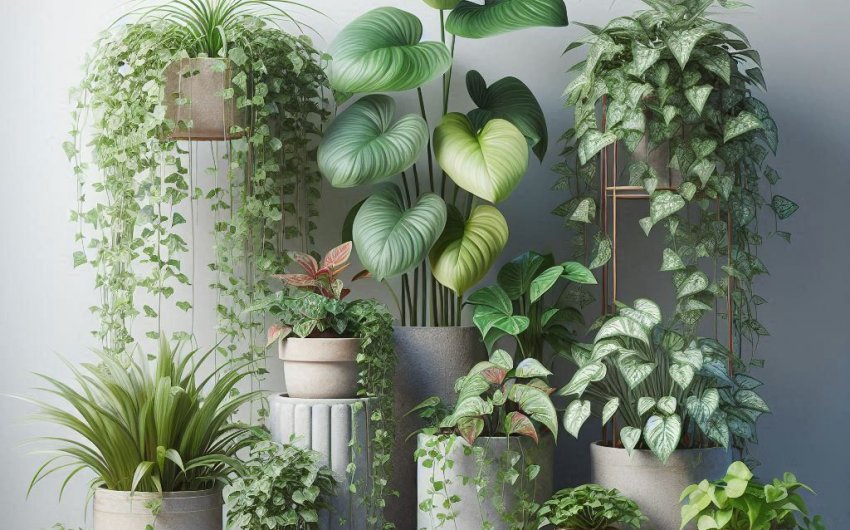
Learning to recognize and appreciate various houseplant vines is a rewarding aspect of indoor gardening, adding dynamic growth and lush greenery to any space. These versatile plants offer a myriad of textures, leaf shapes, and growth habits, making them ideal for hanging baskets, shelves, or climbing supports. While many vine varieties share similar care needs, accurate identification allows you to tailor specific light, watering, and pruning practices to each plant, ensuring it thrives. This visual guide will help you distinguish between some of the most popular and captivating vining houseplants, providing key identification features to confidently name and nurture your climbing botanical companions.
Why is identifying houseplant vines important?
Accurate identification of your houseplant vines goes beyond simply knowing their name; it's crucial for providing proper care, understanding their growth habits, and ensuring their long-term health. Many vines look similar, but their needs can differ.
How does proper identification help?
- Tailored care: Different vines have specific requirements for light, water, humidity, and soil. Knowing the exact species allows you to provide optimal conditions.
- Troubleshooting problems: Symptoms like yellowing leaves or stunted growth can be better diagnosed when you know the plant's typical needs and common issues.
- Growth expectations: Understanding whether a vine will grow slowly or rapidly, trail or climb, helps you choose the right placement and support.
- Toxicity awareness: Some popular vines can be toxic to pets or humans if ingested. Identification is vital for safety, especially in homes with children or pets.
- Propagation: Knowing the plant type helps you choose the most effective propagation method (e.g., stem cuttings, division).
- Collecting and sharing: It allows you to confidently expand your collection and share cuttings with others.
What are common characteristics of houseplant vines?
Houseplant vines share some general features that allow them to climb or trail.
- Long, flexible stems: Designed to stretch and explore their environment.
- Tendrils, aerial roots, or twining stems: Mechanisms for attachment to surfaces or other plants.
- Nodes: Points on the stem where leaves, roots, or new shoots emerge. These are often where aerial roots or climbing structures form.
- Trailing or climbing habit: They can hang elegantly from baskets or climb upwards with support.
What are the key features for identifying houseplant vines?
When trying to identify a specific houseplant vine, pay close attention to several distinct features. A combination of these elements will typically lead you to the correct identification.
What are the leaf characteristics?
This is often the first and most obvious clue.
- Shape:
- Heart-shaped: Common in Philodendron and Pothos.
- Oval/Lance-shaped: Many Hoya varieties.
- Round/Coin-shaped: Peperomia.
- Lobed/Split: Monstera.
- Palmate (finger-like lobes): Schefflera (dwarf varieties can be vining).
- Color and Variegation:
- Solid green: Many basic varieties.
- Marbled/Splashed: Pothos 'Marble Queen', Philodendron 'Brasil'.
- Silver/Gray patterns: Scindapsus pictus (Satin Pothos).
- Pink/Red/White splashes: Hoya varieties, Syngonium.
- Two-toned undersides: Some Philodendron.
- Texture:
- Glossy/Shiny: Many Philodendron, Pothos, Hoya.
- Velvety: Some Philodendron, Scindapsus.
- Waxy/Fleshy: Hoya, some Peperomia.
- Textured/Bumpy: Some Hoya.
- Size: Small, medium, or large leaves. Some vines (like Monstera) have leaves that get much larger as they climb.
What about stem and root characteristics?
- Stem thickness: Thin and delicate vs. thick and woody.
- Stem color: Green, reddish, or variegated.
- Aerial roots: Do they produce roots that emerge from the stem nodes and grasp onto surfaces or absorb moisture? (Common in Pothos, Philodendron, Monstera, Syngonium, Ivy).
- Climbing mechanism:
- Aerial roots: Pothos, Philodendron, Monstera.
- Twining stems: Hoya.
- Tendrils: Some rare vines.
- Clinging by tiny rootlets: Ivy.
What about flowers (if present)?
While many houseplants don't flower indoors, some vines do, and their blooms can be highly distinctive.
- Hoya: Often produce clusters of star-shaped, waxy, fragrant flowers (umbels).
- Dischidia: Related to Hoya, with smaller, often urn-shaped flowers.
- Some Philodendron/Pothos: Can produce Araceae family flowers (spathe and spadix) but rarely do so indoors.
What about growth habit?
- Trailing: Spreads horizontally or cascades downwards (e.g., String of Hearts, some Peperomia).
- Climbing: Actively seeks to grow upwards, often benefiting from a moss pole or trellis (e.g., larger Philodendron, Monstera, Pothos, Ivy).
- Bushy vs. Sparse: How densely do the leaves grow along the stem?
What are common houseplant vine families and their members?
Understanding plant families can often help narrow down identification, as family members share common characteristics.
Araceae Family (Aroids)
This is a huge family, home to many popular vining houseplants. They often have a spathe and spadix flower (though rarely seen indoors) and sometimes produce aerial roots. Many are toxic if ingested.
- Pothos (Epipremnum aureum varieties):
- Key features: Heart-shaped, somewhat thick leaves. Prominent aerial roots from nodes. Very forgiving.
- Common varieties:
- 'Golden Pothos': Green leaves with splashes of yellow/gold.
- 'Marble Queen': Green leaves with extensive white/cream variegation.
- 'Neon Pothos': Bright, solid lime-green leaves.
- 'Jade Pothos': Solid dark green leaves.
- 'N'Joy': Green leaves with distinct white margins.
- Growth: Trailing, but will climb and produce larger leaves with support.
- Care: Tolerates a wide range of light, easy to care for. Needs soil to dry out between waterings.
- Philodendron (various species):
- Key features: Highly diverse. Many have heart-shaped leaves, but some are lobed or deeply cut. Often produce aerial roots.
- Common varieties:
- 'Heartleaf Philodendron' (Philodendron hederaceum): Classic solid green, heart-shaped leaves. Very common.
- 'Brasil' (P. hederaceum 'Brasil'): Heart-shaped leaves with lime green or yellow variegation down the center.
- 'Pink Princess' (P. erubescens 'Pink Princess'): Dark green leaves with splashes of bright pink variegation.
- 'Micans' (P. hederaceum 'Micans'): Velvety, dark green/bronze/burgundy heart-shaped leaves.
- Growth: Trailing or climbing. Leaves can be larger on climbing varieties.
- Care: Prefer bright, indirect light. Allow top inch of soil to dry.
- Monstera (various species, especially deliciosa and adansonii):
- Key features: Iconic fenestrations (holes/splits) in leaves. Thick aerial roots.
- Common varieties:
- 'Monstera Deliciosa' (Swiss Cheese Plant): Large, deeply lobed and split leaves.
- 'Monstera Adansonii' (Swiss Cheese Vine): Smaller, oval leaves with prominent holes (fenestrations) that don't reach the leaf edge.
- 'Monstera Pinnatipartita': Unique deep splits almost to the midrib.
- Growth: Strong climbers; need a moss pole for best results.
- Care: Bright, indirect light. Allow soil to dry out partly between waterings.
- Syngonium (Arrowhead Plant, various varieties):
- Key features: Arrowhead-shaped leaves when young, becoming more lobed or segmented as they mature and climb.
- Common varieties:
- 'White Butterfly': Green leaves with prominent white/cream centers.
- 'Neon Robusta': Soft pink leaves.
- 'Pink Splash': Green leaves with pink speckles.
- Growth: Can be kept bushy with pruning, or allowed to vine and climb.
- Care: Bright, indirect light. Keep soil consistently moist but not soggy.
Apocynaceae Family (Dogbane Family)
Known for their milky sap and often fragrant flowers.
- Hoya (Wax Plant, various species):
- Key features: Thick, waxy, succulent-like leaves. Often have speckled or silver-splashed variegation. Produce clusters of star-shaped, fragrant flowers. Tend to twine.
- Common varieties:
- 'Hoya Carnosa': Classic green waxy leaves.
- 'Hoya Carnosa 'Krimson Queen' / 'Tricolor': Green leaves with white, pink, and red variegation on the edges.
- 'Hoya Carnosa 'Krimson Princess': Green leaves with white, pink, and red variegation in the center.
- 'Hoya Kerrii' (Sweetheart Hoya): Heart-shaped leaves, often sold as a single leaf.
- 'Hoya Pubicalyx': Often has speckled leaves and darker blooms.
- Growth: Slow-growing, twining climbers/trailers.
- Care: Bright, indirect light. Allow soil to dry completely between waterings, especially in winter.
- Dischidia (various species):
- Key features: Often small, plump, or unusual-shaped leaves. Some are epiphytic. Related to Hoya.
- Common varieties:
- 'Dischidia nummularia' (Button Orchid): Small, round, succulent leaves.
- 'Dischidia Geri': Small oval leaves.
- Growth: Trailing, epiphytic.
- Care: Bright, indirect light. Similar to Hoya but may prefer slightly more frequent watering depending on leaf thickness.
Araliaceae Family (Ginseng Family)
- Ivy (Hedera helix, English Ivy and cultivars):
- Key features: Lobed leaves (often 3-5 lobes), sometimes variegated. Clings with tiny rootlets along stems. Can be invasive outdoors.
- Common varieties: Many different leaf shapes and variegation patterns (e.g., 'Glacier' with white edges, 'Gold Dust' with yellow speckles).
- Growth: Fast-growing, aggressive climber/trailer.
- Care: Tolerates lower light, but prefers bright indirect. Keep soil consistently moist. Prone to spider mites in dry conditions.
Piperaceae Family (Pepper Family)
- Peperomia (various vining species):
- Key features: Highly diverse leaf shapes and textures. Many have somewhat succulent leaves.
- Common vining varieties:
- 'Peperomia scandens' (Cupid Peperomia): Heart-shaped, often variegated leaves.
- 'Peperomia Rotundifolia' (Button Peperomia): Small, round, succulent leaves.
- 'Peperomia Hope': Round, slightly cupped, variegated leaves.
- Growth: Trailing.
- Care: Bright, indirect light. Allow soil to dry between waterings due to semi-succulent nature.
Scrophulariaceae Family (Figwort Family)
- String of Hearts (Ceropegia woodii):
- Key features: Delicate, heart-shaped leaves on thin, trailing stems. Often has silver variegation on green leaves, purple undersides. Produces small tubers on stems.
- Growth: Very long, delicate trailing stems.
- Care: Bright, indirect light. Drought-tolerant, allow soil to dry completely. Needs good drainage.
Vitaceae Family (Grape Family)
- Grape Ivy (Cissus rhombifolia):
- Key features: Compound leaves (usually 3 leaflets, resembling grape leaves). Tendrils for climbing.
- Growth: Vining climber/trailer.
- Care: Adaptable to various light, but prefers medium to bright indirect. Keep soil consistently moist.
How do you care for common houseplant vines? (General Tips)
While specific care varies, many popular houseplant vines share similar basic needs.
What are general light requirements?
Most houseplant vines thrive in bright, indirect light.
- Avoid direct sun: Can scorch leaves, especially for variegated varieties.
- Rotate: Turn your plants regularly to ensure even growth and prevent them from reaching for light.
- Supplemental light: If natural light is insufficient, consider a grow light for houseplants.
How do you water effectively?
- "Soak and dry" method: Most vines prefer to dry out somewhat between waterings. Water thoroughly until water drains from the bottom, then allow the top 1-2 inches of soil to dry out before watering again.
- Drainage: Always use pots with drainage holes.
- Reduce in winter: Water less frequently during the cooler, darker winter months when growth slows.
What kind of soil is best?
- Well-draining potting mix: Use a good quality all-purpose potting mix amended with perlite or orchid bark for improved drainage and aeration.
How do you manage humidity and temperature?
- Humidity: Most tropical vines appreciate moderate to high humidity.
- Pebble trays: Place on a pebble tray with water.
- Humidifier: Use a room humidifier.
- Grouping plants: Cluster plants together.
- Temperature: Maintain consistent indoor temperatures, typically between 65-80°F (18-27°C). Avoid cold drafts.
What about fertilizing?
- During growing season: Fertilize sparingly during spring and summer with a balanced liquid houseplant fertilizer diluted to half strength.
- Avoid in winter: Do not fertilize during fall and winter dormancy.
How do you prune and provide support?
- Pruning: Trim leggy growth to encourage bushier plants. Pruning also provides cuttings for propagation. Use clean, sharp pruning shears.
- Support: For climbing vines, provide a moss pole, plant trellis, or allow them to trail from a hanging basket or shelf.
By carefully observing the unique characteristics of your houseplant vines, you can accurately identify them and provide the specific care they need to flourish, transforming your home into a dynamic and vibrant indoor jungle.