
How to Spot and Treat Fungus Gnats in Plants?
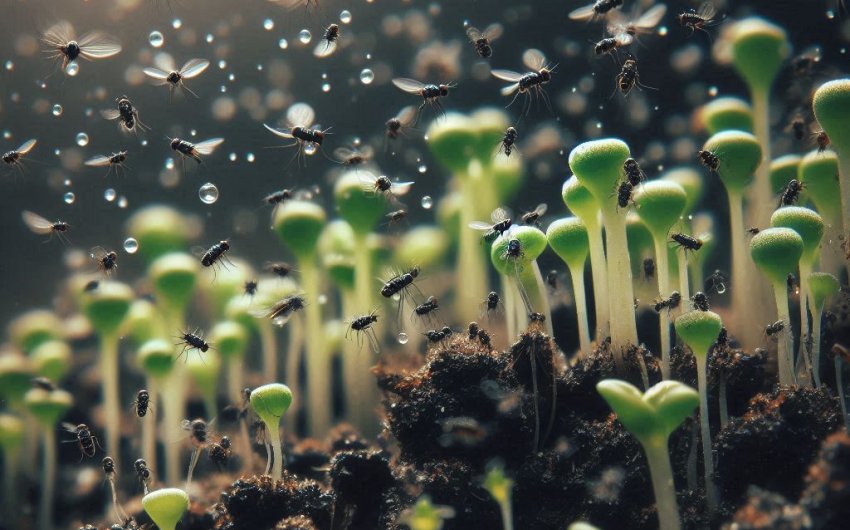
Fungus gnats are tiny, annoying flying insects. They love damp soil and can be a real pain for plant lovers. But don't worry, they are easy to get rid of if you know how. This guide will help you spot them and show you how to treat them. Let's get your plants healthy again!
What Are Fungus Gnats and Why Are They a Problem?
Fungus gnats are small, dark flies. They look a bit like tiny mosquitoes. They are usually found buzzing around your houseplants. Their scientific name is Mycetophilidae or Sciaridae. While the adult gnats are mostly just annoying, their babies (larvae) can hurt your plants.
What Do Fungus Gnats Look Like?
Adult fungus gnats are about \(1/8\) of an inch long. They are black or dark brown. They have long legs and antennae. You'll often see them walking on the soil surface or flying in zig-zag patterns near your plants. They are attracted to light, so you might see them near windows too.
Their larvae are clear or whitish worms. They have shiny black heads. They live in the soil and are very small, usually less than \(1/4\) inch long. You might not see them unless you dig into the soil.
What Damage Do Fungus Gnats Cause?
The main problem with fungus gnats comes from their larvae. The larvae eat fungus and decaying plant matter in the soil. But if there isn't enough of that, they will start eating tiny plant roots. This can be very bad for young plants or seedlings. When roots are damaged, plants can't take up water and nutrients well. This can make your plants look sickly, stunted, or even die.
Adult fungus gnats don't bite humans or pets. They don't spread diseases to humans. They are mostly just a nuisance, flying around your face and food. But they can lay hundreds of eggs, making the problem worse quickly.
Where Do Fungus Gnats Come From?
Fungus gnats often come into your home on new plants. They can also come from contaminated potting soil. Sometimes, they just fly in from outside if you leave doors or windows open. Once they are in your home, they look for wet soil to lay their eggs. This is why overwatering is a big cause of fungus gnat problems.
How Do I Know if I Have Fungus Gnats?
Spotting fungus gnats is usually pretty easy. Here are some signs to look for.
Are There Small Flies Around My Plants?
This is the most obvious sign. If you see tiny, dark flies buzzing around your houseplants, especially when you water them, you likely have fungus gnats. They are often seen resting on leaves, the rim of the pot, or flying lazily near the plant. A gentle shake of the plant might make them fly up.
Is the Soil Always Wet?
Fungus gnats love wet soil. If your plant's soil stays soggy for too long after watering, it's a perfect breeding ground for them. This is why overwatering is a common cause. Check the soil moisture often. If the top inch or two of soil stays wet for days, it's a sign you might attract gnats.
Are My Plants Looking Unhealthy?
If you have a lot of fungus gnat larvae, your plants might start to look bad. You might see:
- Yellowing leaves: Especially on lower leaves.
- Stunted growth: New leaves might be small, and the plant might not grow much.
- Wilting: Even if the soil is wet, the plant might look droopy. This is because root damage prevents water uptake.
- Sudden death: Seedlings and young plants are very vulnerable. They might suddenly collapse and die.
Can I Use Yellow Sticky Traps to Spot Them?
Yes! Yellow sticky traps are a great way to catch and count fungus gnats. These are bright yellow cards with a very sticky surface. Fungus gnats are attracted to the color yellow. Place them near your plants, sticking them into the soil or hanging them above the plant. You'll quickly see adult gnats stuck to them. This helps you know how big your gnat problem is and how well your treatments are working. You can find useful yellow sticky traps like these sticky traps.
How Can I Prevent Fungus Gnats?
Prevention is always better than cure. Most fungus gnat problems can be avoided with good plant care.
How Does Proper Watering Help?
Overwatering is the number one cause of fungus gnats. These pests need moist soil to lay their eggs and for their larvae to survive.
- Let the soil dry out: Before watering again, let the top \(1\) to \(2\) inches of soil dry completely. You can check this by sticking your finger into the soil. For smaller pots, you can even lift the pot to feel its weight. Dry soil is much lighter.
- Water thoroughly, but less often: When you do water, give the plant enough water so that it drains out the bottom. This helps flush out any built-up salts. But then, wait until the soil is dry again before the next watering.
- Use well-draining soil: Good potting mix helps water drain faster. Make sure your soil isn't too dense. You can amend your soil with perlite or coarse sand for better drainage.
What About Potting Soil and Drainage?
- Use sterile potting mix: When repotting or planting new seeds, always use fresh, sterile potting mix. Bags of soil left open outside can easily get fungus gnat eggs.
- Ensure good drainage holes: Always use pots with drainage holes. If your pot doesn't have holes, it's very hard for excess water to escape. This leads to soggy soil. You can also put a layer of pebbles or broken pot pieces at the bottom, but the drainage hole is key.
- Avoid leaving standing water: Don't let your plant sit in a tray of water for long periods. If there's water in the saucer after watering, dump it out after \(30\) minutes or so.
Should I Clean Up Fallen Leaves and Debris?
Yes! Fungus gnats feed on decaying plant matter. If there are dead leaves, spent flowers, or other plant debris on the soil surface, it provides a food source for the larvae.
- Remove plant debris: Regularly inspect your plants and remove any fallen leaves or dead plant parts from the soil.
- Keep the area clean: A clean plant area helps reduce places for gnats to hide and breed.
How Does Air Circulation Help?
Good air circulation helps the soil dry out faster.
- Provide good airflow: Don't cram your plants too close together. Give them space so air can move around them.
- Use a fan: If your indoor space is humid or tends to stay damp, a small fan can help circulate air and dry out the soil surface. This is especially useful in winter when homes can be less ventilated.
How Can I Treat Fungus Gnats Effectively?
So, you have fungus gnats. Don't panic! There are many effective ways to get rid of them. You might need to use a few methods at the same time for the best results.
Drying Out the Soil: A Simple First Step
This is the most important step for dealing with fungus gnats. If you starve the larvae of moisture, they will die.
- Stop watering for a while: Let the top \(2\) to \(3\) inches of soil dry out completely. For some plants, this might mean waiting a week or even longer between waterings. Be careful not to let your plant wilt too much, but a little stress from dryness is better than too much moisture for fungus gnat control.
- Add a top layer: Once the top soil is dry, you can add a \(1/2\) inch layer of sand, diatomaceous earth, or pebbles on top of the soil. This creates a dry barrier. Adult gnats won't want to lay eggs on it, and emerging larvae will have a hard time getting through it. For example, a bag of horticultural sand can be very useful here.
Using Yellow Sticky Traps for Adults
As mentioned, yellow sticky traps are excellent for trapping adult gnats.
- Place them strategically: Stick the traps directly into the soil of infested pots. You can also hang them just above the plant canopy.
- Replace regularly: Once the traps are covered with gnats, replace them. This helps you track how many gnats you're catching and how well your treatments are working. By reducing the number of adults, you stop them from laying more eggs.
What About Apple Cider Vinegar Traps?
Apple cider vinegar traps can also help catch adult gnats. They are attracted to the smell.
- Make your own trap: Put a few tablespoons of apple cider vinegar in a small dish. Add a few drops of dish soap. The soap breaks the surface tension of the liquid, so the gnats will sink and drown.
- Cover with plastic wrap: You can also cover the dish with plastic wrap and poke small holes in it. This lets gnats in but makes it harder for them to escape.
- Place near plants: Put these traps near your infested plants. They won't solve the problem alone, but they can reduce the adult population.
How Can Diatomaceous Earth Help?
Diatomaceous earth (DE) is a natural, powdery substance made from the fossilized remains of diatoms (tiny aquatic organisms). It's a fantastic organic pest control method.
- How it works: On a microscopic level, DE is very sharp. When insects like fungus gnat larvae crawl over it, it scratches their waxy outer layer. This causes them to dehydrate and die. It's safe for humans and pets, but always use food-grade diatomaceous earth.
- Application: Sprinkle a generous layer of dry food-grade diatomaceous earth on top of the soil. Make sure it covers the entire surface. Reapply if it gets wet or you water the plant, as it only works when dry. You can find effective diatomaceous earth like this food-grade diatomaceous earth.
Will Hydrogen Peroxide Work?
Yes, hydrogen peroxide can kill fungus gnat larvae on contact.
- How to mix: Mix \(1\) part \(3\)\% hydrogen peroxide with \(4\) parts water.
- How to use: Wait until the soil is fairly dry. Then, water your plants with this mixture. You'll see a fizzing reaction when it touches organic matter in the soil. This is normal. The hydrogen peroxide will kill any larvae it touches. It also adds oxygen to the soil, which can be good for roots.
- Frequency: Do this treatment only once or twice, about a week apart. Overuse can harm beneficial microbes in the soil. Be careful not to use it on very delicate plants.
Introducing Beneficial Nematodes: A Natural Solution
Beneficial nematodes are microscopic roundworms that naturally live in soil. They are completely harmless to plants, humans, and pets. They are a great biological control for fungus gnats.
- How they work: Specific types of nematodes, like Steinernema feltiae, seek out and kill fungus gnat larvae (and other soil-dwelling pests). They enter the larvae's body and release bacteria that kill the host. Then, they reproduce inside the dead larvae.
- Application: Beneficial nematodes usually come in a powder or sponge form that you mix with water. Then, you simply water your plants with the solution.
- Effectiveness: This is one of the most effective long-term solutions for fungus gnats because the nematodes continue to patrol the soil and kill new larvae. They need moist soil to survive, so make sure the soil doesn't dry out completely for a few days after application. You can buy beneficial nematodes like these beneficial nematodes.
Using Bacillus Thuringiensis Israelensis (BTI)
Bacillus thuringiensis israelensis (BTI) is a naturally occurring bacterium. It's a very specific biological insecticide.
- How it works: BTI only affects the larvae of certain insects, including mosquitoes, black flies, and fungus gnats. When fungus gnat larvae eat the BTI, it produces toxins that disrupt their digestive system, killing them. It is harmless to humans, pets, and beneficial insects like bees.
- Products: BTI is often sold in granular form as mosquito bits or liquid form.
- Application: You can sprinkle mosquito bits directly on top of the soil and water them in, or you can steep them in water for a few hours (like making tea) and then water your plants with the BTI-infused water.
- Regular use: For best results, use BTI every time you water for a few weeks to break the fungus gnat life cycle. It will kill the larvae as they hatch. Find helpful mosquito bits like these mosquito bits.
When Should I Repot My Plant?
Repotting can be a drastic step, but sometimes it's necessary, especially if the infestation is very severe.
- Remove all old soil: Gently remove the plant from its pot. Shake off as much of the old, infested soil from the roots as you can. You can even rinse the roots gently under lukewarm water.
- Clean the pot: Wash the old pot thoroughly with hot, soapy water, or even a dilute bleach solution (\(1\) part bleach to \(9\) parts water) to kill any remaining eggs or larvae.
- Use fresh, sterile soil: Repot your plant into a clean pot with brand new, sterile potting mix. This eliminates the existing population in the soil.
- Be careful with sensitive plants: Repotting can stress plants. Only do this if other methods aren't working or if your plant is already very sick.
What About Neem Oil?
Neem oil is a natural plant-based insecticide. It works as an antifeedant (makes insects not want to eat), insect growth regulator (stops them from developing), and repellent.
- How to use: Mix cold-pressed neem oil with water and a small amount of insecticidal soap (or dish soap) to help it mix. Follow the product instructions for dilution.
- Application: You can use it as a soil drench to kill larvae or as a foliar spray to deter adults. For soil drench, water your plant with the neem oil solution.
- Caution: Always do a small test spray on a leaf first to make sure your plant doesn't react badly. Do not use neem oil in direct sunlight, as it can burn leaves.
- You can acquire useful neem oil from Amazon.
Using Sticky Barriers for Adults
Besides yellow sticky traps, you can use other physical barriers.
- Sand or pebbles: A thick layer (at least \(1\) inch) of decorative sand or small pebbles on top of the soil can create a dry barrier. This prevents adult gnats from laying eggs in the moist soil below and emerging larvae from reaching the surface.
- Mosquito netting: For very valuable plants or plants in a nursery setting, you could even consider fine mosquito netting around the plant or its pot.
Are There Chemical Sprays for Fungus Gnats?
While natural methods are usually preferred, some chemical options exist for very severe infestations.
- Insecticidal soaps: These kill on contact by breaking down the insect's protective outer layer. They are less toxic than traditional pesticides. You would spray this directly on adult gnats you see. They are not very effective against larvae in the soil. You can acquire a useful insecticidal soap from Amazon.
- Pyrethrin-based sprays: These are natural insecticides derived from chrysanthemum flowers. They can kill adult gnats on contact. Use with caution, as they can also harm beneficial insects. Always follow label directions strictly.
- Systemic insecticides: These are absorbed by the plant and move through its tissues. When larvae feed on the roots, they ingest the insecticide and die. These are generally considered a last resort due to their potential impact on the environment and other organisms. Always read labels carefully and understand the risks before using systemic insecticides.
How Long Does It Take to Get Rid of Fungus Gnats?
Getting rid of fungus gnats takes time and patience. There's no instant fix.
- Breaking the life cycle: The key is to break their life cycle. Fungus gnats go from egg to larva to pupa to adult. This cycle can take about \(17\) to \(28\) days, depending on temperature. You need to consistently target both the adults and the larvae.
- Adults vs. Larvae: Treatments like sticky traps and apple cider vinegar will catch adults. But more will emerge from the soil. Treatments like diatomaceous earth, hydrogen peroxide, beneficial nematodes, and BTI target the larvae in the soil.
- Consistency is key: You'll likely need to use a combination of methods for several weeks.
- Continue using yellow sticky traps to monitor adult populations.
- Maintain dry soil conditions.
- Reapply treatments like diatomaceous earth or BTI as needed (e.g., every time you water for a few weeks).
- Expect a few weeks: You should see a noticeable decrease in adult gnats within a week or two. However, it can take anywhere from two to four weeks of consistent treatment to completely eliminate them. Sometimes, a few lingering gnats might pop up for a bit longer. Don't give up! Persistence pays off.
Can Fungus Gnats Harm My Pets or Me?
Good news! Fungus gnats are generally harmless to humans and pets.
- No bites: Adult fungus gnats do not bite humans or animals. They don't carry diseases that affect us.
- Nuisance only: Their main impact on humans is being annoying as they fly around.
- Safe treatments: Most of the recommended treatments, like drying out the soil, sticky traps, diatomaceous earth, beneficial nematodes, and BTI, are safe for use around pets and children. Always follow product instructions for any pesticides, even natural ones, just to be safe.
- Toxic if ingested: While many treatments are safe, always store them out of reach of children and pets. For example, large amounts of diatomaceous earth could cause irritation if inhaled, though it's food-grade safe for accidental ingestion in small amounts.
When Should I Ask for Professional Help?
Most fungus gnat infestations can be handled by home remedies. But in very rare cases, you might consider professional help.
- Massive infestation: If you have hundreds or thousands of gnats, and your plants are severely suffering despite your best efforts.
- Commercial setting: In large greenhouses or plant nurseries where the problem is widespread and affecting many valuable plants.
- Unable to identify: If you're not sure what kind of pest you have, a plant expert or pest control service might help with identification.
For the average houseplant owner, the methods described in this guide should be more than enough to get rid of fungus gnats and keep your plants healthy. Remember, good watering habits are your best defense!