
Indoor Hydroponic Garden: Grow Fresh Produce Year-Round
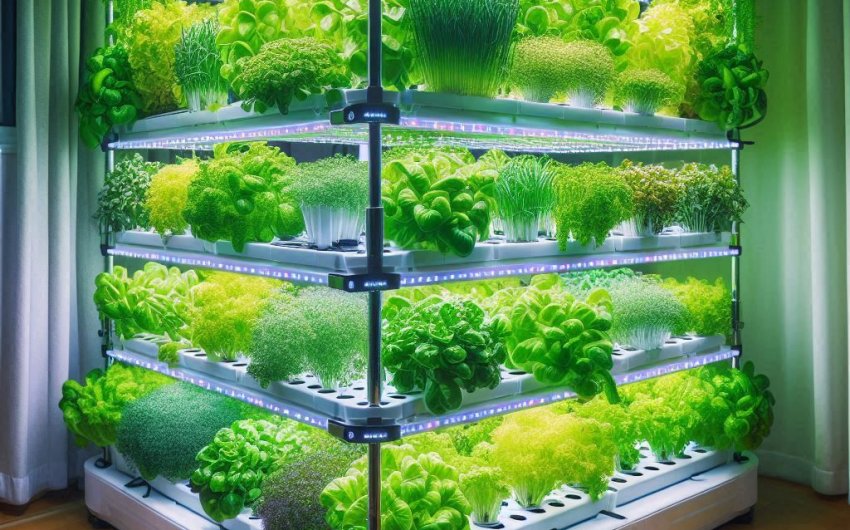
An indoor hydroponic garden is a soilless growing system where plants receive all their essential nutrients directly from a water-based solution, allowing for accelerated growth and year-round harvesting in a controlled indoor environment. This innovative method offers a clean, efficient, and space-saving way to cultivate herbs, vegetables, and even some fruits directly in your home.
What Exactly is an Indoor Hydroponic Garden?
An indoor hydroponic garden takes the traditional concept of gardening and removes the soil. Instead, plants are grown with their roots suspended in nutrient-rich water or in an inert growing medium that provides support. The word "hydroponics" comes from Greek words meaning "water working," perfectly describing this method.
In a hydroponic system, plants directly access all the essential minerals and nutrients they need for growth without having to search for them in the soil. This direct delivery of nutrients, combined with controlled environmental factors like light, temperature, and humidity, often leads to:
- Faster Growth: Plants grow significantly quicker than in traditional soil gardens.
- Higher Yields: More produce from the same amount of space.
- Less Water Usage: Hydroponic systems recirculate water, using up to 90% less water than conventional farming.
- No Soil Mess: Eliminates soil-borne pests, diseases, and the general mess associated with soil.
- Year-Round Harvests: Unaffected by outdoor weather conditions, allowing you to grow fresh produce regardless of the season.
- Space Efficiency: Many systems are vertical, allowing you to grow a lot in a small footprint.
Why Should I Start an Indoor Hydroponic Garden?
Starting an indoor hydroponic garden offers a myriad of benefits, making it an increasingly popular choice for home growers, urban dwellers, and anyone looking to enhance their self-sufficiency and access to fresh, healthy food.
- Fresh Food on Demand: Imagine harvesting fresh basil, crisp lettuce, or juicy tomatoes right from your kitchen counter, any day of the year. No more grocery store trips for wilting herbs.
- Healthier Eating: Growing your own means no pesticides, herbicides, or unknown chemicals. You control what goes into your food.
- Save Money: While there's an initial investment, growing your own produce, especially expensive herbs or specialty greens, can significantly reduce your grocery bill over time.
- Space Optimization: Hydroponic systems, particularly vertical ones, allow you to grow a surprising amount of food in small spaces, like apartments, balconies, or even just a corner of a room.
- Water Conservation: Hydroponics is remarkably water-efficient. The closed-loop systems recirculate water, drastically reducing waste compared to traditional farming.
- Faster Growth & Higher Yields: Plants in hydroponics grow faster and often produce more because they get a constant, perfectly balanced supply of nutrients.
- No Soil, No Mess, Fewer Pests: Say goodbye to dirt, mud, and the majority of soil-borne pests and diseases. This makes indoor gardening much cleaner.
- Educational for Families: It's a fantastic hands-on learning experience for kids and adults, teaching about plant science, nutrition, and sustainable living.
- Therapeutic Hobby: Gardening, even indoors, is a calming and rewarding activity that connects you with nature.
- Environmental Impact: Reducing food miles, water usage, and reliance on chemical sprays contributes to a more sustainable lifestyle.
What Are the Main Types of Indoor Hydroponic Garden Systems?
Understanding the different types of indoor hydroponic garden systems is key to choosing one that fits your space, budget, and gardening goals.
1. Deep Water Culture (DWC)
- How it Works: Plants are suspended in net pots with their roots submerged directly into a reservoir of nutrient solution. An air stone and air pump oxygenate the water to prevent root rot.
- Pros: Simplest and most affordable for beginners, minimal moving parts, excellent for leafy greens and herbs.
- Cons: Not ideal for larger, longer-lived plants. Root oxygenation is critical.
- Ideal For: Small-scale home growers, leafy greens, herbs.
- Consider: A SMALL DWC HYDROPONIC KIT.
2. Nutrient Film Technique (NFT)
- How it Works: Plants sit in channels, and a very thin film of nutrient solution flows continuously over their roots. The solution is typically pumped from a reservoir to the higher end of the channel and drains back down.
- Pros: Highly efficient, excellent oxygenation for roots, good for large-scale production of leafy greens.
- Cons: Requires a precise slope for proper flow, susceptible to power outages if pumps stop.
- Ideal For: Leafy greens, strawberries, commercial setups.
3. Wick System
- How it Works: The simplest passive system. Wicks draw nutrient solution up from a reservoir to the growing medium around the plant roots.
- Pros: No pumps, no electricity, very low maintenance, good for small plants.
- Cons: Less efficient, plants might not get enough nutrients for rapid growth, limited to smaller plants.
- Ideal For: Very small setups, classroom projects, herbs.
4. Ebb and Flow (Flood and Drain)
- How it Works: The grow tray is periodically flooded with nutrient solution, then the solution drains back into the reservoir. This cycle provides nutrients and oxygen to the roots.
- Pros: Good oxygenation, versatile for various plant types, scalable.
- Cons: Requires a timer for pump cycles, can be prone to pump failures.
- Ideal For: Herbs, leafy greens, and some larger plants like peppers or tomatoes.
5. Drip System
- How it Works: A timer-controlled pump delivers nutrient solution through small drip emitters directly to the base of each plant. Excess solution can be collected and recirculated (recirculating drip) or discarded (drain-to-waste).
- Pros: Very versatile for large plants, efficient, customizable for individual plant needs.
- Cons: Can clog if nutrient solution isn't clean, requires more components.
- Ideal For: Larger plants like tomatoes, cucumbers, peppers, and cannabis.
6. Aeroponics
- How it Works: Plants are suspended in the air, and their roots are periodically misted with a fine spray of nutrient solution.
- Pros: Fastest growth, highest oxygenation, very efficient use of nutrients and water.
- Cons: Most technologically complex, very sensitive to pump failures or nozzle clogging, higher initial cost.
- Ideal For: High-value crops, rapid propagation, advanced growers.
All-in-One Smart Garden Systems
- How it Works: These compact, often aesthetically pleasing systems come with integrated grow lights, automated watering, and sometimes app control. You typically use pre-seeded pods.
- Pros: Extremely user-friendly, plug-and-play, ideal for beginners, minimal effort.
- Cons: Limited plant variety to pre-packaged pods, higher ongoing cost for refills, often smaller scale.
- Ideal For: Kitchen counter gardening, herbs, leafy greens, absolute beginners.
- Consider: A AEROGARDEN HARVEST or LETTUCE GROW FARMSTAND.
What Do I Need to Start an Indoor Hydroponic Garden?
Setting up an indoor hydroponic garden requires a few key components. Even simple systems need these basics to function.
1. Hydroponic System Kit or Components
- Choose a Kit: For beginners, a pre-made HYDROPONIC SYSTEM KIT (like DWC or a smart garden) simplifies setup significantly.
- DIY Components: If building your own, you'll need:
- Reservoir: A light-proof container to hold the nutrient solution.
- Grow Tray/Channels: Where the plants sit.
- Net Pots: Small baskets to hold the plants and growing medium.
- Pump & Tubing: For active systems (NFT, Ebb & Flow, Drip, Aeroponics).
- Air Pump & Air Stone: For DWC systems, to oxygenate the water.
- Timer: To automate light cycles and pump cycles (if applicable).
2. Grow Lights
- Essential for Indoors: Unless you have an incredibly sunny spot, a GROW LIGHT FOR INDOOR PLANTS is non-negotiable for healthy hydroponic growth.
- Full Spectrum LED: Most recommended for home use due to efficiency, low heat, and balanced light.
3. Hydroponic Nutrients
- Specific Formulations: Use nutrients specifically designed for hydroponics. They come in powdered or liquid forms, usually in "Part A" and "Part B" solutions to be mixed separately before adding to water.
- Balanced Ratios: These provide all the macro (Nitrogen, Phosphorus, Potassium) and micro (Magnesium, Calcium, Iron, etc.) nutrients plants need.
4. Growing Medium (Substrate)
- This provides physical support for the plants in the net pots. It's inert and doesn't provide nutrients.
- Common Choices:
- Rockwool: Cubes made from molten rock spun into fibers. Great for seed starting.
- Hydroton (Clay Pebbles/LECA): Lightweight expanded clay aggregate. Excellent drainage and aeration.
- Coco Coir: Made from coconut husks. Can retain moisture well.
- Oasis Cubes: Foam-like cubes for seedlings.
5. pH Testing Kit and pH Up/Down Solutions
- Critical for Success: The pH level of your nutrient solution directly impacts how well plants can absorb nutrients.
- pH Range: Most plants prefer a pH range of 5.5 to 6.5.
- Testing: Use a PH TEST KIT (liquid drops, strips, or digital meter).
- Adjusting: Use PH UP AND PH DOWN solutions to adjust the pH.
6. EC/TDS Meter (Optional but Recommended)
- Measures Nutrient Strength: An EC (Electrical Conductivity) or TDS (Total Dissolved Solids) meter measures the concentration of nutrients in your solution.
- Optimized Feeding: Helps you ensure plants are getting the right amount of food.
What are the Best Plants for an Indoor Hydroponic Garden?
The versatility of an indoor hydroponic garden allows you to grow a wide range of plants, but some are particularly well-suited for beginners and provide quick rewards.
Easiest Plants for Hydroponics:
- Leafy Greens:
- Lettuce (especially loose-leaf varieties like Romaine, Butterhead, Red Leaf): Fast-growing, low maintenance, and perfect for DWC or NFT systems.
- Spinach: Similar to lettuce, quick and easy.
- Kale: Hardy and productive.
- Swiss Chard: Adds color and flavor.
- Herbs:
- Basil: Extremely fast-growing and fragrant.
- Mint: Very vigorous, can quickly take over!
- Chives: Easy to grow and harvest.
- Cilantro: Can bolt (go to seed) quickly but provides frequent harvests.
- Parsley: A consistent producer.
- Oregano & Thyme: Slower growing but very rewarding.
- Fruiting Vegetables (require more light & precise care):
- Strawberries: Especially ever-bearing varieties, thrive in NFT or vertical systems.
- Cherry Tomatoes: Bush varieties are better for smaller systems, require strong light and support.
- Bell Peppers: Also need strong light and support.
Plants to Avoid (Generally, for Beginners):
- Root Vegetables: Carrots, potatoes, radishes, as they need space for roots to expand, which is challenging in most hydroponic setups.
- Large Vining Plants (without ample space/support): Pumpkins, melons, large squash.
- Corn: Too large for typical indoor systems.
Step-by-Step Setup for a Basic DWC Indoor Hydroponic Garden
Setting up a simple Deep Water Culture (DWC) indoor hydroponic garden is a great starting point for beginners.
Materials (Recap):
- Dark, Opaque Container (5-gallon bucket or tote): For the reservoir. Opaque prevents algae growth.
- Lid with Holes: To hold net pots.
- Net Pots (3-6 inch): To hold plants.
- Air Pump, Air Stone, & Air Tubing: To oxygenate the water.
- Growing Medium: Rockwool cubes for seedlings, Hydroton for support.
- Hydroponic Nutrients: A&B solution.
- pH Test Kit & pH Up/Down.
- Seeds or Seedlings: Of your chosen plants (e.g., lettuce, basil).
- Grow Light & Timer.
The Process:
- Prepare Your Reservoir:
- Clean your container thoroughly.
- Ensure the lid has holes for your net pots. If not, cut them with a hole saw.
- Drill a small hole near the top for the air tubing, or feed it through a net pot hole.
- Set Up Aeration:
- Place the air stone at the bottom of the reservoir.
- Connect the air tubing from the air stone to the air pump.
- Position the air pump outside the reservoir (it can't get wet).
- Mix Nutrient Solution:
- Fill the reservoir with water. Room temperature is best.
- Following the instructions on your hydroponic nutrient packaging, add "Part A" and then "Part B" solutions. Always add them separately and mix well before adding the next part. Never mix concentrates directly.
- Fill the reservoir so that the bottom of the net pots will be submerged about 1 inch (2.5 cm) into the nutrient solution when the lid is on. As the plants grow, you might slightly lower the water level so roots can also reach for oxygen in the air space above the water.
- Adjust pH:
- Use your pH test kit to check the pH of the solution.
- Add pH Up or pH Down in small increments, mixing well and retesting, until the pH is in the optimal range (5.5-6.5 for most plants).
- Start Your Seeds/Seedlings:
- Seeds: Place seeds in damp rockwool cubes or other seed-starting medium. Keep them moist and warm until they sprout.
- Seedlings: Once seedlings have a few true leaves and a small root system emerging from the bottom of the rockwool cube, they are ready for the net pots.
- Place Plants in Net Pots:
- Place your sprouted seedling (still in its rockwool cube) into a net pot.
- Fill any remaining space in the net pot with Hydroton clay pebbles for stability.
- The roots should be extending below the net pot.
- Assemble the System:
- Place the net pots with plants into the holes in the reservoir lid.
- Place the lid on the reservoir.
- Set Up Grow Light:
- Hang your grow light for indoor plants above the plants.
- Adjust the height according to the manufacturer's recommendations for your specific light and plant type (typically 12-24 inches for leafy greens under LEDs).
- Set the light timer for 14-16 hours on, 8-10 hours off.
- Monitor and Maintain:
- Initial Check: Check water level daily.
- Nutrient Top-up: Top up the reservoir with plain pH-adjusted water (not full nutrient solution) as the water level drops due to plant uptake and evaporation.
- Full Nutrient Change: Every 1-2 weeks, completely drain and refill the reservoir with a fresh batch of pH-adjusted nutrient solution. This prevents nutrient imbalances.
- Monitor Plants: Watch for signs of nutrient deficiencies (yellowing leaves, stunted growth) or pH issues. Adjust as needed.
Essential Care and Maintenance for Your Indoor Hydroponic Garden
Maintaining your indoor hydroponic garden consistently is key to its success and maximizing yields.
1. pH Monitoring
- Frequency: Check the pH daily for the first week, then at least every 2-3 days, and definitely before adding nutrients or topping up water.
- Adjustments: Use pH Up or pH Down in very small amounts to bring the solution back into the ideal 5.5-6.5 range. Always mix well and retest.
2. Nutrient Solution Management
- Top-offs: Between full nutrient changes, top off the reservoir with plain, pH-adjusted water. This prevents nutrient concentration from becoming too high as plants absorb water.
- Full Changes: Drain and refill your reservoir with a fresh batch of nutrient solution every 1-2 weeks. This flushes out any imbalances or accumulation of unused nutrients.
- EC/TDS Monitoring: If you have a meter, use it to track nutrient concentration. Consult your nutrient manufacturer's guidelines for optimal readings for your plants.
3. Grow Light Cycles
- Consistency: Use a timer to maintain a consistent light cycle (e.g., 14-16 hours on, 8-10 hours off). Consistency reduces plant stress.
- Height Adjustment: As plants grow, adjust the height of your grow light for indoor plants to maintain the optimal distance, ensuring all parts of the plant receive sufficient light.
4. Temperature and Humidity
- Ideal Range: Most hydroponic plants thrive in temperatures between 65-75°F (18-24°C).
- Humidity: 50-70% humidity is generally good for leafy greens and herbs. For fruiting plants, lower humidity during flowering can reduce fungal issues.
- Air Circulation: Good airflow (a small fan can help) is essential to prevent mold, strengthen stems, and ensure CO₂ exchange.
5. Cleaning
- Algae Prevention: Keep your reservoir and nutrient solution light-proof to prevent algae growth. Algae compete with your plants for nutrients.
- System Cleaning: When performing full nutrient changes, briefly clean the reservoir and system components to prevent buildup and algae.
6. Pruning and Harvesting
- Prune for Bushiness: Pinch back leafy greens and herbs to encourage bushier growth and prevent leggy plants.
- Harvest Regularly: For leafy greens and herbs, harvest outer leaves as needed. This encourages more growth. For fruiting plants, harvest ripe fruits regularly.
Troubleshooting Common Indoor Hydroponic Garden Problems
While efficient, an indoor hydroponic garden can present some challenges. Knowing how to troubleshoot helps keep your plants healthy.
1. Yellowing Leaves (Chlorosis)
- Cause: Most common issue. Can be due to:
- Nutrient Deficiency: Especially Nitrogen.
- Incorrect pH: Roots can't absorb nutrients even if present.
- Overwatering/Lack of Oxygen: Roots suffocating.
- Too little light.
- Solution:
- Check and adjust pH.
- Ensure proper oxygenation (air pump/air stone functioning).
- Verify nutrient solution strength (using EC/TDS meter if available).
- Ensure adequate light.
2. Brown, Mushy Roots
- Cause: Lack of oxygen in the nutrient solution (most common), often due to a malfunctioning air pump or algae blocking oxygen.
- Solution: Check air pump and air stone. Ensure sufficient bubbles. Clean reservoir and remove any algae. Increase air pump strength if necessary.
3. Stunted Growth
- Cause: Insufficient nutrients, incorrect pH, inadequate light, or water temperature issues.
- Solution: Check and adjust pH. Verify nutrient strength. Ensure grow light is at optimal height and duration. Maintain ideal water temperature (65-72°F or 18-22°C for most plants; too cold or too warm can slow growth).
4. Algae Growth in Reservoir/Channels
- Cause: Light reaching the nutrient solution.
- Solution: Ensure all parts of the system are light-proof. Cover any exposed areas of the reservoir. While some algae isn't immediately detrimental, excessive growth can compete for nutrients and clog pumps.
5. Pests (Fungus Gnats, Aphids, Spider Mites)
- Cause: Introduced on new plants, through open windows, or poor sanitation. Less common than in soil but still possible.
- Solution: Inspect new plants carefully. Use sticky traps for flying insects like YELLOW STICKY TRAPS. For infestations, use organic pest control like neem oil spray or insecticidal soap (check if safe for hydroponics). Maintain cleanliness.
6. Nutrient Burn (Crispy Leaf Edges)
- Cause: Nutrient solution is too concentrated.
- Solution: Reduce the concentration of your nutrient solution. Dilute with plain pH-adjusted water.
An indoor hydroponic garden is a rewarding venture that transforms how you approach fresh food cultivation. By providing direct access to nutrients, controlling environmental factors, and committing to consistent maintenance, you can enjoy abundant, healthy harvests right from the comfort of your home, all year long.