
How Can I Integrate Composting with Permaculture Principles in My Garden?
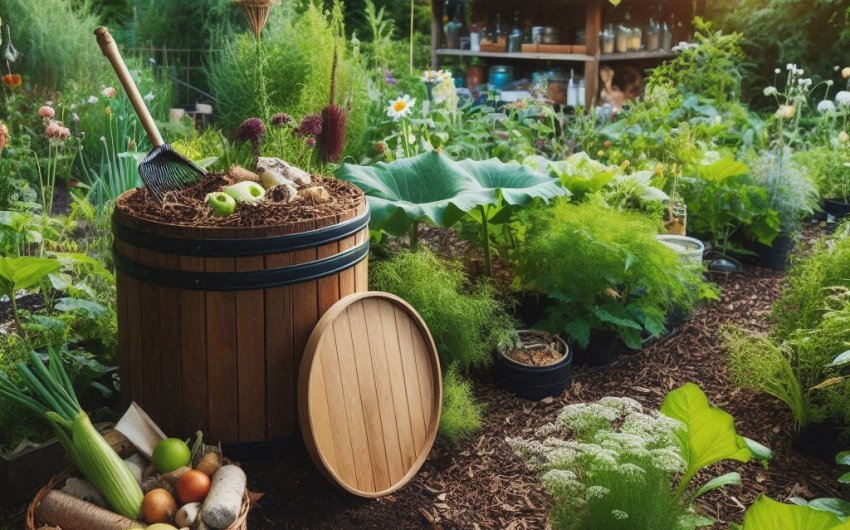
You envision a garden that does more than just produce food; you dream of a vibrant, self-sustaining ecosystem, working in harmony with nature's rhythms. This vision often leads gardeners to explore permaculture principles, a design system for sustainable living. At the heart of any truly regenerative garden lies the efficient cycling of resources, and in the garden, no process embodies this better than composting.
Composting and permaculture are a match made in gardening heaven. While composting focuses on transforming organic waste into soil amendments, permaculture provides the framework for integrating this process seamlessly into your entire garden design, ensuring every input has multiple functions and every output feeds another part of the system. Learning how to integrate composting with permaculture principles in your garden isn't just about managing waste; it's about building an incredibly fertile, resilient, and productive oasis that truly exemplifies nature's wisdom.
What is Permaculture and Why is it Important for Gardens?
Before diving into how composting fits in, it's essential to understand what permaculture is and why it's important for gardens. Permaculture is far more than just a gardening technique; it's a holistic design philosophy for creating sustainable human settlements and agricultural systems that mimic the patterns and resilience of natural ecosystems.
At its core, permaculture is about working with nature, not against it, to create abundant, self-sustaining, and energy-efficient gardens.
Core Principles of Permaculture
Permaculture is guided by a set of core principles, often summarized as "ethics," and a series of design principles. These ethical principles underpin every design decision in a permaculture garden.
- 1. Earth Care:
- Meaning: This principle focuses on regenerating soil, water, forests, and other living systems. It acknowledges that healthy ecosystems are the foundation for life.
- In the Garden: This translates to building soil health (no-dig gardening, composting), conserving water, planting trees, fostering biodiversity, and minimizing pollution. It's about leaving the earth better than you found it.
- 2. People Care:
- Meaning: This principle ensures that people's needs are met for food, shelter, education, and social connection. It's about designing systems that support human well-being.
- In the Garden: This means creating gardens that are productive, safe, accessible, beautiful, and enjoyable. It also includes sharing surplus, building community, and fostering connections.
- 3. Fair Share (Return of Surplus):
- Meaning: This principle encourages the redistribution of surplus resources to meet the needs of all living things, limiting consumption, and setting limits to growth.
- In the Garden: This involves sharing abundant harvests with neighbors or food banks, preserving excess produce, or allowing some parts of the garden to go to seed for wildlife. It also encourages resource cycling, like composting all organic waste back into the garden.
Beyond these ethics, permaculture employs a series of design principles that include:
- Observe and Interact: Spend time watching your garden to understand its natural patterns.
- Catch and Store Energy: Capture resources like rainwater and sunlight.
- Obtain a Yield: Design for abundance.
- Apply Self-Regulation and Accept Feedback: Learn from successes and failures.
- Use and Value Renewable Resources and Services: Prioritize what can be replenished.
- Produce No Waste: Every output becomes an input somewhere else.
- Design from Pattern to Detail: Start with the big picture before fine-tuning.
- Integrate Rather Than Segregate: Place elements so they support each other.
- Use Small and Slow Solutions: Focus on manageable steps.
- Use and Value Diversity: Create resilient ecosystems.
- Use Edges and Value the Marginal: Maximize productivity at interfaces.
- Creatively Use and Respond to Change: Be adaptable.
These core principles of permaculture provide a holistic framework for designing a garden that is not only productive but also regenerative and resilient.
Creating Self-Sustaining Ecosystems
At its heart, permaculture is about creating self-sustaining ecosystems that mimic nature's efficiency. Unlike conventional gardens that often rely on external inputs (synthetic fertilizers, pesticides, large amounts of water), a permaculture garden is designed to minimize these dependencies.
- Mimicking Natural Systems: In nature, there is no waste. Everything is recycled. Leaves fall, decompose, and feed the soil. Water infiltrates naturally. Pests are kept in check by predators. Permaculture applies these lessons to garden design.
- Closed-Loop Systems: The goal is to create closed-loop systems where the outputs of one element become the inputs for another. For example, kitchen scraps become compost, which feeds the soil, which feeds the plants, which produce food, which creates more scraps.
- Minimizing External Inputs:
- Nutrients: By building soil health with compost and mulch, and by incorporating nitrogen-fixing plants, the garden becomes less reliant on synthetic fertilizers.
- Water: Through strategies like rainwater harvesting, swales, and thick mulch layers, water is conserved and managed on-site.
- Pest Control: Biodiversity (attracting beneficial insects, natural predators) and companion planting reduce the need for chemical pesticides.
- Reduced Labor: Over time, as the ecosystem matures, the garden requires less intervention from the gardener. It becomes a more resilient and self-regulating system.
- Increased Biodiversity: A diverse range of plants, animals, and microorganisms is actively encouraged, leading to a healthier and more stable ecosystem that is more resistant to disease and pests.
Creating self-sustaining ecosystems through permaculture principles results in gardens that are not only productive but also resilient, environmentally friendly, and require less human effort over the long run.
Maximizing Resource Efficiency
A core tenet of permaculture is maximizing resource efficiency. This means getting the most out of every resource (water, sunlight, nutrients, space, labor) by designing systems where nothing is wasted and every element performs multiple functions.
- Water Conservation:
- Rainwater Harvesting: Collecting rainwater from roofs (e.g., using a rain barrel) for irrigation.
- Swales/Keyhole Gardens: Earthworks or garden shapes designed to slow, spread, and sink water into the landscape.
- Mulching: A thick layer of mulch dramatically reduces water evaporation from the soil.
- Greywater Recycling: Using filtered greywater (from sinks, showers) for irrigation where safe and permitted.
- Nutrient Cycling:
- Composting: All organic waste (kitchen scraps, yard trimmings) is recycled into compost to feed the soil.
- Chop-and-Drop: Plant materials are cut down and left in place as mulch to decompose.
- Nitrogen Fixers: Incorporating plants that pull nitrogen from the air and make it available in the soil.
- Sunlight Optimization:
- Zoning: Placing sun-loving plants in the sunniest areas, and shade-tolerant plants in shadier spots.
- Vertical Gardening: Utilizing trellises, arbors, and vertical planters to grow plants upwards, maximizing light capture in limited space.
- Space Utilization:
- Guilds: Planting compatible species together (e.g., "Three Sisters" of corn, beans, squash) where they mutually benefit and efficiently use space.
- Stacking Functions: Each element in the design serves multiple purposes (e.g., a chicken coop produces eggs, manure for compost, and helps with pest control).
- Reduced Labor: By designing intelligent systems, the need for constant human intervention (weeding, watering, fertilizing, pest control) is reduced over time.
Maximizing resource efficiency in a permaculture garden leads to a highly productive system that requires fewer external inputs and less ongoing labor, truly embodying sustainable living.
The Synergy: Why Composting is Perfect for Permaculture
Composting is not just compatible with permaculture principles; it is absolutely foundational to a successful permaculture garden. The two concepts share core philosophies and a deep, symbiotic relationship. The benefits of composting align perfectly with the goals of permaculture, making them an inseparable pair for regenerative gardening.
This synergy highlights why composting isn't just an addition, but a vital engine, for a truly permaculture garden.
Aligns with "Produce No Waste" Principle
The most direct alignment between composting and permaculture is with the "Produce No Waste" principle. This core ethical tenet in permaculture encourages us to view "waste" as a misplaced resource.
- Waste as Resource: In a linear economy, organic waste (kitchen scraps, yard trimmings) is often discarded and sent to landfills, where it becomes a problem (producing methane, taking up space). Composting transforms this "waste" into a valuable soil amendment (compost).
- Closed-Loop System: Composting enables a closed-loop system within the garden. Organic matter generated on-site (fallen leaves, grass clippings, garden trimmings) and from the kitchen (food scraps) is processed and returned to the soil, nourishing new growth. This mimics natural ecosystems where everything is recycled.
- Reducing Landfill Burden: By diverting organic materials from landfills, composting significantly reduces the volume of municipal waste and prevents the production of harmful methane gas, directly aligning with permaculture's Earth Care ethic.
- Resource Cycling: Instead of depleting external resources (like synthetic fertilizers), composting champions resource cycling, creating fertility from what's already available within the system.
- Efficiency: It contributes to overall resource efficiency by transforming discarded materials into something highly beneficial for the garden.
Composting directly embodies the "Produce No Waste" principle of permaculture, demonstrating how to turn problematic outputs into valuable inputs for a regenerative system.
Builds Soil Health (Earth Care)
One of the cornerstones of permaculture is Earth Care, which mandates regenerating and enriching the living soil. Composting is an unparalleled tool for building soil health, directly fulfilling this fundamental ethic.
- Adding Organic Matter: Compost is rich in organic matter, which is the lifeblood of healthy soil. When added to garden beds, it:
- Improves Structure: Enhances soil structure, making clay soils more permeable and sandy soils better at retaining water. This improves drainage, aeration, and overall workability.
- Increases Water Retention: Allows soil to hold significantly more water, reducing irrigation needs and building drought resilience.
- Provides Nutrients: Offers a balanced supply of slow-release nutrients, feeding plants sustainably.
- Feeds the Soil Food Web: Compost introduces and nourishes a diverse array of beneficial microorganisms (bacteria, fungi, earthworms) – the soil food web. These microbes are crucial for:
- Nutrient Cycling: Making nutrients available to plants.
- Disease Suppression: Suppressing harmful pathogens.
- Soil Aggregation: Further improving soil structure.
- Carbon Sequestration: By building soil organic matter, composting actively sequesters carbon from the atmosphere into the soil, directly contributing to climate change mitigation (a key aspect of Earth Care).
- Reduced Chemical Inputs: Healthier soil, fed by compost, reduces the need for synthetic fertilizers and pesticides, protecting the environment and aligning with organic principles.
Composting's profound ability to build soil health makes it an indispensable practice for any garden striving to adhere to permaculture's core ethic of Earth Care.
Supports Integrated Pest Management
A fundamental principle of permaculture is to design systems that are resilient and self-regulating, naturally minimizing problems like pests. Composting indirectly supports integrated pest management (IPM) by fostering healthier plants and a balanced ecosystem.
- Stronger, More Resilient Plants: Plants growing in compost-rich, healthy soil are better nourished and generally more vigorous. Stronger plants have better natural defenses and can often tolerate minor pest infestations without suffering significant damage or needing chemical intervention.
- Balanced Soil Ecosystem: A vibrant soil food web, encouraged by compost, introduces and supports a diverse array of beneficial microorganisms. Many of these microbes can suppress soil-borne pathogens that cause plant diseases, reducing stress on the plant and making it less attractive to some pests.
- Reduced Chemical Use: Because compost improves soil fertility and plant health, the reliance on synthetic fertilizers and pesticides is diminished. This is crucial for IPM, as chemical applications can harm beneficial insects (like pollinators and natural pest predators), disrupting the natural balance.
- Attracting Beneficial Insects: A healthy garden often attracts more diverse insect life. Some composting practices can also directly contribute to biodiversity by adding new materials that house beneficial microbes. While compost doesn't directly attract specific predatory insects (like flowers do for pollinators), it fosters the overall health that allows these beneficial populations to thrive.
- Improved Water Management: Compost improves water retention and drainage. Plants that are consistently hydrated (but not overwatered) are less stressed and thus less susceptible to certain pests (e.g., spider mites often target stressed, dry plants).
Composting's indirect yet powerful impact on plant vitality and soil health makes it a crucial, preventative component of an integrated pest management strategy within a permaculture garden.
Enhances Water Conservation
In a world facing increasing water scarcity, water conservation is a critical permaculture principle. Composting significantly enhances water conservation in the garden, making your landscape more drought-resilient and resource-efficient.
- Improved Soil Structure for Water Retention: Compost is rich in organic matter. When this organic matter is incorporated into the soil, it acts like a giant sponge.
- It helps sandy soils hold onto water that would otherwise drain too quickly.
- It improves the aggregation (clumping) of clay particles, creating more pore spaces that absorb and hold water while still allowing excess to drain.
- Each percentage point increase in soil organic matter can significantly increase the soil's water-holding capacity.
- Reduced Evaporation: Applying compost as a mulch (a top dressing) dramatically reduces water evaporation directly from the soil surface due to sun and wind exposure. This keeps the root zone consistently moist for longer periods.
- Improved Infiltration: Compost-rich soils have better soil structure and permeability, allowing rainwater and irrigation water to infiltrate deeply into the soil profile rather than running off the surface. This ensures more water reaches the plant roots.
- Drought Resilience: When soil health is improved by compost, plants can access more stored water and develop deeper root systems. This makes your garden much more drought-tolerant and less reliant on frequent irrigation, especially during dry spells.
- Reduced Water Bill: For the gardener, this directly translates into lower water bills and less time spent watering.
Composting's profound impact on soil water retention makes it an invaluable tool for water conservation and building a more drought-resilient and sustainable permaculture garden.
Integrating Composting: Practical Permaculture Applications
Integrating composting with permaculture principles means moving beyond a simple pile in the corner and instead weaving it into the very design and function of your garden. It's about designing systems that are efficient, stack functions, and are highly effective at recycling resources.
These practical permaculture applications demonstrate how composting becomes a dynamic and central element of a regenerative garden.
1. Centralized Composting Hub (Zone 2/3)
In permaculture design, gardens are often divided into zones based on frequency of human interaction. A centralized composting hub is typically placed in Zone 2 or 3, balancing convenience with scale.
- Permaculture Zones:
- Zone 0: The home (kitchen scraps generated).
- Zone 1: High-use areas right outside the door (herb garden, frequently harvested greens).
- Zone 2: Less frequently visited areas for more demanding crops, small orchards, or poultry.
- Zone 3: Major food production, larger orchards, and main compost systems.
- Zone 4/5: Wild or unmanaged areas.
- Location for Composting Hub:
- Balance of Convenience and Scale: Placing your compost hub in Zone 2 or 3 means it's not directly outside your back door (where it might be unsightly or attract unwanted visitors), but it's still close enough to be convenient for transferring kitchen scraps.
- Ample Space: Zone 2/3 usually offers enough space for a larger, multi-bin composting system (e.g., a three-bin composting system) that can handle the volume of kitchen and yard waste generated.
- Resource Access: This location is typically also convenient for accessing "brown" materials (like fallen leaves or wood chips) and water for the pile.
- Kitchen to Compost Path: Design a clear, easy path from your kitchen (Zone 0/1) to your compost hub (Zone 2/3). This encourages consistent use. A small kitchen compost caddy can collect daily scraps before transfer.
- Visual Integration: While functional, try to visually integrate the compost hub into the landscape using screening plants or attractive bin designs.
- Stacking Functions: The compost hub itself can be designed with stacked functions, e.g., a bin that collects rainwater from its roof, or a nearby shed for tools.
A centralized composting hub in the appropriate permaculture zone optimizes efficiency for converting diverse organic waste into valuable compost.
2. Sheet Composting / Lasagna Gardening
Sheet composting, often called lasagna gardening, is a permaculture principle that integrates composting directly into your garden beds, rather than in a separate pile. It's a "no-dig" method that builds fertility over time.
- How it Works: Instead of mixing compost into the soil, you build a garden bed directly by layering "green" and "brown" organic materials on top of the existing ground (often starting over grass or weeds).
- Layers: Typically starts with a cardboard barrier, then alternating layers of nitrogen-rich "greens" (kitchen scraps, fresh grass clippings, manure) and carbon-rich "browns" (shredded leaves, straw, wood chips, shredded newspaper). Each layer is moistened.
- Decomposition: Over time (several months to a year), these layers slowly decompose, creating a rich, fertile soil profile underneath.
- Benefits:
- Builds Soil In Place: Eliminates the need for digging or tilling.
- Excellent Soil Health: Creates incredibly fertile, well-drained, and water-retentive soil.
- Weed Suppression: The initial layers (especially cardboard) effectively smother existing weeds.
- Minimizes Labor: Less digging, less weeding, less hauling of compost.
- Efficient Waste Cycling: Directly applies organic waste where it's needed, skipping the separate compost pile step (though it can be used with a pile).
- Application:
- New Beds: Ideal for establishing new garden beds or converting lawn areas without digging.
- Over Existing Beds: Can be done over existing garden beds to refresh soil fertility.
- Timing: Best started in fall or spring to allow time for decomposition before planting.
- Materials: Gather ample amounts of various "greens" and "browns." A bag of garden cardboard for sheet mulching is a great base.
Sheet composting is a powerful permaculture application that continuously builds soil health and converts organic waste directly into productive garden beds.
3. Compost Socks / Trench Composting (In-Situ)
Compost socks (or compost trenches) are innovative permaculture applications that bring composting directly to the plant's root zone, often called in-situ composting.
- Compost Socks (Perforated Pipe):
- How it Works: A length of perforated drainage pipe (e.g., perforated drain pipe) is partially buried vertically or horizontally in a garden bed. Food scraps and other "greens" are added to the pipe.
- Decomposition: The organic matter decomposes within the pipe, and the released nutrients and compost leachate seep out through the perforations directly into the root zone of surrounding plants.
- Pros: Direct nutrient delivery; no turning required; keeps food scraps contained (reducing pests and odors); provides consistent moisture.
- Trench Composting:
- How it Works: Dig a small trench (6-12 inches deep and wide) between rows of plants or at the base of larger perennial plants/shrubs. Bury food scraps and other small "greens" in the trench.
- Decomposition: As the organic matter decomposes, it enriches the soil directly where the plants' roots can access the nutrients.
- Pros: Simple; discreet (waste is buried); no separate compost pile needed; excellent for building fertility.
- Benefits (Both Methods):
- Direct Nutrient Delivery: Feeds plants directly in their active root zone.
- Waste Diversion: Easy way to deal with daily kitchen scraps.
- Odor/Pest Control: Waste is buried or contained, greatly reducing odors and attraction for pests.
- Water Conservation: The decomposing materials help retain moisture in the root zone.
- Builds Soil Health In Place: Continuously enriches the soil profile.
- Considerations: Best for plant-based food scraps. Avoid meat/dairy/oils in small, unheated trenches/socks to prevent pests.
Compost socks and trench composting are highly efficient permaculture techniques for providing direct, continuous fertility and managing organic waste right where it's needed in the garden.
4. Worm Composting (Vermicomposting)
Worm composting, or vermicomposting, is a highly efficient and compact permaculture application for composting specific types of organic waste, primarily kitchen scraps, into incredibly rich worm castings.
- How it Works: Uses specialized composting worms, typically red wigglers (Eisenia fetida), in a dedicated worm bin. The worms consume food waste and other organic matter, digesting it and excreting nutrient-rich worm castings.
- Ideal for Kitchen Scraps: Worms excel at breaking down fruit and vegetable scraps, coffee grounds, tea bags, and paper.
- Benefits:
- High-Quality Output: Produces worm castings, a potent organic fertilizer and soil amendment that is highly beneficial for plants. Also produces compost tea (liquid leachate).
- No Odors (if managed well): Worm bins are virtually odorless if fed correctly and kept balanced.
- Pest Control: Less prone to attracting pests (like rodents) than traditional piles because of the contained system and the speed worms work.
- Compact: Can be done indoors (kitchen, garage, basement) or outdoors, making it ideal for small spaces.
- Educational: Fun for kids and a great way to learn about decomposition.
- Integration into Permaculture:
- Resource Cycling: All kitchen scraps are converted into a valuable nutrient source.
- Fertility Boost: The worm castings are used to top-dress garden beds, provide a nutrient boost for potted plants, or enrich seed starting mixes.
- Stacking Functions: The worm bin itself can be incorporated into other systems. You can find many types of vermicomposting worm bins.
- Considerations: Cannot handle meat, dairy, excessive oils, or woody materials. Sensitive to temperature extremes.
Worm composting is a highly efficient and accessible permaculture strategy for turning kitchen food waste into premium soil amendments, enriching your garden naturally.
5. Hugelkultur Mounds (Long-Term Composting)
Hugelkultur mounds are a unique and ambitious permaculture application that integrates composting on a large scale to create long-lasting, self-watering, and incredibly fertile garden beds.
- What it is: German for "hill culture," it involves building large mounds or raised beds using logs, branches, and other woody debris at the base, layered with smaller organic matter (leaves, grass clippings, compost, soil).
- How it Works:
- Slow Decomposition: The large woody core slowly decomposes over many years (sometimes decades). This continuous, long-term breakdown slowly releases nutrients into the surrounding soil, acting as a slow-release fertilizer source.
- Water Retention: The woody material acts like a giant sponge, absorbing and holding vast amounts of water. This makes the hugelkultur mound incredibly drought-tolerant and often eliminates the need for irrigation once established.
- Increased Surface Area: The mounded shape increases the total planting surface area, allowing for higher density planting.
- Warmer Soil: The decomposition process can generate a little heat, slightly warming the soil and extending the growing season.
- Integration into Permaculture:
- "Chop and Drop": Directly utilizes woody prunings and other large garden waste that might be too slow for conventional compost piles.
- Resource Cycling: Turns large amounts of organic waste into productive garden beds.
- Water Conservation: A prime example of water harvesting and conservation in action.
- Low Maintenance: Once built, they require very little maintenance (no tilling, less watering, less fertilizing).
- Considerations: Requires a significant amount of woody material and initial labor. Best for larger gardens or homesteads. Need to be built carefully to prevent settling issues.
- Benefits: Creates incredibly fertile, drought-tolerant, and long-lived garden beds, demonstrating permaculture's ability to create self-sustaining and productive ecosystems.
Hugelkultur mounds are an ambitious but highly rewarding permaculture strategy for long-term composting and building permanent, resilient garden beds.