
How Do I Propagate Dumb Cane?
The Dumb Cane, or Dieffenbachia, is a truly striking houseplant. Its large, lush leaves, often splashed with vibrant greens, creams, and whites, bring a touch of the tropics indoors, instantly brightening any room. Many gardeners cherish their Dieffenbachia for its dramatic foliage and relatively easy-going nature. However, like all living things, these plants grow, sometimes becoming leggy or simply getting too tall for their space. This is where propagation comes in, offering a fantastic opportunity to create new plants from your existing one, whether to share with friends, expand your indoor jungle, or rejuvenate an overgrown specimen.
Propagating Dumb Cane might sound a bit intimidating at first, but it's a surprisingly straightforward process. It’s essentially taking a piece of the parent plant and encouraging it to grow into a brand new, independent plant. Not only does this save you money on buying new plants, but it also gives you immense satisfaction in nurturing new life from something you already have. Plus, if your Dieffenbachia has gotten leggy (meaning it has a long, bare stem with leaves only at the top), propagation is the perfect way to get it back to a bushy, more attractive shape.
This guide will walk you through the most common and successful methods for Dieffenbachia propagation. We'll cover everything from the essential tools you'll need to step-by-step instructions for each technique, making sure you understand how to handle the plant's sap safely and provide the best conditions for your new cuttings to thrive. Get ready to multiply your beautiful Dumb Canes and enjoy even more of their leafy splendor!
What is Dumb Cane and Why Propagate It?
Before we dive into how to make more Dumb Cane plants, let's understand what this popular houseplant is and why you might want to multiply it.
What is Dumb Cane (Dieffenbachia)?
Dumb Cane, scientifically known as Dieffenbachia, is a very common tropical houseplant. It's loved for its large, oval leaves, which often have beautiful patterns of green, white, yellow, or cream. The patterns vary a lot depending on the specific type (cultivar) of Dieffenbachia.
- Warning: It's very important to know that Dumb Cane is poisonous. Its sap contains calcium oxalate crystals. If this sap touches your skin, it can cause irritation. If eaten, it can cause temporary swelling and numbness in the mouth and throat, making it hard to speak. This is why it's called "Dumb Cane." Always wear gloves when handling and keep it away from curious children and pets.
Why Propagate Your Dieffenbachia?
There are several great reasons to propagate your Dumb Cane:
- Rejuvenate Leggy Plants: Over time, especially if they don't get enough light, Dieffenbachia plants can become "leggy." This means the lower leaves fall off, leaving a long, bare stem with leaves only at the top. Propagating allows you to cut the top off and root it, giving you a bushier new plant, and often encouraging the old stem to sprout new growth too.
- Create More Plants: You can get new plants for free! This is perfect if you want to fill more spaces in your home, create a tropical vibe, or give gifts to friends and family.
- Save a Dying Plant: If your Dieffenbachia is struggling or has root rot, sometimes taking cuttings is your last chance to save it.
- Experiment and Learn: Propagation is a fun way to learn more about plants and how they grow. It's very satisfying to see a cutting develop roots and turn into a full plant.
What Do I Need Before I Start Propagating Dumb Cane?
Having the right tools ready makes Dumb Cane propagation easier and safer.
Essential Tools and Materials
- Sharp Pruning Shears or Knife: A clean, sharp tool is crucial for making a neat cut. Dull tools can crush the stem, making it harder for the cutting to root. Ensure your tool is sterilized before use (wipe with rubbing alcohol or a 10% bleach solution) to prevent spreading diseases.
- Gloves: As mentioned, Dumb Cane sap is irritating. Always wear protective gloves to avoid skin contact. Nitrile or latex gloves work well.
- Safety Glasses (Optional but Recommended): If you're cutting a large plant, sap might squirt. Eye protection is a good idea.
- Paper Towels or Cloth: To wipe away any dripping sap from the plant or your tools.
- Rooting Hormone (Optional but Recommended): A powder or gel that encourages roots to form faster. It can increase your success rate, especially with stem cuttings. You can find rooting hormone powder at most garden stores.
- Pots or Containers: For planting your new cuttings. Small pots (4-6 inches) with drainage holes are ideal.
- Well-Draining Potting Mix: A good quality potting mix designed for houseplants or a mix specifically for aroids (like Dieffenbachia) is best. A common mix is peat moss, perlite, and a little potting soil. Good drainage is key to prevent rot. Look for houseplant potting mix with perlite.
- Clear Plastic Bag or Dome: To create a humid environment around your cuttings, which helps them root. You can use a large clear plastic bag or a purpose-made propagation dome.
- Water (for water propagation): If you choose to root cuttings in water, you'll need a clear jar or vase.
How Do I Propagate Dumb Cane Using Stem Cuttings?
Stem cuttings are one of the most common and effective ways to propagate Dumb Cane. This method works great for leggy plants.
Step-by-Step Guide for Stem Cuttings
- Prepare Your Tools: Put on your gloves and safety glasses. Sterilize your pruning shears or knife with rubbing alcohol. Have your rooting hormone, pots, and potting mix ready.
- Choose Your Cutting: Look for a healthy stem section, ideally from the top of your plant, that has at least 2-3 leaves and a few nodes. Nodes are the bumps on the stem where leaves or roots grow from.
- For Leggy Plants: You can cut off the top 6-8 inches of the stem, ensuring it has active leaves. You can also take sections of the bare stem below this, which we'll discuss as "cane cuttings."
- Make the Cut: Using your sharp, sterilized tool, make a clean cut across the stem. Aim to cut about 1/2 inch below a node.
- Important: The cut stem on the main plant may ooze sap. Wipe it gently with a paper towel. You can sprinkle a little cinnamon on the cut end of the mother plant; it acts as a natural antifungal.
- Prepare the Cutting:
- Remove Lower Leaves: Carefully remove any leaves from the bottom 2-3 inches of the cutting. This exposes the nodes where roots will form and prevents leaves from rotting when buried in soil or submerged in water.
- Dip in Rooting Hormone (Optional): If using rooting hormone, dip the cut end of the stem into the powder or gel. Tap off any excess. This step can speed up rooting and improve success.
- Plant the Cutting (Soil Method):
- Fill a small pot (4-6 inches) with fresh, well-draining potting mix.
- Use a finger or a pencil to make a hole in the center of the potting mix.
- Gently insert the cutting into the hole, making sure at least one node (preferably two) is buried beneath the soil surface.
- Lightly firm the soil around the cutting to hold it in place.
- Water thoroughly until water drains from the bottom.
- Create Humidity:
- Place the potted cutting inside a clear plastic bag or cover it with a clear plastic dome. This creates a mini-greenhouse effect, increasing humidity, which is vital for rooting.
- Make sure the plastic doesn't touch the leaves too much, as this can cause rot. If needed, use stakes to prop up the bag.
- Place in Ideal Conditions:
- Put the potted cutting in a warm spot (around 70-80°F or 21-27°C) with bright, indirect light. Avoid direct sun, which can cook the cutting inside the plastic.
- Check the soil moisture every few days. The soil should stay consistently moist, but not waterlogged. Lift the plastic bag for a few minutes daily to allow for fresh air circulation and prevent fungal issues.
- Patience is Key:
- Rooting can take anywhere from 4 to 8 weeks, sometimes longer.
- You'll know it's rooted when you see new leaf growth. You can also gently tug on the cutting; if you feel resistance, it has likely rooted.
- Once rooted, gradually remove the plastic cover over a few days to help the new plant adjust to normal humidity.
- Continue to care for it as you would a mature Dumb Cane plant.
Can I Root Dumb Cane Cuttings in Water?
Yes, Dumb Cane stem cuttings can also be rooted successfully in water. This method allows you to see the roots grow, which can be very exciting!
Step-by-Step Guide for Water Propagation
- Prepare Your Cutting: Follow steps 1-4 from the "Stem Cuttings (Soil Method)" above. Make sure your cutting has a few nodes exposed at the bottom, and remove any lower leaves that would be submerged in water.
- Choose a Container: Select a clear glass jar or vase. A clear container lets you watch the roots develop.
- Add Water: Fill the container with clean, room-temperature water. Tap water is usually fine if it's not heavily chlorinated. If your water is highly chlorinated, let it sit out for 24 hours to allow the chlorine to dissipate.
- Place the Cutting: Place the prepared Dumb Cane cutting into the water, ensuring that the nodes (the parts where you removed leaves) are fully submerged. Keep the leaves above the water.
- Location, Location, Location:
- Place the jar in a warm spot with bright, indirect light.
- Avoid direct sunlight, which can promote algae growth in the water and potentially harm the cutting.
- Change Water Regularly:
- Change the water every few days, or at least once a week. This keeps the water fresh and oxygenated, preventing bacterial growth and ensuring healthy root development.
- You can rinse the cutting stem gently under running water during changes if you see any sliminess.
- Watch for Roots:
- You should start to see small white roots emerging from the nodes in about 3-6 weeks.
- Wait until the roots are at least 1-2 inches long before planting in soil. This gives the new plant a strong start.
- Transition to Soil:
- Once roots are long enough, gently plant the cutting into a small pot filled with well-draining potting mix.
- Water thoroughly.
- Because the roots developed in water, the plant might experience a little "shock" when moved to soil. To help with this, you can cover it with a plastic bag for the first few days (gradually removing it) or place it in a humid location.
What is Cane Cutting Propagation for Dumb Cane?
Cane cutting propagation is a fantastic method for Dumb Cane, especially if your plant has a long, bare stem without many leaves, or if you want to make many new plants from one leggy stem. This method uses sections of the bare stem, often called "canes" or "logs."
Step-by-Step Guide for Cane Cuttings
- Prepare Your Tools and Stem:
- Wear gloves and safety glasses. Sterilize your cutting tool.
- Identify the bare stem sections of your Dumb Cane. If you've just taken a top cutting, you'll have leftover bare stem.
- Cut the Cane Sections:
- Cut the bare stem into 2-4 inch long sections. Each section must have at least one node, and ideally two or more. A node looks like a small bump or ring around the stem. This is where new roots and shoots will emerge.
- Make sure you note which way is "up" on each section (which end was closer to the top of the plant). You can make an angled cut on the bottom end and a straight cut on the top end to remember.
- Allow to Callus (Crucial Step):
- Place the cane sections in a dry, airy spot, away from direct sunlight, for 1-3 days. This allows the cut ends to "callus over" (form a dry, protective layer).
- Why it's crucial: Callusing prevents rot when you plant the sections. Do not skip this step!
- Plant the Cane Sections:
- Fill a shallow tray or pot with a well-draining, light potting mix. A mix of peat moss and perlite or sand works well.
- Lay the callused cane sections horizontally on top of the potting mix.
- Gently press them down slightly so about half of the cane is touching or lightly buried in the mix. Ensure the node(s) are in contact with the soil.
- You can also plant them vertically, burying the bottom (the original "down" end) about halfway into the soil, but horizontal planting is often easier to manage multiple nodes.
- Create Humidity and Warmth:
- Lightly water the potting mix.
- Cover the tray/pot with a clear plastic dome or a clear plastic bag to create high humidity.
- Place the container in a warm spot (70-80°F or 21-27°C) with bright, indirect light. A heat mat can be very beneficial for bottom warmth, speeding up rooting. An electric seedling heat mat is a great tool for this.
- Care During Rooting:
- Keep the potting mix consistently moist but not soggy.
- Ventilate the plastic cover for a few minutes daily to prevent mold.
- This method usually takes 4-12 weeks for roots and new shoots to appear.
- Potting Up New Plants:
- Once you see new shoots and roots (you might have to gently lift a cane to check for roots), you can carefully separate the new plantlets from the cane.
- Pot each new plant into its own small pot with fresh potting mix.
- Continue to provide high humidity initially as they adjust, gradually acclimating them to normal room conditions.
This method is especially satisfying because a single leggy stem can yield multiple new Dieffenbachia plants!
Can I Propagate Dumb Cane by Air Layering?
Air layering is a less common but very effective method for propagating Dumb Cane, especially for older, leggy plants where you want to encourage roots to form before cutting the stem from the parent plant. This reduces shock to the cutting.
Step-by-Step Guide for Air Layering
- Prepare Your Tools: Put on gloves and sterilize a sharp knife or razor blade. You'll also need some sphagnum moss, plastic wrap, and twist ties or string.
- Choose the Stem Section: Select a healthy, bare section of the stem that is about 6-12 inches below the current growth tip. Make sure there are a few nodes in this area.
- Make the Cut:
- About 1-2 inches below a node, make an upward-slanting cut about one-third to halfway through the stem. Do not cut all the way through!
- Some people prefer to make two circular cuts around the stem (about 1 inch apart) and then carefully remove the bark between these cuts (this is called girdling or ringing). This completely severs the phloem (which carries sugars down the plant), forcing roots to form above the cut. This method is often more reliable but can be riskier if done incorrectly. For Dumb Cane, a simple upward cut or notch is often sufficient.
- Keep the Cut Open: Insert a small toothpick or a piece of a matchstick into the cut to keep it open.
- Apply Rooting Hormone (Optional): Dust the cut area and the nodes above it with rooting hormone.
- Wrap with Sphagnum Moss:
- Take a generous handful of damp sphagnum moss (squeeze out excess water).
- Mold the moss around the cut area, covering it completely. It should form a ball of moss around the stem.
- Wrap with Plastic:
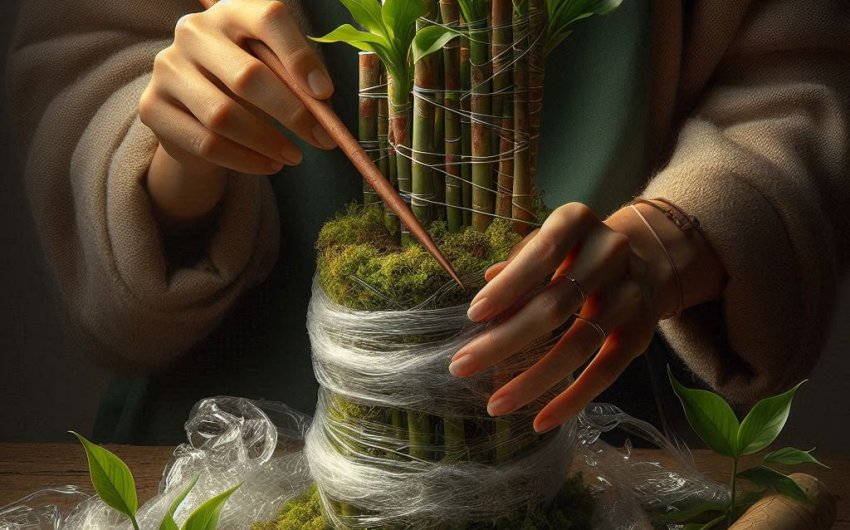
- Wrap the moss-covered area tightly with clear plastic wrap. Seal the top and bottom with twist ties or string to hold the moss in place and keep moisture in. The clear plastic allows you to see if roots are forming.
- Patience and Monitoring:
- Place the plant in its usual spot with bright, indirect light.
- Roots should start to appear within the sphagnum moss in 6-12 weeks. You might see new leaves sprouting from the top of the original plant too.
- Occasionally check the moss to ensure it remains moist. If it dries out, you can inject a little water with a syringe.
- Separate and Pot:
- Once a good network of roots has formed within the moss (they should be visible through the plastic), you can cut the stem just below the rooted section.
- Carefully remove the plastic wrap, but leave the sphagnum moss around the new roots.
- Plant the new, rooted cutting into a pot with well-draining potting mix, just as you would with a regular stem cutting.
- Keep the new plant in a humid environment for a few days to help it adjust.
Air layering is a bit more involved but results in a larger, more established new plant from the start.
What Are Important Care Tips for Your Propagated Dumb Cane?
Once your new Dumb Cane cuttings have rooted and are growing, giving them the right care will ensure they thrive and grow into beautiful mature plants.
Light
- Bright, Indirect Light: Dieffenbachia prefers bright light but no direct sun. Direct sunlight can scorch their leaves, especially the more variegated (patterned) types.
- Too Little Light: If your plant isn't getting enough light, it might become leggy again, stretch towards the light, or its vibrant leaf patterns might fade.
Water
- Consistent Moisture, Not Soggy: Water thoroughly when the top 1-2 inches of soil feel dry to the touch. Allow excess water to drain from the bottom of the pot.
- Avoid Overwatering: The biggest killer of Dumb Canes is overwatering, which leads to root rot. Do not let the pot sit in standing water.
- Reduce Watering in Winter: During cooler, darker winter months, your plant will need less water.
Humidity
- High Humidity is Best: As a tropical plant, Dumb Cane loves humidity. Low humidity can lead to brown leaf tips.
- How to Increase Humidity:
- Pebble Tray: Place the pot on a tray filled with pebbles and water. Make sure the bottom of the pot doesn't sit directly in the water.
- Humidifier: Use a room humidifier, especially in dry climates or during winter when indoor air is dry.
- Grouping Plants: Grouping plants together can create a localized humid microclimate.
- Misting (Limited Effect): While misting offers a temporary boost, it's not as effective as the methods above for long-term humidity. If you do mist, do it in the morning.
Temperature
- Warmth is Key: Dieffenbachia thrives in warm temperatures, ideally between 65-80°F (18-27°C).
- Avoid Cold Drafts: Keep your plant away from cold windows, air conditioning vents, or drafty doorways, as sudden drops in temperature can stress the plant.
Soil and Fertilizer
- Well-Draining Potting Mix: Use a good quality, well-draining potting mix that allows for good air circulation around the roots.
- Fertilize During Growing Season: Feed your Dieffenbachia every 2-4 weeks during its active growing season (spring and summer) with a balanced liquid houseplant fertilizer. Always dilute it to half strength to avoid over-fertilizing. Reduce or stop fertilizing in fall and winter.
Pruning and Maintenance
- Pruning for Bushiness: If your plant becomes leggy or too tall, you can prune it back. This also encourages new growth from the cut stem.
- Clean Leaves: Wipe dust off the large leaves regularly with a damp cloth. This helps the plant breathe and absorb light better.
- Remove Yellow/Dead Leaves: As new leaves grow, older lower leaves may naturally yellow and fall off. Remove them to keep the plant tidy and healthy.
By following these care tips, your newly propagated Dumb Cane plants will flourish, adding beautiful, vibrant foliage to your home for years to come. Remember to always handle this plant with care due to its irritating sap.