
How Do You Propagate a Spider Plant?
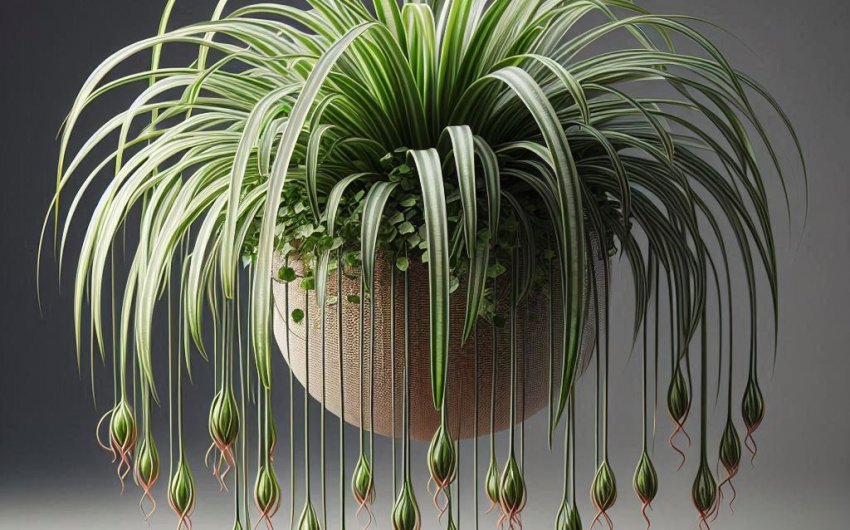
Spider plants are truly a houseplant classic, and for good reason! They're incredibly easy to care for, tolerant of a little neglect, and their graceful, arching leaves with beautiful variegation add a touch of fresh green to any space. Beyond their aesthetic appeal, they're also fantastic air purifiers, making your home a healthier place to live. But perhaps one of the most charming and unique aspects of a spider plant is its enthusiastic production of "spiderettes" – those adorable little plantlets that dangle from the mother plant like tiny spiders on a web.
These spiderettes aren't just cute; they're the key to effortlessly expanding your spider plant collection, sharing with friends, or even creating fuller, bushier displays. Propagating a spider plant is one of the easiest and most rewarding plant projects you can undertake, making it a perfect starting point for beginner plant parents. You don't need any fancy tools or a green thumb the size of a pumpkin patch. With just a few simple steps, you can turn one happy spider plant into many! Let's explore the simple magic of multiplying your spider plant family.
What Makes Spider Plant Propagation So Easy?
Spider plants are known as one of the easiest houseplants to propagate, making them a fantastic choice for beginners or anyone looking to quickly expand their plant collection. Their unique growth habit is what truly simplifies the process.
What Are "Spiderettes" or "Pups"?
The secret to spider plant propagation lies in their charming little offspring, commonly known as "spiderettes" or "pups."
- How They Form: When a spider plant matures and is happy, it sends out long, arching stems called stolons (also sometimes incorrectly called runners or inflorescences, though the stolons actually emerge from the flower stalk). Along these stolons, after tiny white flowers bloom (and are often self-pollinated to produce small seeds, though propagation is usually done by pups), little miniature spider plants begin to develop. These are the spiderettes or pups.
- Appearance: Each spiderette is a small, self-contained miniature version of the mother plant, complete with its own tiny leaves and, crucially, often a cluster of small aerial roots already forming at its base. These roots look like little white nubs or even short, fleshy roots extending from the bottom of the pup.
- Self-Sufficiency: The presence of these pre-formed roots is what makes spider plant propagation so incredibly easy. The pups are essentially little clones that are already halfway to being independent plants. They are still connected to the mother plant, getting water and nutrients, which helps them grow roots before being fully cut off.
- Nature's Design: This is nature's way of allowing spider plants to easily reproduce vegetatively (without seeds) and spread in their natural habitat, often trailing along the ground and rooting wherever a pup touches soil.
The sight of these dangling spiderettes is not just delightful; it's an open invitation to easily create new spider plants!
Why Is Spider Plant Propagation So Reliable?
The reliability of spider plant propagation is largely due to the inherent design of the spiderette.
- Pre-Formed Roots: As mentioned, the spiderettes often already have tiny aerial roots forming even while still attached to the mother plant. This gives them a massive head start compared to cuttings from other plants that need to be coaxed into forming roots from scratch.
- Genetic Clones: Since they are pups (vegetative propagation), they are genetic clones of the mother plant. This means they will have the exact same characteristics (variegation pattern, growth habit) as the parent, ensuring consistency.
- High Success Rate: Because of the pre-rooted nature and the spider plant's natural vigor, the success rate for rooting spiderettes is extremely high. Even beginner propagators typically achieve success with these plants.
- Hardiness: Spider plants themselves are very resilient and adaptable. This hardiness extends to their pups, which can often survive slight variations in propagation conditions.
- Abundant Production: A happy, mature spider plant will produce numerous spiderettes, giving you plenty of opportunities to propagate and share. This means you don't have to be stingy with your cuttings; there will usually be more!
- Multiple Methods Work: You can root spiderettes in water, directly in soil, or even leave them attached to the mother plant. This flexibility allows you to choose the method that best suits your comfort level and resources.
The combination of readily available, pre-rooted "spiderettes" and the inherent hardiness of the spider plant species makes its propagation one of the simplest and most foolproof processes in the world of houseplants.
When Is the Best Time to Propagate a Spider Plant?
While spider plants are very forgiving, understanding the best time to propagate can significantly speed up the rooting process and ensure the healthiest new plants.
What Is the Ideal Season for Spider Plant Propagation?
- Active Growing Season is Best: The best time to propagate a spider plant is during its active growing season, which is typically spring and summer.
- Why? During these warmer months, plants are naturally more vigorous, putting out new growth and actively forming roots. This means the spiderettes will root faster and establish more quickly. The longer daylight hours and warmer temperatures provide the ideal environment for growth.
- Can You Propagate in Fall/Winter? Yes, you can propagate spider plants in fall and winter, but the process will likely be much slower.
- Slower Rooting: The pups will take longer to form roots because the plant's metabolism slows down in cooler temperatures and shorter daylight hours.
- Lower Success Rate (Slightly): While still relatively high, the success rate might be slightly lower than in spring/summer.
- Consider Grow Lights: If propagating in fall or winter, providing supplemental light with a full-spectrum LED grow light can help speed up the process.
So, while spider plant propagation is possible year-round, aiming for spring and summer will give you the fastest and most reliable results.
How Mature Should a Spiderette Be Before Propagation?
The maturity of the spiderette plays a big role in its success rate.
- Look for Roots: The most important indicator of a ready-to-propagate spiderette is the presence of visible aerial roots. These often look like small, white nubs or even short, fleshy roots starting to emerge from the base of the pup, just below the leaves.
- Size: The spiderette should be a decent size, usually at least 1-2 inches (2.5-5 cm) across its leaf span. It should have at least 3-4 healthy leaves. Avoid very tiny pups that haven't developed properly yet, as they have fewer energy reserves.
- Vigor: Choose spiderettes that look plump, healthy, and vibrant, not withered or discolored.
While some tiny pups might root eventually, waiting for them to develop those tell-tale roots significantly increases your chances of quick and successful propagation. Don't be too eager; patience pays off here!
How Do I Propagate a Spider Plant in Water?
Propagating spider plants in water is often the most popular method, especially for beginners. It's incredibly easy, and watching those roots grow is very satisfying!
What Supplies Do I Need for Water Propagation?
You don't need much to get started with water propagation.
- Sharp Scissors or Pruning Shears: Clean and sharp for a clean cut. You can use regular kitchen scissors if they are sharp. Small pruning snips are ideal.
- Clear Glass Jars or Vases: Clear containers are best so you can easily see the root development. Any small glass (like a shot glass), a propagation vase, or even a clean plastic bottle with the top cut off will work.
- Filtered or Distilled Water (Optional but Recommended): Tap water can contain chlorine or chloramines, which can sometimes be harmful to plants or inhibit root growth. If your tap water is heavily chlorinated, let it sit out for 24 hours to allow chlorine to dissipate, or use filtered/distilled water.
- Rooting Hormone (Optional): While not strictly necessary for spider plants (they root so easily without it!), a rooting hormone powder can sometimes speed up the process or improve success with less vigorous pups.
Step-by-Step Water Propagation Guide
This method is super simple and yields great results.
- Select Your Spiderettes: Choose plump, healthy spiderettes that have developed visible aerial roots (small white nubs or short fleshy roots) at their base. The bigger the pup and the more roots, the faster it will root.
- Cut from the Mother Plant: Using your clean, sharp scissors or pruning shears, snip the stolon (the long stem connecting the pup to the mother plant) about an inch or two away from the base of the spiderette. Make a clean cut. You only need the pup itself; the long stem is not needed for propagation.
- Prepare the Spiderette: Gently remove any small, yellowing, or damaged leaves at the very base of the spiderette. You want to expose the area where the roots will emerge clearly. Make sure no leaves will be submerged in the water, as they can rot and contaminate the water.
- Place in Water: Fill your clear glass jar or vase with about an inch or two of water. Place the spiderette in the water, ensuring that only the bare base (where the roots are forming) is submerged. The leaves should remain above the water. You can often place several pups in one container if it's wide enough, but make sure they aren't too crowded.
- Find the Right Spot: Place the container in a spot that receives bright, indirect light. Avoid direct, harsh sunlight, which can make the water too warm and encourage algae growth. A north-facing windowsill or a spot a few feet back from a bright east-facing window is usually ideal. Consistent room temperature (around (65^\circ\text{F}) to (75^\circ\text{F}) or (18^\circ\text{C}) to (24^\circ\text{C})) is perfect.
- Change Water Regularly: This is important! Change the water every few days, or at least once a week. This keeps the water fresh, provides oxygen to the developing roots, and prevents bacterial or algal growth. If the water looks cloudy, change it immediately.
- Watch for Roots: Be patient! You should start to see new roots developing within 1-3 weeks. They will look white and fleshy.
- When to Pot Up: Wait until the roots are at least 1-2 inches (2.5-5 cm) long and well-developed. They should be robust, not just tiny wisps. This usually takes 2-4 weeks, but can be longer in cooler conditions.
Once the roots are well-established, your spiderette is ready to be transitioned into soil.
How Do I Propagate a Spider Plant Directly in Soil?
Propagating spider plants directly in soil is another reliable method, and for some, it's preferred as it avoids the "shock" of moving from water to soil. It also helps the new plant establish more quickly in its permanent medium.
What Supplies Do I Need for Soil Propagation?
For soil propagation, you'll need:
- Sharp Scissors or Pruning Shears: Clean and sharp.
- Small Pots (with drainage holes!): Choose small pots, around 4-6 inches (10-15 cm) in diameter. Ensure they have drainage holes at the bottom, as good drainage is crucial. You can find inexpensive nursery pots or biodegradable plant pots.
- Well-Draining Potting Mix: Use a high-quality potting mix for houseplants. You can also mix in some perlite (about (1/4) to (1/3) of the mix) to improve drainage and aeration, which spider plants love.
- Rooting Hormone (Optional): As with water propagation, it's not strictly necessary, but can give a slight boost.
Step-by-Step Soil Propagation Guide
There are two main ways to propagate spiderettes directly in soil: by cutting them first, or by rooting them while still attached to the mother plant.
Method 1: Detached Spiderettes (Cut First)
This method is similar to water propagation, but you're skipping the water step and going straight to soil.
- Select and Cut Spiderettes: Choose plump, healthy spiderettes with visible aerial roots. Snip the stolon about an inch or two from the base of the pup.
- Prepare the Spiderette: Remove any small or yellowing leaves from the very base of the pup to ensure the root-forming area is clear.
- Prepare the Pot: Fill your small pot with the well-draining potting mix. Make a small hole in the center with your finger or a pencil.
- Plant the Spiderette: Place the base of the spiderette into the hole, ensuring the aerial roots are covered by the soil. Gently firm the soil around the base to provide support. The leaves should sit above the soil surface.
- Water Thoroughly: Water the newly planted spiderette immediately and thoroughly until water drains from the bottom of the pot. This settles the soil around the roots.
- Find the Right Spot: Place the pot in a spot that receives bright, indirect light. Avoid direct sunlight.
- Keep Soil Consistently Moist: For the first few weeks, it's crucial to keep the soil consistently moist but not soggy. Water when the top inch of soil feels slightly dry. Good drainage is essential to prevent rot before roots establish.
- Test for Roots: After 3-6 weeks, gently tug on the spiderette. If you feel resistance, it means roots have formed and it's established. You should also see new leaf growth.
Method 2: Attached Spiderettes (Still Connected)
This "in situ" method is arguably the easiest and most foolproof, as the spiderette continues to receive nourishment from the mother plant while it develops its own roots.
- Select a Rooted Spiderette: Choose a mature spiderette that has visible aerial roots. It should still be attached to the mother plant's stolon.
- Prepare a Small Pot: Fill a small pot (4-6 inches) with well-draining potting mix.
- Position the Pot: Place the small pot next to the mother plant. Position the spiderette so its base (where the roots are forming) sits on top of the soil in the small pot. The stolon will still be connected to the mother plant.
- Secure the Spiderette: Gently press the base of the spiderette onto the soil. You can use a paperclip bent into a U-shape, a floral pin, or a small rock to hold the base of the pup firmly against the soil surface. The stolon should remain connected.
- Water Regularly: Water the soil in the small pot consistently, keeping it moist but not soggy. The mother plant should also be watered as usual.
- Wait for Roots: The spiderette will continue to grow its roots into the new soil. This usually takes 2-4 weeks.
- Sever the Connection: Once you feel resistance when you gently tug on the spiderette, and you see obvious new leaf growth, you know it's rooted. At this point, you can use your sharp scissors to cut the stolon that connects the new plant to the mother.
- New Independent Plant: Your new spider plant is now independent and ready for regular care!
This method offers the highest success rate because the pup has a continuous lifeline to the mother plant until it can fully support itself.
How Do I Care for My New Spider Plant Cuttings?
Once your spiderette has successfully rooted (whether in water or soil), the final step is to ensure a smooth transition and continued healthy growth.
Transitioning Water-Rooted Cuttings to Soil
This step can be a slight shock for the plant, but spider plants are usually quite resilient.
- Choose the Right Pot: Select a pot that's just a bit larger than the root ball, usually 4-6 inches (10-15 cm) in diameter. Ensure it has good drainage holes.
- Prepare Potting Mix: Use a fresh, well-draining potting mix for houseplants. You can mix in perlite for extra drainage.
- Plant Gently: Create a small hole in the center of the potting mix. Gently place the water-rooted spiderette into the hole, spreading the roots out carefully. The base of the leaves should be at soil level. Gently backfill with soil, firming lightly around the base.
- Water Thoroughly: Water immediately and deeply after potting until water drains from the bottom. This helps settle the soil around the delicate new roots.
- Acclimation Period: For the first week or two, keep the newly potted spider plant in a slightly shadier spot than its permanent location. This helps it adjust to the change in medium without added stress from intense light. Gradually move it to its brighter, indirect light spot over the next few days.
- Consistent Moisture: During this transition, keep the soil consistently moist but not soggy. The roots are used to constant water, so don't let the soil dry out completely. As the plant establishes, you can gradually shift to a more typical watering schedule (letting the top inch or two of soil dry out between waterings).
- Patience: Don't be alarmed if the plant looks a little droopy for a day or two after transplanting. It's experiencing some shock. Give it time and consistent care.
Ongoing Care for Your Young Spider Plant
Once your new spider plant is established in its pot and showing active new growth, you can care for it just like a mature spider plant.
- Light: Provide bright, indirect light. A few feet back from a sunny window or near a north/east-facing window is ideal. Avoid direct, harsh sunlight, which can scorch the leaves and cause brown tips. If growth is leggy or variegation fades, it might need more light. If leaves look bleached, it needs less direct light. Consider a plant grow light if your home is dim.
- Watering: Water when the top 1-2 inches (2.5-5 cm) of soil feel dry to the touch. Water thoroughly until it drains from the bottom. Do not let the plant sit in standing water. Reduce watering in winter.
- Humidity: While spider plants are quite tolerant, they appreciate average to slightly higher humidity. Brown leaf tips can often be a sign of low humidity (or fluoride in tap water). Misting occasionally, using a humidity tray for plants, or grouping plants can help.
- Temperature: Average room temperatures (65-75°F or 18-24°C) are perfect. Protect them from cold drafts.
- Fertilizing: Wait about 4-6 weeks after potting before fertilizing your young plant. Then, fertilize every 2-4 weeks during the active growing season (spring and summer) with a balanced liquid houseplant fertilizer diluted to half strength. Reduce or stop fertilizing in fall and winter.
- Repotting: Spider plants prefer to be slightly root-bound. You'll only need to repot when the roots start to visibly fill the pot or emerge from the drainage holes. When you do repot, go up only one size in pot diameter.
- Brown Leaf Tips: This is a very common issue with spider plants. It can be caused by low humidity, inconsistent watering, or fluoride/chlorine in tap water. Using filtered or distilled water can sometimes help. Allowing the top inch of soil to dry out between waterings and providing consistent humidity is generally the best approach. You can trim off the brown tips with clean scissors if desired, but they won't regreen.
By providing consistent and appropriate care, your new spider plant will soon grow into a thriving, beautiful specimen, ready to produce its own generation of spiderettes for you to enjoy!