
Thirsty Turf: Mastering Proper Lawn Watering Techniques
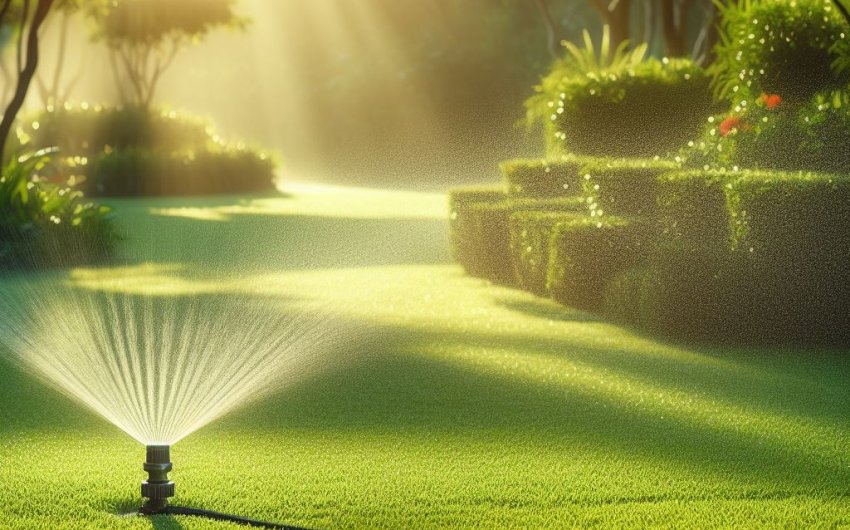
Proper lawn watering techniques focus on providing deep, infrequent hydration that encourages grass roots to grow far into the soil. By applying approximately 1 inch of water per week in a single session, you create a resilient turf that can withstand heat and drought better than shallowly watered grass.
What Is the Best Time of Day to Water Your Lawn?
The ideal window for watering is between 4:00 AM and 9:00 AM. During these early morning hours, the air is cool and the wind is usually calm, which significantly reduces the amount of water lost to evaporation.
Watering at night is often tempting but can lead to serious fungal diseases. When water sits on the grass blades for 10 to 12 hours overnight without sunlight to dry it, it creates a breeding ground for mold and mildew. By watering in the morning, you ensure the roots get a deep soak while the sun dries the blades quickly once it rises.
- Morning (Best): Lowest evaporation and allows blades to dry.
- Evening (Acceptable): Only if morning is impossible; watch for fungus.
- Mid-day (Worst): Up to 30% of water can evaporate before hitting the ground.
- Night (Risky): High risk of leaf spot and root rot.
How Much Water Does Your Grass Actually Need?
Most established lawns require about 1 inch of water per week to stay healthy and green. This amount includes any rainfall you receive. It is better to provide this inch in one deep soaking rather than small daily sprinkles.
Deep soaking forces the roots to reach downward to find moisture. Shallow watering keeps the roots near the surface, where they are easily damaged by the sun’s heat. You can use a rain gauge to track exactly how much water your sprinkler system is delivering.
| Grass Type | Weekly Water Need | Root Depth Potential |
|---|---|---|
| Kentucky Bluegrass | 1 to 1.5 inches | Moderate |
| Tall Fescue | 1 inch | Deep |
| Bermuda Grass | 0.75 to 1 inch | Very Deep |
| Zoysia Grass | 0.5 to 1 inch | Deep |
How Can You Tell If Your Lawn Is Dehydrated?
Before you turn on the tap, you should check if the grass actually needs a drink. Overwatering is just as harmful as underwatering because it suffocates the roots. Your grass will give you clear visual cues when it is under moisture stress.
The most common sign is the "footprint test." If you walk across your lawn and the grass stays flat rather than springing back up, it lacks the internal water pressure to stand tall. Using a soil moisture meter can provide an even more accurate reading by checking the moisture levels several inches below the surface.
- Color Change: Thirsty grass often turns a dull, bluish-gray or grayish-green color.
- Curled Leaves: The blades may roll or fold inward to reduce their surface area and save water.
- Soil Gaps: In clay soils, you may see cracks forming in the ground.
- Hard Dirt: If you cannot easily push a screwdriver 6 inches into the soil, it is too dry.
Which Sprinkler System Is Best for Efficient Watering?
The right equipment makes it much easier to achieve proper lawn watering techniques. The goal is to distribute water as evenly as possible without creating puddles or runoff.
If you have a large, open yard, a rotary sprinkler is usually the best choice because it delivers water in slow, heavy droplets that are less likely to be blown away by the wind. For smaller or oddly shaped areas, an oscillating sprinkler might be more practical.
Common Irrigation Tools
- In-Ground Systems: Convenient but require regular maintenance and "head" adjustments.
- Soaker Hoses: Perfect for garden borders or flower beds where you want to keep the foliage dry.
- Smart Controllers: These adjust your watering schedule automatically based on local weather forecasts.
- Impact Sprinklers: Great for long-distance coverage and large rectangular yards.
How Do Soil Types Affect Your Watering Schedule?
Your soil's texture determines how fast it absorbs water and how long it holds onto it. If you have clay soil, you have to water more slowly because the tiny particles take a long time to absorb moisture. If you water too fast, it will just run off into the street.
In contrast, sandy soil absorbs water very quickly but cannot hold onto it for long. If you have sandy soil, you might need to split your weekly inch into two sessions of 1/2 inch each to keep the roots hydrated.
- Clay: High water retention, slow absorption. Use the "cycle and soak" method.
- Sandy: Low water retention, fast absorption. Needs more frequent, lighter applications.
- Loam: The ideal mix. Holds water well but drains properly.
What Is the "Cycle and Soak" Method?
If you notice water running off your lawn and into the gutter before you’ve finished watering, your soil is likely compacted or high in clay. The cycle and soak method solves this problem by giving the earth time to breathe.
Instead of running your sprinklers for 60 minutes straight, run them for 20 minutes, wait an hour, and then run them for another 20 minutes. This gives the water time to move deep into the soil profile rather than just sitting on top. Using a mechanical hose timer makes this process easy to manage without having to stand outside all morning.
Why Is Aeration Critical for Water Absorption?
Hard, compacted soil acts like a brick, preventing water from reaching the root zone. Core aeration involves pulling small plugs of soil out of the ground to create "tunnels" for water, air, and nutrients.
If you haven't aerated in a few years, much of the water you apply is likely being wasted. You can use a manual lawn aerator for small patches or rent a power aerator for the whole yard. Fall and spring are the best times to perform this task while the grass is actively growing.
Can You Use Technology to Save Water?
Modern gardening tools can take the guesswork out of your routine. A smart irrigation controller connects to your Wi-Fi and looks at the local weather. If it rained yesterday or if it’s going to be unusually cool, the system will skip your scheduled watering session.
Another helpful tool is a rain sensor. This small device mounts to your fence or roof and shuts off your sprinklers as soon as it detects natural rainfall. This prevents the "watering in the rain" mistake that many homeowners make, which saves money on your utility bill and protects the environment.
How Should You Water New Grass Seed or Sod?
New grass has a much different set of rules than an established lawn. Because baby grass has almost no root system, it cannot find water deep in the soil. It needs the surface to stay moist at all times.
- For Seeds: Water lightly 2 to 3 times a day for about 5 to 10 minutes.
- For Sod: Water daily for the first two weeks until the roots "knit" into the soil.
- Transition: Once the grass is 3 inches tall, slowly reduce the frequency and increase the depth of watering.
To avoid washing away expensive seeds, use a gentle misting nozzle for these frequent, short sessions.
What Are the Benefits of Dormancy During a Drought?
In areas with severe water restrictions, you may choose to let your lawn go dormant. This is a natural defense mechanism where the grass turns brown to protect its "crown" and roots. Most healthy lawns can stay in a dormant state for 3 to 4 weeks without dying.
During dormancy, you should stop all fertilization and limit foot traffic, as the grass cannot easily repair itself. If the drought lasts longer than a month, apply about 1/2 inch of water once every two weeks just to keep the roots alive until the rains return.
How Does Mowing Height Affect Your Water Bill?
Keeping your grass a bit longer actually helps you save water. When you mow your grass at 3 to 4 inches, the tall blades provide shade to the soil. This reduces the soil temperature and slows down the evaporation of the water you’ve applied.
Taller grass also produces deeper roots. If you "scalp" your lawn by cutting it too short, the plant has to focus all its energy on regrowing its blades, which leaves the roots weak and shallow. Ensuring you have a sharp mower blade also helps, as clean cuts heal faster and lose less moisture than jagged, torn edges.
How Can You Fix "Dry Spots" in Your Yard?
Sometimes, certain areas of your lawn stay brown even when the rest is green. These are often called localized dry spots. They can be caused by buried rocks, old tree stumps, or a fungal condition that makes the soil "hydrophobic" (water-repellent).
To fix these spots, try "poking" the area with a garden fork to loosen the soil. You can also apply a specialized soil wetting agent that helps the water penetrate the waxy coating on the soil particles. This ensures that your efforts reach the roots rather than just pooling on the surface.
Why Is Slope Management Important?
Watering on a hill is a challenge because gravity wants to pull all the moisture to the bottom of the slope. To water a hill correctly, you must use very short sessions with long breaks in between.
- Start at the top: Let the water naturally migrate downward.
- Short bursts: Water for 5 minutes, then wait 15.
- Drip irrigation: Consider using a drip kit for sloped garden beds to deliver water directly to the base of the plants without runoff.
Mastering proper lawn watering techniques is the most effective way to improve your home's curb appeal and environmental footprint. By shifting from shallow, daily watering to a deep-soak schedule, you empower your grass to thrive in any condition. With the right tools and a little bit of patience, you can transform a thirsty turf into a lush, green sanctuary that is the pride of your neighborhood.