
How Do I Prune a Rubber Plant (Ficus elastica) to Encourage Growth?
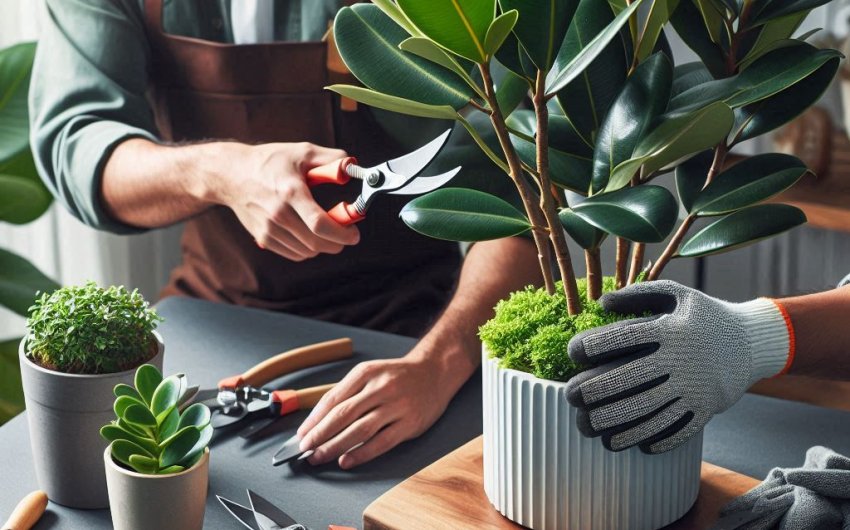
Mastering the art of pruning a Rubber Plant is an essential skill for any enthusiast aiming to foster a bushier, more robust, and aesthetically pleasing indoor specimen. While these popular houseplants are generally low-maintenance, strategic trimming can significantly influence their growth habit, encouraging them to develop multiple stems rather than growing as a single, tall stalk. By understanding the principles behind proper pruning techniques, you can effectively shape your Ficus elastica and stimulate new, healthy foliage, ensuring your plant thrives and becomes a focal point in your home.
Why Should You Prune a Rubber Plant?
Pruning a Rubber Plant is not just about keeping it tidy; it's a vital practice that contributes significantly to its long-term health, appearance, and vigor. Without occasional trimming, your Ficus elastica can become leggy or unbalanced, but with the right approach, you can transform it into a lush, well-branched specimen.
Encouraging Bushier Growth
One of the primary reasons to prune a Rubber Plant is to stimulate bushier growth. Rubber Plants naturally tend to grow as a single, tall stem. When you make a cut, you disrupt the production of a hormone called auxin, which is responsible for promoting apical dominance (growth primarily from the top bud). This disruption encourages dormant buds further down the stem to activate and produce new branches, leading to a fuller, more compact plant.
Managing Size and Shape
Pruning allows you to control the overall size and shape of your Ficus elastica. If your plant is growing too tall for its space or becoming unwieldy, a well-placed cut can halt vertical growth and redirect the plant's energy elsewhere. You can also shape the plant to create a more balanced silhouette, remove awkward branches, or train it to grow in a specific direction.
Removing Dead or Damaged Foliage
Like all plants, Rubber Plants can accumulate dead or damaged leaves or branches. These not only detract from the plant's appearance but can also become entry points for pests or diseases. Regularly removing this unhealthy foliage through pruning helps maintain the plant's hygiene and redirects its energy to healthy growth, preventing unnecessary stress.
Promoting Air Circulation and Health
A dense, unpruned Rubber Plant can have poor air circulation within its canopy, especially in humid indoor environments. This can create conditions favorable for fungal diseases or pest infestations. By strategically removing some leaves or branches, you improve airflow, reducing the risk of such problems and contributing to the overall health and vitality of your Ficus elastica.
When Is the Best Time to Prune a Rubber Plant?
Timing is crucial when pruning a Rubber Plant to ensure the plant recovers quickly and directs its energy into new growth. Making cuts at the right moment can maximize the benefits of pruning, while pruning at an inappropriate time might stress the plant or hinder its recovery.
The Ideal Season for Pruning
The best time to prune a Rubber Plant is during its active growing season, which typically spans from late spring to early summer. During these months, the plant is actively producing new growth, and its metabolic processes are at their peak. This means it has ample energy to recover from the stress of pruning and quickly push out new branches and leaves. Pruning in spring or early summer allows the plant to heal before entering its slower growth period in fall and winter.
Why Avoid Pruning in Fall and Winter?
Pruning a Rubber Plant during fall and winter is generally discouraged. This is the plant's dormant or slower growth period, when light levels are lower, and temperatures are often cooler. The plant's energy reserves are focused on survival rather than active growth, meaning it will take much longer to heal from cuts and produce new foliage. Pruning at this time can cause undue stress, potentially leading to stunted growth or increased susceptibility to disease.
Pruning for Specific Issues
While late spring to early summer is ideal for major shaping and encouraging bushiness, you can make exceptions for specific issues:
- Dead or Damaged Leaves/Branches: These can be removed at any time of year as soon as you notice them. Removing unhealthy parts promptly prevents the plant from wasting energy on them and reduces the risk of disease spread.
- Pest Infestation: If a specific branch is heavily infested with pests, removing it can be part of an immediate treatment plan, regardless of the season.
- Urgent Size Control: If a branch is posing an immediate obstruction or hazard, it can be pruned out of season, though the plant may take longer to recover.
Always consider the plant's overall health before making any cuts. A stressed or unhealthy plant should be given time to recover before undergoing major pruning.
What Tools Do You Need for Pruning a Rubber Plant?
Having the right tools is just as important as knowing when and how to prune a Rubber Plant. Using clean, sharp instruments will ensure precise cuts that heal quickly, minimizing stress on your Ficus elastica and preventing the spread of diseases.
Essential Pruning Tools
- Sharp Pruning Shears or Scissors: For smaller branches and stems, a good pair of sharp pruning shears or sturdy household scissors will suffice. Ensure they are clean and sharp to make a clean cut rather than crushing the stem. The Fiskars Bypass Pruning Shears are a reliable choice.
- Bypass Loppers or Hand Saw (for larger plants): If your Rubber Plant is mature with thick, woody stems (larger than 1/2 inch in diameter), you may need bypass loppers for thicker branches or even a small hand saw for very mature, woody trunks. Bypass tools are preferred as they make clean, scissor-like cuts, reducing damage to plant tissue.
- Rubbing Alcohol or Disinfectant Wipes: It is absolutely crucial to sterilize your pruning tools before making any cuts and between cuts on different plants. This prevents the spread of plant diseases. Rubbing alcohol or disinfectant wipes are effective for this purpose.
Protective Gear
When pruning a Rubber Plant, be aware that it produces a milky white sap (latex) when cut. This sap can be irritating to skin and eyes, and it can also stain surfaces.
- Gloves: Wear gardening gloves to protect your hands from the sticky sap. Latex or nitrile gloves are also good options if you're concerned about skin irritation.
- Eye Protection: It's wise to wear eye protection, such as safety glasses or goggles, to prevent sap from splashing into your eyes.
- Old Clothes or Apron: The sap can stain clothing, so wear something you don't mind getting dirty.
- Paper Towels or Cloth: Have some paper towels or an old cloth handy to wipe away any dripping sap from the plant or your tools.
By preparing your tools and protective gear, you ensure a safe and effective pruning experience for both you and your Rubber Plant.
How Do You Make the Right Pruning Cuts?
The way you make your cuts significantly impacts how your Rubber Plant responds to pruning. Understanding the correct cutting techniques is crucial for promoting new growth, maintaining plant health, and achieving your desired shape for your Ficus elastica.
Identifying the Nodes
Before making any cut, it's essential to identify the nodes on your Rubber Plant's stem. A node is a small bump or ring on the stem where a leaf attaches or once attached. These nodes contain dormant buds, which are the points from which new branches or leaves will emerge after pruning. Just above each leaf attachment point, you'll find a node.
Making the Cut to Encourage Branching
To encourage branching and make your Rubber Plant bushier, you'll want to make what's called a "heading cut."
- Choose Your Desired Height/Length: Decide how tall you want the main stem or branch to be, or how much length you want to remove.
- Locate a Node: Find a node just below your desired cutting point.
- Cut Above the Node: Make a clean cut with your sterilized, sharp pruning shears about 1/4 to 1/2 inch (0.6-1.3 cm) above a node. The cut should be horizontal or slightly angled away from the node to prevent water pooling on the cut surface.
- Why Above the Node? Cutting above a node signals to the dormant buds at that node to activate. The plant's energy, which was previously directed upwards to the tip, will now be redirected to these lateral buds, causing them to sprout and form new branches. Typically, two to three new branches will emerge from the nodes just below the cut, leading to a fuller plant.
Removing Entire Branches or Leaves (Thinning Cuts)
Sometimes, you might need to remove an entire branch or leaf, known as a "thinning cut."
- Removing Dead or Damaged Leaves: Trace the stem of the yellowed, brown, or damaged leaf back to the main stem or branch. Make a clean cut close to the main stem, without cutting into the main stem itself.
- Removing Unwanted Branches: If a branch is growing awkwardly, crossing other branches, or making the plant unbalanced, you can remove it entirely. Cut the branch back to its point of origin on the main stem or another larger branch, or to a node where you want new growth to emerge.
Dealing with the Milky Sap
When you cut a Rubber Plant, it will bleed a milky white sap (latex).
- Wipe it Away: Have paper towels or an old cloth ready to wipe away the sap from the cut end of the plant. This helps the cut seal faster.
- Protect Yourself: Remember to wear gloves and eye protection as the sap can be irritating.
- Clean Tools: Wipe your tools clean of sap immediately after use, then sterilize them again before storage.
By applying these precise cutting techniques, you empower your Rubber Plant to respond optimally to pruning, resulting in healthy, directed growth and a more appealing form.
How Do You Care for a Rubber Plant After Pruning?
Proper aftercare is crucial for your Rubber Plant to recover quickly from pruning and channel its energy into producing new, vigorous growth. Neglecting this phase can undo the benefits of your careful trimming.
Watering After Pruning
- Avoid Immediate Watering: Immediately after pruning, your Rubber Plant might actually need slightly less water temporarily, as it has fewer leaves to transpire through.
- Monitor Soil Moisture: Continue to check the soil moisture regularly. Water thoroughly only when the top 1-2 inches of soil feel dry. Do not let the plant sit in soggy soil, as damaged roots are more susceptible to rot.
- Maintain Humidity: Continue to provide adequate humidity, especially if you live in a dry environment. This helps reduce stress and supports the plant's recovery.
Light and Location
- Consistent Light: Keep your pruned Rubber Plant in its usual spot with consistent, bright, indirect light. Avoid moving it to a drastically different location immediately after pruning, as this can add another layer of stress.
- Avoid Direct Sun: Ensure it's not exposed to harsh, direct sunlight, which can scorch the stressed leaves and cuts.
Fertilizing After Pruning
- Delay Fertilization: It's generally best to wait about 2-4 weeks after pruning before applying any fertilizer. Giving the plant this time allows it to focus its energy on healing the cuts and initiating new growth without the added stress of processing nutrients.
- Resume Regular Feeding: Once you see signs of new growth (small buds swelling or new leaves emerging), you can resume your regular fertilizing schedule using a balanced liquid houseplant fertilizer diluted according to package directions.
Patience and Observation
- Be Patient: New growth won't appear overnight. It can take several weeks for the dormant buds to activate and start pushing out new branches.
- Observe Closely: Regularly inspect the pruned areas for signs of new growth. Also, keep an eye on the overall health of the plant, watching for any signs of stress or disease.
- Cleanliness: Continue to keep the plant area tidy and free of fallen leaves or debris.
By providing consistent and appropriate aftercare, you support your Rubber Plant's natural healing process and encourage it to develop the robust, bushy growth you desired from pruning.
How Can You Propagate Your Rubber Plant Cuttings?
A wonderful bonus of pruning a Rubber Plant is the opportunity to propagate new plants from the cuttings you remove. This allows you to multiply your collection, share with friends, or simply repurpose what would otherwise be waste.
Choosing Healthy Cuttings
- Stem Cuttings: The most common and successful method is using stem cuttings. Look for healthy, vibrant sections of stem with at least 2-3 leaves and a couple of nodes. Cuttings should be about 4-6 inches (10-15 cm) long.
- Terminal vs. Mid-Stem Cuttings: Both the tip of a branch (terminal cutting) and a section from the middle of a branch (mid-stem cutting) can be used.
Preparing the Cuttings
- Clean Cut: Using your sterilized pruning shears, make a clean cut just below a node. This node is where roots will typically emerge.
- Remove Lower Leaves: Remove any leaves from the bottom 1-2 nodes to expose them. These will be the nodes that are submerged in water or planted in soil.
- Wipe Sap: Just like with the parent plant, the cutting will likely bleed milky sap. Gently wipe it away. Some propagators suggest letting the cutting "scab over" for a few hours or overnight to reduce sap leakage, especially for soil propagation.
Propagating in Water
This is a popular and visually satisfying method for propagating Rubber Plants.
- Place in Water: Put the prepared cutting(s) in a clear glass or jar filled with clean, lukewarm water. Ensure at least one node is submerged, but no leaves are in the water.
- Change Water Regularly: Change the water every few days to keep it fresh and prevent bacterial growth.
- Provide Bright, Indirect Light: Place the jar in a spot with bright, indirect light, avoiding direct sun.
- Patience: Roots typically start to emerge from the submerged nodes after 2-4 weeks, though it can sometimes take longer. Wait until the roots are a few inches long before potting.
- Potting Up: Once roots are well-established, carefully transfer the cutting to a small pot filled with well-draining potting mix. Water thoroughly and keep the soil consistently moist for the first few weeks as the plant acclimates.
Propagating in Soil
Propagating in soil can sometimes lead to faster establishment once rooted, though you can't see the root development.
- Prepare Potting Mix: Fill a small pot with a well-draining potting mix or a specialized propagation mix (e.g., a mix of peat moss and perlite).
- Optional: Rooting Hormone: Dip the cut end of the cutting into rooting hormone powder or gel for increased success. The Bonide Rooting Powder is a common choice.
- Plant the Cutting: Make a small hole in the soil with your finger or a pencil, then insert the cutting, ensuring at least one node is buried. Gently firm the soil around the base.
- Create Humidity (Optional but Recommended): To increase humidity and promote rooting, you can cover the pot with a clear plastic bag or dome, creating a mini-greenhouse effect. Just ensure some ventilation to prevent mold.
- Provide Bright, Indirect Light: Place the potted cutting in bright, indirect light.
- Keep Soil Moist: Keep the soil consistently moist but not soggy.
- Check for Roots: Gently tug on the cutting after a few weeks. If you feel resistance, it indicates roots have formed. You should also see new leaf growth.
By utilizing the cuttings from pruning your Rubber Plant, you extend the life and beauty of your Ficus elastica collection, creating new plants from a simple act of maintenance.
Troubleshooting Common Pruning Issues
Even with the best intentions, you might encounter some challenges when pruning a Rubber Plant. Knowing how to identify and address common issues can help ensure your plant recovers smoothly and achieves the desired growth.
Sap Continues to Bleed Excessively
- Problem: After making a cut, the milky sap (latex) continues to drip for an extended period, which can be messy and dehydrate the plant.
- Reason: This is normal for Ficus elastica. The sap helps seal the wound. Excessive bleeding might be due to the plant being very hydrated at the time of pruning.
- Solution: Gently wipe away the sap with a clean paper towel or cloth until it slows down. For very persistent drips, some gardeners apply a small amount of water or even a little pressure directly to the cut area for a few moments, or sprinkle a tiny bit of powdered charcoal or cinnamon to help dry it out. Avoid over-watering the plant just before pruning.
No New Growth After Pruning
- Problem: You've pruned your Rubber Plant to encourage branching, but weeks or months have passed with no sign of new buds or leaves.
- Reason:
- Wrong Timing: Pruning during the dormant season (fall/winter) is the most common reason for slow or no new growth.
- Insufficient Light: After pruning, the plant still needs adequate, bright, indirect light to produce the energy required for new growth.
- Stress: The plant might be stressed from other factors (under/overwatering, pests, nutrient deficiency).
- Incorrect Cut: Cutting too far from a node, or damaging the node, might prevent new growth from that specific spot.
- Solution:
- Patience: New growth can take time, especially if the plant was stressed or pruned slightly out of season.
- Check Conditions: Ensure your plant is receiving bright, indirect light. Reassess your watering routine to ensure it's appropriate.
- Fertilize: Once you're sure the plant is not stressed from other factors, and after waiting the recommended few weeks, you can resume fertilizing to provide the necessary nutrients for new development.
- Re-Prune (If Necessary): If a specific cut consistently fails to produce new growth after several months, and the node appears dead, you might consider making another clean cut just below it at a healthy node during the next active growing season.
Plant Stress or Decline After Pruning
- Problem: The Rubber Plant appears to be struggling after pruning, showing signs like yellowing leaves, wilting, or general decline.
- Reason:
- Over-Pruning: Removing too much foliage at once can shock the plant.
- Infection: Unsterilized tools can introduce pathogens, leading to disease at the cut site.
- Underlying Issues: The plant may have been unhealthy or stressed before pruning, making it less resilient to the process.
- Solution:
- Assess Severity: If it's just minor yellowing of a few older leaves, it might be part of the plant's recovery. If it's widespread or the plant looks significantly unwell, act quickly.
- Check for Infection: Inspect the cut sites for any signs of mold, rot, or discoloration. If infected, re-cut cleanly with sterilized tools.
- Review Care: Double-check all other care parameters: watering, light, temperature, and humidity. Ensure they are optimal to support the plant's recovery.
- Avoid Further Stress: Do not prune again or fertilize. Let the plant recover. In severe cases of root rot, repotting may be necessary.
Uneven or Lopsided New Growth
- Problem: New branches emerge only from one side of the cut, or growth is disproportionate.
- Reason: This can happen if one side of the plant receives more light, if some dormant buds are naturally stronger, or if a specific node was stimulated more effectively.
- Solution:
- Rotate Your Plant: Regularly rotate your Rubber Plant to ensure all sides receive even light exposure, encouraging balanced growth.
- Strategic Future Pruning: In future pruning sessions, you can make targeted cuts to encourage growth in thinner areas or remove branches that contribute to the lopsided appearance, working towards a more symmetrical plant over time.
By understanding these common troubleshooting scenarios and applying the appropriate solutions, you can overcome potential setbacks and continue to successfully prune your Rubber Plant to encourage healthy, attractive growth for your Ficus elastica.