
How to Get Rid of Burrowing Animals Ruining Your Lawn?
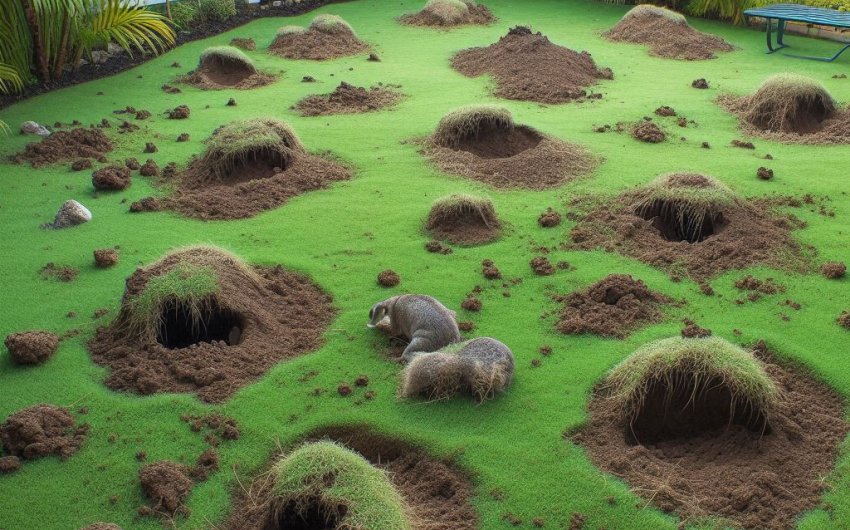
To get rid of burrowing animals ruining your lawn, first identify the specific pest causing the damage, as different animals require different control strategies. Common culprits include moles, voles, gophers, and groundhogs, and effective solutions range from deterrents and repellents to trapping and exclusion methods. Taking action promptly is key to minimizing damage and reclaiming your lawn.
What Kinds of Burrowing Animals Ruin Lawns?
Identifying the specific burrowing animal causing damage is the first and most crucial step to get rid of them. Different pests create distinct signs and require tailored solutions to protect your lawn. Here are the most common culprits:
1. Moles
- Signs of Damage: Moles are infamous for their distinctive damage. They create two main types of tunnels:
- Molehills: Cone-shaped mounds of soil, often volcano-like, that appear where the mole pushes excavated dirt to the surface.
- Surface Ridges (Runways): Raised ridges or tunnels that crisscross your lawn just below the surface, feeling squishy underfoot. These are their active feeding tunnels.
- Behavior: Moles are insectivores, meaning they primarily eat insects, grubs, worms, and other invertebrates found in the soil. They are not looking to eat your plants, but their extensive tunneling can sever plant roots, leading to dead patches in your lawn. They are highly active and can quickly cause widespread damage.
- Distinguishing Feature: Moles have large, paddle-like front paws designed for digging. Their tunnels are usually perfectly round.
2. Voles (Field Mice)
- Signs of Damage: Voles create narrow, visible surface runways (often 1-2 inches wide) through the grass, where they travel repeatedly. These runways are like miniature trails in the lawn. They also create small, dime-sized burrow entrances directly into their underground tunnels, which often go unnoticed. Voles also chew on the bark of trees and shrubs, girdling them.
- Behavior: Voles are primarily herbivores. They feed on roots, bulbs, and the tender stems of plants. They can cause significant damage to the root systems of your lawn and garden plants, sometimes even pulling plants underground. They often take advantage of mole tunnels.
- Distinguishing Feature: Voles look like stocky mice with short tails, small ears, and small eyes. Their runways are very characteristic.
3. Gophers
- Signs of Damage: Gophers create fan-shaped or horseshoe-shaped mounds of fresh soil, which are distinct from molehills. These mounds typically have a plugged burrow entrance on one side, where the gopher has pushed dirt out from its extensive underground tunnel system. They tunnel much deeper than moles.
- Behavior: Gophers are strict herbivores. They eat roots, bulbs, and other plant parts, pulling entire plants from your lawn and garden into their burrows. They are incredibly destructive to gardens and agricultural areas.
- Distinguishing Feature: Gophers have large, external cheek pouches used for carrying food. Their plugged, fan-shaped mounds are a giveaway.
4. Groundhogs (Woodchucks)
- Signs of Damage: Groundhogs create large, distinct burrow entrances, often 8-12 inches in diameter, usually near buildings, fences, or wood piles, or in open areas. These burrows have a large mound of excavated soil next to the main entrance. They often have multiple entrances and exits.
- Behavior: Groundhogs are large herbivores that consume a wide variety of plants, including grass, garden vegetables, and ornamental plants. They can decimate a garden quickly and undermine structures with their extensive burrowing.
- Distinguishing Feature: Groundhogs are much larger than the other burrowing animals, resembling a large squirrel or small beaver. Their large burrow entrances are easily identifiable.
5. Skunks
- Signs of Damage: Skunks don't typically create extensive tunnel systems like moles or gophers. Instead, they dig small, cone-shaped holes or divots (3-5 inches wide) in the lawn as they forage for grubs, worms, and insects. They "root around" rather than burrow.
- Behavior: Skunks are omnivores. While they eat insects, they might also consume fallen fruit or berries. Their digging is generally superficial compared to other burrowers but can still leave your lawn looking unsightly.
- Distinguishing Feature: The distinctive smell, of course, but their foraging holes are also a clear sign.
Understanding these differences is the first critical step in developing an effective strategy to get rid of burrowing animals ruining your lawn. Misidentifying the pest can lead to ineffective and frustrating control efforts.
How Can I Identify Which Burrowing Animal is Ruining My Lawn?
Accurate identification is paramount to get rid of burrowing animals ruining your lawn. Each pest leaves distinct clues. By observing the type of damage and the characteristics of their tunnels and mounds, you can pinpoint the culprit and choose the most effective control methods.
Key Indicators for Identification:
Here's a breakdown of what to look for:
Type of Mounds/Holes:
Advertisement- Mole Hills: These are conical or volcano-shaped mounds of fine, uniform soil. The opening is usually in the center or not readily visible. They often appear quickly overnight.
- Gopher Mounds: These are typically fan-shaped or horseshoe-shaped mounds of coarse soil. The entrance hole is usually plugged with dirt and located off to one side of the mound.
- Groundhog Burrows: Large, conspicuous entrance holes (8-12 inches in diameter) with a substantial mound of excavated dirt immediately next to the opening. They often have multiple entrance/exit holes.
- Vole Holes: Small, numerous, dime-sized holes, often camouflaged by grass. They are less obvious than gopher or groundhog holes.
- Skunk Digging: Shallow, cone-shaped holes or divots, typically 3-5 inches wide, where they have rooted for grubs.
Presence of Tunnels/Runways:
- Mole Tunnels: Raised, visible ridges (runways) just below the surface of the lawn. These are often shallow and irregular, crisscrossing the area.
- Vole Runways: Narrow, visible pathways or "trails" through the grass, where the voles repeatedly travel. These are on the surface, not deeply underground, though they also have small burrow entrances.
- Gopher Tunnels: Not usually visible on the surface in the same way as mole tunnels. Their tunnels are deeper, and the excavated soil is pushed out to form mounds.
Nature of Soil in Mounds:
- Mole Hills: The soil in molehills is often finely sifted and uniform, as moles tunnel through soft earth.
- Gopher Mounds: The soil in gopher mounds tends to be coarser and clumpy, reflecting their deeper, more extensive digging.
Damage to Plants:
- Moles: Do not eat plants. Damage is from roots being severed by tunnels, leading to dying patches of grass.
- Voles: Eat roots, bulbs, and tender stems of plants. You might see plants pulled into holes or girdled bark on trees/shrubs.
- Gophers: Pull entire plants (or their roots) underground. You'll often see missing plants or plants suddenly wilting.
- Groundhogs: Eat above-ground plant parts voraciously, especially garden vegetables.
Location of Burrows:
- Moles: Can appear anywhere there's loose soil and food.
- Gophers: Prefer areas with soft soil and abundant plant roots, common in gardens and lawns.
- Groundhogs: Often establish burrows near structures, fences, under sheds, or in brushy areas for cover, though they'll forage in open lawns.
- Voles: Often found near ground cover, dense vegetation, or sometimes using mole tunnels.
Table of Common Signs:
To help you distinguish between the culprits:
| Animal | Mounds/Holes | Tunnels/Runways | Plant Damage | Primary Food Source | Size of Animal |
|---|---|---|---|---|---|
| Mole | Cone-shaped, volcano-like mounds (molehills) | Raised surface ridges, runways, squishy feel | Roots severed, causing dead grass patches | Grubs, worms, insects | Small, rodent-like, no visible ears |
| Vole | Small, dime-sized holes, often hidden | Visible, narrow surface runways through grass | Eats roots, bulbs, girdles bark of trees/shrubs | Roots, bulbs, stems, seeds | Small, mouse-like, short tail |
| Gopher | Fan-shaped or horseshoe-shaped, plugged hole | Deeper tunnels, not visible on surface | Pulls entire plants underground, eats roots | Roots, bulbs, vegetables | Small to medium rodent, external cheek pouches |
| Groundhog | Large, obvious entrance (8-12"), large dirt mound | Deep burrows, not visible runways | Eats above-ground plants (grass, veggies) | Grass, vegetables, clover | Large rodent, like a small beaver |
| Skunk | Shallow, cone-shaped divots (3-5") | None (foraging only) | Superficial root damage from digging | Grubs, insects, worms | Medium-sized, black & white fur |
By carefully observing these details, you'll be able to confidently identify the burrowing animal responsible and move on to selecting the most effective methods to get rid of them and restore your lawn.
What Are Natural Deterrents and Repellents for Burrowing Animals?
When dealing with burrowing animals ruining your lawn, starting with natural deterrents and repellents is often the first step. These methods aim to make your lawn less appealing to the pests without resorting to lethal measures. While their effectiveness can vary depending on the animal and the severity of the infestation, they offer a humane and environmentally friendly approach.
1. Modifying the Environment (Habitat Modification)
Making your lawn and garden less inviting is a proactive deterrent.
- Remove Food Sources:
- Grubs: For animals like moles and skunks, a primary draw is grubs and other lawn insects. Treating your lawn for grubs (e.g., with Milorganite Organic Nitrogen Fertilizer, which can help deter grubs naturally, or beneficial nematodes like Garden's Alive Grub HALT!) can reduce their appeal. Be careful not to eliminate all beneficial insects, however.
- Vole/Gopher Food: Keep garden beds free of weeds and tall grass that voles might hide in or feed on. Harvest fallen fruit promptly.
- Remove Shelter/Cover: Keep grass mowed, clear brush piles, and remove dense ground cover near your lawn where voles and groundhogs might seek refuge or burrow entrances.
- Drought Conditions (For Moles): While not always practical for a green lawn, very dry soil can reduce earthworm and grub populations, making it less attractive to moles.
2. Repellents (Odor and Taste)
These products work by creating an unpleasant environment for the animals, usually through strong odors or tastes.
- Castor Oil-Based Repellents: Highly effective against moles and voles. Castor oil doesn't harm the animals but makes their food source (grubs, worms) unpalatable and can cause digestive upset if ingested. It also smells unpleasant to them.
- How to Use: Available in granular or liquid concentrates. Apply granular products evenly over the affected lawn and water them in. Mix liquid concentrates with water and spray onto the lawn.
- Recommendation: Molemax Mole & Vole Repellent Granules are a popular choice.
- Reapply: Reapply after heavy rains or according to product directions, as the effectiveness wears off over time.
- Garlic or Pepper-Based Sprays: Some commercial or homemade repellents use extracts of garlic, capsaicin (hot pepper), or peppermint oil. These can deter a variety of burrowing animals with their strong, irritating odors and tastes.
- How to Use: Spray directly onto affected areas of the lawn or around burrow entrances.
- Predator Urine: Some people use granules soaked in fox or coyote urine (available commercially) to create a "predator presence" that deters smaller burrowing animals like voles, gophers, and sometimes moles.
- Recommendation: Shake-Away Fox Urine Granules.
- Caution: Less effective for large infestations or larger animals like groundhogs.
3. Sound and Vibration Devices
These devices emit sonic pulses or vibrations designed to annoy and drive away burrowing animals.
- Solar-Powered Sonic Spikes: Inserted into the ground, these devices emit low-frequency sounds or vibrations every few seconds.
- How to Use: Place them strategically around your lawn, covering the affected area.
- Recommendation: Victor PestChaser Rodent Repellent (though typically for indoor rodents, similar outdoor solar spikes are available for moles).
- Effectiveness: Opinions vary widely on their effectiveness. Some users report success, others find them ineffective, as animals may habituate to the sounds. They are generally considered less reliable than other methods.
4. Planting Deterrents
Certain plants are believed to deter burrowing animals with their root secretions or strong odors.
- Castor Bean (Ricinus communis): Contains a substance that deters moles. Caution: Extremely poisonous if ingested by humans or pets. Plant with extreme care or avoid if you have children or pets.
- Gopher Spurge (Euphorbia lathyris): Reputed to deter gophers with its milky sap. Also toxic if ingested.
- Alliums (Onions, Garlic, Chives): Some gardeners believe planting these around vulnerable plants can deter voles and gophers due to their strong smell.
Natural deterrents and repellents are best used as part of an integrated pest management plan. Consistency and reapplication are crucial for any success when trying to get rid of burrowing animals ruining your lawn through these non-lethal means.
How Can I Use Traps to Get Rid of Burrowing Animals?
When natural deterrents and repellents fall short, trapping becomes one of the most effective ways to get rid of burrowing animals ruining your lawn. Different traps are designed for specific animals, and proper placement is key to success.
General Trapping Principles:
- Identify the Animal: Crucial for selecting the right trap.
- Fresh Activity: Traps are most effective when placed in active tunnels or near fresh mounds.
- Safety First: Always follow manufacturer instructions. Wear gloves when handling traps and animals.
- Check Regularly: Check traps frequently (at least twice a day) to minimize suffering for captured animals and to release non-target animals.
- Legal Regulations: Be aware of local laws regarding trapping and releasing wild animals. Some states require a permit or prohibit certain types of traps.
1. Trapping Moles:
Mole traps are designed to kill the mole quickly and humanely. Live traps for moles are generally ineffective.
- Types of Mole Traps:
- Scissor/Pincer Traps: Placed straddling an active mole runway. When the mole pushes up through the tunnel, it triggers the trap. Victor Out O'Sight Mole Trap is a well-known model.
- Harpoon/Spear Traps: Also placed over a runway. A trigger plate is depressed by the mole, causing spikes to plunge into the tunnel.
- Choker Loop Traps: Set within the tunnel, they use loops that tighten around the mole as it passes through.
- Placement Strategy:
- Locate Active Tunnels: Flatten all molehills and surface ridges. Wait 12-24 hours. The ridges that reappear are active tunnels.
- Set Trap: Follow specific instructions for your chosen trap. Dig a small depression in the center of an active, straight section of runway. Place the trap so the trigger mechanism is directly over the tunnel.
- Cover: Cover the trap and surrounding area with a bucket or board to block light and create a dark environment. Moles prefer dark tunnels.
- Bait (Not for Moles): Moles are insectivores and rarely take bait. Traps rely on the mole encountering the trigger in its tunnel.
2. Trapping Voles:
Voles are smaller and can be caught using common rodent traps.
- Types of Vole Traps:
- Mouse Snap Traps: Standard snap traps or plastic snap traps are very effective.
- Live Traps: Small live traps designed for mice or voles can be used if you prefer to relocate (check local laws). Havahart 1-Door Small Animal Trap can work for voles.
- Bait: Peanut butter mixed with oats, apple slices, sunflower seeds, or birdseed are good baits.
- Placement Strategy:
- Locate Runways/Holes: Place traps directly in visible surface runways or near small burrow entrances.
- Cover: Cover the traps with a board or bucket to provide a sense of security for the vole and protect from non-target animals.
- Multiple Traps: Set several traps, as voles often travel in groups.
- Wear Gloves: Voles can be wary of human scent.
3. Trapping Gophers:
Gopher traps are specifically designed to be placed inside the active tunnels.
- Types of Gopher Traps:
- Box Traps (e.g., Macabee, Cinch): These are spring-loaded traps designed to be placed within the main tunnel runway. Victor Easy Set Gopher Trap is a popular, robust option.
- Black Hole Traps: Long, narrow tubes with internal triggers.
- Bait (Optional but Can Help): Gophers respond well to fresh vegetables like carrots, lettuce, or apple slices.
- Placement Strategy:
- Locate Main Tunnel: Find a fresh, active gopher mound. Use a probe (a slender stick or rebar) to locate the main runway, which is usually a few inches below the ground and extends from the plugged hole.
- Dig Opening: Dig a neat, clean opening into the main tunnel, just large enough to insert the trap.
- Set Traps: Set two traps, facing each other, into the tunnel opening. This catches gophers coming from either direction.
- Seal: Block the opening with a board, sod, or dirt to exclude all light and drafts. Gophers dislike open tunnels and will often push dirt towards the block, triggering the trap.
4. Trapping Groundhogs:
Groundhogs are larger and require sturdy live traps.
- Type of Groundhog Traps:
- Live Cage Traps: Large, sturdy cage traps (e.g., 32 inches or larger) are used to capture groundhogs alive. Havahart 1079 Large 1-Door Trap is suitable.
- Bait: Groundhogs are attracted to fresh vegetables like cantaloupe, apples, corn, carrots, or even strong-smelling herbs like mint. Place bait towards the back of the trap.
- Placement Strategy:
- Near Burrow Entrance: Place the trap directly in front of an active burrow entrance, making sure it's stable.
- Cover (Optional): You can cover the top of the trap with a tarp or blanket to make it more inviting.
- Relocation: If you catch a groundhog alive, you'll need to relocate it (check local laws regarding distance and release sites) or contact animal control.
Trapping, when done correctly, can be highly effective in reducing or eliminating burrowing animals ruining your lawn. Patience and persistence are key, as you may need to adjust trap placement or try multiple traps.
Can I Use Exclusion Methods to Prevent Burrowing Animals?
Exclusion methods are a highly effective and long-term strategy to get rid of burrowing animals ruining your lawn by physically preventing them from entering or establishing burrows in desired areas. While they often require more upfront effort and cost, they offer a durable solution.
General Principles of Exclusion:
- Identify Entry Points: Determine where animals are entering your property or specific garden beds.
- Durable Materials: Use sturdy materials that animals cannot easily chew through or dig under.
- Proper Installation: Ensure fences are buried deep enough and extend high enough.
1. Fencing Your Yard or Garden Beds:
Fencing is particularly effective against surface-dwelling burrowers like voles and larger animals like groundhogs, but can also deter gophers if properly installed. Moles are less deterred by surface fencing alone as they tunnel deeper.
- For Groundhogs, Rabbits, and sometimes Voles:
- Material: Use heavy-gauge woven wire mesh (like chicken wire or hardware cloth), at least 1 inch or 1/2 inch opening for smaller animals.
- Height: The fence should be at least 3 feet high to prevent groundhogs from climbing over.
- Burying (Crucial): Dig a trench at least 12-18 inches deep and bury the bottom of the fence. Bend the bottom 6 inches of the fence outwards (forming an L-shape) away from the protected area. This "skirt" prevents animals from digging directly under the fence.
- Gates: Ensure any gates are equally secure and close tightly at the bottom.
- For Voles and Gophers (Garden Beds):
- You can create underground barriers around raised beds or individual plants. Line the bottom and sides of raised beds with hardware cloth before filling with soil.
- For individual plants, consider creating a "gopher basket" from hardware cloth to protect roots, especially for vulnerable plants like bulbs.
2. Protecting Structures (Groundhogs, Skunks):
If burrowing animals are trying to tunnel under sheds, decks, or foundations, exclusion is vital.
- Bury Wire Mesh Skirts: Dig a trench around the perimeter of the structure, at least 18-24 inches deep, and install heavy-gauge hardware cloth or welded wire mesh. Bend the bottom outwards into an L-shape for at least 12 inches.
- Secure Openings: Seal off any open gaps or entry points under sheds or decks with sturdy wire mesh or concrete.
3. Creating Barriers in Lawns (Moles, Gophers):
While fencing a whole lawn is impractical, targeted subsurface barriers can be used in specific areas.
- Hardware Cloth Barriers: For new flower beds or small areas of the lawn that are repeatedly targeted, you can install buried hardware cloth barriers around the perimeter, similar to fencing, to prevent moles and gophers from tunneling in.
- Perimeter Exclusion: Some homeowners install a trench around their entire property and bury a vertical barrier (like hardware cloth or even a plastic pond liner) about 2-3 feet deep to block moles and gophers from entering the entire yard. This is a significant undertaking but can be very effective.
4. Special Considerations for Moles:
- Mole Mesh/Netting: For new lawns or areas that are highly susceptible to moles, you can install specialized mole mesh or netting directly under the sod or seed before planting. This creates a physical barrier that moles cannot tunnel through.
- Installation: Lay the mesh flat on prepared soil, then cover with a thin layer of soil before laying sod or seeding. It must extend beyond the lawn perimeter to be effective. Mole Barrier Mesh is designed for this.
Advantages and Disadvantages of Exclusion:
- Advantages:
- Long-lasting: Once installed, exclusion can provide protection for many years.
- Non-lethal: Does not harm the animals.
- Prevents Re-infestation: If done correctly, it physically blocks future animals.
- Disadvantages:
- Costly: Materials and installation can be expensive.
- Labor-intensive: Requires digging trenches and often professional installation for larger areas.
- Not Always Practical: Fencing an entire large lawn might not be feasible or aesthetically desirable.
Exclusion methods are a proactive and permanent way to get rid of burrowing animals ruining your lawn by preventing access in the first place, offering peace of mind once installed.
When Should I Call a Professional for Burrowing Animal Control?
While many strategies exist to get rid of burrowing animals ruining your lawn, there are specific situations where calling a professional pest control service is the smartest and most effective course of action. Knowing when to escalate can save you time, money, and frustration.
1. Persistent and Widespread Infestations:
- Despite Your Efforts: You've tried multiple DIY methods (repellents, trapping, cultural controls) consistently for several weeks or months, but the burrowing animals continue to cause extensive damage. The problem isn't getting better.
- Large-Scale Damage: Your entire lawn or significant portions of your property are riddled with tunnels, mounds, or holes, indicating a large population of pests.
- Recurrent Problem: The animals are successfully removed, but new ones keep moving in from adjacent properties, making it a continuous battle.
2. Difficulty in Identification:
- Unsure of the Culprit: You can't confidently identify which burrowing animal is causing the damage, leading to ineffective treatment methods. Professionals have expertise in tracking and identifying various pests.
3. Safety Concerns:
- Aggressive Animals: While rare, some burrowing animals (especially groundhogs cornered or protecting young) can become aggressive.
- Hazardous Trapping: Setting certain traps, especially larger ones or those requiring precise placement, can be risky if you're inexperienced. Professionals are trained in safe handling and placement.
- Disease Risk: Wild animals can carry diseases or parasites. Professionals know how to handle carcasses safely if lethal traps are used.
- Pets and Children: If you have pets or small children, using certain traps or repellents can pose a risk. Professionals can advise on pet-safe solutions.
4. Structural Damage:
- Undermining Foundations: If burrowing animals (especially groundhogs or large gophers) are tunneling under foundations, concrete slabs, sheds, or decks, this can lead to serious structural integrity issues. This requires immediate and expert intervention.
- Compromised Utilities: Animals digging near buried utility lines (gas, water, electrical) can create dangerous situations.
5. Time and Convenience:
- Lack of Time: Effectively managing burrowing animals often requires consistent effort, monitoring traps, and reapplying repellents. If you don't have the time to dedicate to this, a professional service offers a convenient solution.
- Desire for Quick Resolution: Professionals can often resolve infestations more quickly due to their experience, specialized equipment, and knowledge of animal behavior.
What a Professional Can Offer:
- Expert Identification: Accurate identification of the pest and assessment of the infestation's scale.
- Integrated Pest Management (IPM): They will develop a comprehensive plan that combines various strategies (trapping, exclusion, repellents, habitat modification) for long-term control.
- Specialized Tools and Baits: Access to professional-grade traps, repellents, and sometimes restricted-use pesticides (if necessary and legally permitted).
- Humane Removal: Knowledge of the most humane and ethical methods for trapping and disposal/relocation.
- Guarantees: Many reputable pest control companies offer guarantees on their services for a certain period.
- Prevention Advice: They can offer tailored advice on long-term prevention strategies, including exclusion methods and habitat modification.
Ultimately, if you're overwhelmed, seeing no progress, concerned about safety, or dealing with structural damage, don't hesitate to contact a qualified pest control professional. They can provide a targeted and effective solution to get rid of burrowing animals ruining your lawn and help you reclaim your outdoor space.