
How Do I Create a Composting System for a Rooftop Garden in a City?
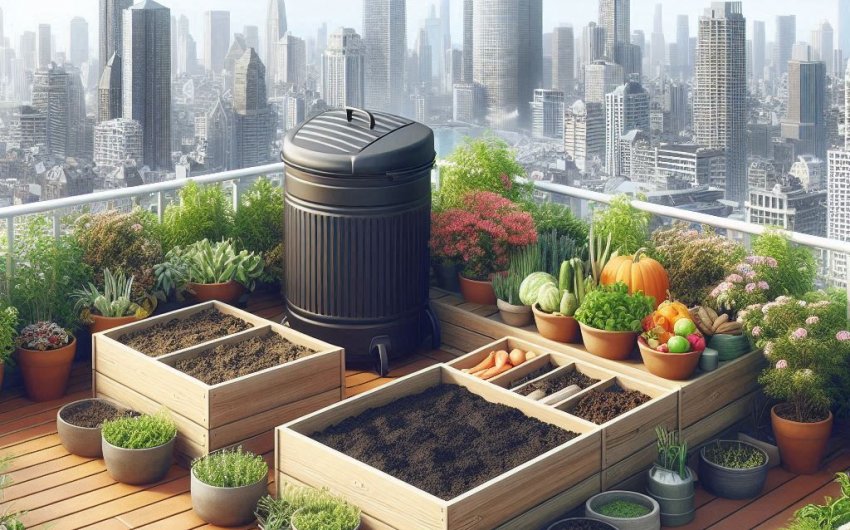
To create a composting system for a rooftop garden in a city, prioritize lightweight, enclosed, and efficient methods to handle kitchen and garden waste. Choose a compact composting unit, such as a worm bin or a small tumbling composter, and carefully manage the input materials to avoid odors and pests.
Why is Composting Essential for a Rooftop Garden?
Composting is not just beneficial but often essential for a rooftop garden in a city for a multitude of practical and environmental reasons. Unlike ground-level gardens, rooftop environments present unique challenges that composting can directly address, significantly impacting the success and sustainability of your urban green space.
Here's why composting is a game-changer for rooftop gardening:
- Reduces Waste and Saves Money: In a city, disposing of organic waste (kitchen scraps, plant trimmings) can be inconvenient. Composting transforms this "waste" into a valuable resource, diverting it from landfills. This reduces your garbage output and saves you money on buying bags of commercial compost or soil amendments. It's a closed-loop system for your garden.
- Creates Nutrient-Rich Soil Amendment: Rooftop gardens often rely on container planting, which means your plants are entirely dependent on the soil you provide. Store-bought potting mixes can be expensive and may lack the long-term microbial diversity and nutrient richness needed for sustained plant health. Compost is teeming with beneficial microorganisms and a wide array of macro and micronutrients, making it the perfect slow-release fertilizer and soil conditioner.
- Improves Soil Structure and Water Retention: In containers, soil can become compacted quickly, leading to poor drainage or, conversely, rapid drying out. Adding compost to your potting mix dramatically improves its structure. It lightens heavy mixes, improves aeration, and, crucially for rooftops, enhances water retention. This means your plants stay hydrated longer, reducing the frequency of watering – a significant benefit when water sources on a roof might be limited or difficult to access.
- Lightweight and Local Resource: Transporting large bags of soil or compost up to a rooftop can be physically demanding and costly. By composting on-site, you create a lightweight, nutrient-dense material directly where you need it. This reduces the need to haul heavy bags up flights of stairs or elevators, a major logistical advantage for urban gardeners.
- Reduces Dependence on External Inputs: Composting empowers you to create your own high-quality soil amendment. This reduces your reliance on external suppliers, making your rooftop garden more self-sufficient and sustainable.
- Supports Soil Biology: Healthy soil is alive with microorganisms. Compost introduces and nurtures this vital soil food web, which is essential for breaking down organic matter, cycling nutrients, and suppressing plant diseases. This living soil promotes robust plant growth and resilience.
- Environmental Benefits: Beyond your garden, composting has broader environmental impacts. It reduces methane emissions from landfills (a potent greenhouse gas) and decreases the carbon footprint associated with manufacturing and transporting synthetic fertilizers. It's a small but powerful step towards urban sustainability.
- Odor and Pest Management: While sometimes a concern, a well-managed composting system on a rooftop is designed to be enclosed and efficient, minimizing odors and deterring pests. Properly aerated and balanced compost breaks down organic matter quickly, preventing putrefaction.
In summary, for a rooftop garden in a city, composting isn't just a green initiative; it's a practical, economical, and environmentally sound strategy that fundamentally underpins the health, productivity, and longevity of your urban oasis.
What Are the Best Composting Methods for a Rooftop Garden?
Choosing the best composting method for a rooftop garden is paramount due to the unique constraints of urban spaces: limited space, potential for odors, weight considerations, and pest attraction. The ideal system will be compact, enclosed, efficient, and appropriate for the types of materials you'll be composting.
Here are the top composting methods suited for a rooftop garden:
1. Vermicomposting (Worm Composting)
- Description: This method uses specialized composting worms (red wigglers, Eisenia fetida) to break down organic waste. The worms consume organic matter and excrete nutrient-rich "worm castings," which are highly beneficial for plants.
- Pros:
- Extremely Compact: Worm bins are small and can fit in tight spaces.
- Low Odor: A properly managed worm bin produces very little to no odor.
- Fast: Worms can process food scraps relatively quickly.
- High-Quality Output: Worm castings are a superior soil amendment, packed with nutrients and beneficial microbes.
- No Turning Required: Worms do all the work.
- Perfect for Food Scraps: Ideal for kitchen waste.
- Uncle Jim's Worm Farm 1,000 Red Worms can get you started.
- Cons:
- Temperature Sensitivity: Worms are sensitive to extreme temperatures (too hot or too cold). Bins may need to be moved indoors or insulated during harsh weather.
- Specific Inputs: Cannot process large amounts of garden waste, woody materials, dairy, meat, or oily foods.
- Management: Requires some initial learning and consistent feeding schedule.
- Ideal For: Small rooftop gardens primarily looking to compost kitchen scraps.
2. Tumbling Composters
- Description: These are enclosed barrels or spheres mounted on a stand that allow you to easily "tumble" or rotate the contents, mixing and aerating them.
- Pros:
- Enclosed: Keeps pests out and odors in.
- Easy to Turn: The tumbling mechanism makes turning effortless, speeding up the composting process.
- Faster Than Static Bins: Aeration helps accelerate decomposition.
- Can Handle More Materials: Can process a mix of kitchen scraps and smaller garden waste.
- A good option is the ComposTumbler Compact Composter.
- Cons:
- Size/Weight: While more compact than traditional bins, they can still be bulky and heavy once filled with materials.
- Cost: Generally more expensive than basic worm bins or static bins.
- Limited Capacity: Still relatively small for a very prolific gardener.
- Ideal For: Medium-sized rooftop gardens with a mix of kitchen and garden waste, looking for convenience and speed.
3. Static Enclosed Bins (Small Scale)
- Description: These are upright, enclosed bins made of plastic, wood, or metal, with access doors for adding material and removing finished compost. They do not typically have turning mechanisms.
- Pros:
- Compact Footprint: Takes up minimal ground space.
- Enclosed: Helps deter pests and contain odors.
- Relatively Inexpensive: More affordable than tumblers.
- Low Maintenance: Requires less active management than hot composting.
- Cons:
- Slower Decomposition: Without turning, the process is slower than tumblers or hot composting.
- Less Aeration: Can become anaerobic if not properly layered or occasionally poked with an aeration tool.
- Pest Risk: While enclosed, pests can still be an issue if materials are not properly balanced or are too wet.
- A suitable choice is the Algreen Products Soil Saver Classic Compost Bin.
- Ideal For: Small to medium rooftop gardens with moderate amounts of kitchen and garden waste, where patience is not an issue.
Methods to Avoid or Use with Extreme Caution
- Open Piles/Bins: Attracts pests, creates odors, and is unsuitable for most rooftop situations.
- Large Hot Compost Bins: Requires significant space, large quantities of material, and frequent turning, making them impractical and often too heavy for rooftops.
When selecting your composting system for a rooftop garden, remember to consider the weight capacity of your roof structure, the types and quantities of organic waste you'll generate, and your willingness to actively manage the composting process.
What Materials Can I Compost in a Rooftop Garden?
Understanding what materials you can compost in a rooftop garden is crucial for success. The types of materials directly impact the speed of decomposition, the quality of your compost, and, importantly for urban settings, the potential for odors and pests. The key is to maintain a healthy balance of "greens" (nitrogen-rich, moist) and "browns" (carbon-rich, dry).
Here's a breakdown of common compostable materials suitable for a rooftop garden composting system:
"Greens" (Nitrogen-Rich Materials)
These materials add nitrogen, moisture, and help the compost pile heat up. Aim for roughly 1 part green to 2-3 parts brown by volume.
- Fruit and Vegetable Scraps: Apple cores, banana peels, carrot tops, lettuce leaves, potato peels, citrus rinds (in moderation), etc. These are the staple of most home composting.
- Coffee Grounds and Filters: Excellent source of nitrogen and add fine texture.
- Tea Bags (paper/fiber bags only): Remove staples if present.
- Fresh Garden Trimmings: Soft, green plant material from your rooftop garden – small weeds (no seeds!), spent annuals, leaf trimmings from herbs. Avoid diseased plants.
- Grass Clippings: Use in moderation as they can become slimy and smelly if added in large, wet clumps. Mix well with browns.
- Crushed Eggshells: While not technically "green," they add calcium and take a long time to break down, but are fine in small quantities.
- Expired Spices/Herbs: Old pantry spices are great.
"Browns" (Carbon-Rich Materials)
These materials provide carbon, bulk, aeration, and help prevent odors. Aim for roughly 2-3 parts brown to 1 part green by volume.
- Dry Leaves: A prime brown material. If you can collect them from a nearby park or street, ensure they are free of pesticides. Shredding them helps them break down faster.
- Shredded Newspaper/Cardboard: Tear into small pieces. Avoid glossy paper, colored inks, or heavily waxed cardboard.
- Straw/Hay: Untreated straw is excellent for adding bulk and aeration.
- Sawdust/Wood Shavings: Untreated, from hardwoods or softwoods. Use in moderation as they can be slow to break down and may temporarily deplete nitrogen.
- Small Twigs/Prunings: Break or chop into very small pieces (less than 1/2 inch) for faster decomposition.
- Paper Towel/Toilet Paper Rolls: Shredded or torn into small pieces.
- Plain Bread/Pasta (in moderation): Use sparingly and bury deep to avoid attracting pests.
Materials to Avoid (Especially in a Rooftop Composting System)
These materials can cause odor problems, attract pests, or introduce pathogens, making them unsuitable for an urban composting system:
- Meat, Bones, Fish: Attracts rodents, flies, and can cause strong, unpleasant odors.
- Dairy Products: Attracts pests and creates odors.
- Oils and Greasy Foods: Attracts pests, slows decomposition, and creates odors.
- Pet Waste (Dog/Cat Feces): Contains pathogens harmful to humans and should never be used in a garden compost.
- Diseased Plants: Can spread plant diseases to your garden when the compost is used.
- Weeds with Seeds: Will simply reseed in your garden.
- Treated Wood (Plywood, MDF, Painted Wood): Contains chemicals that are toxic to plants and soil organisms.
- Heavily Processed Foods: May contain ingredients that attract pests or inhibit decomposition.
- Synthetic Materials: Plastics, metals, glass – they don't break down.
Tips for Success
- Chop Small: The smaller the pieces, the faster they will decompose. Chop large scraps into 1-2 inch pieces.
- Balance Greens and Browns: This is the most critical rule for odor prevention and efficient composting. If it smells bad, add more browns. If it's too dry, add more greens and some water.
- Bury Food Scraps: Always bury fresh food scraps deep within the compost pile to deter pests and contain odors.
- Moisture: The compost should feel like a wrung-out sponge – damp but not soggy. Add water if it's too dry.
By carefully selecting and balancing your compostable materials, you can successfully create a composting system for your rooftop garden that produces valuable, nutrient-rich soil amendment without common urban composting headaches.
How Do I Manage Odors and Pests in a Rooftop Composting System?
Managing odors and pests is arguably the most critical aspect of successfully creating a composting system for a rooftop garden in a city. Due to close proximity to neighbors and limited space, preventing unpleasant smells and unwanted visitors is paramount. A well-managed compost bin is naturally less prone to these issues.
Here's how to effectively manage odors and pests:
Odor Management
Most compost odors arise from an imbalanced or anaerobic (lacking oxygen) compost pile.
- Maintain Proper "Greens" to "Browns" Ratio:
- The Golden Rule: This is the #1 way to prevent odors. Too many "greens" (nitrogen-rich, wet materials like food scraps) without enough "browns" (carbon-rich, dry materials like leaves, shredded paper) will lead to a smelly, slimy, anaerobic mess.
- Solution: For every layer of food scraps, add a thicker layer of dry, brown material. If you notice a putrid or rotten smell, immediately add more browns and turn the pile.
- Ensure Adequate Aeration:
- Oxygen is Key: Compost microbes need oxygen to do their work effectively. Without it, anaerobic bacteria take over, producing foul-smelling gases.
- Tumbling Composters: Their design inherently provides good aeration.
- Static Bins: You'll need to turn the material regularly (once a week or every few days) with a compost aerator tool, a pitchfork, or by simply poking holes throughout the pile.
- Control Moisture Levels:
- Wring-Out Sponge Consistency: The compost should feel damp, like a wrung-out sponge. If it's too wet, it will become anaerobic and smelly.
- Solution: If too wet, add more dry browns (shredded cardboard, dry leaves) and turn. If too dry, add a little water (preferably rainwater) and mix.
- Bury Food Scraps Deeply:
- Always cover fresh kitchen scraps with a layer of existing compost or fresh brown materials. This hides them from pests and helps contain initial odors as they start to break down.
- Avoid Problem Materials:
- Never add: Meat, bones, fish, dairy products, oily foods, or pet waste. These are major sources of strong odors and attract serious pests.
Pest Management
Pests are typically attracted to an open, smelly, or easily accessible food source.
- Use an Enclosed Composter:
- Critical for Rooftops: An enclosed bin or tumbling composter is non-negotiable for a city rooftop. It prevents access for rodents (mice, rats), raccoons, and large insects like cockroaches. Ensure the lid latches securely and there are no large gaps or holes. Lifetime Compost Tumbler is an example of a securely enclosed unit.
- Ventilation: Ensure small ventilation holes are not large enough for pests to enter.
- Balance Greens and Browns (Again!):
- No Exposed Food: A balanced pile breaks down food scraps quickly. Exposed food waste is a prime attractant for flies and rodents. Always ensure fresh food scraps are buried beneath a layer of brown materials.
- Keep the Composter Clean:
- Wipe down the exterior of your composter if spills occur.
- Avoid leaving food scraps on the ground around the composter.
- Chop Food Scraps Small:
- Smaller pieces break down faster, leaving less accessible food for pests.
- Harvest Regularly:
- Don't let finished compost sit in the bin for too long, as it can still attract some insects. Harvest finished compost and use it in your garden.
- Maintain Optimal Moisture:
- Overly wet compost can attract fungus gnats and fruit flies. Keeping it at the "wrung-out sponge" consistency helps deter these.
- Consider Mesh Screens:
- If using a DIY or more open bin design, line it with fine hardware cloth or mesh to exclude rodents while allowing air circulation.
- Vigilance:
- Regularly check your composting system for any signs of pest activity. Address issues promptly by re-balancing materials, tightening lids, or adding more browns.
By rigorously adhering to these odor and pest management strategies, your rooftop composting system can be a clean, efficient, and valuable asset to your urban rooftop garden, free from common urban composting annoyances.
What Are the Weight Considerations for a Rooftop Composting System?
Weight considerations are a critical, often overlooked, aspect when planning to create a composting system for a rooftop garden in a city. Rooftops have specific load-bearing capacities, and exceeding them can lead to serious structural damage or even collapse. It's imperative to understand and account for the weight of your composting unit and its contents.
Understanding Roof Load Capacity
- Live Load vs. Dead Load:
- Dead Load: The permanent weight of the building's structure itself (roofing materials, support beams, walls).
- Live Load: The temporary weight placed on the roof, including people, snow, water, and, crucially, your garden components, including composting systems.
- Consult a Professional: Before placing any significant weight on a rooftop, especially heavy objects like a filled composter or large planters, it is highly recommended to consult a structural engineer or the building manager. They can provide precise information on your specific roof's load-bearing capacity (usually expressed in pounds per square foot or kilograms per square meter). Do not guess.
- Spread the Load: Even if your roof can handle the weight, it's always better to distribute the load over a wider area rather than concentrating it in one spot.
Estimating the Weight of Your Composting System
Compost, especially when wet, can be surprisingly heavy.
- Empty Composter Weight: Factor in the weight of the composting unit itself (e.g., plastic tumblers are lighter than some large wooden bins).
- Material Weight:
- Dry Materials (Browns): Shredded leaves, straw, shredded paper are relatively lightweight.
- Wet Materials (Greens): Food scraps, fresh grass clippings are much heavier.
- Finished Compost: Fully decomposed compost is dense and holds water, making it quite heavy. A cubic foot of moist, finished compost can weigh anywhere from 40 to 60 pounds (18 to 27 kg), or even more if very wet.
| Material Type | Approximate Weight (lbs/cubic foot) | Approximate Weight (kg/cubic meter) |
|---|---|---|
| Dry leaves/Straw | 5-10 | 80-160 |
| Kitchen scraps | 20-30 | 320-480 |
| Finished, Moist Compost | 40-60+ | 640-960+ |
| Water (for comparison) | 62.4 | 1000 |
- Example Calculation: A small 20-gallon (approx. 2.67 cubic feet) tumbling composter, when full of moist finished compost, could easily weigh 100-160 pounds (45-73 kg) or more, plus the weight of the composter itself. A larger 65-gallon (approx. 8.7 cubic feet) composter could weigh over 350-500 pounds (160-227 kg) when full.
Strategies to Reduce Weight
Given the weight constraints, employ strategies to keep your rooftop composting system as light as possible:
- Choose a Lightweight Composter: Opt for plastic worm bins or lightweight tumbling composters over large, heavy wooden or metal bins.
- Select Appropriate Composting Method:
- Vermicomposting: Worm bins are generally the lightest option as they deal with a smaller volume of material and produce less overall bulk in proportion to their output. The bulk of their bedding (shredded paper, coir) is very light.
- Small Tumblers: Choose smaller volume tumblers.
- Manage Material Input:
- Avoid Excess Water: Do not over-saturate your compost. Keep it merely damp, like a wrung-out sponge. Excess water adds unnecessary weight.
- Shred Materials: Shredding or chopping materials into smaller pieces speeds decomposition, which reduces the total volume of material sitting in the composter at any one time.
- Regular Harvesting: Harvest finished compost frequently. Don't let large quantities of heavy, finished compost accumulate in the bin. Use it in your rooftop garden containers as soon as it's ready.
- Strategic Placement:
- Place your composting system directly over load-bearing walls, columns, or beams if possible, as these areas can typically support more weight than unsupported roof spans.
- Spread out multiple smaller containers or bins rather than concentrating one large, heavy unit.
- Consider Alternative Waste Disposal: For very large quantities of dense, wet organic waste (e.g., significant grass clippings from a large green roof), consider diverting some of it to municipal composting programs or sharing with community gardens if available. Your rooftop composting system might be best suited for daily kitchen scraps and lighter garden trimmings.
By carefully planning for weight considerations, selecting appropriate systems, and managing your materials, you can safely and effectively create a composting system for your rooftop garden in a city without compromising the structural integrity of the building.
What Are the Benefits of Using My Own Compost in a Rooftop Garden?
Using your own compost from a rooftop composting system brings a multitude of powerful benefits directly to your rooftop garden. This homemade "black gold" is a far superior soil amendment than most store-bought alternatives, directly impacting the health, productivity, and sustainability of your urban growing space.
Here are the key benefits of using your own compost in a rooftop garden:
- Superior Soil Fertility and Nutrient Supply:
- Slow-Release Nutrients: Unlike synthetic fertilizers that provide a quick, temporary boost, compost releases nutrients slowly and steadily as its organic matter continues to break down. This provides a continuous and balanced food supply for your plants over a longer period.
- Comprehensive Nutrition: Compost contains a wide spectrum of macro and micronutrients essential for plant growth, often missing or in limited supply in standard potting mixes.
- Improves Soil Structure and Aeration:
- For Containers: In pots and raised beds, soil can easily become compacted, limiting root growth and oxygen availability. Adding compost lightens the potting mix, preventing compaction, improving aeration, and allowing roots to breathe and grow freely.
- Better Drainage: It enhances drainage by creating larger pore spaces, preventing waterlogging around roots.
- Enhances Water Retention:
- Paradoxically, while improving drainage, compost also dramatically increases the soil's capacity to hold water. The sponge-like nature of organic matter means less frequent watering is needed for your rooftop garden, saving time and water. This is a huge advantage in exposed, often windy rooftop environments where containers dry out quickly.
- Boosts Beneficial Microbial Life:
- Living Soil: Compost is teeming with billions of beneficial microorganisms (bacteria, fungi, protozoa, nematodes). These microbes are the true workhorses of the soil, cycling nutrients, breaking down organic matter, and even suppressing plant diseases.
- Healthy Root Zone: Introducing these microbes into your container mixes creates a vibrant, living soil ecosystem around your plant roots, leading to stronger, healthier plants.
- Disease Suppression:
- Natural Defenses: A healthy, biologically active soil, rich in compost, is better equipped to resist and suppress plant diseases. Beneficial microbes can outcompete or even actively attack harmful pathogens.
- Reduced Need for Chemicals: This naturally reduces your reliance on chemical fungicides or pesticides.
- Weed Suppression (when used as a topdressing):
- Applying a layer of finished compost as a topdressing or mulch in your containers can help suppress weed seeds from germinating by blocking light.
- Buffering Soil pH:
- Compost acts as a pH buffer, helping to stabilize soil pH and bring it closer to a neutral range, making nutrients more available to plants, regardless of the initial pH of your potting mix.
- Reduces Reliance on Commercial Products:
- By producing your own compost, you become more self-sufficient, reducing your need to buy expensive bags of potting mix, fertilizers, and soil amendments. This is particularly appealing for urban gardeners facing high costs and logistical challenges of transporting supplies.
- Environmental Impact:
- Waste Diversion: Every pound of kitchen and garden waste you compost is a pound diverted from landfills, reducing methane emissions.
- Reduced Carbon Footprint: Producing your own soil amendments lowers the carbon footprint associated with manufacturing and transporting commercial products.
Using your own compost transforms your rooftop garden into a more productive, resilient, and sustainable ecosystem. It's the most powerful tool in an urban gardener's arsenal for nurturing vibrant, healthy plants without constantly buying external inputs.