
Solving Waterlogging Issues in Lawns with Poor Drainage
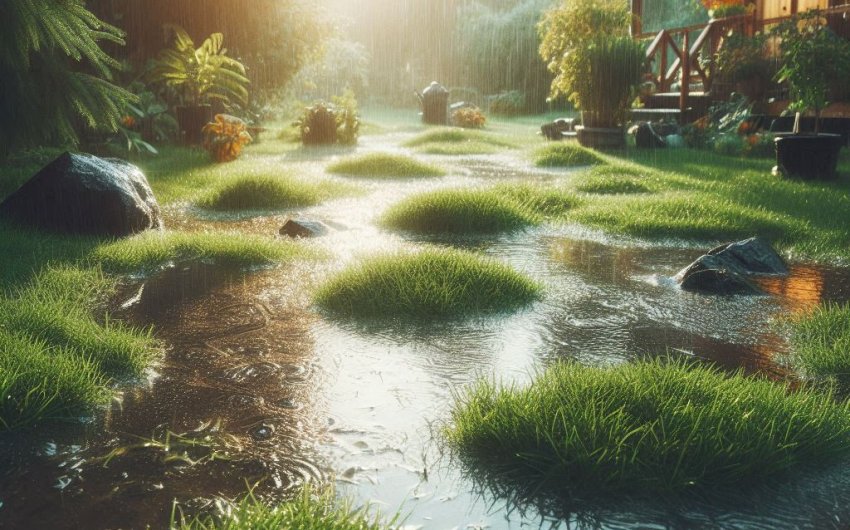
If you're dealing with soggy spots, puddles that linger for days, or grass that always seems to struggle, then solving waterlogging issues in lawns with poor drainage is crucial for a healthy and enjoyable yard. Poor drainage can turn a beautiful green expanse into a muddy mess, suffocating grass roots and inviting unwelcome problems like disease and pests. Fortunately, there are many effective strategies, from simple fixes to more involved landscaping solutions, that can transform your waterlogged lawn into a flourishing outdoor space.
What Causes Waterlogging and Poor Drainage in Lawns?
Waterlogging occurs when water cannot drain away from the soil surface and root zone at an adequate rate, leading to oversaturation. Several factors contribute to this problem.
Soil Compaction:
- Description: This is one of the most common culprits. Over time, foot traffic, heavy machinery, or even rain can compact soil particles, squeezing out the air pockets that allow water and oxygen to penetrate.
- Impact: When soil is compacted, it becomes dense and impermeable, acting like concrete and preventing water from soaking in or moving through.
- Symptoms: Hard, dense soil; water runoff; shallow root growth; thin, struggling grass.
Heavy Clay Soil:
- Description: Clay particles are very small and flat, packing tightly together. While clay soil can be very fertile, its small particle size and tight structure lead to poor drainage.
- Impact: Water moves very slowly through clay soil, leading to standing water on the surface and in the root zone.
- Symptoms: Soil feels sticky when wet and hard when dry; puddles after rain; slow drying times.
Low Spots or Uneven Grading:
- Description: Depressions or unevenness in your lawn's surface can act as collection points for rainwater. If the ground doesn't slope away from structures or low areas, water will pool there.
- Impact: Gravity directs water to these low points, where it sits indefinitely if it can't drain vertically.
- Symptoms: Consistent puddles in specific areas, especially after rainfall or irrigation.
Underlying Hardpan:
Advertisement- Description: A hardpan is a dense, compacted layer of soil or rock that lies beneath the topsoil, typically 6-18 inches deep. It can be natural or caused by construction activities.
- Impact: This impermeable layer acts as a barrier, preventing water from percolating deeper into the ground.
- Symptoms: Waterlogged topsoil even when the surface appears graded correctly; water table feels surprisingly high.
Thatch Buildup:
- Description: Thatch is a layer of dead and living organic matter (stems, roots, leaves) that accumulates between the soil surface and the green grass blades. A thin layer is healthy, but an excessive layer (more than 1/2 inch) becomes a problem.
- Impact: Thick thatch acts like a sponge, holding water at the surface and preventing it from reaching the soil. It also harbors pests and diseases.
- Symptoms: Spongy lawn; water runs off rather than soaking in; grass roots grow within the thatch layer instead of the soil.
High Water Table:
- Description: In some areas, the natural water table (the level below which the ground is saturated with water) is very close to the surface, especially after heavy rains or in low-lying regions.
- Impact: Even if the soil structure is good, there's nowhere for excess surface water to go if the ground is already saturated from below.
- Symptoms: Consistently wet soil year-round; water seeping up from the ground; aquatic plants appearing.
How Does Waterlogging Harm My Lawn?
Standing water and overly saturated soil can cause significant damage to your grass and lead to a host of other problems.
Root Suffocation:
- Problem: Grass roots, like all living things, need oxygen to survive. Waterlogged soil fills the air pockets, depriving roots of essential oxygen.
- Impact: Roots effectively "drown." They stop functioning, can't absorb water or nutrients, and eventually die.
- Symptoms: Yellowing grass, wilting, stunted growth, and eventual death of grass patches.
Increased Disease Risk:
- Problem: Constantly wet conditions create an ideal breeding ground for various fungal and bacterial diseases.
- Impact: Common lawn diseases like brown patch, Pythium blight, and various root rots thrive in soggy environments, quickly spreading and killing grass.
- Symptoms: Discolored patches of grass (brown, red, black), slimy texture, rapid decline.
Weed Invasion:
- Problem: While grass struggles in waterlogged conditions, many common weeds are perfectly adapted to wet, low-oxygen environments.
- Impact: Weeds like sedges, nutsedge, dollar weed, and creeping Charlie will rapidly colonize soggy areas, outcompeting the weakened grass.
- Symptoms: Rapid appearance of undesirable weeds in wet spots.
Pest Problems:
- Problem: Some lawn pests are attracted to overly wet conditions.
- Impact: Mosquitos will breed in standing puddles. Slugs and snails thrive in damp environments. Certain grubs may also prefer moist soil.
- Symptoms: Increased insect activity, visible pests.
Compaction Cycle:
- Problem: Wet soil is highly susceptible to compaction. Walking or mowing on a waterlogged lawn compresses the soil even further, worsening the drainage problem.
- Impact: This creates a vicious cycle where poor drainage leads to compaction, which further worsens drainage.
- Symptoms: Hard, dense soil that is difficult to work with.
What Simple Solutions Can Improve Minor Waterlogging Issues?
For less severe waterlogging or as a starting point, several straightforward methods can make a noticeable difference.
Core Aeration:
- What it is: Using an aerator tool (manual or powered) to remove small plugs of soil from your lawn.
- How it helps: Creates channels in compacted soil, allowing water, air, and nutrients to penetrate deeper into the root zone.
- When to do it: Best done during the grass's active growing season (fall for cool-season grasses, late spring/early summer for warm-season grasses).
- Frequency: Annually or every other year for compacted lawns.
- Pros: Directly addresses soil compaction, improves drainage and nutrient uptake, promotes stronger roots.
- Cons: Can be labor-intensive for large lawns without equipment.
Dethatching:
- What it is: Removing excessive thatch from your lawn using a dethatching rake or power dethatcher.
- How it helps: Breaks up the spongy layer that prevents water from reaching the soil.
- When to do it: Similar to aeration, during active growth.
- Frequency: As needed, when thatch build-up exceeds 1/2 inch.
- Pros: Improves water penetration, airflow, and reduces disease risk.
- Cons: Can be strenuous; generates a lot of debris.
Top-Dressing with Organic Matter:
- What it is: Spreading a thin layer (1/4 to 1/2 inch) of high-quality organic material (like compost, sand, or a blend) over your lawn.
- How it helps:
- Compost: Incorporates beneficial microbes, improves soil structure (making clay less dense and sand more absorbent), and adds nutrients. Over time, it helps water percolate. You can use a compost spreader.
- Sand: While sand can improve drainage in clay soils if mixed in significant quantities (often not practical for existing lawns), applying it alone can sometimes worsen compaction if not done correctly. Mixing it with compost is usually better.
- When to do it: After aeration, as the holes provide channels for the top-dressing to work its way into the soil.
- Pros: Improves soil structure over time, adds nutrients, enhances microbial activity.
- Cons: Gradual improvement; requires repeated application.
Adjusting Mowing and Watering:
- Mowing Height: Mow at the highest recommended height for your grass type (e.g., 2.5-3.5 inches). Taller grass develops deeper roots, making it more resilient.
- Watering Schedule: Water deeply but infrequently. This encourages roots to grow deeper in search of water, making them less susceptible to surface waterlogging.
- Pros: Simple, free adjustments that promote overall lawn health.
- Cons: Won't fix severe drainage issues alone.
Addressing Minor Low Spots:
- What it is: Filling shallow depressions with a top-dressing mix.
- How it helps: Levels out minor dips where water collects.
- Technique: Use a mix of topsoil and sand (or topsoil and compost). Apply in thin layers (no more than 1/2 inch at a time) to avoid suffocating the grass. Rake it evenly and allow the grass to grow through before adding more if needed.
- Pros: Corrects localized pooling.
- Cons: Only for very shallow depressions; requires patience.
When Are More Extensive Drainage Solutions Needed?
For persistent waterlogging, large problem areas, or if simple solutions don't suffice, you'll need to consider more significant landscaping and drainage systems.
French Drains:
- What it is: A trench filled with gravel and containing a perforated pipe that redirects surface and subsurface water away from a problem area.
- How it helps: Collects excess water and channels it to a more suitable disposal point (e.g., a drier part of the yard, a rain garden, a storm drain).
- Installation: Involves digging a trench with a slight slope, lining it with landscape fabric, laying perforated pipe, covering with gravel, and then backfilling with soil/sod.
- Pros: Highly effective for collecting and moving large volumes of water, relatively inconspicuous once installed.
- Cons: Labor-intensive, requires digging, professional installation may be needed.
Catch Basins and Surface Drains:
- What it is: A catch basin is a box-like structure with a grate on top that sits at the lowest point of a depression, collecting surface water. It's connected to underground pipes that carry water away.
- How it helps: Excellent for eliminating standing puddles in specific low spots.
- Installation: Involves digging, installing the basin, and connecting to drainage pipes.
- Pros: Very effective at removing standing surface water.
- Cons: Requires digging and a suitable discharge point.
Grading and Re-sloping:
- What it is: Physically altering the slope of your lawn to ensure water drains away from problem areas (like your house foundation) and towards a suitable drainage point.
- How it helps: Uses gravity to solve pooling issues at their source.
- Installation: Can involve adding fill dirt to raise low areas or excavating high spots to create a gentle, continuous slope. Requires careful planning to ensure proper fall (slope).
- Pros: Permanent solution for uneven terrain and surface runoff.
- Cons: Significant earthwork, expensive, may require professional landscaping equipment and expertise.
Dry Wells:
- What it is: An underground pit filled with gravel or large stones, often with a perforated barrel or concrete rings, designed to temporarily hold and slowly disperse excess stormwater into the surrounding soil.
- How it helps: Provides a localized area for water to dissipate slowly, useful when there's no suitable daylight discharge point for a French drain.
- Installation: Requires significant excavation and proper sizing for the anticipated water volume. A dry well kit can simplify the process.
- Pros: Good for localized areas with no good outflow.
- Cons: Requires significant digging, effectiveness depends on underlying soil permeability (not good for heavy clay).
Channel Drains:
- What it is: Long, narrow grates that sit flush with the surface, typically used along hardscapes like patios, driveways, or at the base of slopes to collect sheet flow runoff.
- How it helps: Intercepts large volumes of surface water before it can spread or pool.
- Installation: Involves embedding the linear drain in concrete or other hardscaping materials, connected to drainage pipes.
- Pros: Highly effective for linear water collection.
- Cons: Primarily for hardscapes, requires precise installation.
Can I Use Plants to Help with Waterlogging?
Yes! Incorporating certain plants and designing specific landscape features can be a beautiful and eco-friendly way to manage excess water.
Rain Gardens:
- What it is: A shallow depression designed to collect and absorb stormwater runoff from impervious surfaces (roofs, driveways, lawns). It's planted with water-tolerant native plants.
- How it helps: Allows water to slowly filter into the ground, reducing runoff and replenishing groundwater, rather than just moving it away.
- Plants: Choose plants native to your region that can tolerate both wet feet and periods of dryness. Examples include coneflowers, sedges, irises, and certain grasses.
- Pros: Highly effective, creates beautiful habitat, low maintenance once established, environmentally beneficial.
- Cons: Requires some initial planning and excavation, only suitable for areas where water can eventually infiltrate.
Water-Tolerant Grasses and Groundcovers:
- What it is: Selecting grass species or alternative groundcovers that naturally tolerate wetter soil conditions.
- How it helps: These plants are better equipped to survive in waterlogged areas where traditional lawn grasses might fail.
- Examples:
- Grasses: Tall fescue, zoysia grass (some varieties), various types of sedges (though technically not grasses).
- Groundcovers: Creeping Jenny, Acorus, various types of moss (if you embrace a moss lawn).
- Pros: Provides green cover in difficult areas.
- Cons: May not match the aesthetics of the rest of your lawn, some are not suitable for high traffic.
Deep-Rooted Trees and Shrubs:
- What it is: Strategically planting trees and shrubs with extensive root systems.
- How it helps: Their roots can absorb significant amounts of water from the soil, helping to dry out problem areas.
- Placement: Plant them in areas that tend to be damp, but ensure they are not too close to your house foundation where roots could cause issues.
- Examples: Willow, river birch, red maple, certain dogwoods. Always choose species appropriate for your climate and soil.
- Pros: Long-term solution, adds aesthetic value, provides shade and habitat.
- Cons: Takes time for trees/shrubs to mature and have significant impact, requires careful placement.
How Do I Maintain My Lawn to Prevent Future Waterlogging?
Once you've addressed your existing waterlogging issues, ongoing maintenance is crucial to prevent them from returning.
- Consistent Aeration: Make aeration a regular part of your lawn care routine, especially if you have clay soil or high traffic.
- Regular Dethatching: Keep an eye on thatch levels and dethatch when they exceed 1/2 inch to ensure water penetrates the soil.
- Annual Top-Dressing: Continue to top-dress your lawn with high-quality compost or a compost/sand blend annually. This constantly feeds the soil, improves its structure, and promotes healthy microbial activity, all of which enhance drainage.
- Proper Mowing and Watering: Reiterate the importance of deep, infrequent watering and mowing at the highest appropriate height. These cultural practices are foundational to a resilient lawn.
- Monitor Your Landscape: Regularly walk your lawn after heavy rain. Note any new puddling areas, slow-draining spots, or changes in grass health. Early detection allows for minor adjustments before issues become severe.
- Maintain Drainage Systems: If you've installed French drains, catch basins, or other systems, ensure they are kept clear of debris (leaves, silt, roots) to maintain their effectiveness. Regularly clean out grates and inspect pipe outlets.
- Address Runoff Sources: Look at where water is coming from. Are downspouts properly directed away from the lawn? Are hardscapes sloping correctly? Sometimes the problem isn't the lawn itself but the water flowing onto it. Consider downspout extensions or even rain barrels to divert roof water.
- Avoid Compaction: Minimize foot traffic on wet grass. If you must walk on it, consider stepping stones or pathways in frequently used areas to distribute weight. Avoid driving vehicles or heavy equipment on your lawn, especially when wet.
By systematically solving waterlogging issues in lawns with poor drainage and implementing these long-term strategies, you can transform your soggy lawn into a vibrant, healthy, and functional outdoor living space, regardless of the weather.