
What should I do with compost that doesn't seem to be breaking down properly?
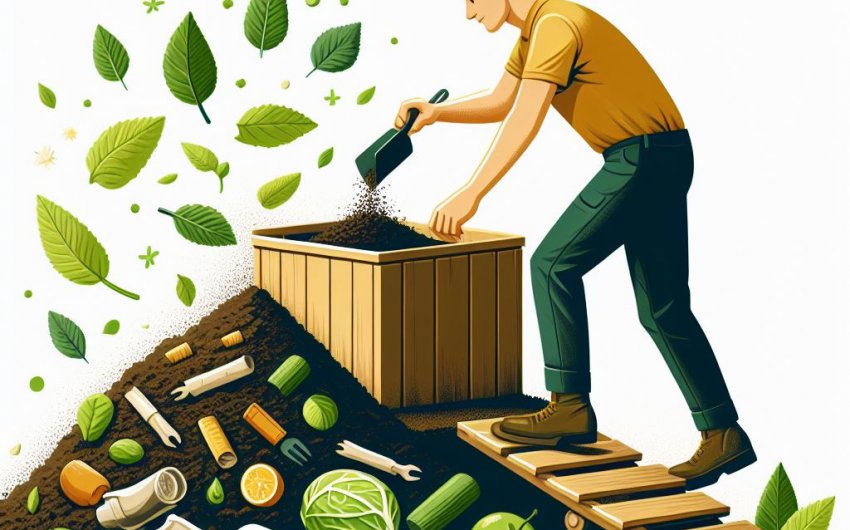
The journey of transforming kitchen scraps and yard waste into rich, dark compost is one of gardening's most rewarding experiences. It's like alchemy, turning seemingly useless organic matter into "black gold" that breathes life into your soil. For many gardeners, seeing that active pile heating up and gradually transforming is a satisfying sign that nature is hard at work. But sometimes, the magic seems to pause. You check your compost pile, and instead of a crumbly, earthy-smelling treasure, it's a stagnant, smelly, or stubbornly unchanged mess.
This can be frustrating, especially if you're new to composting. A compost pile that isn't breaking down properly isn't just an inconvenience; it means you're not getting that valuable finished product for your garden. The good news is that most composting problems are easily fixable. It's usually a sign that one of the key ingredients needed for decomposition is out of balance. We'll explore the common reasons why compost might stall, how to diagnose the problem, and practical steps you can take to jumpstart the process and get your pile back on track to producing beautiful, usable compost.
What Does "Not Breaking Down Properly" Look Like?
When your compost pile isn't performing as it should, it will give you some clear warning signs. Recognizing these issues is the first step toward fixing them.
What are the Common Symptoms of a Stalled Compost Pile?
- No Heat: For a hot compost pile, a lack of heat is the most obvious sign something is wrong. An active, healthy compost pile should generate internal heat, sometimes reaching 130-160°F (55-70°C). You should be able to feel warmth when you stick your hand into the pile, or see steam rise on a cool morning. If it's consistently cool or cold, decomposition has slowed or stopped.
- Note: Cold composting piles are not expected to heat up, but they should still show signs of slow breakdown.
- Bad Odors: A healthy compost pile should smell earthy, like a forest floor after rain. If your pile smells foul, sour, like ammonia, or like rotting garbage, it's a clear sign of trouble.
- Rotten/Sulfur Smell: Often indicates anaerobic conditions (lack of oxygen) and/or too many "greens" (nitrogen-rich materials) like food scraps.
- Ammonia Smell: Usually means too much nitrogen (greens) and not enough carbon (browns).
- No Reduction in Volume: You keep adding material, but the pile doesn't seem to be shrinking much. This means the decomposition process is extremely slow.
- Dry or Soggy Materials: The materials in your pile might be either:
- Bone Dry: If it's too dry, the microorganisms (the "workers" of the compost pile) don't have the water they need to survive and break down material.
- Soggy/Slimey: If it's too wet, water fills all the air pockets, leading to anaerobic conditions and a slimy, smelly mess.
- Still Recognizable Scraps: You've left food scraps or plant material in the pile for weeks or months, and they still look largely unchanged, rather than breaking down into an unidentifiable mass.
- Pests: An unhealthy, smelly, or stagnant compost pile (especially one with exposed food scraps) can attract unwanted pests like flies, rodents, or raccoons. This is a sign that the composting process is not proceeding efficiently. You can find Compost Bins that Deter Pests.
Any of these signs indicates that your compost isn't breaking down properly. The next step is to diagnose why.
What Are the Common Reasons a Compost Pile Stalls?
Most compost pile problems boil down to an imbalance of the four essential ingredients for decomposition: carbon, nitrogen, water, and air. Getting these wrong will cause your compost to stall.
1. Wrong Carbon-to-Nitrogen Ratio ("Greens" and "Browns")
This is arguably the most common issue. The microorganisms in your compost pile need a balanced diet.
- Too Many Greens (Too Much Nitrogen):
- Symptoms: Ammonia smell (like cat urine), slimy, wet, possibly hot initially but then cools quickly. Doesn't break down into finished compost.
- Why: Too much nitrogen (from fresh grass clippings, food scraps) without enough carbon "starves" the microbes of their structural needs and leads to rapid, smelly breakdown into ammonia gas.
- Too Many Browns (Too Much Carbon):
- Symptoms: Pile is very dry, little to no smell, very slow decomposition (might just sit there for months).
- Why: Too much carbon (from dry leaves, wood chips, shredded paper) without enough nitrogen "starves" the microbes of the protein they need to build their bodies. The pile won't heat up.
- Ideal Ratio: Aim for a balance of roughly 2-3 parts "browns" (carbon-rich, dry, woody materials) to 1 part "greens" (nitrogen-rich, moist, fresh materials) by volume.
2. Incorrect Moisture Level
Water is essential for microbial activity, but too much or too little is problematic.
- Too Dry:
- Symptoms: Pile looks dusty, dry, decomposition is extremely slow or stopped, no smell (or a very faint earthy smell).
- Why: Microorganisms need moisture to live and work. If the pile is too dry, they go dormant or die.
- Too Wet:
- Symptoms: Pile is soggy, slimy, smells like rotten eggs or sulfur, often attracts flies.
- Why: Water fills all the air pockets, suffocating the beneficial aerobic (oxygen-loving) microbes. This leads to anaerobic (oxygen-free) decomposition, which is slow and smelly.
- Ideal Moisture: Your compost pile should feel like a wrung-out sponge – damp but not dripping wet when squeezed.
3. Lack of Air (Aeration)
Even with the right carbon/nitrogen balance and moisture, a compost pile needs oxygen.
- Symptoms: Foul, rotten egg or sulfur smell; pile is cold and soggy inside, decomposition is very slow.
- Why: Microorganisms doing the fast, healthy composting (aerobic microbes) need oxygen. If the pile becomes compacted or you don't turn it, oxygen levels drop, and slow, smelly anaerobic decomposition takes over.
- Solution: Turning the pile regularly is key to aeration.
4. Materials Too Large
- Symptoms: Larger items (whole leaves, big food scraps, thick branches) remain recognizable for a very long time, while smaller items might break down around them.
- Why: Microorganisms have more surface area to "eat" when materials are smaller. Large pieces take a very long time to decompose.
- Solution: Shred, chop, or break down materials into smaller pieces (ideally no larger than 1-2 inches) before adding them to the compost. You can use a Garden Shredder for larger items.
Diagnosing which of these factors is causing your compost to stall is the first step to reviving it. Often, it's a combination of issues.
How Do You Fix a Stalled Compost Pile? (Too Dry or Too Wet)
The first step to reviving a stalled compost pile is often to correct its moisture level. This is a common and relatively easy fix.
What if My Compost Pile is Too Dry?
This is one of the easiest problems to fix.
- Symptoms: Pile looks dusty, feels crumbly and dry, decomposition is very slow or has stopped entirely, no discernible smell.
- Why it happens: Not enough water for the microorganisms to do their work.
- Solution Steps:
- Turn the Pile: Begin by turning the entire compost pile. As you turn, break up any large clumps.
- Add Water Gradually: Use a garden hose with a spray nozzle (or a watering can) to evenly moisten the materials as you turn them. Don't just spray the top; try to get water deep into the pile.
- Check Consistency: Aim for the "wrung-out sponge" consistency – damp but not dripping wet. Squeeze a handful; a few drops of water should come out.
- Repeat as Needed: Continue turning and adding water until the entire pile is uniformly moist.
- Prevention: After fixing, monitor the moisture regularly, especially during hot, dry weather. If your compost bin has an open top, heavy rains might be enough, but in dry climates or with covered bins, you'll need to add water.
What if My Compost Pile is Too Wet?
This is a more challenging problem to fix, as it often leads to unpleasant odors.
- Symptoms: Pile is soggy, slimy, smells like rotten eggs or sulfur, often attracting flies. It's likely cold due to anaerobic conditions.
- Why it happens: Too much water fills all the air pockets, suffocating the beneficial aerobic microorganisms. Slow, smelly anaerobic decomposition takes over. It can also be caused by too many "greens" (high-moisture food scraps, fresh grass clippings) without enough dry "browns."
- Solution Steps:
- Add More Browns: This is the most crucial step. Start adding plenty of dry, carbon-rich materials (browns) to absorb the excess moisture and rebalance the carbon-to-nitrogen ratio. Good materials include:
- Dry leaves (shredded)
- Shredded newspaper or plain cardboard (rip or cut into small pieces)
- Straw
- Sawdust (in moderation)
- Wood chips (in moderation, they break down slowly)
- Turn the Pile Thoroughly: As you add the dry browns, turn the entire pile diligently. This mixes the dry material into the soggy parts, helping to soak up excess moisture, and crucially, it re-aerates the pile, introducing vital oxygen. Break up any compacted or slimy clumps.
- Repeat if Necessary: You may need to add more browns and turn multiple times over a few days or a week until the smell dissipates and the consistency returns to that of a wrung-out sponge.
- Add More Browns: This is the most crucial step. Start adding plenty of dry, carbon-rich materials (browns) to absorb the excess moisture and rebalance the carbon-to-nitrogen ratio. Good materials include:
- Prevention:
- Always try to add a layer of dry browns every time you add wet kitchen scraps or fresh grass clippings.
- Avoid adding very wet, dripping materials to the compost.
- Ensure your compost bin has adequate drainage holes if it's enclosed.
By correctly adjusting the moisture levels, you set the stage for the microorganisms to resume their hard work and get your compost back on track.
How Do You Fix a Stalled Compost Pile? (Wrong Balance or Lack of Air)
Beyond moisture, imbalances in the carbon-to-nitrogen ratio and insufficient air are primary reasons a compost pile might stall or become smelly. These also require active intervention.
What if My Compost Pile Smells Like Ammonia (Too Much Nitrogen/Greens)?
- Symptoms: A strong, pungent smell like ammonia or cat urine. The pile might be hot but then cools quickly, feels slimy or wet.
- Why it happens: Too many "greens" (nitrogen-rich materials like fresh grass clippings, coffee grounds, food scraps) without enough "browns" (carbon-rich materials like dry leaves, shredded paper). The excess nitrogen is off-gassing as ammonia.
- Solution Steps:
- Add More Browns: This is the direct fix. Add a significant amount of dry, carbon-rich materials. Good choices include:
- Shredded dry leaves
- Shredded newspaper or plain cardboard
- Straw
- Turn Thoroughly: Mix the newly added browns into the nitrogen-heavy greens by turning the entire pile diligently. This helps absorb excess nitrogen and re-establishes the carbon-to-nitrogen balance.
- Aeration: Turning also introduces much-needed oxygen, which is crucial for efficient nitrogen breakdown.
- Add More Browns: This is the direct fix. Add a significant amount of dry, carbon-rich materials. Good choices include:
- Prevention: Always follow the recommended 2-3 parts browns to 1 part greens ratio by volume. Have a ready supply of dry browns near your compost bin to add every time you put in kitchen scraps or fresh grass clippings.
What if My Compost Pile is Cold, Slow, or Smells Like Rotten Eggs (Lack of Air/Anaerobic)?
- Symptoms: The pile is cold, very slow to break down (materials look the same for weeks), often smells like rotten eggs or sulfur. It might be dense and compacted.
- Why it happens: Lack of oxygen due to compaction, insufficient turning, or being too wet. Anaerobic microorganisms (those that thrive without oxygen) take over, which decompose materials very slowly and produce foul-smelling gases like hydrogen sulfide.
- Solution Steps:
- Turn the Pile Vigorously: This is the most important step. Use a Compost Aerator Tool or a pitchfork to turn and fluff up the entire pile. Break apart any dense, matted clumps. Aim to move the outer, cooler material to the hot center.
- Check Moisture: As you turn, check the moisture. If it's too wet (which is often the case with anaerobic conditions), add more dry browns to absorb moisture and create air pockets. If it's too dry, add water as you turn.
- Increase Brown Materials (if too wet or too much nitrogen): Adding browns will increase air pockets and create a better structure for air to penetrate.
- Prevention:
- Regular Turning: For hot composting, turn your pile every few days to once a week. For slower composting, turn at least every few weeks.
- Balance Materials: Ensure you have enough bulky browns to prevent compaction. Avoid adding overly dense layers of fresh grass clippings without mixing them.
- Avoid Compacting: Don't step on your compost pile.
What if the Materials Are Too Large?
- Symptoms: Large items (whole leaves, big food scraps, thick branches) remain recognizable for a very long time.
- Why it happens: Microorganisms need surface area to work on. Large pieces break down very slowly.
- Solution Steps:
- Shred/Chop: Remove the large items and chop them into smaller pieces (ideally no larger than 1-2 inches).
- Reincorporate: Add the smaller pieces back into the compost pile and turn them in.
- Prevention: Shred or chop materials before adding them to the compost, especially woody items or tough vegetable stalks. A Garden Shredder is great for this.
By actively adjusting the carbon-to-nitrogen balance, ensuring ample aeration, and reducing particle size, you can effectively revive a stalled compost pile and get it back to efficient, odor-free decomposition.
What Are Some General Tips for Troubleshooting and Preventing Stalled Compost?
Beyond addressing specific symptoms, maintaining good composting habits and understanding the overall process will help you avoid issues and troubleshoot effectively.
How Does Starting with a Good Mix Help?
- Layering: When starting a new pile or adding a large batch of materials, try to layer your greens and browns. For example, a layer of food scraps, then a layer of dry leaves, then some grass clippings, etc. This helps create a balanced mix.
- Chopped Ingredients: Smaller pieces break down faster. Always try to chop or shred materials (especially food scraps and leaves) into pieces no larger than 1-2 inches.
What About the Size of Your Compost Pile?
- Minimum Size for Heat: For an actively heating (hot) compost pile, you generally need a minimum volume of about 3x3x3 feet (1x1x1 meter). This size allows enough material to build up heat in the core.
- Too Small: A very small pile will struggle to heat up and will break down very slowly, often resembling cold composting.
- Too Large: While not a common home garden problem, excessively large piles can sometimes become too dense and go anaerobic in the center if not turned regularly.
What is the Role of a Compost Starter?
- Benefits: A compost starter (or activator) is a product that contains beneficial microorganisms or a high-nitrogen source to kickstart the decomposition process. They can be helpful for:
- Starting a new pile.
- Boosting a slow or cold pile.
- Adding to a pile that has a lot of "brown" materials.
- Types: Can be commercial granular products (e.g., Compost Starter), or natural materials like a scoop of finished compost, a handful of garden soil, or a nitrogen source like alfalfa meal or blood meal.
- Considerations: While useful, a starter isn't a substitute for the proper balance of greens/browns, moisture, and aeration. If these basics are wrong, a starter won't fix it.
How to Monitor Your Compost Regularly?
- Check Temperature: For hot piles, check the temperature regularly with a Compost Thermometer. If it cools down, it's a sign to turn or add more "greens."
- Check Moisture: Feel the pile. Is it like a wrung-out sponge?
- Smell Test: Does it smell earthy? Or sour/ammonia?
- Visual Inspection: Are materials breaking down? Are there any obvious problems?
What About Preventing Pests?
A healthy, active, and well-managed compost pile is naturally less attractive to pests.
- Bury Food Scraps: Always bury all food scraps deep in the pile (at least 6-8 inches) under brown material.
- Avoid Problem Foods: Never add meat, bones, fish, dairy products, or oily/greasy foods to your outdoor compost.
- Secure Bin: Use an enclosed, pest-proof Compost Bin if rodents are a concern.
By understanding these common troubleshooting tips and maintaining good composting habits, you can keep your compost pile actively working, ensuring a steady supply of rich "black gold" for your garden. A little attention to these details can make all the difference in your composting success.