
Tulip Mania: Creating Mesmerizing Arrangements with Spring's Favorite Bloom
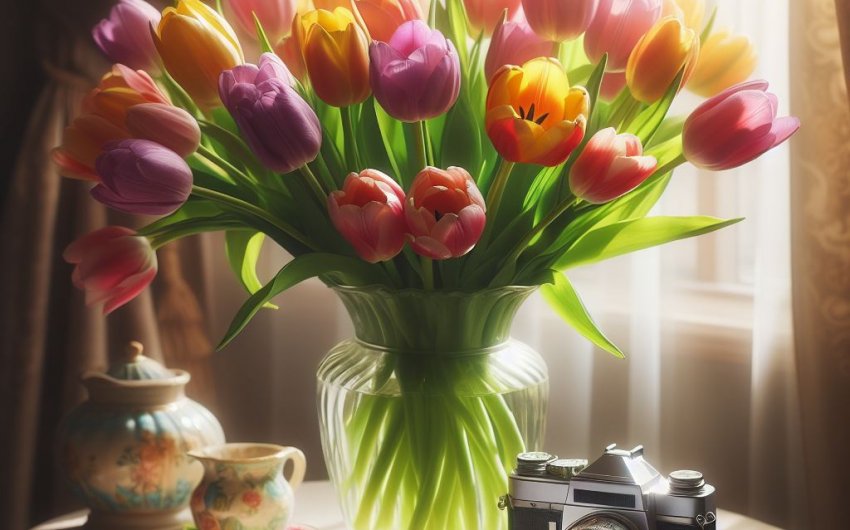
To create mesmerizing tulip arrangements, start with fresh, high-quality blooms and choose a vase that complements their elegant stems. Focus on proper hydration and conditioning, then experiment with grouping colors and varieties to highlight the tulip's natural beauty and movement.
Why are tulips so popular for spring arrangements?
Tulips are undeniably spring's favorite bloom, cherished for their vibrant colors, graceful forms, and incredible versatility in floral design. Their unique ability to continue growing and moving in the vase adds a dynamic, almost whimsical quality that other flowers simply can't match, making every tulip arrangement a living work of art.
What makes tulips unique for floral design?
- Vibrant Color Palette: Tulips come in an astonishing array of colors, from soft pastels to fiery reds, deep purples, and even multi-colored variegated varieties, offering endless creative possibilities.
- Diverse Forms: Beyond the classic cup shape, tulips boast diverse forms like frilly parrot tulips, elegant lily-flowered types, double-petaled varieties, and fringed blooms, each adding unique texture.
- Graceful Movement: Unlike many cut flowers that remain static, tulips continue to grow and bend towards light even after being cut. This "dance" in the vase creates dynamic, ever-changing arrangements that feel alive.
- Simple Elegance: Even a single tulip stem can make a striking statement, offering a simple yet profound elegance that embodies the freshness of spring.
- Seasonal Symbolism: They are synonymous with spring, rebirth, and new beginnings, instantly bringing a joyful, seasonal feel to any space.
How do I choose the best tulips for my arrangements?
Selecting fresh, high-quality tulips is the foundation of any stunning tulip arrangement. Paying attention to a few key details when purchasing your blooms will ensure they last longer and look their best.
Tips for selecting fresh tulips:
- Check the petals: Look for firm, crisp petals that are tightly closed or just beginning to open. Avoid tulips with bruised, torn, or discolored petals.
- Examine the stems: Stems should be strong, firm, and a uniform green color. Avoid stems that are soft, slimy, or discolored at the ends.
- Look at the leaves: Leaves should be fresh and green, not yellowed, wilted, or spotted.
- Consider the stage of opening:
- Tightly closed buds: These will last the longest but may take a few days to fully open.
- Just beginning to show color: A good balance of longevity and immediate beauty.
- Partially open: Offer instant impact but have a shorter vase life. Avoid fully open tulips unless you plan to use them immediately for a very short-term display.
- Source: Purchase from reputable florists, flower markets, or growers who care for their blooms. If picking from your garden, cut them early in the morning when they are most hydrated.
Popular tulip varieties for arrangements:
- Single Late Tulips: Classic, tall, strong stems, and large flowers. Excellent vase life.
- Darwin Hybrid Tulips: Very large, sturdy, often bi-colored blooms. Great for bold statements.
- Parrot Tulips: Known for their exotic, fringed, feathered, and often brightly colored petals. Add dramatic texture.
- Lily-Flowered Tulips: Elegant, slender flowers with pointed, often reflexed petals that resemble lilies. Very graceful.
- Double Early/Late Tulips: Resemble peonies or roses with many petals. Add volume and richness.
- Fringed Tulips: Distinctive, crystal-like fringed edges on their petals, offering unique texture.
What's the secret to conditioning tulips for a longer vase life?
Proper conditioning is the single most important step to maximizing the vase life of your tulips and allowing them to hydrate fully before arranging. This process ensures they remain vibrant and minimizes droopiness.
Step-by-step tulip conditioning:
- Prepare your work surface: Have a clean counter, a sharp knife or floral snips, and a bucket or tall vase filled with fresh, cool water ready.
- Remove lower leaves: Gently strip any leaves that would fall below the waterline in your vase. Submerged leaves will rot and contaminate the water, shortening the tulip's life.
- Recut stems: Using a sharp knife or floral snips, make a fresh, diagonal cut (at a 45-degree angle) about 1 inch from the bottom of each stem.
- Why diagonal? This increases the surface area for water absorption and prevents the stem from sitting flat against the bottom of the vase, which can block water uptake.
- Tip: Do this under running water or immediately plunge stems into water after cutting to prevent air bubbles from forming and blocking water uptake.
- Hydrate immediately: Place the recut tulips into your bucket or tall vase filled with cool water, ideally with flower food.
- "Paper wrap" for straight stems (optional): If you want your tulips to stay relatively straight in your arrangement, wrap them tightly in brown paper or newspaper (like a cone) before placing them in water. Let them hydrate in this wrap for 2-4 hours, or even overnight, in a cool, dark place. This helps them take up water efficiently and stiffens their stems.
- Allow to drink: Let the tulips hydrate in a cool spot away from direct sunlight for at least 2-4 hours (preferably longer). You'll notice them perk up significantly.
Essential tips for tulip care in the vase:
- Use fresh water: Change the water daily or every other day.
- Add flower food: Cut flower food provides essential nutrients and inhibitors to keep water clean.
- Recut stems every few days: This opens up fresh vascular tissue for better water uptake.
- Keep cool: Place arrangements in a cool spot away from direct sunlight, heat vents, or ripening fruit (which releases ethylene gas that ages flowers).
What are the best vases for tulip arrangements?
Choosing the right vase is paramount for showcasing the unique charm of tulips. The vase not only holds the water but also provides structure and complements the tulip's natural elegance and movement.
Vase styles and their impact on tulip arrangements:
- Tall, straight cylindrical vases:
- Best for: Achieving a clean, modern, and sculptural look. Ideal if you want your tulips to stay relatively upright. The narrow opening helps hold stems together.
- Example: A simple glass cylinder vase of varying heights.
- Vases with narrow necks and wider bodies:
- Best for: Allowing tulips to naturally splay and spread out, emphasizing their graceful bends and curves. The narrow neck provides some support while the wider body gives them room to move.
- Example: A classic hourglass-shaped vase or a bottle-neck design.
- Low, wide bowls or compotes:
- Best for: Creating lush, low, and abundant displays, especially with shorter stems or double tulips that offer more volume. Requires a flower frog or floral foam for stability.
- Example: A ceramic compote bowl or a shallow glass dish.
- Bud vases:
- Best for: Showcasing individual tulips or very small groupings. Perfect for creating an elegant, minimalist statement or scattering small touches of spring around a room.
- Example: A collection of varied small glass bud vases.
- Opaque vs. Clear Vases:
- Clear vases: Allow you to see the beautiful stems and the water level, making it easy to monitor and change water.
- Opaque vases: Hide the stems and any potential cloudy water, focusing attention solely on the blooms. They can also hide any creative stem supports.
Choosing the right size:
- The height of the vase should generally be about half to two-thirds the height of your tulip stems. This provides good balance and support.
- Consider the weight of the vase; tulips can become top-heavy as they grow and bend. A heavier, stable vase is often a good choice.
How do I create a simple yet stunning mono-botanical tulip arrangement?
A mono-botanical tulip arrangement, featuring only tulips and perhaps their own foliage, celebrates the flower's inherent beauty and movement. It's an elegant and impactful way to showcase spring's favorite bloom.
Steps for a simple mono-botanical tulip arrangement:
- Condition your tulips: Always start with freshly conditioned tulips (see "Secret to conditioning" section).
- Select your vase: Choose a vase that complements the number and style of your tulips. Tall cylinders or narrow-necked vases work well.
- Consider the number of stems: Odd numbers (5, 7, 9) often look more natural and balanced. For a simple arrangement, 10-15 stems can create a full look without being overwhelming.
- Prepare stems (again): Give the stems a fresh, quick trim before placing them in the vase. This ensures maximum water uptake.
- Arrangement Technique - "Grid" (for straight look):
- If you want a more structured look, you can create a loose grid with clear floral tape across the top of your vase. This helps guide each tulip stem into place, providing support as they grow.
- Place tulips one by one, allowing them to lean slightly into the grid.
- Arrangement Technique - "Natural Flow":
- For a more organic, dynamic look that embraces the tulip's movement, simply place them directly into the vase.
- Start by placing a few stems around the perimeter of the vase, angling them slightly outwards.
- Fill the center, letting stems cross over to create a loose framework that supports each other.
- Allow some tulips to be slightly taller or shorter, creating varying heights.
- Embrace the movement: Remember that tulips will continue to grow and bend towards the light. This is part of their charm! Resist the urge to constantly adjust them.
- Final touches: Ensure all stems are submerged in water and remove any leaves that might fall below the waterline.
How can I combine tulips with other flowers for a mixed arrangement?
Tulips play beautifully with other spring flowers, creating lush, multi-textured, and captivating mixed arrangements. The key is to choose companion blooms that complement the tulip's form and color, while also being mindful of their unique care needs.
Ideal companion flowers for tulips:
- Ranunculus: Their ruffled, multi-petaled blooms offer a romantic contrast to the simpler tulip cup shape.
- Anemones: Dark centers and delicate petals provide a striking, whimsical touch.
- Hyacinths: Their dense, fragrant spikes add texture, volume, and a wonderful scent.
- Muscari (Grape Hyacinth): Small, delicate blue spikes are perfect for adding tiny pops of color and texture at the base.
- Freesias: Fragrant, delicate bell-shaped flowers on arching stems add elegance and a lovely scent.
- Narcissus/Daffodils: While beautiful, Daffodils release a sap that can be toxic to other cut flowers (including tulips) and shorten their vase life. If you want to include them, condition them separately for several hours (until the sap stops flowing) before adding them to a mixed arrangement.
- Waxflower/Eucalyptus: Greenery adds texture, structure, and fills out the arrangement.
Steps for creating a mixed tulip arrangement:
- Condition all flowers separately: This is vital, especially if including daffodils. Ensure all stems are recut and hydrated.
- Choose a complementary vase: Consider the overall size and style you want. A ceramic vase with a wider mouth often works well for mixed arrangements.
- Start with your base/greenery: Place your chosen greenery (e.g., eucalyptus, ruscus) first to establish the shape and provide a framework.
- Add larger companion flowers: Place your larger, more structured companion blooms (e.g., ranunculus, hyacinths) next, creating focal points.
- Integrate tulips: Carefully place your tulips throughout the arrangement. Allow them space to "breathe" and move. You can cluster them for impact or distribute them evenly.
- Fill in with delicate blooms/fillers: Add smaller flowers like freesias or muscari to fill gaps, add texture, and create a sense of fullness.
- Adjust and refine: Step back and assess your arrangement from all angles. Adjust stem lengths as needed. Ensure even distribution of colors and textures.
- Water and maintenance: Continue to change water daily and recut stems of all flowers every few days for longevity.
How do I incorporate foliage and texture into tulip arrangements?
While tulips are stunning on their own, adding complementary foliage and textural elements can elevate any tulip arrangement from beautiful to truly mesmerizing. These additions provide contrast, depth, and a more natural, garden-inspired feel.
Choosing foliage for tulips:
- Eucalyptus: Silver-green, round, or elongated leaves (e.g., Silver Dollar, Baby Blue). Adds a modern, airy feel and often a pleasant scent. A bunch of preserved eucalyptus can also work.
- Ruscus: Glossy, dark green leaves on sturdy stems. Provides a strong structural element and depth.
- Leatherleaf Fern: Classic fern look, great for filling out arrangements and adding a lush, traditional feel.
- Salal (Lemon Leaf): Round, glossy green leaves. Very durable and adds good coverage.
- Pistache: Elegant, elongated leaves, often with a reddish hue. Adds sophistication.
- Pittosporum: Variegated or solid green, dense foliage. Offers a different texture.
- Tulip's own leaves: Don't discard all the leaves! A few leaves left on the stem or strategically placed can add a natural, cohesive look.
Adding textural elements:
- Branches/Twigs: Thin, delicate branches (e.g., willow, pussy willow) can add height, natural texture, and an early spring feel.
- Berries: If available and in season (though less common with spring tulips), small berries can provide pops of color and texture.
- Dried elements: Consider incorporating some dried bunny tails, natural grasses, or even dried lotus pods for unexpected texture contrast.
How to integrate foliage and texture:
- Start with foliage: Begin by establishing the basic shape and green base of your arrangement using your chosen foliage. This creates a "nest" for your tulips.
- Layer different greens: Use a mix of 2-3 types of foliage with varying shapes and sizes to create more depth and interest.
- Place tulips: Once your green base is established, carefully place your tulips throughout, allowing them to peek out and shine.
- Add textural elements last: If using branches or other unique textures, weave them in to add interest without overwhelming the tulips.
- Consider color harmony: Match the green and textural elements to the colors of your tulips and other flowers.
How can I display tulips beyond a traditional vase?
Tulips are incredibly versatile and can be used in creative displays that go beyond the classic vase, adding unexpected charm to any spring décor. Thinking outside the box allows for truly mesmerizing arrangements.
Creative tulip display ideas:
- Massing in a low bowl with a flower frog:
- Concept: Cut tulips relatively short and arrange them tightly in a low, wide bowl using a flower frog for support. This creates a dense, impactful display reminiscent of a garden bed.
- Impact: Highlights the individual bloom shapes and colors.
- Glass cloches or bell jars:
- Concept: Place a single, perfect tulip in a small bud vase inside a glass cloche.
- Impact: Creates a dramatic, museum-like display, perfect for a statement piece or a rare variety.
- Groupings of bud vases:
- Concept: Instead of one large arrangement, use 3-5 (or more) individual bud vases, each holding 1-3 tulips.
- Impact: Allows for a scattered, delicate display that can spread joy across a table or mantelpiece.
- "Bulb in a jar" display:
- Concept: If you buy potted tulip bulbs, gently rinse off the soil and place the bulb with roots in a clear glass jar with just enough water to cover the roots.
- Impact: A unique way to see the entire plant, from roots to bloom, offering a charming, living display.
- Cascading from a pitcher or jug:
- Concept: Use an antique ceramic pitcher or a rustic jug. Allow tulips to naturally lean and spill over the edges, embracing their graceful movement.
- Impact: Creates a farmhouse-chic, relaxed, and abundant feel.
- Deconstructed tulip stem:
- Concept: Place individual tulip blooms (cut without stems) floating in a shallow bowl of water. You can even float individual petals.
- Impact: Creates a minimalist, serene, and artistic display.
- Woven into a centerpiece:
- Concept: For a long table, create a low, linear arrangement by securing tulip stems within a series of small, connected containers or a floral foam base, potentially weaving them with greenery.
- Impact: A sophisticated, elongated display perfect for dining tables.
Creating mesmerizing tulip arrangements is an art that celebrates the vibrant beauty and unique movement of these quintessential spring blooms. From selecting fresh flowers and proper conditioning to choosing the right vase and embracing creative display techniques, every step contributes to a stunning display that brings the joy of spring indoors.