
When Is the Best Time to Fertilize a Lawn?
Achieving a lush, green carpet of grass often hinges on more than just regular watering and mowing; understanding the optimal timing for fertilizing a lawn is paramount. Just like any living organism, your grass needs proper nutrition to thrive, resist pests, and bounce back from environmental stresses. Applying the right type of lawn fertilizer at the correct points in the growing season can transform a lackluster yard into a vibrant, healthy outdoor space. This guide will help you decipher the best schedule for feeding your turf, tailored to different grass types and regions.
Why is Fertilizing Your Lawn Important?
Fertilizing your grass isn't just about making it look good; it's about providing the essential nutrients it needs to grow strong and healthy. A well-nourished lawn is better equipped to fight off weeds, resist insect damage, and recover quickly from disease or drought. Think of it as giving your grass a balanced diet. Over time, the soil in your yard can lose important nutrients. Regular mowing also removes nutrients as clippings are taken away. By adding lawn fertilizer, you replenish these vital elements, ensuring your grass has everything it needs to develop deep roots, grow dense blades, and maintain that desirable green color.
What Nutrients Does Lawn Fertilizer Provide?
Most lawn fertilizers are a blend of three main nutrients, often listed as N-P-K on the bag:
- Nitrogen (N): This is the superstar for green growth. Nitrogen promotes lush, green leaves and dense turf. It's what gives your lawn that vibrant color.
- Phosphorus (P): Essential for strong root development. Phosphorus helps young grass establish a robust root system, making it more resilient.
- Potassium (K): This nutrient boosts overall plant health and stress tolerance. Potassium helps your grass withstand drought, disease, and cold temperatures.
Beyond these primary nutrients, some fertilizers also contain micronutrients like iron, which can enhance the green color, especially in alkaline soils. Understanding these components helps you choose the best lawn fertilizer for your specific needs.
What Happens If You Don't Fertilize Your Lawn?
If you neglect to fertilize your lawn, it will likely become thin, patchy, and lose its vibrant color. The grass will be weaker, making it more susceptible to problems. Weeds will find it easier to invade bare spots, as there's less competition from healthy grass. Pests and diseases can also take hold more readily in a stressed lawn. Over time, your yard can look dull and unhealthy, making it less enjoyable and potentially decreasing your home's curb appeal.
What Happens If You Fertilize Your Lawn Incorrectly?
Fertilizing incorrectly can be just as damaging as not fertilizing at all, or sometimes even worse.
- Too much fertilizer: This can "burn" your lawn, turning the grass yellow or brown. It can also lead to excessive, weak growth that's more prone to disease and pest issues. Over-fertilization can also cause nutrient runoff, polluting nearby water sources.
- Wrong type of fertilizer: Using a high-nitrogen fertilizer in late fall on warm-season grass, for instance, can promote new growth that is then killed by frost.
- Wrong timing: Applying fertilizer at the wrong time of year can be ineffective or even harmful, as the grass may not be actively growing enough to absorb the nutrients, leading to waste or runoff.
Proper application, at the right time, with the right product, is key to a healthy lawn.
What is Your Grass Type: Cool-Season vs. Warm-Season Grass?
Before you can decide when to fertilize, you need to know your grass type. Lawns are generally categorized into two main groups: cool-season grasses and warm-season grasses. Each type has different growth cycles and therefore different optimal fertilizing times.
What are Cool-Season Grasses?
Cool-season grasses thrive in regions with cold winters and hot summers, typically found in the northern half of the United States. They grow most actively during the cool temperatures of spring and fall. Their growth slows down, and they may even go dormant (turn brown) during the heat of summer and the cold of winter.
Common cool-season grass types include:
- Kentucky Bluegrass: Known for its deep green color and dense growth.
- Perennial Ryegrass: Establishes quickly and is often used in grass seed mixes.
- Tall Fescue: Tolerant of drought and shade, with coarse blades.
- Fine Fescues (Creeping Red Fescue, Chewings Fescue): Good for shaded areas and lower maintenance.
If you have a cool-season lawn, your fertilization schedule will focus on spring and fall applications.
What are Warm-Season Grasses?
Warm-season grasses prefer hot summers and mild winters, common in the southern half of the United States. They grow most actively when temperatures are warm, typically from late spring through summer. Their growth slows down, and they go dormant (turn brown) during the cooler temperatures of fall and winter.
Common warm-season grass types include:
- Bermudagrass: Very tolerant of heat and drought, often used on golf courses.
- Zoysiagrass: Dense, slow-growing, and highly tolerant of heat and drought.
- St. Augustinegrass: Coarse-bladed grass common in coastal areas, good for shady spots.
- Centipedegrass: Low-growing, low-maintenance grass for warm, humid climates.
- Bahiagrass: Hardy and drought-tolerant, often found in sandy soils.
If you have a warm-season lawn, your fertilization schedule will primarily be from late spring through late summer.
When is the Best Time to Fertilize Cool-Season Grasses?
For cool-season grasses, the most crucial times for fertilization are in the fall and spring. These are the periods when your grass is actively growing and can best utilize the nutrients.
First Application: Early Fall Fertilization for Cool-Season Grass
The absolute best time to fertilize cool-season grass is in the early fall, usually between September and October, before the first hard frost. This application is arguably the most important of the year. During this time, the grass is recovering from summer stress and actively growing its roots. A fall application of lawn fertilizer (especially one higher in potassium, like a "winterizer" formula) helps:
- Promote strong root development for winter survival.
- Build up nutrient reserves for a strong spring green-up.
- Improve overall winter hardiness.
- Encourage dense turf that can outcompete weeds next spring.
Look for a slow-release fertilizer with a balanced N-P-K ratio or one slightly higher in potassium, like a fall lawn food. Apply it when evening temperatures are consistently cool.
Second Application: Late Spring Fertilization for Cool-Season Grass
The second important time to fertilize cool-season grass is in late spring, typically in May or early June, before the summer heat arrives. This application helps:
- Provide nutrients for vigorous top growth as temperatures warm.
- Prepare the grass for the stresses of summer.
- Maintain good color and density through the growing season.
Use a balanced granular fertilizer or one with a slightly higher nitrogen content. Avoid applying high-nitrogen fertilizer once temperatures consistently reach above 80°F (27°C), as this can promote shallow root growth and make the grass more susceptible to heat stress. A good general-purpose spring lawn fertilizer would work here.
Optional Application: Early Spring for Cool-Season Grass (with Weed Control)
An optional application can be made in early spring, usually in March or April, as soon as the grass starts to green up. This timing is especially good if you plan to use a pre-emergent herbicide to prevent crabgrass and other annual weeds.
- The pre-emergent creates a barrier that stops weed seeds from germinating.
- The fertilizer provides an initial boost of nitrogen for early green-up.
If you choose this early spring application, ensure you use a weed and feed product that contains a pre-emergent herbicide. If you plan to overseed or reseed your lawn in the spring, skip the pre-emergent, as it will also prevent your new grass seeds from sprouting. A crabgrass preventer plus fertilizer is a common choice for this timing.
Optional Application: Late Fall (Winterizer) for Cool-Season Grass
Some homeowners with cool-season grasses choose to do a second fall application, a "winterizer," in late fall (late October to early December), just before the ground freezes. This application is focused on potassium to enhance winter hardiness and root development. It's often debated whether two fall applications are necessary, but if your lawn looks particularly stressed after summer, a late fall boost can be beneficial. Ensure the grass is still green and able to absorb nutrients, not completely dormant.
When is the Best Time to Fertilize Warm-Season Grasses?
Warm-season grasses are fertilized primarily during their active growing season, which is typically from late spring through late summer. Applying fertilizer when these grasses are actively growing ensures they can effectively absorb and utilize the nutrients.
First Application: Late Spring Fertilization for Warm-Season Grass
The best time to fertilize warm-season grass is in late spring, usually from April to June, once the grass has fully emerged from dormancy and is actively growing. This is often when soil temperatures consistently reach 65-70°F (18-21°C). This first application helps:
- Encourage vigorous top growth and deep green color as summer approaches.
- Provide a strong foundation for the peak growing season.
- Support recovery from any winter damage.
This is also an ideal time to apply a pre-emergent herbicide for warm-season weeds like crabgrass if you didn't do so in early spring. A good warm-season lawn fertilizer with a higher nitrogen content is suitable here.
Second Application: Mid-Summer Fertilization for Warm-Season Grass
A second application for warm-season grasses can be made in mid-summer, typically from June to August, during the peak of their growth. This application helps:
- Sustain growth and color throughout the hot summer months.
- Replenish nutrients lost due to consistent growth and mowing.
- Boost the grass's ability to withstand heat and drought stress.
For this application, choose a balanced lawn fertilizer or one slightly higher in potassium to help with stress tolerance. Be careful not to over-fertilize during extreme heat, as this can stress the lawn.
Optional Application: Early Fall for Warm-Season Grass
An optional, lighter application can be made in early fall, usually in September, as long as temperatures are still consistently warm and the grass is actively growing. This helps:
- Maintain color and density as the growing season winds down.
- Provide a final boost of nutrients before dormancy.
Avoid fertilizing warm-season grasses too late in the fall (October onwards) with a high-nitrogen fertilizer. This can promote tender new growth that will be easily damaged by the first frost, weakening the plant for winter. Focus on potassium if you do a late-season application, to aid in winter hardiness.
What is the Role of a Soil Test in Fertilization?
Before you even think about buying fertilizer, getting a soil test is one of the smartest things you can do for your lawn. A soil test provides a detailed report on the nutrient levels in your soil (N, P, K, and micronutrients), as well as the soil pH.
Why is a Soil Test Important?
- Customized Fertilization: It tells you exactly what nutrients your soil is lacking or has in abundance. This prevents you from applying unnecessary nutrients, which can be wasteful, harmful to the environment (due to runoff), and potentially damaging to your lawn.
- pH Levels: The soil pH (how acidic or alkaline your soil is) affects how well your grass can absorb nutrients. A soil test will tell you if your pH is too high or too low and recommend amendments (like lime to raise pH or sulfur to lower it) to bring it into the ideal range (typically 6.0-7.0 for most grasses).
- Saves Money: By knowing what your lawn needs, you avoid buying and applying fertilizers that aren't necessary.
You can purchase a soil test kit from your local garden center or send a sample to your local cooperative extension office for a more comprehensive analysis. It's recommended to do a soil test every 3-5 years.
What are the Different Types of Lawn Fertilizers?
Choosing the right lawn fertilizer can be confusing with so many options available. They generally fall into a few categories based on their release rate and form.
Granular Fertilizers (Slow-Release vs. Fast-Release)
Granular fertilizers are the most common type and come in solid pellets that are spread over the lawn.
- Fast-Release Fertilizers: These provide a quick burst of nutrients, leading to a rapid green-up. They are good for a quick boost or to correct immediate nutrient deficiencies. However, they are more prone to "burning" the lawn if over-applied and can lead to excessive growth spurts followed by declines. They also wash away more easily.
- Slow-Release Fertilizers: These are designed to release nutrients gradually over an extended period (weeks or even months). They provide a more consistent feeding, reduce the risk of burning, and minimize nutrient runoff. They are generally preferred for long-term lawn health and fewer applications. Many professional-grade lawn foods are slow-release.
When buying a granular fertilizer, look at the N-P-K numbers on the bag. For example, a 20-5-10 means 20% nitrogen, 5% phosphorus, and 10% potassium by weight.
Liquid Fertilizers
Liquid fertilizers are concentrated solutions that are mixed with water and applied with a sprayer.
- Pros: They offer immediate nutrient availability, allowing for quick green-up. They are easy to apply evenly and can be combined with other liquid treatments like herbicides or insecticides.
- Cons: They provide a short-term boost, meaning more frequent applications are needed compared to slow-release granular types. They also don't build up soil health as much.
A hose-end sprayer is often used for applying liquid fertilizers.
Organic vs. Synthetic Fertilizers
- Organic Fertilizers: Derived from natural sources like compost, manure, bone meal, or alfalfa meal. They release nutrients slowly as microorganisms break them down, improving soil health over time.
- Synthetic Fertilizers: Manufactured using chemical processes. They offer precise nutrient ratios and often provide faster results.
Both types can be effective. Organic fertilizers are generally preferred for long-term soil health and environmental benefits, while synthetic fertilizers offer predictable and rapid results.
Weed and Feed Products
Weed and feed products combine lawn fertilizer with a herbicide (either pre-emergent or post-emergent).
- Pros: Convenient, as you apply fertilizer and weed control in one step.
- Cons: The timing of weed control and fertilization may not always be optimal for your lawn's specific needs. The herbicide may not target all types of weeds, and applying it where you don't have weeds is unnecessary. Also, if you plan to seed your lawn, a pre-emergent weed and feed will prevent your new grass seeds from sprouting.
Consider using separate products for fertilization and weed control for more targeted and effective results.
How to Apply Lawn Fertilizer Properly?
Proper application is just as important as the right timing and fertilizer type. Mistakes in application can lead to uneven growth, burning, or wasted product.
What Tools Do You Need to Apply Fertilizer?
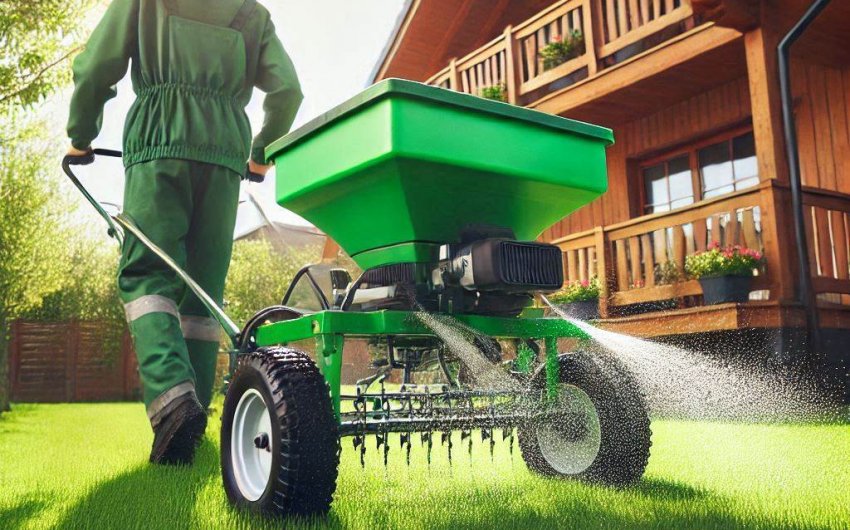
For granular fertilizers, a spreader is essential for even application:
- Broadcast Spreader: Covers a wide area, good for larger lawns. It throws the granules in a wide arc. A broadcast spreader can save a lot of time.
- Drop Spreader: Drops granules straight down, ideal for smaller lawns or for precise application near garden beds to avoid fertilizing unwanted areas. A drop spreader offers more control.
For liquid fertilizers, a hose-end sprayer or a pump sprayer is used. Always read the fertilizer bag or bottle for specific application instructions and spreader settings.
What are the Steps for Applying Granular Fertilizer?
- Read the Label: This is the most crucial step. The fertilizer bag will tell you the recommended application rate and the correct spreader setting for your type of spreader.
- Mow Your Lawn: Mow your lawn a day or two before fertilizing. This ensures the fertilizer reaches the soil and doesn't sit on long grass blades.
- Calibrate Your Spreader: If you haven't used your spreader recently, calibrate it according to the manufacturer's instructions and the fertilizer label.
- Fill the Spreader: Fill the spreader over a hard surface, like a driveway, so any spills can be easily swept up.
- Apply Evenly:
- For broadcast spreaders: Make passes that slightly overlap to ensure even coverage. Go around the perimeter of your lawn first, then fill in the middle.
- For drop spreaders: Overlap your passes slightly.
- Avoid applying too much in one spot or missing areas, which can lead to streaks of lighter or darker green.
- Sweep Up Spills: Sweep any fertilizer granules that land on driveways, sidewalks, or patios back onto the lawn. This prevents staining and runoff into storm drains.
- Water In (Usually): Most granular fertilizers need to be watered in immediately after application. This washes the granules off the grass blades and into the soil, where they can start dissolving and providing nutrients to the roots. Check the product label – some slow-release fertilizers might not require immediate watering or are designed to be applied to dry grass.
When Should You Water After Fertilizing?
For most granular fertilizers, especially those with nitrogen, watering immediately after application is crucial.
- It moves the fertilizer down into the soil, where the roots can access it.
- It washes the fertilizer off the grass blades, preventing "burn" from direct contact.
- It activates the fertilizer, starting the nutrient release process.
If rain is expected within 24 hours of applying fertilizer, you might not need to water, but always check the label.
What Are Other Important Lawn Care Practices to Complement Fertilization?
Fertilization is just one piece of the puzzle for a healthy lawn. Other practices work hand-in-hand with feeding to create a truly vibrant yard.
How Does Mowing Affect Lawn Health?
Proper mowing techniques are vital.
- Mow High: Most grass types prefer to be cut at a height of 2.5-3.5 inches or even higher. Taller grass blades promote deeper root growth and help shade out weeds. Never remove more than one-third of the grass blade's height in a single mowing.
- Keep Blades Sharp: Dull mower blades tear the grass, leading to ragged edges that brown and make the lawn susceptible to disease. Sharpen your mower blades regularly.
- Leave Clippings: Unless they are very heavy or clumpy, leave grass clippings on the lawn. They act as a natural fertilizer, returning nitrogen and other nutrients to the soil. This is called "grasscycling."
How Does Watering Affect Lawn Health?
Efficient watering is essential, especially when combined with fertilization.
- Water Deeply and Infrequently: Instead of daily shallow watering, water deeply to encourage roots to grow deeper into the soil. Aim for 1 inch of water per week, either from rain or irrigation.
- Water in the Morning: The best time to water is early morning, before the sun gets too hot. This allows the grass blades to dry off before nightfall, reducing the risk of fungal diseases.
- Avoid Overwatering: Too much water can lead to root rot and nutrient leaching.
A rain gauge can help you keep track of how much water your lawn is receiving.
Why is Aeration Important for Lawn Health?
Aeration involves creating small holes in the lawn to relieve soil compaction.
- Benefits: It allows water, air, and nutrients (including fertilizer) to penetrate the soil more effectively, reaching the grass roots. This promotes deeper root growth and improves drainage.
- Timing: The best time to aerate cool-season grasses is in early fall or early spring. For warm-season grasses, aerate in late spring or early summer when they are actively growing.
- Equipment: You can rent a lawn aerator from a home improvement store.
Aeration is particularly beneficial for high-traffic areas or lawns with heavy clay soil.
What is Dethatching and When is it Necessary?
Thatch is a layer of dead grass stems, roots, and other organic matter that builds up between the green grass blades and the soil surface. A thin layer (less than half an inch) is beneficial, but a thick layer can prevent water, air, and nutrients from reaching the soil.
- When to Dethatch: If your thatch layer is more than half an inch thick, you should consider dethatching.
- Timing: For cool-season grasses, dethatch in early fall or early spring. For warm-season grasses, dethatch in late spring or early summer.
- Equipment: You can use a dethatching rake for small areas or rent a power dethatcher for larger lawns.
When Should You Overseed Your Lawn?
Overseeding involves spreading new grass seed over an existing lawn to fill in bare spots, increase density, and improve the overall health and appearance of the turf.
- Timing: For cool-season grasses, the best time to overseed is in early fall (late August to October). This gives the new seedlings plenty of time to establish before winter. For warm-season grasses, overseed in late spring to early summer when soil temperatures are consistently warm.
- Preparation: Before overseeding, mow your lawn low, dethatch if necessary, and aerate to ensure good seed-to-soil contact.
- Fertilizer and Overseeding: If you are overseeding, use a "starter fertilizer" that is high in phosphorus, which promotes root development in new seedlings. Avoid using any weed and feed products with pre-emergent herbicides, as they will prevent your new grass seeds from germinating. A lawn repair mix often includes seed and starter fertilizer.
Can You Fertilize a Lawn in Winter?
Generally, fertilizing a lawn in winter is not recommended, especially if the grass is dormant or the ground is frozen.
Fertilizing Cool-Season Grass in Winter
For cool-season grasses, any fertilizer applied during true winter dormancy (when the grass is brown and not actively growing) will likely sit on the surface, be wasted, or run off. The roots aren't actively absorbing nutrients. The last application for cool-season grass should be a "winterizer" in late fall, just before the ground freezes, to help with root development and nutrient storage for spring. Applying nitrogen when the ground is frozen can lead to runoff and pollution.
Fertilizing Warm-Season Grass in Winter
Warm-season grasses go dormant and turn brown during the winter months. Fertilizing them during this period is not only ineffective but can also harm the lawn. They are not actively growing and cannot use the nutrients. Any fertilizer applied will simply be wasted, potentially contributing to nutrient runoff. It's best to wait until they start to green up and actively grow in late spring before resuming fertilization.
What Are Common Mistakes to Avoid When Fertilizing a Lawn?
Even with the best intentions, it's easy to make mistakes when fertilizing. Avoiding these common pitfalls will help you achieve a healthier lawn.
Over-Fertilizing
This is one of the most common and damaging mistakes. Applying too much fertilizer can "burn" the lawn, turning it yellow or brown, and can also lead to excessive, weak growth. Always follow the recommended application rates on the fertilizer bag precisely. When in doubt, apply less rather than more.
Fertilizing at the Wrong Time
As discussed, applying fertilizer outside of the optimal growth periods for your specific grass type can be ineffective or even harmful. Fertilizing dormant grass, or applying high nitrogen in summer heat to cool-season grass, are examples of poor timing.
Uneven Application
Using a faulty spreader or applying fertilizer by hand can lead to uneven coverage, resulting in patchy growth with dark and light green stripes or spots. Invest in a good quality spreader and learn how to use it correctly. Overlapping your passes slightly helps ensure even coverage.
Not Watering After Granular Application
For most granular fertilizers, not watering them in immediately after application can lead to the granules sitting on the grass blades and causing fertilizer burn. It also prevents the nutrients from reaching the roots. Always check the label, but assume you'll need to water unless otherwise specified.
Fertilizing a Dry or Stressed Lawn
Applying fertilizer to a severely stressed lawn (e.g., during a drought or when grass is already showing signs of disease or pest infestation) can actually worsen its condition. Address the underlying stress first (e.g., deep watering, pest control) before fertilizing. It's often best to water a dry lawn a day or two before fertilizing.
Ignoring Soil pH
A lawn's ability to absorb nutrients is heavily influenced by soil pH. If your pH is off, even the best fertilizer won't be fully effective. A soil test will reveal your pH, and you can amend it with lime (to raise pH) or sulfur (to lower pH) as needed.
Using the Wrong Type of Fertilizer
Not all fertilizers are created equal. Using a general-purpose fertilizer when your lawn needs a specific nutrient blend (e.g., high phosphorus for new seeding or high potassium for winterization) can be less effective. Refer to your soil test results and grass type.
Forgetting About Weed Control
While fertilization strengthens your lawn to naturally fight weeds, a severely weedy lawn may need direct weed control. Applying a pre-emergent herbicide at the right time (early spring for cool-season, late spring for warm-season) can stop weeds before they sprout. Post-emergent products tackle existing weeds. Do not confuse the timing of a weed and feed product with your ideal fertilizer schedule.
By understanding your grass type, the optimal growing seasons, and following these guidelines, you'll be well on your way to achieving a vibrant, healthy lawn that's the envy of the neighborhood. Remember, a thriving lawn is a long-term project, and consistent, correct care is the key to success.