
Aquaponic Plants: How to Care For a Sundew Plant?
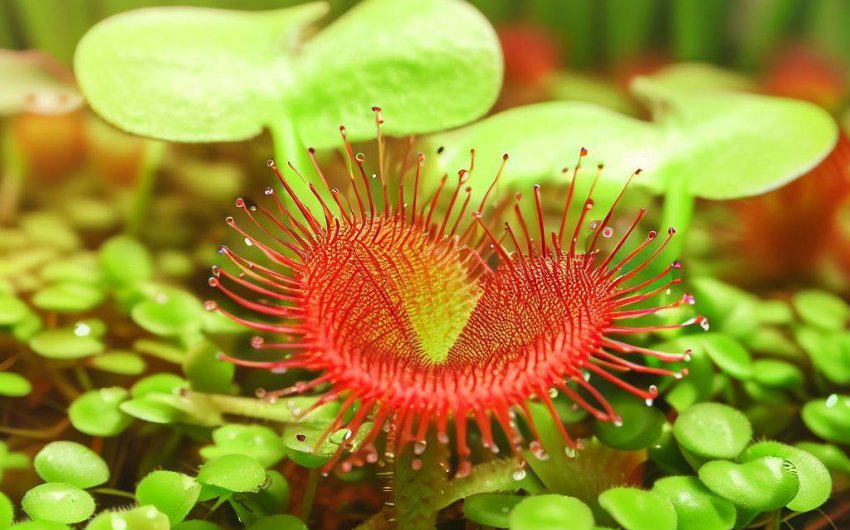
To care for a sundew plant, a fascinating carnivorous plant, provide it with abundant bright, direct sunlight, use only distilled, rainwater, or reverse osmosis water, and plant it in a nutrient-poor, acidic substrate like sphagnum peat moss and perlite. Ensure constant moisture through the tray method and maintain high humidity.
What is a sundew plant and why are they so unique?
Sundew plants, belonging to the genus Drosera, are captivating carnivorous plants famous for their glittering, jewel-like leaves covered in sticky, tentacle-like glands. These glands secrete a sweet, glue-like mucilage that attracts, traps, and digests small insects, providing the sundew with essential nutrients it cannot get from its naturally poor soil environment. Their unique hunting mechanism and diverse forms make them truly unique and highly sought-after additions to any plant collection.
What are the distinctive features of sundew plants?
Sundews are easily identified by their sparkling, dewy appearance and remarkable adaptations.
- Glistening Tentacles (Dews): This is their most iconic feature. The leaves are covered in numerous slender tentacles, each tipped with a droplet of sticky, clear mucilage that resembles morning dew or sparkling jewels. This mucilage is both an attractant (due to its sugary composition) and a powerful adhesive trap for insects.
- Carnivorous Nature: Sundews are true carnivorous plants. Once an insect lands on the sticky tentacles, it becomes ensnared. The tentacles then slowly curl inward, further entangling the prey and allowing digestive enzymes to break down the insect's soft tissues.
- Diverse Forms: The genus Drosera is incredibly diverse, with over 200 species found worldwide. They come in a wide range of shapes and sizes:
- Rosetted Sundews: Grow in a flat, circular pattern close to the ground (e.g., Drosera capensis - Cape Sundew, Drosera spatulata).
- Upright/Erect Sundews: Have longer stems with leaves arranged along them.
- Petiolaris Complex Sundews: Specialized for hot, arid conditions with dense, fuzzy growth to protect against desiccation.
- Pygmy Sundews: Tiny, miniature species (often less than an inch across) that produce gemmae for vegetative reproduction.
- Tuberous Sundews: Native to Australia, they go dormant during dry summers, surviving as underground tubers.
- Small Flowers: Sundews typically produce small, often delicate flowers on tall stalks, usually white, pink, or red. The flower stalk is often positioned far above the leaves to avoid trapping pollinators.
- Bright Colors: Many species develop vibrant red, pink, or orange hues in bright sunlight, adding to their ornamental appeal.
Where do sundew plants naturally grow?
Sundews are remarkably widespread, found on every continent except Antarctica, but always in specific types of habitats.
- Nutrient-Poor, Acidic Soils: This is the most consistent feature of their natural habitat. Sundews thrive in boggy, marshy, or sandy environments where the soil is extremely low in nitrogen, phosphorus, and other essential nutrients. This nutrient-poor condition is precisely why they evolved carnivory.
- High Humidity and Consistent Moisture: They are typically found in areas with consistently high humidity and constantly wet or damp soil, such as:
- Peat bogs
- Swamps
- Seepage slopes
- Sandy wetlands
- Full Sun to Partial Sun: Most species prefer bright conditions, often growing in open, sunny clearings within their boggy habitats.
- Diverse Geographic Range: While many well-known species are from South Africa (like the Cape Sundew), Australia has an astonishing diversity of sundews, as do North America, Europe, and Asia.
Understanding these natural conditions is key to successfully cultivating sundew plants as houseplants or in a specialized garden setup like an aquaponic system.
Can sundew plants be grown in aquaponics or hydroponics?
The concept of growing carnivorous plants, which naturally thrive in nutrient-poor conditions, within a nutrient-rich system like aquaponics or hydroponics seems contradictory. However, with careful consideration and adaptation, it is possible to integrate certain sundew species into these advanced growing methods, though it presents unique challenges.
What are the challenges of growing sundews in aquaponics?
Integrating sundews into a traditional aquaponics system, which provides dissolved nutrients from fish waste, faces several inherent challenges.
- Nutrient Sensitivity: This is the primary hurdle. Sundews are adapted to nutrient-poor (oligotrophic) environments. In aquaponics, the water is naturally rich in nitrogen, phosphorus, and potassium from fish effluent.
- Nutrient Burn: Direct exposure to high levels of these dissolved nutrients can severely damage or kill sundews, causing leaf blackening, stunted growth, and eventual death.
- Reduced Carnivory: With an abundant supply of root-absorbed nutrients, sundews may lose their desire or ability to produce sticky dew, making them less effective at catching insects and negating their unique feature.
- Substrate Mismatch: Traditional aquaponics uses inert media like clay pebbles (hydroton) or rockwool. Sundews require an acidic, peat-based substrate (sphagnum peat moss and perlite/sand) to thrive.
- pH Requirements: Most aquaponics systems maintain a pH suitable for fish and leafy greens (typically 6.0-7.0), which can be too high for the distinctly acidic (pH 4.0-5.5) preference of many sundews.
- Water Quality: While aquaponics uses circulating water, it's not the same as the pure, mineral-free water (distilled, RO, rainwater) that sundews absolutely require. The dissolved salts in aquaponics water can accumulate and harm sundews.
How can I adapt aquaponics for sundew plants?
While direct integration is difficult, some adaptations or specialized setups can make it feasible.
- Separate System/Dedicated Zone: The most practical approach is to create a separate, isolated system or a dedicated zone within a larger aquaponics setup that specifically caters to sundew needs.
- Indirect Absorption: You could have aquaponics water feeding a reservoir that then, in turn, slowly wicks to the sundew pots, diluting nutrients significantly.
- Purified Water: Still need to use purified water (distilled, RO, rainwater) for the sundew zone, rather than direct aquaponics water.
- Nutrient-Poor Media in an Aquaponics Bed:
- Instead of typical aquaponics media, fill a portion of a grow bed with a mix of sphagnum peat moss and perlite/sand.
- Bottom Watering/Wicking: Set up the system so that the sundews are in pots that sit in trays of pure, mineral-free water, and the aquaponics water only periodically floods the larger grow bed around these trays, providing some ambient humidity but not direct nutrient contact with the sundew roots.
- Fog/Misting System with Pure Water: Use a fogger or mister within an enclosed grow area to provide high humidity with pure water. This helps the sundews absorb atmospheric moisture without direct root contact with nutrient-rich aquaponics water.
- Careful Nutrient Monitoring: If attempting direct integration, constantly monitor nutrient levels. Aim for very low levels of NPK, far below what is typical for leafy greens. This is a highly experimental approach.
Can sundews be grown hydroponically?
Hydroponics, which involves growing plants in inert media with nutrient solutions, faces similar challenges to aquaponics for sundews.
- Nutrient Solution: Traditional hydroponic nutrient solutions are far too concentrated and rich for sundews.
- Pure Water Hydroponics: The most viable method would be to grow sundews hydroponically using pure, mineral-free water only, with the occasional very dilute, specialized carnivorous plant fertilizer (applied foliarly or very sparingly to the roots). This essentially treats them like "air plants" getting all their nutrients from prey.
- Media: Still need an acidic, inert medium like long-fiber sphagnum moss.
In general, traditional potting with the tray method using appropriate soil and water is the easiest and most successful way to grow sundews. Aquaponics/hydroponics with sundews are advanced, experimental, and require significant modification to prevent nutrient overload.
What are the ideal light and humidity conditions for sundew plants?
Providing the right light and humidity is absolutely critical for the health, vibrant coloration, and dew production of sundew plants. These conditions directly replicate their boggy, open habitat and are paramount for successful cultivation.
How much sunlight do sundew plants need?
Sunlight is a key ingredient for sundew health and their striking appearance.
- Abundant, Direct Sunlight is Ideal: Most sundew species thrive in bright, direct sunlight. Aim for at least 6-8 hours of direct sun per day. This intensity helps them develop their vibrant red and orange coloration and encourages prolific dew production.
- South-Facing Window: Indoors, a south-facing window (in the Northern Hemisphere) that receives direct sun for a significant portion of the day is often the best spot.
- Grow Lights are Highly Recommended: If natural light is insufficient, especially during winter months or in less sunny locations, strong grow lights are highly recommended. Full-spectrum LED grow lights positioned relatively close to the plants can provide the intensity they need. Without enough light, sundews will become pale, leggy, and produce very little sticky dew.
- Avoid Deep Shade: Deep shade will quickly lead to a colorless, dew-less, and ultimately declining sundew.
- Acclimatization: If moving a sundew from lower light to brighter conditions, do so gradually over 1-2 weeks to prevent scorching.
What humidity levels do sundew plants prefer?
High humidity is a non-negotiable requirement for most sundew species, directly influencing their ability to produce dew.
- High Humidity is Essential: Sundews naturally grow in boggy, marshy environments with consistently high relative humidity, typically 60% or higher. This keeps their mucilage sticky and prevents the plants from drying out.
- Signs of Low Humidity: In dry air, the mucilage droplets on the tentacles will dry up, leading to a lack of dew production. Leaves may also brown at the tips or edges.
- How to Provide Humidity Indoors:
- Terrariums/Closed Environments: Small sundews, or those more sensitive to dry air, thrive in closed or partially closed terrariums. Ensure good air circulation within any enclosed space to prevent mold.
- Humidifier: Place a plant humidifier near your sundews to maintain consistent high humidity.
- Pebble Tray (Less Effective): While a pebble tray with water can offer a slight boost in humidity, it's often not sufficient for sundews in very dry indoor environments.
- Misting (Limited Usefulness): Misting can provide a temporary spike in humidity, but it quickly evaporates and is generally less effective than a humidifier or enclosed environment for maintaining consistent high levels.
- Air Circulation: While high humidity is important, good air circulation is also crucial to prevent stagnant, overly damp conditions that can lead to fungal issues.
By providing strong, direct light and maintaining consistently high humidity, you are replicating the crucial environmental conditions that allow sundew plants to thrive, display their vibrant colors, and effectively trap their insect prey.
How do I water and fertilize sundew plants?
Watering and "fertilizing" sundew plants are entirely different from conventional plant care. Due to their carnivorous nature and bog-dwelling origins, they have very specific and strict requirements for water purity and nutrient intake.
What kind of water should I use for sundew plants?
The type of water you use is the most critical factor for sundew survival. This cannot be emphasized enough.
- Pure Water Only: Sundews require water that is extremely low in dissolved mineral salts and contaminants. You must use only:
- Distilled Water: Widely available at grocery stores.
- Rainwater: Collected directly from the sky, free from contaminants.
- Reverse Osmosis (RO) Water: Produced by an RO filtration system.
- Why Tap Water is Harmful: Regular tap water, even if it tastes fine to us, contains dissolved minerals (calcium, magnesium, chlorine, fluoride, etc.). These minerals accumulate in the sundew's nutrient-poor soil and eventually poison the roots, leading to leaf blackening, stunted growth, and death.
- TDS Meter: If you're unsure about your water source, you can test its purity with a TDS (Total Dissolved Solids) meter. The reading should be 50 ppm (parts per million) or less for carnivorous plants. Ideally, aim for below 25 ppm.
How often should I water sundew plants (Tray Method)?
Sundews require constant moisture, mimicking their boggy habitat.
- The Tray Method: This is the preferred and easiest way to water most sundews.
- Place the potted sundew in a tray or saucer.
- Fill the tray with 1/2 to 1 inch of pure water (distilled, RO, or rainwater).
- Allow the pot to sit in this water continuously. The sundew's specialized substrate will wick the water up to the roots, keeping it constantly moist.
- Replenishing: Replenish the water in the tray as it evaporates or is absorbed. Don't let the tray completely dry out for prolonged periods.
- Flushing (Optional): Occasionally (e.g., once a month or every few months), you can let the tray dry out for a day or two, then top water with pure water (allowing it to drain through) before refilling the tray. This helps flush out any potential mineral buildup in the substrate.
- Dormancy: Some temperate sundew species (those that experience a cold winter) may require reduced watering during their winter dormancy period, but most tropical and subtropical sundews prefer year-round moisture.
Do sundew plants need fertilizer?
This is where the carnivorous nature of sundews truly comes into play.
- Absolutely NO Soil Fertilizer: Never apply conventional granular or liquid fertilizer to the soil of a sundew plant. Their roots are adapted to poor soils and will be severely burned by the high salt content of fertilizers, leading to rapid death.
- Nutrients from Prey: Sundews get their supplemental nutrients (especially nitrogen and phosphorus) by digesting insects. Their roots absorb water, but rely on their leaves to capture and digest prey for the "food" part of their diet.
- Foliar Feeding (Very Sparingly): For sundews that are not catching enough insects (e.g., indoors), you can very sparingly provide a highly diluted foliar feed specifically formulated for carnivorous plants or orchids (e.g., Maxsea 16-16-16 at 1/8 to 1/4 strength). Apply it directly to the leaves, not the soil, once every 1-2 months during the growing season. This should be a last resort.
- Feeding Insects (Optional): If your sundew isn't catching its own, you can manually feed it tiny insects (fruit flies, small ants, rehydrated bloodworms) once a month during the growing season. Only feed one or two tentacles on one or two leaves at a time. Do not overfeed.
By strictly adhering to these pure water requirements and understanding their unique nutrient acquisition, you can successfully nurture your sundew plants without the risk of fatal fertilizer burn or mineral poisoning.
What is the best potting mix and repotting schedule for sundew plants?
Using the correct potting mix is as critical as using pure water for sundew plants. Their specialized root systems are adapted to extremely nutrient-poor, acidic conditions, and anything else will be detrimental. Repotting, though infrequent, helps refresh their environment.
What kind of potting mix is essential for sundew plants?
This is a non-negotiable aspect of sundew care. You cannot use regular potting soil.
- Nutrient-Poor and Acidic: Sundews require a potting mix that is:
- Extremely low in nutrients: Free of conventional fertilizers.
- Acidic: Maintains a low pH (typically 4.0-5.5).
- Well-Aerated and Moisture-Retentive: Holds moisture but allows air to reach the roots.
- Common Mix (Sphagnum Peat Moss and Perlite/Sand): The most common and effective mix is a combination of:
- Long-fibered sphagnum moss or finely milled sphagnum peat moss: This is the base, providing acidity and moisture retention. Ensure it's pure sphagnum peat moss, not "potting mix" that contains added fertilizers or wetting agents.
- Perlite or Horticultural Sand: Mixed in to provide aeration and improve drainage. Use silica sand or horticultural sand, not play sand or builder's sand, which can contain too many minerals.
- Typical Ratios: Common ratios include:
- 1:1 Sphagnum Peat Moss to Perlite
- 2:1 Sphagnum Peat Moss to Perlite
- 1:1:1 Sphagnum Peat Moss to Perlite to Silica Sand
- Avoid:
- Regular Potting Soil: Contains fertilizers and minerals that will kill sundews.
- Compost, Vermiculite (unless specifically low-nutrient), bark chunks (unless fine orchid bark and used in small amounts): These can break down and release nutrients.
- Pre-moisten: Always thoroughly pre-moisten your potting mix with pure water (distilled, RO, or rainwater) before planting.
How often should I repot sundew plants?
Sundews generally don't need frequent repotting.
- Every 1-3 Years: Most sundews benefit from repotting every 1-3 years.
- Signs It Needs Repotting:
- Decline in Health: If the plant appears to be struggling despite optimal care (pure water, light, humidity), it might be due to the breakdown of the potting medium or a buildup of minerals.
- Potting Medium Breakdown: Over time, peat moss can compact and decompose, reducing aeration and drainage.
- Algae or Moss Growth: Excessive algae or moss growth on the surface of the potting mix can indicate the medium is aging or overly saturated.
- Root Bound: Roots filling the pot (less common for sundews, as they have relatively small root systems).
- Timing: The best time to repot is during the sundew's active growing season (typically spring or early summer). Avoid repotting during dormancy (for temperate species).
Step-by-step guide to repotting sundew plants
Repotting is a delicate process to avoid damaging the roots.
- Prepare New Pot and Mix:
- Choose a pot that is only slightly larger than the current one (1-2 inches wider). Sundews don't need huge pots.
- Ensure the pot has drainage holes. Plastic pots are often preferred as they retain moisture better than terracotta, but terracotta can work if you are vigilant with watering.
- Prepare fresh, pre-moistened, appropriate potting mix (sphagnum peat moss/perlite).
- Remove the Plant:
- Gently tip the old pot on its side and carefully ease the sundew out, supporting the crown and roots. Avoid pulling directly on the plant.
- Inspect Roots and Remove Old Media:
- Gently shake off as much of the old potting mix from the roots as possible. Be very careful, as sundew roots can be delicate.
- Inspect the roots for any signs of rot (mushy, black sections) and trim them away with clean, sterile scissors.
- Position in New Pot:
- Place a small layer of fresh potting mix at the bottom of the new pot.
- Position the sundew in the center, ensuring the base of the plant (where leaves emerge) is at the same level as it was in the old pot.
- Backfill and Firm:
- Fill around the roots with fresh potting mix, gently firming it down. Avoid compacting the mix too tightly.
- Water Thoroughly:
- Immediately after repotting, water thoroughly with pure water (distilled, RO, or rainwater) until water drains from the bottom. Then, place the pot in its water tray.
- Resume Care:
- Place the repotted sundew back in its preferred light and humidity conditions. The plant may show some slight shock for a few days, but should recover quickly.
By consistently providing the correct nutrient-poor potting mix and repotting as needed, you ensure your sundew plants have a healthy, stable environment for their delicate root systems.
What are common problems and solutions for sundew plants?
Even with their reputation for being relatively easy carnivorous plants, sundews can encounter problems if their very specific needs aren't met. Recognizing these issues early and knowing how to address them is crucial for keeping your glittering insect traps healthy and vibrant.
Why is my sundew losing its dew or turning pale?
These are common signs that a sundew is not receiving optimal light or humidity.
- Lack of Dew Production: This is the most common and often the first sign of stress.
- Low Humidity (Most Common): In dry air, the mucilage droplets on the tentacles will dry up before they can fully form.
- Solution: Increase humidity immediately. Use a plant humidifier, place in a terrarium, or place on a pebble tray filled with pure water (though a humidifier is best for consistent high levels).
- Insufficient Light: Without enough light, the plant lacks the energy to produce the sticky mucilage.
- Solution: Move to a brighter location with more direct sun, or provide strong grow lights for 6-8+ hours a day.
- Impure Water: Mineral buildup from tap water can clog the plant's system.
- Solution: Flush the pot with pure water and ensure you are only using distilled, RO, or rainwater for all future watering.
- Pests: A severe spider mite infestation can sometimes cause a loss of dew.
- Low Humidity (Most Common): In dry air, the mucilage droplets on the tentacles will dry up before they can fully form.
- Turning Pale or Green (Loss of Coloration): If a sundew that should be red or pink turns a dull green, it's almost always a sign of insufficient light. The vibrant colors are a beneficial "stress" response to strong light.
- Solution: Move to a brighter location with more direct sun, or increase the intensity/duration of your grow lights.
- Leggy Growth (Stretching Out): Long, spindly stems with widely spaced leaves indicate insufficient light.
- Solution: Provide more intense light.
Why are my sundew leaves turning black or mushy?
These are often signs of severe stress, usually related to watering, heat, or nutrients.
- Blackening or Mushy Leaves/Crown (Root Rot/Nutrient Burn/Too Much Heat): This is very serious and can rapidly kill the plant.
- Impure Water/Fertilizer (Most Common Cause of Death): Accumulation of minerals from tap water or any conventional fertilizer applied to the soil will burn the roots and kill the plant.
- Solution: Immediately stop using impure water. Flush the pot thoroughly with copious amounts of pure water. If severe, repot into fresh, pure, carnivorous plant mix. Ensure you never use tap water or conventional fertilizer again.
- Overwatering (in poorly draining media): While sundews like constant moisture, if the substrate itself is too dense or old and becomes truly anaerobic and waterlogged, root rot can occur.
- Solution: Ensure your potting mix is appropriate (peat/perlite). Repot into fresh mix if necessary. Ensure the pot drains into the tray, and the tray isn't so deep that the entire plant is submerged.
- Too Much Heat/Stagnant Air: Especially in very hot, humid, and stagnant conditions (e.g., a sealed terrarium without ventilation), fungal issues or heat stress can cause blackening.
- Solution: Ensure good air circulation (open terrarium occasionally, use small fan). Protect from extreme heat.
- Dormancy (for temperate species): Some temperate sundews form hibernacula (winter buds) and their outer leaves naturally blacken and die back during winter dormancy. This is normal.
- Solution: Understand your specific species' dormancy requirements.
- Impure Water/Fertilizer (Most Common Cause of Death): Accumulation of minerals from tap water or any conventional fertilizer applied to the soil will burn the roots and kill the plant.
What pests commonly affect sundew plants and how do I treat them?
Sundews are generally resistant to many pests due to their sticky dew, but some can still be an issue.
- Aphids: Small, soft-bodied insects that cluster on new growth, often on flower stalks.
- Solution: Gently dab with a cotton swab dipped in rubbing alcohol. Rinse with pure water. Avoid systemic insecticides, as they can be harmful.
- Mealybugs: Appear as small, white, cottony masses in leaf axils.
- Solution: Treat same as aphids.
- Fungus Gnats: Adult fungus gnats are often caught by sundews, but their larvae can feed on the roots if the potting mix is too rich or old.
- Solution: Let the soil surface dry out slightly between waterings (if not using the tray method) or use BTI (Bacillus thuringiensis israelensis) dunks in your tray water.
- Spider Mites (Rare): Can be a problem in very dry conditions.
- Solution: Increase humidity. Gently rinse foliage with pure water.
- Scale: Less common, but can appear as small, hard bumps on stems.
- Solution: Manual removal with a toothpick or alcohol swab.
How do I prevent these problems from happening?
Proactive care is the best defense against sundew problems.
- Use Only Pure Water: This is the absolute golden rule. Distilled, RO, or rainwater for all watering.
- Correct Potting Mix: Always use a nutrient-poor, acidic mix like sphagnum peat moss and perlite/sand.
- Abundant Light: Provide 6-8+ hours of direct sun or strong grow lights.
- High Humidity: Maintain 60%+ humidity consistently.
- Constant Moisture (Tray Method): Keep pots in a tray of pure water.
- Good Air Circulation: Crucial to prevent fungal issues in humid environments.
- Never Fertilize Soil: Let them catch their own food.
- Regular Inspection: Routinely check your plant's leaves and substrate for any early signs of discoloration, pest activity, or changes in dew production.
- Understand Species Specifics: While these are general guidelines, research the specific Drosera species you have, as some may have unique dormancy or cultivation requirements.
By diligently adhering to these specialized care requirements, you can successfully grow and enjoy the mesmerizing beauty of sundew plants, turning them into thriving, glittering additions to your home or garden.