
Balancing Greens and Browns: The Secret Ratio for Perfect Compost
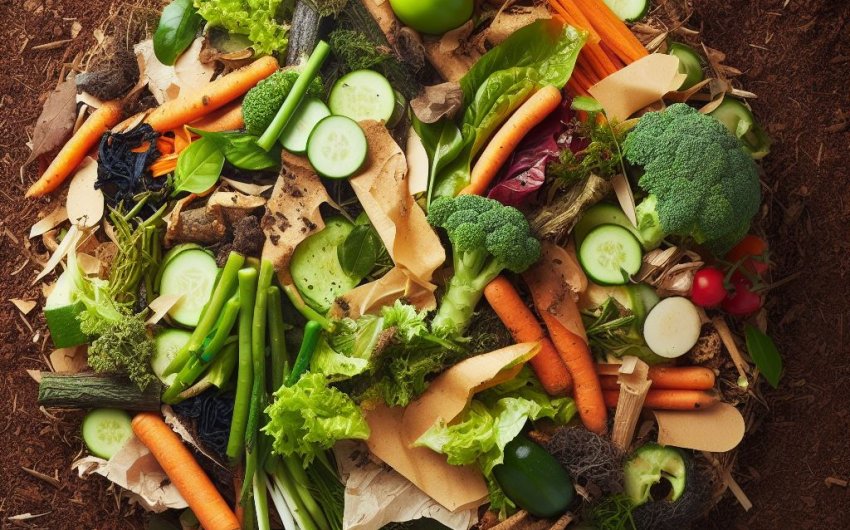
Balancing "greens" and "browns" is the secret ratio for perfect compost, typically aiming for a carbon-to-nitrogen (C:N) ratio of roughly 25-30 parts carbon to 1 part nitrogen. This specific balance provides the ideal "diet" for the microorganisms responsible for decomposition, ensuring a fast-working, odorless, and nutrient-rich compost pile.
What are "greens" and "browns" in composting?
In the world of composting, materials are broadly categorized into "greens" and "browns" based on their primary chemical composition and impact on the decomposition process. Understanding this distinction is fundamental to building a healthy, active compost pile.
What are "green" compost materials?
Green compost materials are typically fresh, moist, and rich in nitrogen. They are the "fuel" for the microorganisms, providing the protein necessary for their growth and multiplication. When added to a compost pile, greens tend to heat it up quickly.
- Examples:
- Kitchen scraps (fruit and vegetable peels, coffee grounds, tea bags)
- Fresh grass clippings
- Fresh plant trimmings (non-diseased)
- Manures (from herbivores like cows, chickens, horses)
What are "brown" compost materials?
Brown compost materials are generally dry, often woody or fibrous, and rich in carbon. They provide the "energy" for the microorganisms and also create bulk and structure within the compost pile, which is essential for aeration.
- Examples:
- Dried leaves
- Straw and hay (weed-free)
- Shredded newspaper and cardboard (non-glossy, non-colored)
- Wood chips and sawdust (in moderation)
- Corn stalks (chopped)
Why is the Carbon-to-Nitrogen (C:N) ratio so important for composting?
The Carbon-to-Nitrogen (C:N) ratio is often referred to as the "secret sauce" of composting because it directly dictates the efficiency and success of the decomposition process. It's the primary nutritional requirement for the vast army of microorganisms that turn your waste into valuable compost.
How does the C:N ratio affect microbial activity?
Microorganisms, like all living things, need a balanced diet.
- Carbon: Provides the energy source for microbes. Without enough carbon, the microbes starve.
- Nitrogen: Provides the protein and building blocks for microbes to grow and reproduce. Without enough nitrogen, the microbial population cannot expand sufficiently to break down materials quickly.
When the C:N ratio is balanced, microorganisms thrive, reproduce rapidly, and efficiently break down organic matter, generating heat in the process.
What happens if the C:N ratio is off?
- Too much nitrogen (too many greens): The pile can become soggy, dense, and quickly run out of oxygen. Anaerobic bacteria take over, leading to foul, ammonia-like odors (excess nitrogen is converted to ammonia gas). Decomposition slows down.
- Too much carbon (too many browns): The pile will be slow to decompose, or it may not heat up at all. Microorganisms don't have enough nitrogen to build their populations efficiently. The process can take a very long time.
What is the ideal Carbon-to-Nitrogen ratio for compost?
The ideal Carbon-to-Nitrogen (C:N) ratio for an active, hot compost pile is generally considered to be between 25:1 and 30:1. This means 25-30 parts carbon for every 1 part nitrogen. While it doesn't need to be exact, aiming for this range ensures the most efficient and odor-free decomposition.
How do you achieve a 25-30:1 C:N ratio in practice?
Since it's difficult to measure carbon and nitrogen content precisely at home, the easiest way to achieve this ratio is by focusing on volume. A general rule of thumb is to aim for:
- 2-3 parts brown materials to 1 part green materials by volume.
For example, if you add one bucket of grass clippings (green), you should add two to three buckets of dry leaves or shredded paper (brown). This proportional layering helps ensure a balanced C:N ratio.
Does the C:N ratio vary by material?
Yes, different materials have vastly different C:N ratios:
| Material Type | Typical C:N Ratio | Category | Impact on Pile (if excess) |
|---|---|---|---|
| Grass Clippings (fresh) | 12-25:1 | Green | Smelly, slimy, anaerobic |
| Coffee Grounds | 20:1 | Green | Good activator, can be too wet |
| Kitchen Scraps | 15-20:1 | Green | Attract pests, get smelly |
| Manure (fresh) | 5-25:1 | Green | Very hot, can be smelly |
| Dry Leaves | 40-80:1 | Brown | Slows decomposition |
| Shredded Newspaper | 170:1 | Brown | Very slow, needs much nitrogen |
| Straw | 40-100:1 | Brown | Slows decomposition |
| Wood Chips/Sawdust | 100-500:1 | Brown | Very slow, can "lock up" nitrogen |
This table shows why balancing is so important. Materials like wood chips have a very high carbon content and need a lot of nitrogen to break down.
How do you effectively layer "greens" and "browns" in a compost pile?
Layering is a fundamental technique for building a balanced compost pile. It ensures good mixing of materials, promotes aeration, and helps maintain the ideal C:N ratio.
What are the steps for layering compost materials?
- Start with browns: Begin your compost pile with a 4-6 inch layer of coarse brown materials (like small twigs or wood chips). This provides good drainage and aeration at the base.
- Add thin layer of greens: Place a 2-4 inch layer of green materials (e.g., kitchen scraps, grass clippings) on top of the browns.
- Add thicker layer of browns: Follow with a 6-12 inch layer of dry brown materials (e.g., shredded leaves, straw) to cover the greens.
- Moisten: Lightly water each layer as you add it, ensuring the materials are damp, like a wrung-out sponge.
- Repeat: Continue alternating layers, always aiming for more browns than greens by volume.
- "Cap" with browns: End the pile with a thick layer of browns on top. This helps retain moisture, deter pests, and prevents odors.
Why is mixing or turning important after layering?
While layering helps, it's not a substitute for turning the compost pile. Turning actively mixes the greens and browns, introduces oxygen, redistributes moisture, and helps generate heat. This constant mixing further refines the C:N balance throughout the pile and ensures uniform decomposition. A compost aerator tool can make turning easier.
What other factors influence successful composting?
Beyond the greens-to-browns ratio, several other factors are crucial for successful and efficient composting. These environmental conditions directly impact the activity of the microorganisms.
How important is moisture for a compost pile?
Moisture is just as critical as the C:N ratio. Microorganisms need water to survive and function, but too much water will drown them.
- Ideal moisture: The compost pile should feel consistently moist, like a wrung-out sponge.
- Too dry: Decomposition will slow down or stop completely.
- Too wet: Leads to anaerobic conditions, foul odors, and slowed decomposition.
How do you manage moisture in a compost pile?
- Watering: If the pile is dry, add water as you turn it.
- Covering: In very rainy climates, cover the pile with a tarp to prevent it from becoming waterlogged. In dry climates, cover to retain moisture.
- Balancing: Add dry browns if the pile is too wet, or wet greens if it's too dry.
Why is aeration so important for decomposition?
Aeration (oxygen) is vital for aerobic microorganisms, which are the most efficient and odor-free decomposers.
- Lack of air: Leads to anaerobic conditions, slower decomposition, and unpleasant smells.
- Good airflow: Encourages hot, fast composting.
How do you provide adequate aeration?
- Turning: The most effective way to introduce oxygen.
- Bulking agents: Include coarse brown materials like straw, wood chips, or loosely crumpled cardboard to create air pockets.
- Pile size: A pile that is too small or too large can have aeration issues. A 3x3x3-foot pile is ideal for generating and retaining heat and air.
What is the role of temperature in composting?
Temperature indicates microbial activity. A hot compost pile (130-160°F or 54-71°C) means decomposition is active and fast, and it can kill weed seeds and pathogens.
- Too low: The pile is either too dry, too small, or has an incorrect C:N ratio.
- Too high (over 160°F): Can kill beneficial microbes. Turn the pile to cool it down and introduce more browns.
- Monitoring: A compost thermometer can help you track internal temperatures.
What are common compost problems and how to fix them?
Troubleshooting your compost pile usually comes down to re-evaluating the greens-to-browns ratio, moisture, and aeration. Most problems have straightforward solutions.
Why does my compost pile smell like ammonia or rotten eggs?
- Problem: Too much nitrogen (greens) and/or not enough oxygen (too wet/compacted).
- Fix: Turn the pile thoroughly to aerate. Add a significant amount of dry, carbon-rich brown materials (shredded leaves, straw, newspaper).
Why isn't my compost pile heating up?
- Problem: Too much carbon (browns), too little nitrogen (greens), insufficient moisture, or the pile is too small.
- Fix: Add more green materials (kitchen scraps, fresh grass clippings) and moisten the pile. Ensure the pile is at least 3x3x3 feet. Turn it to mix.
Why are there pests (e.g., fruit flies, rodents) in my compost pile?
- Problem: Exposed food scraps, meat/dairy/oily foods, or an open compost bin.
- Fix: Remove forbidden items. Bury all kitchen scraps deep within the pile. Ensure the pile is capped with browns. Use an enclosed pest-proof compost bin if necessary.
Why is my compost pile too dry?
- Problem: Not enough moist materials, or too much exposure to sun/wind.
- Fix: Add more green, moist kitchen scraps or dampen with water while turning. Cover the pile.
Why is my compost pile too wet?
- Problem: Too many wet greens, not enough dry browns, or too much rain exposure.
- Fix: Turn the pile to aerate. Add plenty of dry brown materials. Cover the pile to prevent further rain saturation.
Balancing greens and browns is truly the secret ratio for perfect compost, establishing the fundamental conditions for microbial life to flourish. By understanding the optimal carbon-to-nitrogen ratio, implementing effective layering techniques, and diligently managing moisture, aeration, and temperature, you can transform your organic waste into a rich, nutrient-dense "black gold" that will significantly enhance the health and productivity of your garden.