
Best Flowers for Attracting Bees and Pollinators to Your Garden
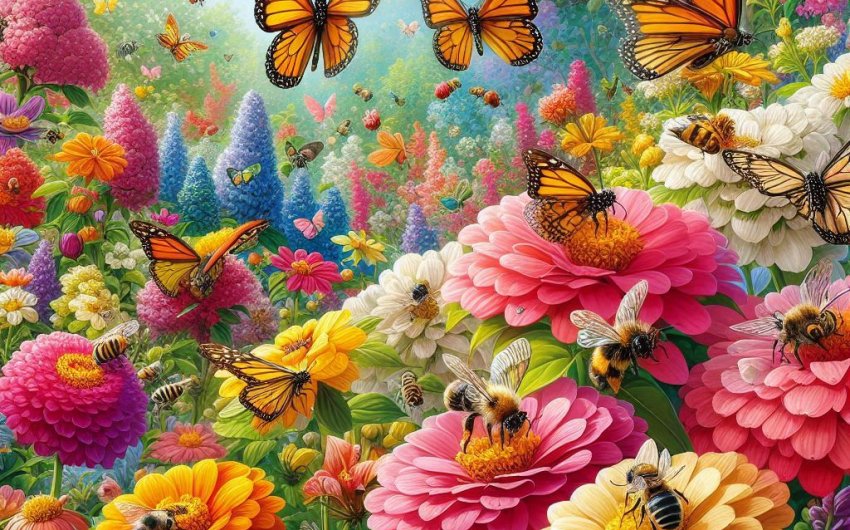
Creating a garden that hums with life is incredibly rewarding, and it starts with choosing the right plants. If you're wondering about the best flowers for attracting bees and pollinators, you're on the right track to fostering a healthy ecosystem right in your backyard. Pollinators, including bees, butterflies, hummingbirds, and more, are vital for the reproduction of many plants, including a significant portion of the food we eat. This comprehensive guide will help you select and grow a diverse array of plants that will turn your garden into a buzzing, vibrant haven for these essential creatures.
Why Are Pollinators So Important?
Pollinators are the unsung heroes of our environment and food supply. They facilitate the movement of pollen from one flower to another, enabling plants to produce seeds and fruits. Without them, our world would look very different, and our dinner plates would be much emptier.
What vital roles do pollinators play?
- Food Production: An estimated 75% of all flowering plants on Earth, and nearly 35% of the world's food crops, depend on animal pollinators to reproduce. This includes staples like apples, almonds, blueberries, coffee, and chocolate.
- Ecosystem Health: Pollinators support the reproduction of wild plants, which in turn provide food and shelter for other wildlife, contributing to biodiversity and healthy ecosystems.
- Biodiversity: By helping plants reproduce, pollinators contribute to the genetic diversity of plant populations, making them more resilient to pests, diseases, and climate change.
- Economic Impact: The value of pollination services to agriculture is enormous, estimated to be billions of dollars globally each year.
Why are pollinators in decline?
Sadly, pollinator populations worldwide are facing significant threats, leading to their decline. Understanding these threats helps us appreciate why creating pollinator-friendly gardens is so crucial.
- Habitat Loss: Urbanization and agricultural expansion reduce natural areas where pollinators find food and shelter.
- Pesticide Use: Insecticides, especially neonicotinoids, can directly harm bees and other pollinators, impairing their navigation, foraging, and reproduction.
- Diseases and Parasites: Pests like the Varroa mite devastate bee colonies.
- Climate Change: Changes in temperature and rainfall patterns can disrupt the delicate timing between plant blooming cycles and pollinator emergence.
- Monoculture Farming: Large areas planted with a single crop reduce the diversity of food sources available to pollinators throughout the year.
By planting the best flowers for attracting bees and pollinators, you are directly contributing to their survival and the health of our planet.
What Makes a Flower Attractive to Pollinators?
Not all flowers are created equal when it comes to attracting pollinators. Bees, butterflies, and hummingbirds have specific preferences based on their foraging needs and physical characteristics. Understanding these preferences is key to selecting the best flowers for attracting bees and pollinators.
Key features that attract pollinators:
- Flower Shape:
- Flat, open flowers: Ideal for bees with shorter tongues (like solitary bees) and butterflies to land on and easily access nectar and pollen. Examples: daisies, coneflowers.
- Tube-shaped flowers: Perfect for pollinators with long tongues, like hummingbirds (who also prefer red) and some butterflies. Examples: foxglove, bee balm.
- Clusters of small flowers: Provide many individual blooms in one convenient spot, great for bees and butterflies who can gather a lot of nectar quickly. Examples: sedum, yarrow.
- Flower Color:
- Bees: Highly attracted to blue, purple, violet, and yellow. They can also see ultraviolet patterns that are invisible to humans. They generally don't see red as a distinct color.
- Butterflies: Attracted to bright colors like red, orange, yellow, pink, and purple.
- Hummingbirds: Strongly drawn to red, orange, and pink.
- Scent: Many flowers release fragrances that guide pollinators to their nectar and pollen rewards. Bees are particularly adept at detecting sweet scents.
- Nectar and Pollen Availability: The primary reward for pollinators. Flowers rich in both provide essential energy (nectar) and protein (pollen).
- Bloom Time: A diverse garden will offer blooms throughout the entire growing season, providing a continuous food source from early spring to late fall.
- Native Plants: Often the best flowers for attracting bees and pollinators because they are co-evolved with local pollinators, providing exactly what they need. They are also adapted to local conditions, requiring less water and care once established.
What Are the Best Flowers for Attracting Bees?
Bees are incredibly diverse, from tiny native bees to large bumblebees, each with slightly different preferences. However, a common thread among the best flowers for attracting bees is abundant pollen and nectar, often in shades of blue, purple, yellow, and white, with open or accessible flower shapes.
Top Flowers for Bees:
- Lavender (Lavandula spp.):
- Why it's great: Highly aromatic, rich in nectar, and loved by honeybees, bumblebees, and various native bees. Its purple flowers are a bee magnet.
- Care tips: Full sun, well-draining soil. Drought-tolerant once established.
- Bee Balm (Monarda spp.):
- Why it's great: As its name suggests, it's a bee favorite. Its tubular flowers are perfect for bees, and the nectar is abundant. Also attracts hummingbirds and butterflies.
- Care tips: Full sun to partial shade, moist soil. Can be susceptible to powdery mildew in humid conditions; choose resistant varieties.
- Coneflower (Echinacea purpurea):
- Why it's great: Iconic daisy-like flowers with a prominent central cone packed with pollen. Attracts many types of bees, especially bumblebees, and also butterflies.
- Care tips: Full sun, well-draining soil. Drought-tolerant. Deadhead for more blooms, or leave seeds for birds.
- Aster (Symphyotrichum spp.):
- Why it's great: Crucial late-season bloomer, providing nectar and pollen when other sources are scarce. Its small, daisy-like flowers come in shades of purple, blue, and white.
- Care tips: Full sun, well-draining soil. Many varieties are native and very hardy.
- Sunflower (Helianthus annuus):
- Why it's great: A giant beacon of nectar and pollen. Each "flower" is actually hundreds of tiny florets, providing a massive food source for bees.
- Care tips: Full sun, well-draining soil. Can grow very tall; stake if needed.
- Zinnia (Zinnia elegans):
- Why it's great: Easy to grow, long blooming, and available in many bright colors. Choose single-petal varieties, as double-petal types can make it harder for pollinators to access nectar.
- Care tips: Full sun, well-draining soil. Deadhead regularly for continuous blooms.
- Sedum (Stonecrop) (Hylotelephium spectabile):
- Why it's great: A fantastic late-season food source. Its clusters of tiny flowers are packed with nectar and attract bees and butterflies in droves.
- Care tips: Full sun, very drought-tolerant, well-draining soil.
- Clover (Trifolium spp.):
- Why it's great: Often considered a "weed," but it's a powerhouse for bees. White and red clover are excellent sources of nectar and pollen.
- Care tips: Can be incorporated into lawns or used as a groundcover. Tolerates a range of soils.
- Borage (Borago officinalis):
- Why it's great: A prolific bloomer with beautiful blue, star-shaped flowers that bees adore. The flowers and young leaves are also edible.
- Care tips: Full sun, self-seeds readily, easy to grow.
- Catmint (Nepeta spp.):
- Why it's great: Drought-tolerant and very low maintenance, producing a long season of lavender-blue flowers that are incredibly attractive to bees.
- Care tips: Full sun, well-draining soil. Shear back after first bloom for a second flush.
What Are the Best Flowers for Attracting Butterflies?
Butterflies are drawn to brightly colored flowers with flat landing pads or long, tubular shapes that can accommodate their proboscis (tongue). When seeking the best flowers for attracting bees and pollinators, remember that butterflies have specific needs for both adult nectar sources and larval host plants.
Top Flowers for Butterflies:
- Milkweed (Asclepias spp.):
- Why it's great: Essential for Monarch butterflies, as it's their only host plant for caterpillars. Also provides nectar for many other butterfly species. Choose native varieties for your region.
- Care tips: Full sun, well-draining soil. Some varieties can be aggressive spreaders.
- Lantana (Lantana camara):
- Why it's great: Clusters of vibrant, multi-colored flowers that are a nectar magnet for butterflies. Blooms continuously from spring to fall.
- Care tips: Full sun, well-draining soil. Drought-tolerant. Can be invasive in warm climates, so choose sterile varieties or grow in containers.
- Purple Coneflower (Echinacea purpurea):
- Why it's great: As mentioned for bees, its large, flat surface and prominent cone make it a popular landing and feeding spot for various butterflies.
- Care tips: Full sun, well-draining soil.
- Phlox (Phlox paniculata - Tall Garden Phlox):
- Why it's great: Produces large clusters of fragrant flowers in mid-to-late summer, providing a significant nectar source. Attracts many butterfly species.
- Care tips: Full sun to partial shade, moist, fertile soil. Good air circulation helps prevent powdery mildew.
- Butterfly Bush (Buddleja davidii):
- Why it's great: Lives up to its name, attracting swarms of butterflies with its long, fragrant flower spikes. Choose sterile or native varieties to prevent invasiveness in some regions.
- Care tips: Full sun, well-draining soil. Prune hard in spring for best blooms.
- Zinnia (Zinnia elegans):
- Why it's great: Bright, cheerful colors and a long blooming season make them irresistible to butterflies. Again, single-petal varieties are best.
- Care tips: Full sun, well-draining soil.
- Cosmos (Cosmos bipinnatus):
- Why it's great: Easy to grow from seed, producing delicate, daisy-like flowers on tall stems. A favorite of many butterfly species, especially Painted Ladies.
- Care tips: Full sun, tolerates poor soil. Deadhead for more blooms.
- Blazing Star (Liatris spicata):
- Why it's great: Tall, spiky purple flowers bloom from the top down, attracting a wide range of butterflies, including monarchs and swallowtails.
- Care tips: Full sun, well-draining soil. Drought-tolerant once established.
- Penta (Penta lanceolata):
- Why it's great: Clusters of small, star-shaped flowers that are highly attractive to butterflies and hummingbirds. Blooms prolifically in warm weather.
- Care tips: Full sun, regular water, performs well in containers in cooler climates.
- Coreopsis (Tickseed) (Coreopsis spp.):
- Why it's great: Cheerful yellow, red, or pink daisy-like flowers that bloom for a long season and are a good nectar source for smaller butterflies.
- Care tips: Full sun, well-draining soil. Deadhead for continuous bloom.
What Are the Best Flowers for Attracting Hummingbirds?
Hummingbirds are drawn to specific flower characteristics: bright, tubular, nectar-rich blooms, often in shades of red, orange, and pink. When considering the best flowers for attracting bees and pollinators, don't forget these aerial acrobats!
Top Flowers for Hummingbirds:
- Bee Balm (Monarda didyma):
- Why it's great: Its vibrant red or pink tubular flowers are perfectly shaped for hummingbird bills and are bursting with nectar.
- Care tips: Full sun to partial shade, moist soil.
- Cardinal Flower (Lobelia cardinalis):
- Why it's great: Stunning spikes of bright red, tubular flowers that are an absolute hummingbird magnet. A North American native.
- Care tips: Full sun to partial shade, prefers consistently moist to wet soil.
- Trumpet Vine (Campsis radicans):
- Why it's great: Produces abundant large, trumpet-shaped orange or red flowers. Can be vigorous, so plan its location carefully.
- Care tips: Full sun, adaptable to many soil types. Requires sturdy support.
- Salvia (Salvia spp.):
- Why it's great: Many varieties of salvia, especially the red and purple ones, have tubular flowers that are irresistible to hummingbirds. Long blooming season.
- Care tips: Full sun, well-draining soil. Drought-tolerant once established.
- Bleeding Heart Vine (Clerodendrum thomsoniae):
- Why it's great: A tropical vine with striking red and white flowers that bloom almost year-round in warm climates, drawing in hummingbirds.
- Care tips: Full sun to partial shade, moist, well-draining soil.
- Columbine (Aquilegia spp.):
- Why it's great: Unique spurred flowers in various colors provide nectar to hummingbirds, particularly early in the season.
- Care tips: Partial shade, well-draining soil.
- Weigela (Weigela florida):
- Why it's great: A deciduous shrub with trumpet-shaped flowers, often pink or red, that are popular with hummingbirds in spring.
- Care tips: Full sun, well-draining soil.
- Honeysuckle (Native varieties like Lonicera sempervirens):
- Why it's great: Tubular, fragrant flowers (especially the native non-invasive species) are a top pick for hummingbirds.
- Care tips: Full sun to partial shade, provide support for climbing varieties. Avoid invasive non-native types.
- Impatiens (New Guinea Impatiens) (Impatiens hawkeri):
- Why it's great: Brightly colored, large flowers that bloom continuously in shade or part shade, providing a steady nectar source.
- Care tips: Partial to full shade, consistently moist soil.
- Penstemon (Penstemon spp. - Beardtongue):
- Why it's great: Spikes of tubular flowers in shades of red, purple, and pink are a hummingbird magnet, especially native species.
- Care tips: Full sun, well-draining soil. Many are drought-tolerant.
How to Create a Thriving Pollinator Garden (Beyond Just Flowers)
Planting the best flowers for attracting bees and pollinators is an excellent start, but a truly successful pollinator garden involves more than just flowers. It's about creating a holistic habitat that provides food, water, shelter, and safety throughout the year.
Key elements of a pollinator-friendly habitat:
- Diversity is Key:
- Plant variety: Include a wide range of flower shapes, sizes, and colors to cater to different pollinator types.
- Succession planting: Ensure you have something blooming from early spring (like crocus, pussy willow) through summer (coneflower, bee balm) and into late fall (asters, sedum). This provides a continuous food source.
- Native plants: Prioritize native plants for your region. They are best adapted to local conditions and provide the specific resources local pollinators have evolved with.
- Host plants: Don't forget host plants for butterfly larvae (caterpillars). For example, dill, fennel, parsley, and carrots for swallowtails; aster and sunflower for painted ladies; willow and birch for viceroys.
- Provide Water Sources:
- Shallow bird baths: Add stones or pebbles so bees and butterflies have a safe place to land and drink without drowning.
- Mud Puddles: Butterflies often "puddle" in muddy areas to extract minerals. Create a small damp, sandy spot for them.
- Offer Shelter and Nesting Sites:
- Brush piles: Provide shelter for overwintering insects.
- Bare ground: Many native bees are ground-nesting. Leave some areas of undisturbed, unmulched soil.
- Dead stems: Hollow stems from plants like bee balm or sunflower can provide nesting sites for cavity-nesting bees. Leave some standing through winter.
- Bee hotels: Consider adding a bee house for solitary tunnel-nesting bees.
- Avoid Pesticides:
- Go organic: The most crucial step. Even "organic" pesticides can harm pollinators.
- Integrated Pest Management (IPM): Focus on prevention, beneficial insects, and cultural controls before resorting to any chemical sprays. Hand-pick pests, use row covers, or blast with water.
- Read labels: If you must use a pesticide, ensure it's not harmful to bees and apply it only when pollinators are not active (e.g., late evening) and never on blooming plants.
- Mass Plantings:
- Plant flowers in groups or drifts (at least 3x3 feet or 1x1 meter) rather than single specimens. This creates a larger, more visible target for pollinators and allows them to forage more efficiently.
- Consider Tree and Shrub Pollinators:
- Many trees and shrubs provide vital early-season nectar and pollen. Examples include willow, maple, apple, cherry, and serviceberry.
- Fruit trees in particular are excellent for spring pollinators.
- Gardening with Kids:
- Involve children in planting best flowers for attracting bees and pollinators. It's a wonderful way to teach them about ecology and the importance of nature.
A Year-Round Bloom Calendar for Pollinators:
| Season | Example Flowers/Trees | Primary Pollinators |
|---|---|---|
| Early Spring | Crocus, Daffodil (single varieties), Pussy Willow, Redbud, Serviceberry, Clover | Early Bees, Queen Bumblebees |
| Mid-Spring | Apple, Cherry, Blueberry, Dandelion, Phlox (creeping), Catmint, Grape Hyacinth | Honeybees, Native Bees |
| Early Summer | Bee Balm, Lavender, Salvia, Coneflower, Penstemon, Lupine, Columbine | Honeybees, Bumblebees, Butterflies, Hummingbirds |
| Mid-Summer | Zinnia, Sunflower, Milkweed, Butterfly Bush, Coreopsis, Phlox (tall), Cosmos | All types of Bees, Butterflies, Hummingbirds |
| Late Summer | Sedum (Autumn Joy), Aster, Goldenrod, Blazing Star, Joe Pye Weed, Ironweed | Bees preparing for winter, Migratory Butterflies |
By thoughtfully designing your garden with a variety of flower types, bloom times, and habitats, you can significantly contribute to the well-being of these essential creatures. Cultivating the best flowers for attracting bees and pollinators is one of the most impactful things you can do to support biodiversity and ensure a healthy future for our planet. Your garden will become a vibrant sanctuary, humming with life and color.