
How to Grow Carrots in Containers: Your Guide to Sweet Homegrown Roots
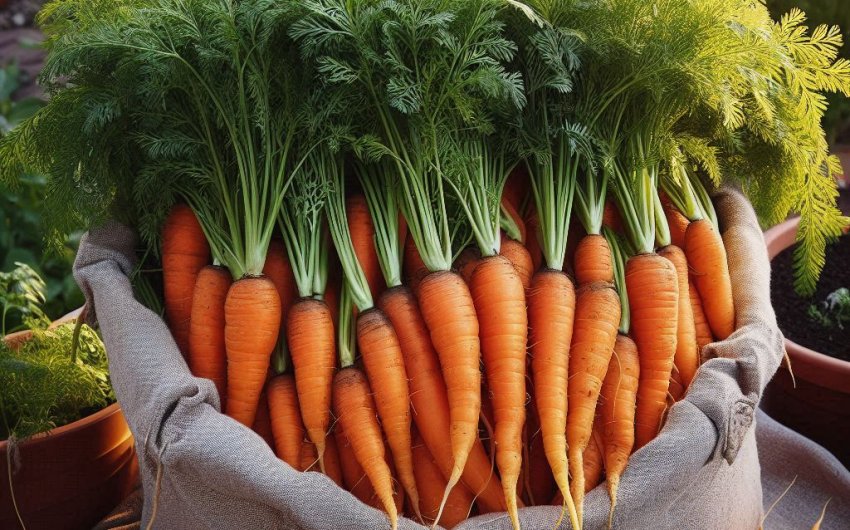
Dreaming of crisp, sweet carrots pulled fresh from your own garden, but lacking the traditional garden space? You're in luck! Learning how to grow carrots in containers is surprisingly easy and incredibly rewarding, making it a perfect project for balconies, patios, or small urban spaces. Container gardening offers flexibility, precise control over soil conditions, and the joy of homegrown produce. This guide will take you step-by-step through everything you need to know to cultivate delicious carrots right on your doorstep.
Why Grow Carrots in Containers?
Growing carrots in pots offers several advantages over traditional in-ground planting, especially for gardeners with limited space or challenging soil conditions. It's a fantastic way to enjoy this versatile root vegetable, even if your backyard is just a few square feet of pavement.
What are the benefits of container carrot gardening?
- Space-Saving: Perfect for small gardens, patios, balconies, or even windowsills.
- Soil Control: You have complete control over the soil mixture, ensuring it's loose, free of rocks, and perfectly suited for carrot growth. This is especially helpful if your native garden soil is heavy clay or very rocky.
- Pest and Disease Management: Containers can offer some protection from soil-borne pests and diseases that might plague in-ground gardens. You can also more easily move plants to avoid specific issues.
- Weed Reduction: Weeds are significantly less of an issue in containers, saving you time and effort.
- Drainage Control: Good drainage is easier to ensure in containers than in some garden beds.
- Mobility: You can move your carrots to follow the sun or protect them from harsh weather.
- Aesthetic Appeal: Container gardens can be beautiful additions to your outdoor living space.
What Supplies Do You Need to Grow Carrots in Containers?
Before you plant your first seed, gathering the right supplies is essential for mastering how to grow carrots in containers. Quality materials will set your carrot crop up for success.
Choosing the Right Containers for Carrots:
The most crucial factor for containers is depth. Carrots need room for their roots to grow straight and long without hitting an obstruction.
- Depth: Aim for containers that are at least 10-12 inches (25-30 cm) deep for most standard carrot varieties. For shorter, rounder varieties (like 'Paris Market'), 6-8 inches (15-20 cm) might suffice, but deeper is always better to allow for good root development and drainage.
- Width: The wider the container, the more carrots you can plant.
- Drainage: Crucial! Ensure your chosen container has multiple drainage holes at the bottom. Carrots will rot in waterlogged soil.
Popular Container Options:
- Large Plastic Pots: Lightweight, inexpensive, and retain moisture well. Can come in various sizes and colors. Look for ones with pre-drilled holes or drill your own.
- Fabric Grow Bags: Excellent choice. They promote air pruning of roots (preventing circling) and provide superior drainage and aeration. They also keep the soil cooler in hot weather. Smart Pots or similar brands are widely available.
- Terracotta Pots: Look attractive and allow good air exchange, but dry out quickly, requiring more frequent watering. Ensure they are large and deep enough.
- Wooden Planters/Raised Beds: If you have more space, larger wooden planters or mini-raised beds are excellent, providing ample depth and width. Ensure the wood is untreated or lined with a safe barrier.
- Repurposed Containers: Get creative! Old galvanized tubs (with drainage holes drilled), plastic storage bins, or even sturdy laundry baskets can work if deep enough and properly drained.
The Perfect Soil for Container Carrots:
Soil quality is paramount when learning how to grow carrots in containers. Carrots need loose, light, and stone-free soil to develop straight roots.
- Potting Mix: Do NOT use garden soil or topsoil in containers. They are too heavy, compact easily, and don't drain well enough. Use a high-quality potting mix specifically formulated for containers.
- Light and Loamy: Look for potting mixes that contain ingredients like peat moss, coco coir, vermiculite, and perlite. These create a light, fluffy texture that carrot roots can easily push through.
- pH Level: Carrots prefer a slightly acidic to neutral pH, ideally between 6.0 and 6.8. Most good quality potting mixes will fall within this range.
- Nutrients: While potting mixes often contain some starter nutrients, adding organic amendments will provide long-term fertility.
- Compost: Mix in a generous amount of well-rotted compost (about 1 part compost to 3-4 parts potting mix) for a nutrient boost and improved soil structure.
- Perlite/Vermiculite (Optional): If your potting mix feels a bit heavy, you can add extra perlite or vermiculite to improve drainage and aeration further.
Other Essential Supplies:
- Carrot Seeds: Choose varieties suitable for containers (more on this below).
- Watering Can: With a fine rose (sprinkler head) to provide gentle, even watering without disturbing newly sown seeds.
- Hand Trowel/Small Scoop: For filling containers.
- Optional: Seed Starting Mix: For starting seeds indoors if you're getting a very early start.
- Optional: Heat Mat: Can help speed up germination, especially in cooler conditions.
What Are the Best Carrot Varieties for Containers?
Choosing the right type of carrot is a key step in how to grow carrots in containers. Some varieties are naturally better suited to confined spaces than others. Look for short, stubby, or round varieties that don't need a lot of depth.
Top Carrot Varieties for Container Growing:
- 'Paris Market':
- Description: Small, round, ball-shaped carrots, often just 1-2 inches in diameter. They are sweet and can be grown in shallower containers (6-8 inches deep).
- Good for: Very shallow pots, bowls, or limited depth.
- 'Danvers Half Long':
- Description: A classic, versatile carrot that grows to about 6-7 inches long with a tapering shape. While not specifically a container variety, it performs well in deeper pots.
- Good for: Containers 10-12 inches deep.
- 'Little Finger':
- Description: Slender, gourmet mini-carrots, typically 3-4 inches long. Known for their tenderness and quick maturity.
- Good for: Containers 8-10 inches deep.
- 'Oxheart':
- Description: Heart-shaped, broad-shouldered carrots that grow to about 4-6 inches long. Good for denser, slightly heavier soil than other varieties.
- Good for: Containers 10-12 inches deep.
- 'Thumbelina':
- Description: Another small, round carrot variety similar to 'Paris Market', but often even smaller and earlier maturing.
- Good for: Shallow pots.
- 'Short 'n Sweet':
- Description: Aptly named, these are stump-rooted carrots that grow 3-4 inches long. Great for heavier soils (though still recommend light potting mix).
- Good for: Containers 8-10 inches deep.
- 'Chantenay Red Core':
- Description: Broad-shouldered, conical carrots that grow 5-7 inches long. Tolerant of heavier soils than some others.
- Good for: Containers 10-12 inches deep.
Tip: When browsing seed packets, look for descriptions like "stump-rooted," "half-long," "short," or "mini" to identify varieties best suited for containers.
How to Plant Carrots in Containers: A Step-by-Step Guide
Once you have your supplies and chosen your carrot varieties, it's time to get planting! This is the most crucial part of learning how to grow carrots in containers successfully.
Step-by-Step Planting Process:
- Prepare Your Container:
- Ensure your container is clean and has ample drainage holes. You can add a layer of gravel or broken pottery shards at the bottom, but this is optional and not strictly necessary with good potting mix.
- Place a coffee filter or a piece of landscape fabric over the drainage holes to prevent soil from washing out while still allowing water to drain.
- Fill with Potting Mix:
- Fill your container with your chosen light, loose potting mix, leaving about 1 inch (2.5 cm) of space from the rim. Lightly pat down the soil, but do not compact it firmly. Carrots need fluffy soil to grow straight.
- If your potting mix is very dry, lightly pre-moisten it before adding to the container.
- Sow the Seeds:
- Carrot seeds are very tiny. You can sow them in several ways:
- Scatter thinly: Sprinkle seeds as evenly as possible over the surface of the soil.
- Create shallow rows: Use a pencil or your finger to make shallow rows (about 1/4 inch or 0.5 cm deep) and sprinkle seeds in these rows. This makes thinning easier later.
- Seed Tapes/Pellets: These are pre-spaced seeds embedded in a biodegradable tape or coated in a pellet. They are more expensive but simplify spacing and reduce thinning.
- Spacing: Aim for seeds to be about 1 inch (2.5 cm) apart initially. Don't worry if they are closer; you'll thin them later.
- Cover Lightly: Gently cover the seeds with about 1/4 inch (0.5 cm) of potting mix or fine sand.
- Pat Gently: Lightly pat the surface of the soil to ensure good seed-to-soil contact.
- Carrot seeds are very tiny. You can sow them in several ways:
- Water Gently:
- Water thoroughly but gently immediately after planting. Use a watering can with a fine rose to avoid displacing the tiny seeds. The goal is to moisten the entire soil depth without washing away the seeds.
- Keep the soil consistently moist (but not waterlogged) during germination. Carrot seeds can take 1-3 weeks to sprout.
- Provide Warmth and Light (Post-Germination):
- Sunlight: Place your containers in a spot that receives at least 6-8 hours of direct sunlight per day. Carrots need plenty of sun to grow well.
- Temperature: Carrots germinate best when soil temperatures are between 50-85°F (10-29°C).
- Outdoor Planting: Sow seeds 2-3 weeks before your last expected frost date in spring, or any time the soil can be worked. Carrots prefer cooler temperatures, so spring and fall are ideal.
Timing Your Planting:
- Spring Planting: As soon as the danger of hard frost has passed and soil can be worked.
- Succession Planting: For a continuous harvest, sow a new batch of seeds every 2-3 weeks until about 8-10 weeks before your first expected fall frost.
- Fall Planting: In many climates, you can plant carrots in late summer for a fall or even winter harvest (if protected from hard freezes).
- Indoor Starting (Optional): While direct sowing is usually recommended, if you have a very short growing season or want an extra early start, you can start carrot seeds indoors in biodegradable pots (like peat pots) and transplant them carefully to avoid disturbing roots.
How Do I Care for Carrots in Containers?
Consistent care is key to success when learning how to grow carrots in containers. Unlike in-ground carrots, container carrots are entirely dependent on you for water, nutrients, and adequate spacing.
Key Care Practices:
- Thinning:
- Why it's crucial: This is perhaps the most important step for growing straight, good-sized carrots. If seedlings are too close, they compete for resources and won't develop properly.
- When: Thin seedlings once they are about 1 inch (2.5 cm) tall and have developed a few true leaves (the second set of leaves that appear after the initial cotyledons).
- How: Gently pull out the weaker seedlings, leaving the strongest ones spaced according to the variety's mature size (typically 2-4 inches / 5-10 cm apart for standard varieties; 1-2 inches / 2.5-5 cm for round/short types). Do this carefully to avoid disturbing the roots of the remaining seedlings.
- Eat the Thinnings: Young carrot thinnings are edible and delicious in salads!
- Watering:
- Consistency is Key: Container carrots need consistent moisture. The soil should remain evenly moist, but never waterlogged.
- Frequency: Containers dry out faster than garden beds. You might need to water daily, especially during warm, sunny, or windy weather. Stick your finger 1-2 inches into the soil; if it feels dry, it's time to water.
- Deep Watering: Water until you see water draining from the bottom of the container.
- Avoid Fluctuations: Inconsistent watering can lead to misshapen, cracked, or bitter carrots.
- Fertilizing:
- Potting mix nutrients are used up quickly in containers. Carrots need a steady supply of nutrients, but be careful with too much nitrogen, which can lead to bushy tops and small roots.
- When: Start fertilizing about 4-6 weeks after germination.
- Type: Use a balanced liquid fertilizer, or one slightly higher in potassium and phosphorus, diluted to half strength.
- Frequency: Fertilize every 2-4 weeks, following product instructions. Organic options like diluted fish emulsion or seaweed extract work well.
- Sunlight:
- Maintain your carrots in a location that receives full sun (at least 6-8 hours direct sunlight daily). If growth seems slow or tops are leggy, they might need more sun.
- Dealing with "Green Shoulders":
- If the top of the carrot root (the "shoulder") is exposed to sunlight, it can turn green and develop a bitter flavor. This is called "greening."
- Solution: Gently mound more potting mix or add a layer of organic mulch (like straw or wood chips) around the base of the plants to cover the developing shoulders. This also helps retain moisture.
Troubleshooting Common Problems When Growing Carrots in Containers
Even with the best intentions, you might encounter some issues when learning how to grow carrots in containers. Here are some common problems and their solutions.
Why are my carrots stunted or misshapen?
- Problem: Carrots are short, stubby, forked, or have multiple roots.
- Cause:
- Compacted/Rocky Soil: The most common culprit. Roots hit obstructions and fork.
- Insufficient Thinning: Too many plants competing in a small space.
- Inconsistent Watering: Erratic moisture levels can cause splitting or misshaping.
- High Nitrogen Fertilizer: Too much nitrogen encourages leafy growth at the expense of root development.
- Root Damage: During thinning or transplanting (if started indoors).
- Solution:
- Use very loose, stone-free potting mix.
- Thin mercilessly and on time.
- Maintain consistent watering.
- Use a balanced fertilizer, or one slightly lower in nitrogen.
- Direct sow seeds rather than transplanting.
Why aren't my carrot seeds germinating?
- Problem: Seeds don't sprout.
- Cause:
- Too Dry: Soil allowed to dry out during the crucial germination period.
- Too Wet: Waterlogged soil can rot seeds.
- Too Deep: Seeds planted too deep.
- Old Seeds: Carrot seeds lose viability quickly.
- Too Cold: Soil temperatures are too low.
- Solution:
- Keep soil consistently moist with gentle watering.
- Ensure good drainage.
- Plant at the correct depth (1/4 inch).
- Use fresh seeds (check expiration dates).
- Ensure soil temperature is warm enough; consider a heat mat indoors.
Why are my carrots bitter or flavorless?
- Problem: Carrots lack sweetness or taste unpleasant.
- Cause:
- Too Much Water/Inconsistent Watering: Can dilute flavor.
- Too Much Nitrogen: Encourages leafy growth, reducing root sugars.
- Harvested Too Early/Late: Picking too soon yields small, undeveloped flavor; too late can make them woody or bitter.
- High Temperatures: Extreme heat during growth can make them bitter.
- "Green Shoulders": Exposed tops turning green and bitter.
- Solution:
- Maintain consistent moisture.
- Balance fertilization; avoid excessive nitrogen.
- Harvest at the right time.
- Provide some afternoon shade in very hot climates.
- Cover exposed carrot shoulders with soil or mulch.
Pest and Disease Issues:
Carrots in containers generally have fewer pest issues than in-ground crops, but occasionally you might see:
- Aphids: Small, soft-bodied insects. Solution: Blast them off with a strong stream of water, use insecticidal soap, or introduce beneficial insects.
- Carrot Rust Fly: Small maggots tunnel into roots. Less common in containers as the flies may struggle to reach them. Solution: Use floating row covers or practice good garden hygiene.
- Fungal Issues: Usually due to overwatering or poor air circulation. Solution: Ensure good drainage, avoid overwatering, and ensure containers are not too crowded.
When and How to Harvest Carrots from Containers
The most exciting part of learning how to grow carrots in containers is enjoying the harvest! Knowing when and how to pick your carrots ensures the best flavor and texture.
When to Harvest:
- Maturity: Check your seed packet for the "days to maturity" (usually 60-80 days for most varieties).
- Size: The best indicator is size. Gently brush away some soil from the top of the carrot. When the shoulder of the carrot reaches the desired diameter (check your seed packet for the typical size of that variety), they are ready.
- Don't Wait Too Long: Overly mature carrots can become woody, fibrous, or split.
- Succession Planting: Harvest smaller "baby carrots" to thin out your crop, and let others grow larger. This also encourages continuous growth for succession plantings.
How to Harvest:
- Water Before Harvesting: Water the container thoroughly about an hour before you plan to harvest. This softens the soil, making it much easier to pull the carrots without breaking them.
- Gently Loosen: Grasp the leafy green top of the carrot firmly at the base. Gently twist and pull upwards. If the soil is still too firm, you can use a hand trowel to carefully loosen the soil around the carrot before pulling.
- Inspect: Check the root for size and shape. If it's too small, gently push the soil back around it and let it grow longer.
- Trim and Store:
- Immediately after harvesting, twist or cut off the green leafy tops. This prevents the greens from drawing moisture and nutrients from the root, which can make the carrot rubbery.
- Brush off excess soil (don't wash until ready to use for longer storage).
- Store carrots in the refrigerator in a plastic bag or airtight container. They can last for several weeks.
By following these guidelines on how to grow carrots in containers, you'll soon be enjoying a continuous supply of crisp, sweet, and perfectly formed carrots, picked fresh from your own mini-garden. It's a satisfying experience that truly brings the joy of gardening to any space, no matter how small.