
Best Outdoor Composting Methods for Large Gardens
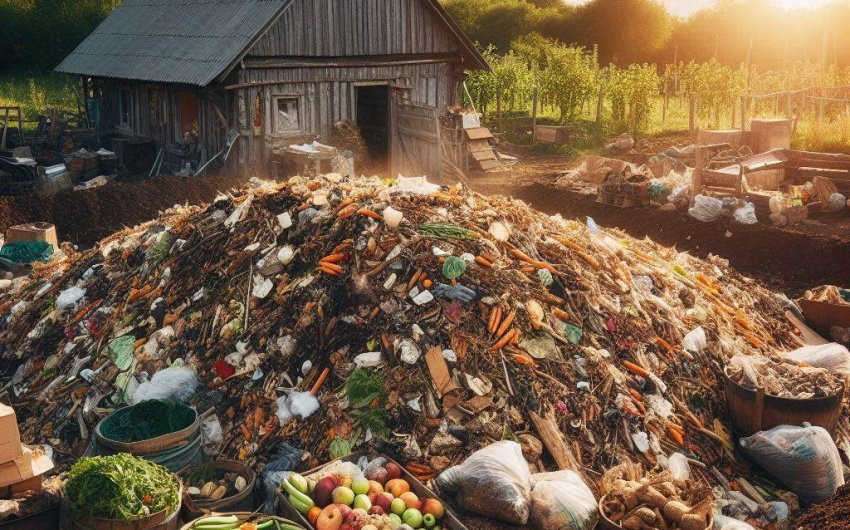
For avid gardeners with expansive plots, the sheer volume of organic material generated from kitchen scraps, yard waste, and garden trimmings can be overwhelming. Simply discarding these valuable resources misses a golden opportunity to enrich your soil and reduce landfill waste on a significant scale. This is where mastering the best outdoor composting methods for large gardens becomes not just a sustainable practice, but an economic and ecological imperative. From efficient batch systems to continuous production, understanding how to manage large quantities of organic waste can transform your garden refuse into a powerhouse of nutrient-rich "black gold."
Why is Composting Essential for Large Gardens?
The benefits of composting multiply with the size of your garden, making it an indispensable practice for gardeners with ample space.
What are the Benefits of Large-Scale Composting?
Composting in a large garden transcends simple waste management, becoming a cornerstone of sustainable and productive horticulture.
- Abundant Soil Amendment: Large gardens demand significant quantities of rich soil amendments. Composting provides an endless, free supply of high-quality compost, improving soil structure, water retention, and nutrient availability far more effectively than bagging and disposing of waste.
- Reduced Waste Stream: With a larger garden comes more garden waste – grass clippings, fallen leaves, spent plants, pruned branches. Composting diverts this substantial organic material from landfills, significantly reducing your environmental footprint.
- Cost Savings: You'll eliminate the need to purchase commercial soil amendments, fertilizers, and often, even potting mix components, leading to substantial savings over time.
- Enhanced Plant Health: Compost introduces beneficial microorganisms, improves aeration, and stabilizes soil pH, leading to stronger, healthier plants that are more resistant to pests and diseases.
- Nutrient Cycling: It's a closed-loop system, returning vital nutrients extracted by plants back to the soil, creating a self-sustaining ecosystem within your garden.
- Improved Water Retention: Compost acts like a sponge, helping sandy soils hold water better and breaking up heavy clay soils for improved drainage, which is crucial for large areas.
What Factors Influence Composting Methods for Large Gardens?
Choosing the right method for a large garden isn't a one-size-fits-all decision. Several key factors will guide your choice.
1. What is Your Available Space?
Even with a large garden, the designated composting area needs to be planned.
- Footprint: Some methods require more horizontal space (e.g., three-bin systems), while others might be more vertical (e.g., large tumblers).
- Accessibility: Ensure the composting area is easily accessible for adding materials, turning, and harvesting, ideally with room for a wheelbarrow.
2. What is the Volume of Material You Generate?
The amount of organic waste you produce directly impacts the required capacity of your composting system.
- Continuous Feeders: If you have a steady, ongoing stream of kitchen scraps and smaller yard waste.
- Batch Processors: If you generate large amounts of material all at once (e.g., autumn leaves, spring garden clean-up).
3. What is Your Desired Speed of Decomposition?
Are you aiming for quick "hot" compost or a more leisurely "cold" approach?
- Hot Composting (Fast): Requires more active management (turning, moisture monitoring) but yields finished compost in weeks to months. Ideal for high volumes and quick turnaround.
- Cold Composting (Slow): Less labor-intensive but takes much longer (6 months to 2 years) to produce compost.
4. What is Your Willingness to Labor?
Composting large volumes of material can be physically demanding.
- Turning: Some methods require frequent turning, which can be arduous.
- Shredding: Pre-processing materials (shredding, chopping) speeds decomposition but adds effort.
5. Are Aesthetics a Concern?
While primarily functional, some gardeners prefer their compost system to be less visible or more visually appealing.
- Hidden Areas: Locate compost bins in a less prominent part of the garden.
- Structured Bins: Consider more aesthetically pleasing wooden or contained bin systems.
What are the Best Outdoor Composting Methods for Large Gardens?
For large gardens, methods that handle high volumes, either continuously or in batches, and facilitate management are paramount.
1. The Three-Bin System: The Gold Standard for Hot Composting
This is widely considered one of the most efficient and scalable methods for producing high volumes of compost, allowing for continuous processing.
- Description: Consists of three contiguous bins or bays. Materials move from the first bin (active additions) to the second (active decomposition/turning) to the third (finishing/curing).
- Construction: Can be built from wooden pallets, lumber, wire mesh, or concrete blocks. The front of each bin is often removable for easy turning and access. Aim for bins that are at least 3x3x3 feet for optimal heat retention.
- Process:
- Bin 1 (Active/Accumulation): Add fresh "greens" (grass clippings, kitchen scraps) and "browns" (leaves, shredded paper) to this bin. This is your accumulation point.
- Bin 2 (Active/Turning): Once Bin 1 is full, turn its contents into Bin 2. This is where the primary hot composting happens. Turn the pile regularly (every few days to a week) to aerate and mix. Monitor moisture and temperature.
- Bin 3 (Curing/Finishing): When the material in Bin 2 has largely broken down and temperatures are no longer consistently hot, move it to Bin 3. This bin allows the compost to cure and mature into finished "black gold."
- Pros:
- High Volume: Easily handles large quantities of materials.
- Continuous Production: Always have a bin for fresh additions, active composting, and finished compost.
- Efficient Hot Composting: Promotes high temperatures, speeding decomposition and killing pathogens/weed seeds.
- Organized: Keeps the composting area neat.
- Cons:
- Space Requirement: Needs a relatively large footprint.
- Labor Intensive: Regular turning of large volumes requires effort.
- Initial Setup: Requires upfront construction.
- Tools & Materials: Wooden pallets (free!), lumber (e.g., cedar, treated lumber if safe for garden use), wire mesh, drill, heavy-duty gloves, compost thermometer, pitchfork.
2. Large Tumbler Composter: Easy Turning, Contained System
For those who want a contained system with minimal physical turning effort, large tumblers are a good option.
- Description: A sealed barrel or drum mounted on a frame that can be rotated to tumble and mix the compost materials.
- Size: For large gardens, look for tumblers with capacities of 60 gallons or more. Some models feature dual chambers, allowing one batch to cure while you add new materials to the other.
- Process: Add a balanced mix of "greens" and "browns" to the tumbler. Rotate the tumbler daily or every few days to aerate and mix the contents. Monitor moisture levels.
- Pros:
- Easy Turning: Much less physically demanding than turning a pile.
- Pest Deterrent: Sealed design helps deter rodents and other pests.
- Aesthetics: Generally neater than open piles.
- Faster Composting: Frequent turning can lead to relatively fast decomposition.
- Cons:
- Capacity Limits: Even large tumblers have a finite capacity, which can be a limitation for very high volumes of waste generated all at once.
- Cost: Higher upfront cost than simple bins.
- Liquids: Can sometimes become too wet or produce "compost tea" that leaks.
- Difficulty with Large Items: Large branches or very dense materials may not tumble well.
- Product Suggestion: A dual-chamber compost tumbler can offer continuous composting for a medium-to-large garden.
3. Wire Mesh Bins: Flexible and Expandable
Simple yet effective, wire mesh bins are a budget-friendly option for larger gardens.
- Description: Cylinders or squares formed from rigid wire mesh fencing.
- Construction: Use heavy-gauge wire fencing to form a circle or rectangular bin, secured with zip ties or clips. You can easily set up multiple bins.
- Process: Add layers of "greens" and "browns." Aerate by turning with a pitchfork or by unhooking the bin, moving it, and shoveling the contents back in.
- Pros:
- Inexpensive: Very budget-friendly.
- Excellent Airflow: The open mesh design allows for great aeration, promoting aerobic decomposition.
- Expandable: Easily set up multiple bins or connect them for a larger system.
- Easy Access: Simple to add materials and harvest.
- Cons:
- Can Be Messy: Less contained than solid bins, can sometimes spill.
- Pest Access: More susceptible to rodents if not managed well or if attractive materials (like meat) are added.
- Heat Loss: Can lose heat faster in cold weather due to high airflow, potentially slowing down composting.
- Tools & Materials: Roll of wire mesh, heavy-duty wire cutters, zip ties.
4. Large-Scale Trench Composting: "Invisible" Composting
For gardeners with ample space, trench composting offers a discreet, continuous method that feeds soil directly.
- Description: Involves burying organic waste directly into trenches or holes dug in unused garden areas.
- Process: Dig a trench (e.g., 12-18 inches deep) or individual holes in an area where you don't plan to plant immediately. Add organic materials (kitchen scraps, smaller yard waste, lawn clippings). Cover thoroughly with at least 6-8 inches of soil to prevent odors and pests. Over time, the materials decompose, enriching the soil. You can then plant over the trenches once decomposition is complete.
- Pros:
- Very Low Effort: No turning required.
- Invisible: Waste is buried, no visible compost pile.
- Direct Soil Enrichment: Nutrients are released directly into the planting area.
- Pest Control: When buried deeply, it deters most pests.
- Cons:
- Slow Decomposition: A colder method, so breakdown is much slower (months to a year or more).
- Labor for Digging: Requires digging trenches.
- Limited Volume: Best for smaller, consistent additions, not huge batches of leaves.
- Cannot Harvest Compost: You are enriching soil, not harvesting loose compost.
- Tools & Materials: Garden spade or trenching shovel.
5. Large Compost Piles: Simple and Scalable
The most basic method, often used by those with very large properties and significant organic waste.
- Description: A simple, open pile of organic materials.
- Construction: No specific construction needed, just a designated area. However, some prefer to create loose containment walls from stacked logs or wire for neatness.
- Process: Layer "greens" and "browns." Turn with a pitchfork or shovel, especially for hot composting.
- Pros:
- Zero Cost: No initial investment.
- Unlimited Capacity: Can be as large as your space allows.
- Simple: No complex setup.
- Cons:
- Less Contained: Can look messy.
- Pest Prone: Most susceptible to pests if not managed well.
- Heat Loss: More difficult to retain heat efficiently without containment.
- Harder to Turn: Very large, sprawling piles can be difficult to turn effectively.
- Tools & Materials: Pitchfork, shovel.
What are the Essential Ingredients for Large-Scale Composting?
Regardless of the method, the quality of your compost depends on the proper mix of materials.
1. "Greens" (Nitrogen-Rich)
These materials activate the pile and provide nutrients.
- Grass Clippings: Your primary source! (See "Grass to Gold" blog for detailed info on maximizing).
- Kitchen Scraps: Fruit and vegetable peels, coffee grounds, tea bags, eggshells.
- Manure: From herbivores (horses, cows, chickens, rabbits). Use aged manure or incorporate fresh manure into a hot pile.
- Fresh Garden Trimmings: Green leaves, soft plant stems (non-diseased, non-seeding).
2. "Browns" (Carbon-Rich)
These provide bulk, structure, and carbon for the microbes.
- Autumn Leaves: Abundant and ideal. Shred them if possible with a leaf shredder or by running a lawnmower over them.
- Shredded Cardboard/Newspaper: Remove tape, labels, and shiny/colored inks. Shred into small pieces.
- Straw/Hay: Excellent for aeration and bulk.
- Wood Chips/Sawdust: Untreated wood only. Use in moderation as they decompose slowly. Larger pieces should be shredded with a wood chipper.
- Dead Plant Material: Brown stems, dried weeds (seed-free).
3. Water and Air
- Moisture: Keep the pile consistently damp, like a wrung-out sponge.
- Aeration: Crucial for oxygen-loving microbes. Ensure regular turning or good structural materials.
What are the Best Management Tips for Large Composting Systems?
Successful large-scale composting involves consistent attention to the details of the decomposition process.
1. How to Monitor and Maintain the C:N Ratio?
- Visual Balance: Aim for roughly equal layers of greens and browns, or slightly more browns by volume.
- Smell Test: If it smells putrid (rotten eggs), add more browns and turn. If it smells like ammonia, add more browns and turn.
- Heat Check: If the pile isn't heating up, it likely needs more greens (nitrogen) or more moisture, or it needs to be turned.
2. How to Manage Moisture Effectively?
- Feel Test: Stick your hand into the pile. If it's dry, add water as you turn. If it's soggy, add dry browns and turn.
- Rain Exposure: In very rainy climates, consider covering a static pile with a tarp to prevent it from becoming waterlogged. Tumblers offer natural protection.
3. How Often Should You Turn a Large Compost Pile?
- Hot Composting: For rapid results, turn every 3-7 days, especially when the internal temperature begins to drop from its peak.
- Cold Composting: Even if not aiming for hot compost, turning once a month or every few months helps introduce oxygen and speeds up decomposition.
4. How Do You Manage Pests and Odors in Large Piles?
- Avoid Attractants: Never add meat, bones, dairy, oily foods, or pet waste to large, open compost piles. These will attract rodents and other pests and create foul odors.
- Bury "Greens": Always bury new additions of kitchen scraps or other potentially smelly "greens" deep within the pile, covered by a generous layer of "browns" or active compost.
- Maintain Balance & Aeration: A well-balanced, well-aerated, actively composting pile rarely smells bad. Foul odors are almost always a sign of anaerobic conditions, requiring more turning and more browns.
- Fencing: For very large open piles, a sturdy fence can deter larger animals.
5. When is Large-Scale Compost Ready?
- Appearance: Dark brown to black, crumbly texture.
- Smell: Earthy, fresh smell, like forest soil.
- Texture: Most original materials are unrecognizable, though some larger, slower-to-decompose items (e.g., wood chips) may still be visible.
- Temperature: Cool to the touch, no longer generating heat.
Successfully implementing the best outdoor composting methods for large gardens not only tackles the challenge of abundant organic waste but transforms it into a sustainable powerhouse, providing your garden with continuous, nutrient-rich soil amendments for thriving plants and a truly productive landscape.