
Best Perennials for Full Sun Gardens: Year-Round Color
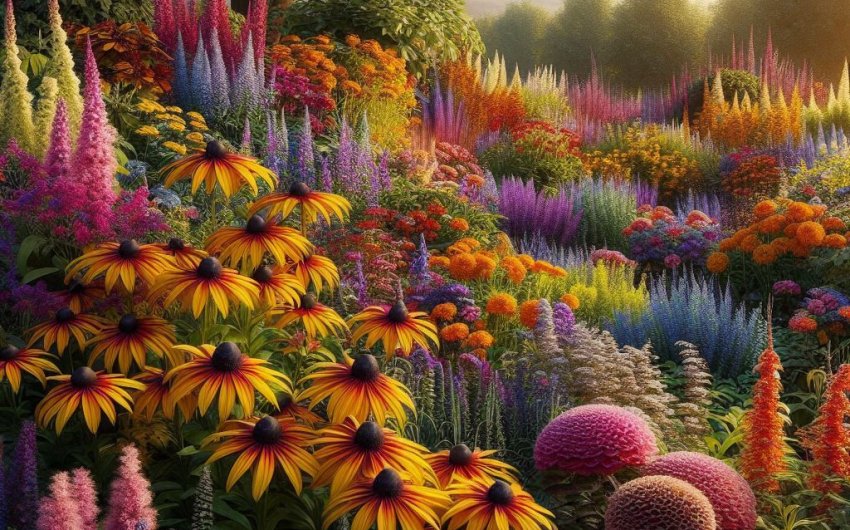
The best perennials for full sun gardens that offer year-round color are those that tolerate intense light, heat, and sometimes drought, providing vibrant blooms, interesting foliage, or attractive seed heads across multiple seasons. Key choices include Coneflower, Daylily, Salvia, Sedum, Lavender, and various ornamental grasses, which collectively ensure continuous visual interest.
What Defines a "Full Sun" Perennial Garden?
Understanding what "full sun" truly means for perennial plants is the foundation of selecting the right species for your garden. It's more than just a vague term; it refers to the amount of direct sunlight a specific area receives throughout the day.
Defining "Full Sun"
- Minimum Direct Sunlight: For most plants, "full sun" means receiving at least 6 hours of direct, unfiltered sunlight per day.
- Ideal Direct Sunlight: Many sun-loving perennials thrive with 8 or more hours of direct sun, especially if it includes the intense midday sun.
- Location Matters: The amount of direct sun an area gets can vary greatly even within the same yard due to obstructions like buildings, large trees, fences, or other structures that cast shadows.
Why Do Some Perennials Need Full Sun?
Perennials that are labeled "full sun" have evolved specific adaptations to thrive in high-light environments. Giving them less light than they need will often result in:
- Weak, Leggy Growth: Plants stretch and become spindly as they desperately try to reach for light.
- Reduced Flowering: Fewer blooms, smaller flowers, or no flowers at all, as the plant lacks the energy for flower production.
- Poor Health: Increased susceptibility to pests and diseases due to weakened immune systems.
- Lack of Vibrancy: Foliage colors may be duller, and variegated patterns may fade.
Characteristics of a Full Sun Perennial Garden
A garden designed for full sun will typically feature plants that:
- Tolerate Heat: Many full-sun perennials are also heat-tolerant, especially those that thrive in the intense afternoon sun.
- Require Good Drainage: While not exclusive to sun-lovers, many plants that enjoy full sun also prefer well-draining soil, as they often originate from drier, open environments.
- Are Often Drought-Tolerant (Once Established): Many full-sun perennials are quite resilient to dry periods once their root systems are well-developed, a common characteristic of plants in exposed locations.
- Have Adaptations for Sun:
- Silver/Gray or Fuzzy Foliage: These adaptations help reflect sunlight and reduce water loss (e.g., Lamb's Ear, Lavender, Artemisia).
- Thick/Succulent Leaves: Store water, helping the plant withstand dry conditions (e.g., Sedum).
- Waxy Coatings: Reduce transpiration (water loss).
- Deep Taproots: Allow access to deeper water reserves.
When planning a full sun perennial garden, accurately observing the sunlight patterns in your chosen spot is the first and most crucial step to ensure the success and vibrancy of your plant selections.
What Are the Best Perennials for Summer Color in Full Sun?
Summer is when a full sun perennial garden truly shines, offering a riot of color during the hottest months. Many plants revel in intense sunlight, providing continuous blooms and vibrant foliage from late spring through early fall.
1. Coneflower (Echinacea purpurea and hybrids)
- Key Features: Daisy-like flowers with raised central cones, available in a wide spectrum of colors (purple, pink, white, yellow, orange, red). Very attractive to pollinators.
- Bloom Time: Early summer to early fall.
- Benefits:
- Exceptional Heat and Drought Tolerance: Once established, they are incredibly tough.
- Long Bloom Period: Provides continuous color for months.
- Pollinator Magnet: Attracts bees and butterflies.
- Seed Head Interest: Spent blooms provide architectural interest and food for birds in winter.
- Varieties to Consider:
- 'Magnus': Classic purple, very robust.
- 'PowWow Wild Berry': Deep rose-pink, compact, prolific.
- 'Cheyenne Spirit': A mix of orange, red, yellow, cream, and purple blooms from seed.
- Care: Deadhead spent flowers for continuous blooming, but leave some for seed production. Divide every 3-4 years. Echinacea Purpurea Seeds are easy to grow.
2. Daylily (Hemerocallis)
- Key Features: Grassy clumps with tall flower stalks bearing trumpet-shaped blooms. Extremely diverse in color, size, and form. Each flower lasts only one day, but multiple buds on a scape ensure continuous bloom.
- Bloom Time: Early summer to late summer (depending on variety, reblooming types extend this).
- Benefits:
- Incredibly Adaptable and Tough: Tolerates heat, drought, and a wide range of soils.
- Low Maintenance: Requires minimal care once established.
- Vast Variety: Endless choices for color, size, and bloom period.
- Varieties to Consider:
- 'Stella de Oro': Famous for continuous golden-yellow blooms all summer.
- 'Happy Returns': Lemon yellow, prolific rebloomer.
- Many other named cultivars with diverse colors (red, pink, purple, bi-colors).
- Care: Deadhead spent scapes to encourage reblooming. Divide every few years to maintain vigor.
3. Salvia (Perennial Varieties, e.g., Salvia nemorosa, S. sylvestris)
- Key Features: Spikes of vibrant blue, purple, pink, or white flowers above aromatic foliage. Part of the mint family.
- Bloom Time: Late spring through summer, often reblooming until fall with deadheading.
- Benefits:
- Excellent Heat and Drought Tolerance: Thrives in hot, dry conditions.
- Pollinator Magnet: Attracts hummingbirds, bees, and butterflies.
- Deer and Rabbit Resistant: Aromatic foliage deters pests.
- Long-Lasting Blooms: Very reliable summer color.
- Varieties to Consider:
- 'Caradonna': Deep violet-blue flowers with dark purple stems.
- 'May Night' (Mainacht): Classic deep indigo-blue, very popular.
- 'Blue Hill': Lighter blue, more compact.
- Care: Shear back after the first flush of bloom to encourage repeat flowering.
4. Sedum (Upright varieties, e.g., 'Autumn Joy', 'Carl the Stonecrop')
- Key Features: Succulent foliage provides texture, followed by dense clusters of tiny flowers that change color as they mature.
- Bloom Time: Late summer to fall.
- Benefits:
- Extreme Drought Tolerance: Stores water in its leaves, making it perfect for dry, sunny spots.
- Four-Season Interest: Attractive foliage in spring/summer, long-lasting blooms in fall, and persistent seed heads in winter.
- Pollinator Friendly: Attracts late-season pollinators.
- Low Maintenance: Virtually carefree.
- Varieties to Consider:
- 'Autumn Joy': Classic green foliage, flowers open pink and deepen to rusty red/bronze.
- 'Autumn Fire': Similar to 'Autumn Joy' but with brighter red fall color.
- 'Purple Emperor': Dark purple foliage with pink flowers.
- Care: Very little needed. Cut back old stems in late winter or early spring.
5. Shasta Daisy (Leucanthemum x superbum)
- Key Features: Classic white daisy flowers with yellow centers on sturdy stems.
- Bloom Time: Early to late summer.
- Benefits:
- Bright, Cheerful Blooms: Classic garden favorite.
- Good Cut Flower: Excellent for bouquets.
- Heat Tolerant: Performs well in full sun.
- Varieties to Consider:
- 'Becky': Robust, long-lasting, very popular.
- 'Crazy Daisy': More fringed petals.
- Care: Deadhead regularly to encourage continuous blooms. Divide every few years.
These perennials form the backbone of a vibrant, low-maintenance full sun garden, ensuring a continuous burst of summer color.
What Are the Best Perennials for Spring and Fall Color in Full Sun?
To achieve year-round color in a full sun garden, it's essential to include perennials that perform in the cooler shoulder seasons of spring and fall. These plants bridge the gaps between the peak summer display, ensuring consistent interest.
Spring Bloomers for Full Sun
These plants kick off the growing season with early bursts of color.
1. Creeping Phlox (Phlox subulata)
- Key Features: Low-growing, mat-forming evergreen foliage covered in a dense carpet of tiny flowers.
- Bloom Time: Early to mid-spring.
- Benefits:
- Masses of Early Color: Creates a spectacular display of pink, purple, blue, or white.
- Excellent Groundcover: Suppresses weeds and controls erosion on slopes.
- Drought Tolerant: Once established.
- Varieties to Consider: Many named cultivars like 'Emerald Blue', 'Candy Stripe', 'Scarlet Flame'.
- Care: Sheer back lightly after flowering to encourage dense growth. Requires excellent drainage.
2. Basket of Gold (Aurinia saxatilis)
- Key Features: Low, mounding plant with silvery-green foliage, covered in brilliant yellow flowers.
- Bloom Time: Mid to late spring.
- Benefits:
- Cheery Yellow Blooms: Adds a burst of sunshine.
- Drought Tolerant: Ideal for rock gardens or hot, dry spots.
- Attractive Foliage: Provides interest even when not in bloom.
- Care: Shear back lightly after flowering to maintain shape.
3. Perennial Poppy (Papaver orientale)
- Key Features: Large, dramatic, crepe-paper-like flowers in vibrant oranges, reds, pinks, and whites.
- Bloom Time: Late spring to early summer.
- Benefits:
- Stunning Showstoppers: Creates an unforgettable visual impact.
- Pollinator Friendly: Attracts bees.
- Care: Foliage often dies back in summer after flowering, leaving a gap, so plan companion plantings.
Fall Bloomers for Full Sun
These plants extend the gardening season, providing color as other plants begin to fade.
1. Aster (Symphyotrichum spp., e.g., New England Aster)
- Key Features: Profuse daisy-like flowers, typically purple, pink, or white, creating a cloud of color. Excellent for late-season pollinators.
- Bloom Time: Late summer to fall.
- Benefits:
- Crucial Late-Season Pollinator Food: A lifeline for migrating butterflies and late-flying bees.
- Massive Color Impact: Provides a dramatic burst of color when many other plants are done.
- Deer Resistant: Generally not preferred by deer.
- Varieties to Consider: 'October Skies' (blue), 'Purple Dome' (compact purple).
- Care: Pinch back in early summer to encourage bushier growth and more blooms.
2. Garden Mum (Hardy Chrysanthemum)
- Key Features: Dense mounds covered in countless flowers, from small buttons to large pom-poms, in a wide array of fall colors.
- Bloom Time: Fall.
- Benefits:
- Quintessential Fall Color: Perfect for extending the season.
- Variety of Forms and Colors: Extremely versatile.
- Care: Pinch back aggressively until mid-summer to create a bushy plant with many flowers.
3. Sneezeweed (Helenium)
- Key Features: Daisy-like flowers with distinctive, often wedge-shaped petals and prominent central cones, in shades of yellow, orange, red, and bronze.
- Bloom Time: Late summer to fall.
- Benefits:
- Strong, Vertical Interest: Adds structure to the late-season garden.
- Pollinator Attractor: Popular with bees and butterflies.
- Deer Resistant: Generally not bothered by deer.
- Varieties to Consider: 'Mardi Gras', 'Moerheim Beauty'.
- Care: Deadhead to prolong bloom. May need staking in windy areas.
By strategically incorporating these spring and fall bloomers, your full sun garden can transition beautifully, offering vibrant color from the awakening of spring until the arrival of persistent frosts.
What Are the Best Perennials for Year-Round Interest (Foliage/Structure) in Full Sun?
To achieve true year-round color and interest in a full sun garden, it's vital to include perennials that offer more than just seasonal blooms. Plants with striking foliage, interesting textures, or attractive winter structure provide visual appeal long after the flowers have faded.
1. Ornamental Grasses
Ornamental grasses are indispensable for a full sun garden, offering textural interest, movement, and often spectacular fall and winter appeal.
- Key Features: Diverse in size, color, and form, from upright plumes to weeping mounds. Many turn beautiful shades of gold, bronze, or red in fall and provide winter structure.
- Year-Round Interest:
- Spring: Emerging fresh green growth.
- Summer: Lush foliage, some with early plumes.
- Fall: Dramatic color changes (e.g., Little Bluestem 'Schizachyrium scoparium' turns fiery red-orange).
- Winter: Persistent seed heads and architectural presence above snow.
- Benefits:
- Exceptional Drought and Heat Tolerance: Most are incredibly tough once established.
- Low Maintenance: Require minimal care, usually just an annual cut-back.
- Adds Movement and Sound: Rustle in the wind, creating calming auditory effects.
- Varieties to Consider:
- Little Bluestem (Schizachyrium scoparium): Blue-green foliage turns coppery-red in fall.
- Maiden Grass (Miscanthus sinensis): Many varieties, often with graceful arching form and feathery plumes.
- Switchgrass (Panicum virgatum): Upright, airy, various cultivars with red or blue tones.
- Feather Reed Grass (Calamagrostis x acutiflora 'Karl Foerster'): Upright, narrow form, early plumes.
- Care: Cut back hard in late winter or early spring before new growth emerges.
2. Yucca (Yucca filamentosa)
- Key Features: Bold, sword-like, stiff evergreen leaves forming a rosette, often with curly white threads (filaments) along the edges. Produces a tall, dramatic flower spike with creamy white bells in summer.
- Year-Round Interest: Provides strong architectural evergreen structure.
- Benefits:
- Extreme Drought and Heat Tolerance: Thrives in hot, dry, neglected spots.
- Bold Texture: Adds a striking visual contrast to softer plants.
- Deer and Rabbit Resistant: Not usually bothered by pests.
- Care: Very low maintenance. Remove spent flower stalk after blooming.
3. Lavender (Lavandula)
- Key Features: Fragrant, silvery-green to grayish-green evergreen foliage. Spikes of purple, pink, or white flowers.
- Year-Round Interest: Evergreen foliage provides continuous color and texture.
- Benefits:
- Wonderful Fragrance: Aromatic foliage and flowers.
- Pollinator Magnet: Attracts bees and butterflies.
- Drought Tolerant: Once established.
- Deer and Rabbit Resistant: Aromatic leaves deter pests.
- Varieties to Consider:
- English Lavender (Lavandula angustifolia): 'Hidcote', 'Munstead' are common, very cold hardy.
- French Lavender (Lavandula stoechas): Unique "bunny ear" blooms.
- Care: Requires excellent drainage. Prune annually after flowering to maintain shape and encourage bushiness.
4. Artemisia (Artemisia schmidtiana, A. absinthium, etc.)
- Key Features: Primarily grown for its fine-textured, silvery, or grayish foliage, which often has a soft, fuzzy appearance. Some varieties are highly aromatic.
- Year-Round Interest: Evergreen or semi-evergreen foliage provides continuous silvery contrast.
- Benefits:
- Striking Foliage Color: Adds brightness and visual texture.
- Drought Tolerant: Thrives in hot, dry conditions.
- Deer and Rabbit Resistant: Aromatic foliage deters browsing animals.
- Varieties to Consider:
- 'Silver Mound': Compact, mounding, feathery silver foliage.
- 'Powis Castle': Larger, more upright, silvery-gray.
- Care: Requires excellent drainage. Shear back after flowering (if any) to maintain shape.
5. Sedum (Creeping varieties, e.g., 'Dragon's Blood', 'Angelina')
- Key Features: Low-growing, spreading succulents with colorful foliage that often changes hue with the seasons. Small star-shaped flowers.
- Year-Round Interest: Evergreen succulent foliage, often providing groundcover color from spring through winter (some turning red/bronze in cold).
- Benefits:
- Extreme Drought Tolerance: Perfect for hot, dry, rocky spots.
- Vibrant Foliage: Offers continuous color.
- Low Maintenance: Extremely tough and carefree.
- Varieties to Consider:
- 'Dragon's Blood': Green foliage turns bright red in full sun.
- 'Angelina': Chartreuse to golden yellow foliage, often with orange tints in fall/winter.
- 'Autumn Joy' (mentioned earlier): Its emerging foliage provides green texture throughout summer before fall blooms.
- Care: Virtually none.
By incorporating a mix of these foliage-focused and structural perennials, your full sun garden will maintain interest, texture, and color throughout all four seasons, providing beauty even when no flowers are in bloom.
How to Design a Full Sun Perennial Garden for Year-Round Color?
Designing a full sun perennial garden for continuous year-round color involves thoughtful planning, understanding bloom times, considering foliage, and layering plants to create a dynamic and enduring display.
1. Know Your Site and Climate
- Sunlight Mapping: Observe your garden space throughout the day in different seasons. Note where you get 6+ hours of direct sun. Use a sun calculator app if needed.
- Soil Test: Understand your soil type (sandy, clay, loam) and pH. Most full-sun perennials prefer well-draining soil. Amend with compost as needed.
- Hardiness Zone: Know your USDA Hardiness Zone to select plants that can survive your winter temperatures.
- Local Conditions: Consider local factors like average rainfall, humidity, and extreme heat waves.
2. Embrace Layering and Grouping
- Height and Depth: Place taller plants at the back of beds, medium-height plants in the middle, and shorter plants or groundcovers at the front. This creates visual depth and ensures all plants get light.
- Drifts and Groups: Plant in groups of odd numbers (3, 5, 7) rather than single specimens. This creates a more natural and impactful visual effect. Repeat groupings throughout the garden for cohesion.
- Succession of Bloom: Plan for continuous bloom by selecting plants with overlapping flowering times from spring, through summer, and into fall.
3. Focus on Foliage First
While flowers provide seasonal bursts, foliage provides year-round structure, texture, and color.
- Diverse Textures: Mix plants with bold leaves (Yucca, some Sedum) with those that have fine, wispy foliage (ornamental grasses, Artemisia).
- Foliage Color: Incorporate plants with interesting leaf colors:
- Silvery/Gray: Artemisia, Lavender, Lamb's Ear (reflects light, reduces water loss).
- Deep Greens: Hostas (for shadier edges of the full sun bed), Coneflowers.
- Burgundy/Purple: Some Heuchera, Sedum 'Purple Emperor'.
- Variegated: Adds bright spots.
- Evergreen Perennials: Include true evergreen perennials (e.g., Lavender, Yucca, some Heuchera, some ornamental grasses) to provide backbone and winter interest.
4. Strategize Bloom Times
Use a calendar to plan your bloom succession.
- Early Spring: Creeping Phlox, Basket of Gold, early bulbs (if desired, though not perennials).
- Late Spring/Early Summer: Perennial Poppies, early Daylilies, Salvia.
- Mid-Summer: Coneflowers, main flush of Daylilies, Shasta Daisies, Bee Balm.
- Late Summer/Fall: Sedum, Asters, Helenium, late-blooming ornamental grasses.
5. Incorporate Winter Interest
Don't cut everything back in fall! Many full sun perennials look beautiful through winter.
- Persistent Seed Heads: Leave ornamental grasses, Coneflowers, Sedum, and Asters standing for winter interest. They provide food for birds and structure against snow.
- Evergreen Foliage: Plants like Yucca and Lavender will maintain their form and color.
6. Consider Growth Habits
- Spreaders: Account for plants that spread aggressively (e.g., some mints – plant in containers).
- Clumpers: Most perennials are clump-forming, which simplifies design.
- Height and Width: Read plant tags carefully to understand mature size and allow enough space.
7. Add Hardscaping and Non-Plant Elements
- Pathways: Create definition and allow access.
- Benches: Provide a place to enjoy your garden.
- Boulders/Rocks: Add natural texture and structure.
- Bird Baths/Feeders: Attract wildlife for dynamic interest.
By weaving together these design principles with your chosen sun-loving perennials, you can create a vibrant, resilient garden that offers beauty and interest in every season, truly delivering year-round color.