
What is the Best Trellising Technique for Growing Grapes?
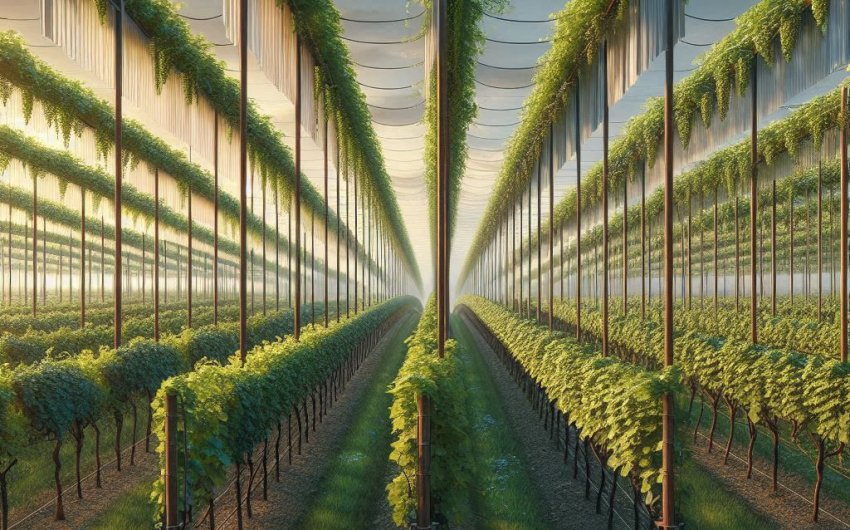
Growing grapes can be one of the most rewarding gardening experiences. There's something truly satisfying about harvesting your own sweet, juicy fruit, whether for fresh eating, juice, or even homemade wine. However, anyone who has ever tried to grow grapes knows they are enthusiastic climbers. Left to their own devices, grapevines can quickly become an unruly, tangled mess, producing very little quality fruit. This is where trellising comes in.
Trellising is not just about supporting the vine; it's a fundamental practice in grapevine management that directly impacts fruit production, vine health, and ease of care. It provides the structure for the vine to grow in an organized way, maximizing sunlight exposure, improving air circulation, and simplifying pruning and harvesting. Without a proper trellising system, your grape dreams might quickly turn into a leafy jungle with hidden, underdeveloped fruit. This comprehensive guide will explore the essential aspects of grape trellising, from why it's so important to the different techniques you can choose, helping you decide on the best trellising technique for your grapes to achieve a bountiful and beautiful harvest.
Why is Trellising So Important for Grapes?
You might think a vine just needs something to climb on, but for grapes, a proper trellising system is much more than simple support. It's an integral part of cultivating healthy, productive grapevines. Without it, you're fighting an uphill battle against nature.
How Does Trellising Affect Fruit Production?
The primary goal of growing grapes is, of course, to produce fruit. Trellising directly impacts the quantity and quality of your grape harvest.
- Sunlight Exposure: Grapes need ample sunlight to ripen properly and develop their full flavor and sugar content. Trellising spreads out the vine's canopy, ensuring that leaves and developing grape clusters receive optimal sun exposure. A tangled, untrellised vine creates too much shade, leading to poor fruit ripening, lower sugar levels, and bland-tasting grapes.
- Air Circulation: Good air circulation within the vine's canopy is crucial for preventing fungal diseases. Trellising keeps the leaves and clusters separated, allowing air to move freely through the vine. This helps dry off moisture, which reduces the risk of common grape diseases like powdery mildew and downy mildew. Without trellising, a dense, humid canopy becomes a breeding ground for these issues.
- Fruit Set: Proper sunlight and air circulation, along with manageable vine growth, contribute to better flower development and fruit set (the process where pollinated flowers turn into fruit). Stressed or overly shaded vines may have reduced fruit set.
- Easier Harvesting: Imagine trying to find ripe grape clusters in a wild, untamed bush. Trellising organizes the fruit into accessible zones, making harvesting much quicker and easier.
How Does Trellising Promote Vine Health?
Beyond fruit production, trellising plays a vital role in the overall health and vigor of the grapevine itself. A healthy vine is a productive vine.
- Support for Growth: Grapevines are vigorous climbers, but their woody stems need physical support. A trellis prevents the vine from sprawling on the ground, where it would be more susceptible to pests and diseases. It also protects delicate new growth from being stepped on or damaged.
- Reduced Disease Pressure: As mentioned, improved air circulation due to trellising significantly reduces humidity within the canopy. This, in turn, lessens the conditions favorable for fungal diseases, meaning healthier leaves and less need for fungicide sprays. Keeping leaves off the wet ground also minimizes disease spread.
- Simplified Pruning: Pruning is essential for grape production. A trellised vine, with its structured framework of permanent wood and annual growth, is much easier to prune correctly. You can clearly identify the main trunk, cordons (permanent arms), and the canes or spurs that will produce fruit. An untrellised vine is a tangled mess that is nearly impossible to prune effectively.
- Pest Management: An open, trellised canopy allows for easier inspection of the vine for pests and facilitates targeted application of any necessary treatments, rather than relying on broad sprays. It also helps prevent pests that thrive in dense, shady conditions.
Does Trellising Make Management Easier?
Absolutely. One of the biggest benefits, especially for home growers, is the sheer ease of managing a trellised grapevine.
- Organization: A trellis creates an organized structure for the vine. This makes it easier to train new growth, tie in canes, and keep track of different parts of the vine.
- Accessibility: All parts of the vine – leaves, clusters, and pruning points – become easily accessible. This simplifies tasks like thinning fruit, netting to protect from birds, or applying sprays if needed.
- Aesthetics: A well-designed and properly trellised grapevine can be a beautiful addition to your garden, creating a living wall, a shaded arbor, or an attractive vineyard row. It transforms a potentially messy plant into an ornamental feature.
- Long-Term Productivity: By promoting vine health and efficient fruit production year after year, trellising contributes to the long-term productivity and longevity of your grapevine. It ensures you get consistent, good-quality harvests.
What Are the Basic Parts of a Grapevine I Need to Know for Trellising?
Before diving into different trellising techniques, it's helpful to understand the basic anatomy of a grapevine. Knowing these terms will make it much easier to follow pruning and training instructions for any trellising system.
What is the Trunk?
The trunk is the permanent, main woody stem of the grapevine that rises from the ground. It's the foundation of the entire vine. For most trellising systems, you'll aim to establish a single, sturdy trunk. This part of the vine doesn't produce fruit directly, but it supports all the other parts that do. It's important to protect the trunk from damage, as it's the lifeline of the vine.
What are Cordons or Permanent Arms?
Cordons, also sometimes called permanent arms, are the main woody branches that extend horizontally or at an angle from the trunk. These are also permanent structures of the vine that you maintain year after year. Not all trellising systems use cordons, but many do, especially those that rely on spur pruning. Cordons are typically trained along a wire on the trellis. They are what support the fruit-producing wood.
What are Canes?
Canes are the one-year-old woody shoots that grew during the previous growing season. They are typically light brown and smooth. This is important: most grape varieties produce their fruit on canes that grew the previous year. So, the canes you see now will produce fruit next year. In cane pruning, you keep a specific number of these canes and prune off the rest. These canes are tied to the trellis wires.
What are Spurs?
Spurs are short sections of one-year-old wood (canes) that have been pruned back to contain only one or two buds. When a cordon system is used, these spurs are usually spaced along the cordon. In spur pruning, the fruit is produced on shoots that grow from these spurs. Spurs are essentially very short canes.
What are Shoots and Leaves?
Shoots are the new, green, herbaceous growth that emerges in the current growing season. These shoots grow from buds on canes or spurs. As the shoots grow, they develop leaves, tendrils (which help the vine climb), flowers, and eventually grape clusters. As the season progresses, these green shoots will harden off and become the brown, woody canes of the next year. Leaves are essential for photosynthesis, producing the energy that fuels vine growth and fruit development.
What are Tendrils?
Tendrils are the thin, curly, grasping structures that grow from the shoots. Their purpose is to twine around supports (like your trellis wires) to help the vine climb and hold itself upright. While they are useful for initial clinging, you will still need to manually tie in your canes and cordons to ensure proper training.
What Are Common Trellising Systems for Grapes?
Choosing the best trellising technique for your grapes depends on several factors: the grape variety you're growing, your climate, the size of your space, and your aesthetic preferences. There are numerous trellising systems, but a few are most common for home gardeners.
What is the Single Guyot System?
The Single Guyot (pronounced "goo-YOH") is a common and relatively simple cane-pruned system, often used for grape varieties that produce fruit primarily on buds towards the ends of their canes. It's great for home gardeners because it's not overly complicated to set up and manage.
- Structure: It typically involves a single, permanent trunk (about 2-3 feet tall) and one horizontal wire positioned about 30-36 inches above the ground.
- Training: Each year, after dormant pruning, you select one vigorous, one-year-old cane to be the main fruiting cane. This cane is typically tied horizontally along the wire. All other one-year-old canes are removed, except for a very short renewal spur (with 1-2 buds) left near the trunk.
- Fruit Production: The fruit will develop on shoots that emerge from the buds along the horizontally trained cane.
- Advantages: Relatively simple to understand and prune, good for varieties that produce fruit higher up on canes, good air circulation.
- Disadvantages: Requires diligent annual cane selection and tying.
What is the Double Guyot System?
The Double Guyot is very similar to the Single Guyot, but it allows for more fruit production per vine by utilizing two fruiting canes instead of one.
- Structure: It also uses a single, permanent trunk, but this time, you train two one-year-old canes horizontally along a single wire. These canes typically extend in opposite directions from the trunk.
- Training: In dormant pruning, you select two healthy one-year-old canes and tie them horizontally along the wire. You also leave two short renewal spurs near the trunk.
- Fruit Production: Like the Single Guyot, fruit develops on shoots from these two trained canes.
- Advantages: Increased yield compared to Single Guyot, still relatively simple.
- Disadvantages: Requires good vigor from the vine, more tying than a single cane system.
Both Guyot systems typically require a simple trellis structure with two sturdy end posts and one or two wires stretched between them.
What is the Four-Arm Kniffin System?
The Four-Arm Kniffin is a very popular cane-pruned system for home gardeners, especially with vigorous American grape varieties like Concord. It allows for a good balance of vigor and fruit production.
- Structure: It uses a permanent trunk that extends up to the top wire of a two-wire trellis. You typically have two wires: one about 3-4 feet from the ground, and a second one 5-6 feet from the ground.
- Training: You establish four permanent arms or cordons (though they're technically renewed canes each year, sometimes called "renewal arms" in this system), with two extending horizontally from the trunk along the lower wire and two along the upper wire. Each arm is actually a one-year-old cane selected during dormant pruning.
- Pruning: Each winter, you select four new one-year-old canes (two for the upper wire, two for the lower) to be the fruiting canes for the coming season. You prune back the previous year's fruiting canes and leave small renewal spurs near the trunk at each wire level to produce the next year's canes.
- Advantages: Good for vigorous varieties, allows for significant fruit production, relatively simple once the trunk is established. Provides good air circulation.
- Disadvantages: Requires a taller trellis, regular pruning and tying.
What is the Geneva Double Curtain (GDC) System?
The Geneva Double Curtain (GDC) is a more complex, high-yielding system often used in commercial vineyards, but it can be adapted for very large home vineyards or if you want to maximize production. It's a cordon-and-spur pruned system.
- Structure: This system is distinct because it uses two separate "curtains" of growth. It requires a specialized trellis with a single post, but with two horizontal cross-arms (like a "T" shape) at the top, typically 5-6 feet high. A permanent cordon is trained along each of these two wires.
- Training: Each vine has a trunk that rises to the T-top, where it then splits into two permanent cordons that are trained horizontally along each arm of the "T".
- Pruning: During dormant pruning, spurs are left along the entire length of these two cordons. Fruit-producing shoots grow downwards from these spurs, creating two "curtains" of foliage and fruit.
- Advantages: Very high yields, excellent light penetration and air circulation due to the separated canopies, ideal for vigorous varieties.
- Disadvantages: More complex and expensive to set up the trellis, requires more space, might be overkill for a small home garden.
How Do I Choose the Right Trellising System?
Selecting the best trellising technique isn't a one-size-fits-all decision. The ideal system for your grapes depends on several critical factors, from the grape variety itself to your local climate and personal preferences.
What Grape Variety Am I Growing?
The type of grape you are growing is perhaps the most important factor in choosing a trellising system. Different grape varieties have different growth habits and fruit-producing characteristics.
- Cane-Pruned Varieties: Many grape varieties, especially some American (Vitis labrusca) and French-American hybrid grapes (e.g., Concord, Niagara, Reliance, Marquette), produce the most fruit on buds located further out on the previous year's canes. For these, a cane-pruned system like the Guyot or Kniffin is best, where you renew the long fruiting canes each year.
- Spur-Pruned Varieties: Most European grape varieties (Vitis vinifera, e.g., Chardonnay, Cabernet Sauvignon, Merlot) and some hybrids produce well on buds located closer to the base of the cane. For these, a spur-pruned system where you maintain permanent cordons and prune back to short spurs is more suitable. The Cane-and-Spur system (where you use both spurs and a few short canes) can also be used.
- Vigor: Some varieties are naturally more vigorous (grow faster and larger) than others. Very vigorous varieties might benefit from larger systems like the Kniffin or GDC to accommodate their growth and spread out the fruit. Less vigorous varieties might do better with simpler systems.
Always research the specific pruning and trellising recommendations for your chosen grape variety. Your nursery or local extension office can provide this information.
What is My Climate Like?
Your local climate, especially the length of your growing season, sunlight intensity, and prevailing winds, can influence the best trellising choice.
- Sunlight: In cooler climates with less intense sunlight, systems that maximize light exposure to the fruit, like the Guyot or Kniffin, are beneficial. In very hot climates, some growers might opt for systems that allow for a bit more shading of the fruit by leaves to prevent sunburn.
- Air Circulation: In humid climates prone to fungal diseases, systems that promote excellent air circulation, such as the Guyot, Kniffin, or GDC, are preferred. Taller systems often have better air flow.
- Wind: In very windy areas, sturdy trellis construction is critical, and a lower-profile system might be more stable. You'll need very strong grape trellis posts and thick trellis wire.
How Much Space Do I Have?
The amount of space available in your garden or vineyard is a practical consideration.
- Limited Space: For small gardens or against a wall, simpler systems like the Single Guyot or a fan-shaped espalier are more manageable. You can also train grapes on an arbor or pergola, though managing fruit production can be trickier with these less formal structures.
- Medium to Large Space: If you have more room for a row of grapes, the Double Guyot or Four-Arm Kniffin are excellent choices that balance productivity and manageability.
- Very Large Space/Commercial: The Geneva Double Curtain is designed for maximizing yield in larger settings but requires significant space and a more complex setup.
What Is My Purpose for Growing Grapes?
Are you growing grapes for casual snacking, juice, jelly, or serious winemaking? Your purpose can influence how critical maximizing yield or specific fruit quality characteristics become.
- Casual Home Use: For a few clusters to enjoy fresh, an arbor or a simple two-wire system might be sufficient. Ease of management and aesthetics might be higher priorities than maximum yield.
- Juice/Jelly/Table Grapes: If you want a good harvest for processing, systems like the Double Guyot or Kniffin offer excellent yields for home production.
- Winemaking: For winemaking, precision in light exposure, fruit ripening, and disease prevention is paramount. Commercial systems or those that offer very good control over the canopy, such as the GDC or careful application of Guyot/Kniffin, are often preferred.
Ultimately, the "best" trellising technique is the one that works best for your specific circumstances, balancing your grape variety's needs with your available space, climate, and gardening goals.
How Do I Set Up a Basic Trellis System?
Regardless of the specific trellising technique you choose, setting up a sturdy and durable trellis is a foundational step. A good trellis will last for many years and provide reliable support for your growing vines.
What Materials Do I Need?
You'll need a few key materials for a basic wire trellis system.
- Posts: These are the backbone of your trellis.
- End Posts: These need to be very strong and deeply set, as they will bear the most tension from the wires and the weight of the vines. Use treated lumber (4x4 inches or larger), metal posts, or even concrete posts. They should be at least 8-9 feet long, buried 2-3 feet deep, leaving 5-6 feet above ground.
- Line Posts (Optional): If your row is very long (more than 20-25 feet between end posts), you'll need intermediate line posts to prevent the wires from sagging. These can be slightly lighter than end posts.
- Wire: Use sturdy, galvanized steel wire that won't rust. 12-gauge or 10-gauge galvanized wire is commonly recommended for its strength and durability. Do not use flimsy fencing wire. You can buy a roll of galvanized trellis wire.
- Wire Tensioners: These are crucial for keeping the wires taut. They allow you to tighten the wires as they stretch over time or with the weight of the vine. In-line wire tensioners (also called in-line strainers) or ratchet tensioners are good options.
- Hardware:
- Eye bolts or U-bolts: To attach wires to end posts.
- Wire staples or nails: To secure wires to line posts.
- Anchors for end posts: Often a short length of wire attached to the top of the end post and anchored deeply into the ground at an angle away from the post. This provides extra stability. You can use a wire strainer kit that includes some of these.
- Tools: Post-hole digger, hammer, wire cutters, pliers, level, measuring tape.
How Do I Position and Space My Posts?
Proper post placement and spacing are crucial for the stability and effectiveness of your trellis.
- Orientation: Ideally, position your trellis row in a north-south direction. This allows both sides of the canopy to receive ample sunlight throughout the day, ensuring even ripening and reducing shade. If north-south isn't possible, an east-west orientation is acceptable, but be aware that one side might get more direct sun.
- End Post Installation: Dig deep, sturdy holes for your end posts. Bury them at least 2-3 feet deep, ensuring they are firm and plumb (straight up and down). You might consider concreting them in for extra stability, especially in loose soils or if you anticipate heavy loads. Use an anchor wire or deadman anchor for extra support, attaching it to the top of the post and anchoring it firmly in the ground at an angle.
- Line Post Installation: If using line posts, space them evenly along the row, typically every 15-20 feet, to support the wires and prevent sagging. They don't need to be as deep or as stout as end posts.
- Post Height: The height of your posts above ground will depend on the trellising system you choose. For Guyot systems, wires might be 3-6 feet high. For Kniffin or GDC, you'll need taller posts, up to 6-7 feet above ground, to accommodate multiple wires.
How Do I Attach and Tension the Wires?
Attaching and tensioning the wires correctly is essential for a stable trellis. Sagging wires don't provide adequate support.
- Wire Placement: Determine the desired height for your wires based on your chosen trellising system. Mark the spots on your posts.
- Attaching to End Posts: Thread the wire through eye bolts or wrap it around and secure it tightly with wire clamps or multiple twists. Connect the wire to the tensioners at one or both ends of the row.
- Attaching to Line Posts: For line posts, simply staple or nail the wire to the side of the post. Don't pull the staple too tight; allow the wire to move slightly so that the tensioners can work effectively. You can also drill holes through the line posts and thread the wire through.
- Tensioning: Use your wire tensioners to pull the wires taut. They should be firm and not sag under their own weight. Retension the wires periodically, especially after the first year as the posts settle and the wires stretch. A tight wire will provide much better support and longevity.
Remember to consider the future growth of your vine. While it might look bare now, a mature grapevine can become very heavy, so build your trellis with strength and durability in mind from the start.
How Do I Train and Prune Grapes on a Trellis?
Once your trellis system is in place, the real magic of grapevine management begins: training and pruning. These annual tasks are fundamental to shaping your vine for optimal fruit production and health within your chosen trellising method.
How Do I Train the Trunk?
Establishing a strong, straight trunk is the first step in training a young grapevine.
- Year 1: Plant your young grape vine. Select the strongest shoot and allow it to grow upwards. Provide it with a temporary stake (like a bamboo cane) to keep it straight. Remove any other shoots that emerge from the base. As the selected shoot grows, gently tie it to the stake to encourage vertical growth. You want this single shoot to reach the top wire of your trellis (or the height you desire for your permanent cordon/arms).
- Winter Pruning (End of Year 1): After the leaves drop in late fall or winter, prune the trunk back. If it reached your desired height, cut it just above the top wire. If it hasn't reached the top wire, cut it back to about 2-3 buds above ground level to encourage stronger growth next season, and try again. This sounds harsh, but it ensures a sturdy trunk for years to come.
- Year 2 Onwards: Continue to train the trunk upwards if it hasn't reached the desired height. Once it does, you can begin training the permanent cordons or selecting your fruiting canes, depending on your trellising system.
What is Dormant Pruning and Why Is It Crucial?
Dormant pruning is the most important annual task for grapevines. It occurs when the vine is dormant, typically in late winter or early spring (January-March in most northern hemisphere climates), before the buds begin to swell.
- Why it's crucial: Grapevines produce fruit on wood that grew last season (one-year-old wood). Dormant pruning removes the old, unproductive wood and selects the best new wood for the upcoming season's crop. It also controls the size and shape of the vine, maintains its structure on the trellis, and balances fruit production with vegetative growth. Without proper dormant pruning, grapevines become overgrown, produce little fruit, and become highly susceptible to disease.
- The Goal: The aim of dormant pruning is to balance the vine's vigor with its crop load. Too few buds, and you under-produce. Too many, and you risk over-cropping, which weakens the vine and leads to small, low-quality fruit.
- Tools: Use very sharp pruning shears for canes and a lopper for thicker cuts on older wood. Ensure your pruning shears are clean and sharp.
How Do I Prune for Cane-Pruned Systems (Guyot, Kniffin)?
In cane-pruned systems, you select specific one-year-old canes (which produced shoots the previous season) to be your fruiting wood for the upcoming year.
- Guyot (Single/Double): After establishing your permanent trunk up to the wire:
- Single Guyot: Select one healthy one-year-old cane (light brown, pencil-thick, with good buds) near the top of the trunk. This will be your fruiting cane. Prune it to 8-12 buds (depending on vigor and desired yield). Tie this cane horizontally to the wire. Cut off all other one-year-old canes, except for one or two short renewal spurs left at the base of the fruiting cane or near the trunk. These spurs will produce the canes for next year's crop.
- Double Guyot: Same as Single Guyot, but select two fruiting canes and tie them in opposite directions along the wire. Leave two renewal spurs.
- Four-Arm Kniffin: After establishing your permanent trunk up to the top wire:
- Identify four healthy one-year-old canes, two at the level of the lower wire and two at the level of the upper wire. These will be your fruiting canes.
- Prune each of these four canes to 8-12 buds. Tie them horizontally to their respective wires, extending from the trunk in opposite directions.
- For each of these four canes, leave a short renewal spur (1-2 buds) near its base. This spur will grow the cane you will select for next year's crop.
- Remove all other one-year-old wood and any old fruiting canes from the previous year.
The key with cane pruning is to remove almost all the previous year's fruiting wood, relying on fresh one-year-old canes for the next harvest.
How Do I Prune for Spur-Pruned Systems (Cordon)?
In spur-pruned systems, you establish permanent cordons (arms) along the trellis wires, and then prune the current year's growth back to short spurs on these cordons.
- Establishing Cordons: In the first 2-3 years, train one or two new shoots to grow horizontally along your trellis wire(s) to form the permanent cordons. Tie them loosely to the wire as they grow. Once they reach the desired length, pinch back their tips.
- Dormant Pruning (Spur Pruning): Once your cordons are established:
- Identify the one-year-old shoots that grew from your cordons during the past season.
- Prune each of these shoots back to a spur containing 1-2 buds. These spurs should be spaced evenly along the cordon (e.g., every 6-12 inches).
- Remove any unwanted shoots, suckers from the trunk, or water sprouts (vigorous upright shoots) from the cordon.
- Ensure the permanent cordon itself is healthy and well-tied to the wire.
Spur pruning is often simpler to execute once the cordon is established, as you're primarily making short cuts each year.
What is Summer Pruning (Hedging and Leaf Pulling)?
Summer pruning, also called green pruning or canopy management, is done during the growing season and focuses on managing the leafy growth to improve fruit quality and vine health.
- Hedging (Shoot Trimming): Once shoots have grown significantly past the top wire or extended too far, you can trim them back. This redirects the vine's energy into the developing fruit rather than excessive leaf growth. It also helps maintain the desired shape on the trellis. Don't remove too much foliage, as leaves are needed for photosynthesis.
- Leaf Pulling (Defoliation): This involves removing a few leaves from around the grape clusters, usually on the side that receives the morning sun.
- Benefits: Improves air circulation around the clusters (reducing disease risk), increases sunlight exposure to the fruit (enhancing ripening, color, and sugar content), and allows for better spray penetration if needed.
- Timing: Do this only after the berries have changed color (veraison) to avoid sunburn or damage to unripe fruit. Remove only enough leaves to provide dappled sunlight, not full exposure.
- Cluster Thinning: While not strictly pruning, cluster thinning is often done in conjunction with summer pruning. It involves removing some grape clusters from the vine, especially if the vine is carrying too many. This concentrates the vine's energy into fewer, higher-quality clusters, leading to larger berries and better flavor. This is particularly important for winemaking grapes.
Summer pruning is about fine-tuning your vine's growth to ensure the best possible harvest. By carefully training and pruning your grapes on their chosen trellis system, you're investing in years of bountiful, delicious harvests.