
Beyond the Blooms: Exploring the Diversity of Outdoor Gardens Around the World
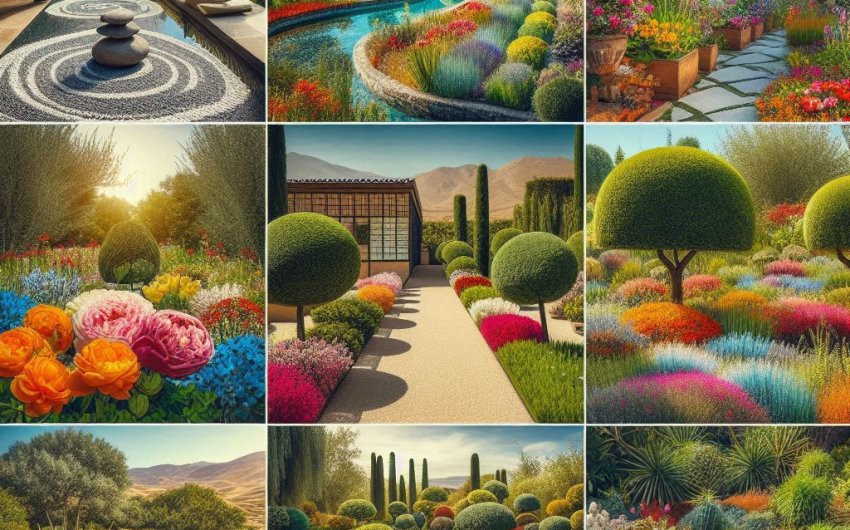
Outdoor gardens around the world offer a stunning tapestry of styles, philosophies, and plant palettes that extend far beyond just colorful blooms. From meticulously manicured landscapes reflecting spiritual principles to wild, ecologically driven spaces, global garden design is a testament to humanity's deep connection with nature and our varied approaches to shaping it. Exploring this diversity reveals how culture, climate, and history profoundly influence what we cultivate and how we experience the natural world.
How Do Cultural Philosophies Influence Garden Design Globally?
The way we design and interact with outdoor gardens is deeply rooted in cultural values, spiritual beliefs, and historical traditions. These philosophies shape everything from plant selection to the placement of stones and water.
Japanese Gardens: Harmony, Simplicity, and Symbolism
Japanese gardens are perhaps the most iconic example of a cultural philosophy dictating garden design. They are not merely collections of plants but miniature landscapes designed for contemplation and spiritual reflection.
- Key Principles:
- Miniaturization: Representing vast natural landscapes (mountains, rivers, oceans) in a small space.
- Symbolism: Every element has meaning. Stones can be mountains or islands, raked gravel represents water, moss signifies age and tranquility.
- Asymmetry (Fukinsei): Embracing imperfection and irregularity, mirroring natural forms.
- Borrowed Scenery (Shakkei): Integrating distant views (mountains, pagodas) into the garden composition.
- Balance and Harmony: Creating a sense of peace and natural flow.
- Types of Japanese Gardens:
- Zen Gardens (Karesansui): Dry landscape gardens of sand, gravel, and rocks, designed for meditation. Example: Ryoan-ji Temple in Kyoto.
- Stroll Gardens (Kaiyu-shiki Teien): Designed for walking along a path, revealing new views and scenes around every bend. Example: Kenroku-en in Kanazawa.
- Tea Gardens (Roji): Simple, rustic gardens leading to a tea house, designed to prepare the mind for the tea ceremony.
- Elements: Stones, carefully pruned pines, moss, water features (ponds, waterfalls, stone basins), stepping stones, lanterns. Flowers are typically minimal and used subtly.
- Philosophy: Emphasizes reverence for nature, transience, contemplation, and finding beauty in simplicity.
Chinese Gardens: Man's Connection to Nature and the Universe
Chinese gardens are often described as "paintings in three dimensions," aiming to recreate idealized natural landscapes and invite wandering and philosophical reflection.
- Key Principles:
- Yin and Yang: Balancing contrasting elements (e.g., rocks vs. water, light vs. shadow, dense vs. open space).
- Curved Lines: Emphasizing natural, winding paths and irregular shapes, rejecting straight lines.
- Framed Views: Creating specific viewpoints through moon gates, windows, and pavilions.
- Layers and Borrowed Scenery: Integrating distant landscapes into the garden's narrative.
- Cosmic Harmony: Representing the natural order of the universe.
- Elements: Scholar rocks (Gongshi) as focal points, ponds with fish, bridges (often zigzag to deter evil spirits), pavilions, covered walkways, winding paths, bamboo, pine, plum, lotus, and symbolic trees.
- Philosophy: Gardens as havens for scholars and poets, places for contemplation, escape, and connecting with the vastness of the universe. They represent a journey through an idealized landscape.
Islamic Gardens: Paradise on Earth
Islamic gardens, particularly those from Persia and Moorish Spain, are characterized by their strong geometric layouts, the central role of water, and the creation of lush, sensory-rich environments.
- Key Principles:
- Chahar Bagh (Fourfold Garden): A quintessential design divided into four quadrants by water channels, symbolizing the four rivers of paradise mentioned in the Quran.
- Water as Life: Water features (fountains, canals, pools) are central, providing irrigation, cooling, sound, and reflection.
- Enclosed Spaces: Often walled, creating a private, secluded oasis from the outside world.
- Symmetry and Order: Reflecting divine order and human control over nature.
- Sensory Experience: Emphasizing fragrant flowers, fruit trees, and the sound of water.
- Elements: Cypress trees (symbolizing eternity), fruit trees (pomegranates, citrus), fragrant roses, jasmine, geometric tile work, shaded pavilions, fountains.
- Philosophy: Gardens as a metaphor for paradise, a place of earthly pleasure, spiritual contemplation, and respite from arid climates. They bring the abundance of heaven down to earth. Example: The Generalife in the Alhambra, Spain.
How Do Different Climates Shape Outdoor Gardens?
The native climate dictates the types of plants that can thrive, which in turn influences the overall character and needs of outdoor gardens around the world.
Mediterranean Gardens: Sun-Drenched and Drought-Tolerant
Found in regions with hot, dry summers and mild, wet winters (e.g., California, Mediterranean coast, parts of Chile).
- Characteristics: Focus on drought-tolerant plants, often with silver or grey foliage, adapted to intense sun and low water. Strong architectural elements, stone, and terracotta.
- Plant Palette:
- Trees: Olive trees, Cypress, Citrus, Aleppo Pine.
- Shrubs: Lavender, Rosemary, Oleander, Bougainvillea, Myrtle, Cistus.
- Perennials: Succulents, Agave, Sedum, Euphorbia, Santolina, Echinops.
- Vines: Wisteria, Jasmine.
- Water Management: Emphasizes efficient irrigation (drip systems), use of gravel mulches, and sometimes dry stream beds. Water features are often small and for aesthetic/cooling rather than extensive irrigation.
- Design Elements: Terracotta pots, stone pathways, pergolas draped with vines, courtyards, vibrant ceramic tiles.
- Example: Many public and private gardens throughout Provence, Tuscany, and Southern California.
Tropical Gardens: Lush, Vibrant, and Biodiverse
Found in regions with high temperatures, high humidity, and abundant rainfall year-round (e.g., Southeast Asia, Central America, parts of Africa).
- Characteristics: Lush, dense foliage, vibrant colors from exotic flowers, large-leafed plants, and often multiple layers of vegetation. Emphasis on shade and cooling.
- Plant Palette:
- Trees: Palms (Areca, Coconut), Banana, Traveler's Palm, Mango.
- Shrubs: Hibiscus, Ixora, Croton, Plumeria, Bromeliads.
- Perennials: Heliconia, Ginger, Bird of Paradise, Alocasia, Philodendron.
- Vines: Monstera, Passion Flower.
- Water Management: Drainage is key due to high rainfall. Often incorporates naturalistic water features like ponds and streams.
- Design Elements: Open-air pavilions, water features, natural stone pathways, emphasis on texture and bold forms.
- Example: Singapore Botanic Gardens, many resorts in Bali or Thailand.
Desert Gardens: Resilience and Stark Beauty
Found in arid regions with extreme temperatures and very low rainfall (e.g., Arizona, parts of the Middle East, Australian Outback).
- Characteristics: Focus on native and drought-adapted plants. Emphasis on striking forms, textures, and subtle colors. Often uses gravel, rock, and minimalist designs.
- Plant Palette:
- Cacti: Saguaro, Barrel Cactus, Prickly Pear.
- Succulents: Agave, Yucca, Aloe, Euphorbia.
- Trees: Mesquite, Palo Verde, Ironwood.
- Shrubs: Creosote Bush, Ocotillo, brittlebush.
- Water Management: Extremely water-efficient. Drip irrigation for establishment, then minimal or no supplemental water. Emphasis on water harvesting.
- Design Elements: Natural stone, large boulders, sand, sculptural plants, often minimalist structures.
- Example: Desert Botanical Garden in Phoenix, Arizona.
Temperate Gardens: Seasonal Drama and Diverse Styles
Found in regions with distinct four seasons (e.g., much of North America, Europe, parts of East Asia).
- Characteristics: High seasonal variation. Can range from formal to informal, cottage style to modern. Emphasis on varied plant forms, textures, and color throughout the year.
- Plant Palette: Wide range of deciduous and evergreen trees, shrubs, perennials, and annuals that adapt to hot summers and cold winters.
- Water Management: Varies depending on region and plant choice, but typically relies on natural rainfall supplemented by irrigation during dry spells.
- Design Elements: Ponds, rock gardens, perennial borders, shrubberies, formal hedges, naturalistic plantings.
- Example: English Cottage Gardens, French Formal Gardens, many botanical gardens in North America.
What Are Unique Garden Styles and Features from Around the World?
Beyond climate-driven plant palettes, distinct garden styles have evolved, often reflecting unique local resources, aesthetic values, or spiritual beliefs.
English Cottage Gardens: Abundance and Romance
Evolved from humble origins, these gardens are characterized by their informal, overflowing abundance and romantic charm.
- Key Features:
- Dense Planting: Plants are packed closely together, spilling over paths and mingling.
- Informal Layout: Winding paths, soft edges, and a relaxed, natural feel.
- Mix of Plants: Herbs, vegetables, flowering perennials, roses, and climbers intermingle.
- Scent and Sound: Fragrant flowers and buzzing bees are key elements.
- Elements: Roses (climbing and bush), delphiniums, foxgloves, lavender, hollyhocks, clematis, rambling paths, picket fences, garden gates, arbors.
- Philosophy: Beauty, romance, and sensory delight, often with a hint of nostalgia for rural life.
French Formal Gardens: Order, Symmetry, and Grandeur
Developed during the Baroque era, epitomized by the gardens of Versailles, these gardens are a celebration of human control over nature.
- Key Features:
- Geometric Precision: Strict symmetry, straight lines, perfectly clipped hedges (parterres) in intricate patterns.
- Grand Scale: Designed to impress, often with long vistas, large water features, and expansive lawns.
- Optical Illusions: Techniques like forced perspective to make avenues appear longer.
- Limited Plant Palette: Emphasis on form and structure over individual plant species.
- Elements: Boxwood hedges, topiary, gravel paths, fountains, canals, sculptures, vast lawns, ornate ironwork.
- Philosophy: Rationality, order, and the power of man to impose his will on nature, reflecting the absolute monarchy.
Italian Renaissance Gardens: Architecture, Terraces, and Views
Developed in the 15th-16th centuries, often on hillsides, these gardens emphasize architecture, sculpture, and commanding views.
- Key Features:
- Terracing: Used to adapt to sloping sites, creating distinct levels.
- Water Features: Cascading fountains, grottoes, water organs, and water plays (giochi d'acqua) are central.
- Axial Planning: Strong central axes guiding the eye through the garden.
- Sculpture and Statuary: Integrated throughout the garden, often with mythological themes.
- Borrowed Landscape: Views of the surrounding countryside are framed and incorporated.
- Elements: Cypress alleys, lemon and orange trees in pots, formal hedges, grottos, stone balustrades, classical sculptures.
- Philosophy: Order, harmony, and the celebration of humanistic ideals, inspired by classical Roman and Greek antiquity. Example: Villa d'Este, Tivoli.
Nordic and Scandinavian Gardens: Minimalism and Resilience
Reflecting the harsh climate and strong connection to nature, these gardens prioritize practicality, native plants, and minimalist design.
- Key Features:
- Use of Native Plants: Resilient species that can withstand cold winters.
- Emphasis on Texture and Form: Often relying on conifers, grasses, and perennials for winter interest.
- Natural Materials: Stone, wood, and water are prominent.
- Functional Spaces: Integrating outdoor living areas, sometimes with fire pits or saunas.
- Light Sensitivity: Designed to maximize light in long winters and provide shade in long summer days.
- Elements: Birch trees, pines, junipers, hardy berries, heather, moss, natural stone walls, wooden decks.
- Philosophy: Simplicity, functionality, sustainability, and a deep appreciation for the stark beauty of the natural landscape.
How Do Gardens Reflect Urbanization and Modern Environmental Awareness?
As the world urbanizes and environmental concerns grow, new forms of outdoor gardens are emerging, often in unexpected places.
Rooftop Gardens: Urban Oases
Transforming unused rooftops into green spaces.
- Benefits: Reduces urban heat island effect, improves air quality, stormwater management, creates habitat, provides urban green space, can grow food.
- Challenges: Weight bearing, irrigation, drainage, plant selection for harsh rooftop conditions (wind, sun exposure).
- Plant Palette: Often uses sedums and other succulents for extensive green roofs, or a mix of trees, shrubs, and perennials for intensive green roofs.
- Example: Many modern city buildings globally, especially in Europe and North America.
Vertical Gardens (Green Walls): Living Art
Living walls that grow plants vertically on a structure.
- Benefits: Space-saving, aesthetic appeal, improves air quality, insulates buildings, reduces noise.
- Challenges: Complex irrigation systems, maintenance, cost, plant selection for vertical growth.
- Plant Palette: Often includes ferns, philodendrons, small grasses, and various small-leafed perennials.
- Example: Patrick Blanc's vertical gardens found on buildings worldwide.
Community Gardens: Social and Productive Spaces
Shared garden plots in urban areas.
- Benefits: Food production, community building, education, improves neighborhood aesthetics, provides green space, promotes healthy eating.
- Characteristics: Often focus on edible plants, but can also include ornamental flowers and shared gathering areas.
- Example: Found in cities globally, supporting urban agriculture movements.
Xeriscaping and Water-Wise Gardens: Sustainable Beauty
Designing landscapes that reduce or eliminate the need for irrigation, particularly in arid regions.
- Principles: Zoned planting (grouping plants with similar water needs), efficient irrigation, low water-use plants, mulching, improved soil.
- Plant Palette: Drought-tolerant native plants, succulents, ornamental grasses, hardy shrubs.
- Philosophy: Environmental responsibility, resource conservation, and adapting to natural conditions.
- Example: Increasingly popular in California, Arizona, and other drought-prone areas.
Permaculture Gardens: Mimicking Natural Ecosystems
Designing gardens as self-sustaining systems inspired by natural ecosystems.
- Principles: Observation, multi-functional elements, stacking functions, closed-loop systems (waste becomes resource), long-term thinking.
- Characteristics: Edible forest gardens, diverse polycultures, rainwater harvesting, composting, integration of animals.
- Plant Palette: Edible trees, shrubs, perennials, nitrogen fixers, dynamic accumulators. Focus on plant guilds and beneficial relationships.
- Philosophy: Ecological harmony, sustainable living, minimal input for maximum output, working with nature.
- Example: Numerous small-scale gardens and farms globally adopting permaculture principles.
The diversity of outdoor gardens around the world serves as a constant source of inspiration, showcasing humanity's incredible ingenuity and passion for connecting with the natural world, whether through grand design, humble cultivation, or innovative urban greening.