
How do I maintain a healthy balance of carbon and nitrogen in my compost pile?
Why Is Carbon-Nitrogen Balance So Important for Composting?
Composting is like baking a cake. You need the right ingredients in the right amounts for it to turn out perfectly. In composting, the two main "ingredients" are carbon and nitrogen. These two elements are vital because they are the food for the tiny workers in your compost pile – the microbes. These microbes break down all your kitchen scraps and yard waste into rich, dark compost. If you get the carbon-nitrogen balance wrong, your compost pile can become a slow, smelly mess, or just sit there doing nothing. Getting this balance right is the secret to fast, efficient, and odor-free outdoor composting. It’s the cornerstone of successful compost management.
What Do Carbon and Nitrogen Do in Compost?
Think of carbon as the "brown" stuff and nitrogen as the "green" stuff.
- Carbon (C): Provides energy for the microbes. It's the "fuel." Carbon-rich materials are typically dry, woody, and brown, like dry leaves, wood chips, and shredded paper. They also add bulk and create air pockets in your pile, which is crucial for good airflow.
- Nitrogen (N): Provides protein and nutrients for the microbes to grow and multiply. It's the "building blocks." Nitrogen-rich materials are usually fresh, moist, and green, like grass clippings, food scraps, and fresh plant trimmings. A good balance means the microbes have both the energy to work (from carbon) and the nutrients to grow their populations (from nitrogen). Without this balance, they can't do their job effectively, and your compost pile will suffer.
What Happens If the Balance Is Off?
- Too Much Nitrogen ("Greens"): If your pile has too much nitrogen and not enough carbon, it will likely become dense, wet, and start to smell like ammonia or rotten eggs. This happens because the microbes can't break down the nitrogen fast enough without enough carbon fuel and air. The excess nitrogen turns into a gas, causing the bad smell.
- Too Much Carbon ("Browns"): If your pile has too much carbon and not enough nitrogen, it will break down very, very slowly, or might not break down at all. The microbes don't have enough "building blocks" (nitrogen) to reproduce and multiply, so the composting process grinds to a halt. The pile might just sit there, looking dry and inactive. Maintaining the carbon-nitrogen ratio is essential for a hot, active, and efficient compost pile.
The Magic Ratio: C:N Ratio
The ideal carbon-to-nitrogen ratio (C:N ratio) for fast and efficient composting is usually said to be around 25 to 30 parts carbon to 1 part nitrogen (25-30:1). Don't worry, you don't need to be a scientist to achieve this! It’s more about understanding the types of materials and their general categories. A little experience will help you "feel" when your pile is balanced.
What Are "Green" Materials (Nitrogen Sources) for Composting?
To achieve a healthy carbon-nitrogen balance in your compost pile, you need to know which materials are rich in nitrogen. These are often called "greens" because many of them are green and fresh. They are the energy boost for your hardworking microbes, helping them reproduce and break down waste.
Common "Green" Materials
- Food Scraps: These are a fantastic source of nitrogen for your compost pile. Think:
- Fruit and vegetable peels, cores, and scraps (e.g., banana peels, apple cores, potato skins, lettuce trimmings).
- Coffee grounds (and filters): Very rich in nitrogen and a great compost activator. You can get a Compost Accelerator if you need a boost.
- Tea bags (and loose tea leaves): Also a good nitrogen source.
- Stale bread or pasta (in moderation, ensure broken up).
- Grass Clippings: Freshly cut grass is a very potent source of nitrogen.
- Caution: Use grass clippings in moderation. Too many can quickly make your pile too wet, dense, and smelly. Mix them thoroughly with "brown" materials to prevent matting. It's best to let them dry a bit before adding or mix them thinly into layers.
- Fresh Plant Trimmings: Any green, soft plant material from your garden, like spent annuals, soft stems, or leaves from pruning (as long as they are disease-free).
- Manure: From herbivores only (like cows, horses, chickens, rabbits). Never use pet waste from carnivorous animals (dogs, cats) as it can contain harmful pathogens. Manure is rich in nitrogen and helps heat up the pile.
- Weeds: Most green weeds (before they go to seed!) can be added. Avoid weeds with stubborn roots or seeds unless your pile consistently reaches high temperatures, as the heat can kill seeds.
- Algae and Seaweed: If you live near a source, these are excellent nitrogen-rich additions. Rinse off any salt first.
Characteristics of "Green" Materials
- High Nitrogen Content: This is their defining feature.
- Moist: They generally have a high water content.
- Tend to Break Down Quickly: Because they are moist and soft, microbes can process them faster.
- Can Cause Odors if Unbalanced: If you have too many greens without enough browns and aeration, they can easily turn smelly.
Tips for Adding "Greens"
- Chop or Shred: Break up larger food scraps and plant materials into smaller pieces. This increases their surface area, making it easier for microbes to work and speeding up decomposition.
- Bury Them: When adding kitchen scraps, always bury them a few inches deep in the middle of your compost pile and cover them with "brown" material. This helps prevent odors and deters pests.
- Mix Well: Never add a thick, solid layer of just greens. Always mix them with browns as you add them, or turn the pile shortly after adding a fresh batch. This helps distribute the nitrogen and prevents compaction.
What Are "Brown" Materials (Carbon Sources) for Composting?
Just as important as "greens" are the "browns" when it comes to maintaining a healthy carbon-nitrogen balance in your compost pile. These materials are rich in carbon, which provides the energy source for your microbes. They also create structure and aeration, preventing your pile from becoming a dense, smelly mess.
Common "Brown" Materials
- Dry Leaves: An absolute composting superpower! Collect fallen leaves in the fall. They are an abundant, free source of carbon and provide great bulk. Shredding them with a leaf shredder or lawnmower before adding them will make them break down much faster. A Leaf Shredder is a worthy investment for serious composters.
- Shredded Paper/Cardboard:
- Newspaper: Non-glossy newspaper is excellent. Avoid colored or glossy inserts.
- Cardboard: Cereal boxes, paper towel rolls, toilet paper rolls, and plain brown corrugated cardboard are great. Always remove tape, labels, and staples. Shred or tear them into small pieces.
- Egg Cartons: Another good source of shredded paper.
- Straw or Hay: These are excellent for adding bulk and creating air pockets in your pile. They break down at a moderate pace.
- Wood Chips/Sawdust: These are very high in carbon and break down slowly. Use them in moderation, especially sawdust from treated wood (which should be avoided). For larger amounts, consider composting them separately or layering very thinly.
- Pine Needles: These are acidic, so use in moderation. They break down slowly but provide good structure.
- Corn Stalks/Cobs: Break them into smaller pieces as they are quite tough and take a while to decompose.
- Dead Plants/Stalks: Brown, dried-up garden plants (as long as they weren't diseased or full of seeds).
Characteristics of "Brown" Materials
- High Carbon Content: This is their defining feature.
- Dry: They typically have a low moisture content.
- Provide Structure and Aeration: Their coarse nature creates air pockets, which are essential for aerobic microbes.
- Break Down More Slowly: Due to their woody and fibrous nature, they take longer to decompose than greens.
Tips for Adding "Browns"
- Stockpile Them: Since "browns" are often seasonal (like fall leaves), it's a great idea to collect and store them so you have a supply year-round. Keep a bag of shredded leaves or cardboard next to your compost bin.
- Layer or Mix Thoroughly: When adding a batch of "greens," always have a pile of "browns" ready to layer over them. This helps balance the nitrogen, absorbs excess moisture, and prevents odors.
- Shred for Speed: The smaller the pieces, the faster they will decompose. Running leaves through a lawnmower or shredding cardboard makes a huge difference. This also helps prevent the pile from becoming too dense.
- Use to Cover Scraps: Always use a layer of browns to cover fresh food scraps. This is vital for pest control and odor prevention.
What Is the Ideal Carbon-to-Nitrogen Ratio (C:N) and How Do You Estimate It?
Understanding the ideal carbon-to-nitrogen ratio (C:N ratio) is the theoretical heart of compost management. While you don't need to be a chemist to compost successfully, knowing what the ratio represents and how to roughly estimate it by eye will dramatically improve your outdoor composting results. The goal is to provide the perfect "diet" for your compost microbes.
The Magic Number: 25-30:1
The generally accepted ideal C:N ratio for rapid, efficient composting is 25 to 30 parts carbon to 1 part nitrogen.
- Why 25-30:1? This ratio provides enough carbon for the microbes' energy needs while also giving them enough nitrogen for their body mass (protein). If there's too much nitrogen, the excess is released as ammonia gas (the bad smell). If there's too much carbon, the microbes don't have enough nitrogen to multiply, and the decomposition process slows down.
Estimating the C:N Ratio By Volume (The Easier Way!)
You don't need a lab test to get a good C:N ratio. Most home composters go by volume. A good rule of thumb is to aim for:
- 2 to 3 parts "Brown" (Carbon-rich) materials to 1 part "Green" (Nitrogen-rich) materials.
For example: if you add a bucket of kitchen scraps (greens), follow it with 2-3 buckets of dry leaves or shredded cardboard (browns). This visual estimation helps you keep your pile balanced. It’s more of an art than a strict science at the home level.
Examples of C:N Ratios for Common Materials (Approximate)
It's helpful to know roughly where common materials fall on the C:N scale:
- Very High Nitrogen (Low C:N):
- Grass clippings (fresh): 10-20:1
- Food scraps (mixed veg/fruit): 15-20:1
- Coffee grounds: 20:1
- Manure (cattle/poultry): 10-25:1
- Balanced/Mid-Range (Closer to ideal C:N):
- Most garden weeds: 20-30:1
- High Carbon (High C:N):
- Dry leaves: 40-80:1
- Straw: 40-100:1
- Shredded newspaper/cardboard: 100-150:1
- Wood chips/sawdust: 200-500:1
Knowing these rough numbers helps you understand why you need significantly more browns than greens by volume. For instance, grass clippings break down fast and are potent, so they need plenty of dry leaves to balance them out.
Don't Get Bogged Down by Numbers
While the ideal ratio is 25-30:1, don't obsess over it. A range of 20:1 to 40:1 will still compost well. The visual estimation method of 2-3 parts browns to 1 part greens by volume is usually sufficient for home composting. What's more important is paying attention to the signs your compost pile gives you.
Listen to Your Compost Pile
Your compost pile will tell you if the C:N ratio is off:
- Smells like ammonia or rotten eggs: Too much nitrogen (greens). Add more browns and turn.
- Smells musty or earthy but not decomposing: Too much carbon (browns). Add more greens and turn.
- Doesn't heat up (for hot composting): Could be too much carbon, too dry, or not enough aeration. Add greens, water, and turn. Adjusting your input materials based on these signs is the most practical way to maintain a healthy carbon-nitrogen balance.
How Does Layering and Mixing Help Maintain Balance?
Just knowing what "greens" and "browns" are isn't enough; how you add them to your compost pile makes a big difference in maintaining the proper carbon-nitrogen balance. Layering and mixing are techniques that ensure your microbes get a well-distributed meal, leading to faster, more efficient, and odor-free outdoor composting.
The Principle of Layering
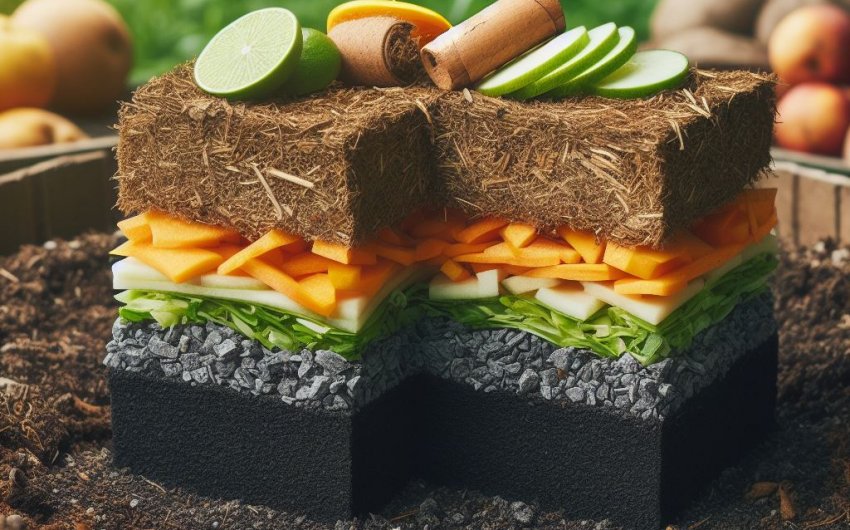
Layering means adding your compost materials in alternating sections of "greens" and "browns." This helps distribute the carbon and nitrogen throughout the pile, preventing dense, anaerobic (oxygen-lacking) pockets or dry, inactive zones.
- Start with Browns: Begin your compost pile with a layer of coarser brown materials, like small twigs or shredded branches, at the very bottom. This provides good drainage and helps establish initial airflow.
- Alternate Layers: After the base, add a layer of "browns" (e.g., 6-8 inches of dry leaves or shredded cardboard), followed by a thinner layer of "greens" (e.g., 2-4 inches of kitchen scraps or grass clippings). Then, cover the greens with more browns.
- Cover Fresh Greens: Crucially, always finish by covering any fresh "green" material (especially food scraps) with a layer of "browns." This helps balance the nitrogen, reduces odors, and deters pests.
- Example Layers:
- Bottom: Coarse woody browns (twigs)
- Layer 1: 6 inches of shredded dry leaves
- Layer 2: 2 inches of food scraps
- Layer 3: 4 inches of shredded newspaper
- Layer 4: 1 inch of grass clippings
- Layer 5: 6 inches of dry leaves ...and so on.
The Importance of Mixing (Turning)
While layering sets up the initial balance, mixing (or turning) your compost pile is essential for maintaining it. Turning incorporates fresh air (oxygen) into the pile and thoroughly mixes the materials, bringing different C:N ratios together for the microbes.
- Aeration: Turning introduces oxygen, which is vital for the aerobic microbes that break down compost quickly and without odors. Without turning, the pile can become compacted and go anaerobic, leading to bad smells. A good compost aerator, like the Compost Crank, makes this easier.
- Even Distribution: Turning mixes newly added materials with older, partially decomposed ones. This ensures that all the "greens" are properly distributed among the "browns," and that all parts of the pile get exposed to the optimal heat and moisture conditions. It prevents hot spots and cold spots.
- Moisture Distribution: Turning also helps distribute moisture evenly throughout the pile. If some parts are too dry, turning can help spread moisture from wetter areas or incorporate water as you add it.
How Often to Turn
- For Hot Composting: If you want fast results and high temperatures, turn your pile every 2-4 days, especially when it's actively heating up. This fuels the microbes with oxygen.
- For Cold Composting: If you're happy for a slower process, turning once a week or even once a month will suffice to maintain some aeration and mix. Always check your pile's smell and moisture when turning. If it smells bad or seems overly wet, it's a sign it needs more aeration and potentially more "browns."
Best Practices for Mixing
- Use the Right Tools: A compost aerator or a sturdy pitchfork (like a Garden Fork for Composting) is essential.
- Turn Thoroughly: Don't just poke holes. Aim to move material from the outside to the center and from the top to the bottom. For open piles, you can literally move the entire pile from one spot to another.
- Incorporate New Materials: When you add a new batch of "greens" or "browns," mix them well into the existing pile rather than just leaving them on top.
How Do You Adjust the C:N Ratio When Something Goes Wrong?
Even with the best intentions, your compost pile might sometimes send you signals that its carbon-nitrogen balance is off. This is a normal part of compost management. The good news is that most problems are easy to fix once you learn to read the signs and know how to adjust your mix of "greens" and "browns." This active troubleshooting is key to successful outdoor composting.
Problem 1: Your Compost Pile Smells Like Ammonia or Rotten Eggs
- The Sign: This is the most common and clear sign of an imbalance. An ammonia smell means you have too much nitrogen ("greens"). The microbes are breaking down the nitrogen so fast that the excess is gassing off, and there isn't enough carbon or oxygen to absorb it. A rotten egg smell means the pile has become anaerobic (lacks oxygen) due to being too wet and dense.
- The Cause: Too many fresh grass clippings, too many food scraps, or simply not enough "brown" materials and/or turning.
- The Solution:
- Add More "Browns": This is your primary fix. Immediately add a generous amount of dry, carbon-rich materials like shredded dry leaves, shredded cardboard, or straw. These will absorb excess moisture and provide the much-needed carbon to balance the nitrogen.
- Turn the Pile Thoroughly: As you add the browns, mix them aggressively into the smelly parts of the pile using your compost aerator or pitchfork. This introduces oxygen, which is essential for aerobic microbes to work and stops the anaerobic (smelly) process.
- Reduce "Greens" Input (Temporarily): For the next few days or weeks, hold back on adding more "greens" until the smell subsides and the pile balances out.
Problem 2: Your Compost Pile Is Not Heating Up (for Hot Composting) or Breaking Down Slowly
- The Sign: Your pile feels cold or lukewarm, and materials aren't visibly breaking down, even after a few weeks.
- The Cause 1: Too Much Carbon ("Browns"): If you have a lot of dry leaves or wood chips and not enough "greens," the microbes don't have enough nitrogen to reproduce and build their populations to actively break things down. They are starving for protein.
- The Solution 1: Add More "Greens": Incorporate more nitrogen-rich materials like kitchen scraps, fresh grass clippings (in moderation), or coffee grounds. Mix them in thoroughly. This will give the microbes the "fuel" they need to kickstart activity and generate heat.
- The Cause 2: Too Dry: If the pile is bone dry, microbes become inactive.
- The Solution 2: Add Water: Moisten the pile as you turn it. Aim for a "damp sponge" consistency.
- The Cause 3: Not Enough Aeration: Lack of oxygen can also slow things down, even if the C:N ratio is okay.
- The Solution 3: Turn More Often: Increase the frequency of turning to introduce more oxygen.
Problem 3: Your Compost Pile is Soggy and Slimy
- The Sign: The compost feels waterlogged, gooey, and likely smells bad.
- The Cause: Too much moisture, often coupled with too many "greens" (which are high in water content) and not enough "browns" to absorb the excess or provide structure. Lack of aeration often contributes.
- The Solution:
- Add Plenty of Dry "Browns": This is crucial. Add large quantities of shredded dry leaves, cardboard, or straw. These will act like sponges, absorbing the excess moisture.
- Turn Aggressively: Thoroughly mix the new dry browns into the wet, slimy material. This introduces air and helps dry out the pile.
- Ensure Drainage: Make sure your compost bin has good drainage at the bottom. If it's on a hard surface, you might need to move it or create a permeable base.
- Cover During Rain: If your pile is getting too much rain, consider covering it temporarily with a tarp.
By learning to recognize these signs and applying the right "fix," you'll become a skilled compost manager, capable of maintaining a healthy and productive compost pile.
Can I Use a Compost Activator to Balance My Pile?
You've heard about "greens" and "browns," and the important carbon-nitrogen balance. Sometimes, even when you try your best, your compost pile might seem a bit sluggish. This is where a compost activator might come in handy. While not always necessary, an activator can give your compost a helpful boost, especially if your balance is a little off or if you're trying to speed up a slow pile.
What is a Compost Activator?
A compost activator is a material that is rich in nitrogen and/or contains beneficial microbes, enzymes, or nutrients designed to kickstart or accelerate the decomposition process in your compost pile. Think of it as a starter fluid for your compost.
- Natural Activators: These are common materials you might already have. They are essentially highly nitrogenous "greens" that give a rapid burst of energy to the existing microbes.
- Commercial Activators: These are products you buy, often in a granular or liquid form, specifically formulated to boost composting.
Common Natural Compost Activators
These are often the best and cheapest activators because they are readily available and natural sources of nitrogen.
- Fresh Grass Clippings: As discussed, they are very high in nitrogen. A thin layer, mixed in, can quickly heat up a pile.
- Coffee Grounds: Exceptionally rich in nitrogen and a favorite of many composters. They are also slightly acidic, which can be beneficial. Many coffee shops will give away used coffee grounds for free.
- Manure (Herbivore): Aged manure from cows, horses, or chickens is packed with nitrogen and beneficial microbes. It's a powerhouse activator.
- Alfalfa Meal or Blood Meal: These are concentrated sources of nitrogen, often used as organic fertilizers. A small sprinkle can activate a sluggish pile. You can find Blood Meal Fertilizer online.
- Finished Compost: Adding a shovel full of finished compost from a previous batch to a new pile (or a sluggish one) introduces millions of active microbes, essentially "seeding" the new pile.
Commercial Compost Activators
These products contain a mix of beneficial bacteria, fungi, enzymes, and sometimes trace minerals or nitrogen sources.
- When to Use: They can be useful if you're starting a new pile from scratch with limited diverse materials, if your pile seems stuck and won't heat up, or if you're dealing with very carbon-heavy materials like wood chips.
- How to Use: Follow the package directions. Typically, you sprinkle or mix them into the pile, often with some water. You can find various options like Jobe's Organics Compost Starter.
Do You Always Need an Activator?
No! If you maintain a good carbon-nitrogen balance with your regular "greens" and "browns," ensure adequate moisture, and turn your pile regularly, you usually won't need a separate compost activator. The microbes naturally present in your materials (especially food scraps and soil) will be sufficient. Activators are more of a boost or a fix for specific situations.
How Activators Help Balance
Activators, particularly the nitrogen-rich ones, work by rapidly increasing the nitrogen content, which then fuels the rapid multiplication of microbes. More microbes means faster breakdown of carbon, helping to balance the overall C:N ratio and get that heat going, especially if your pile was too carbon-heavy.
What Materials Should You Absolutely Avoid in Your Compost Pile?
Maintaining a healthy carbon-nitrogen balance is vital, but so is knowing what not to put in your compost pile. Some materials can throw off your balance, attract pests, introduce diseases, or simply won't break down, causing more problems than they solve in your outdoor composting journey. Avoiding these items is a crucial part of compost management.
1. Meat, Bones, Fish, and Dairy Products
- Why Avoid: These are the biggest culprits for attracting unwanted pests like rodents (rats, mice), raccoons, flies, and other scavengers. They also break down very slowly, can become putrid, and create very strong, unpleasant odors as they decompose. This throws off the ideal environment for beneficial composting microbes.
- Example: Leftover chicken bones, fish heads, milk, cheese, butter.
2. Fats, Oils, and Greases
- Why Avoid: Like meat and dairy, these attract pests. They also create an oily film over compost materials, which can coat the beneficial microbes and slow down the decomposition process by creating anaerobic conditions.
- Example: Cooking oil, bacon grease, salad dressings, greasy food scraps.
3. Diseased Plants or Pest-Infested Plants
- Why Avoid: If you add plants with diseases (e.g., powdery mildew, blight) or active pest infestations, there's a high risk that the disease spores or pest eggs will survive the composting process (unless your pile consistently reaches very high temperatures, which is hard for home composters). When you use the finished compost, you could then reintroduce these problems into your garden.
- Example: Tomato plants with blight, rose bushes with black spot, plants covered in aphids.
4. Weeds with Seeds or Invasive Weeds
- Why Avoid: Unless your compost pile consistently gets hot enough ((130^\circ\text{F}) to (160^\circ\text{F})) to kill weed seeds, you'll simply be cultivating and spreading weeds throughout your garden when you use your finished compost. Invasive weeds (like bindweed or creeping Charlie) can also survive and spread from the compost.
- Example: Dandelions with white seed heads, thistle, Bermuda grass, quackgrass.
5. Pet Waste (from Carnivores/Omnivores)
- Why Avoid: Dog and cat feces can contain harmful pathogens (bacteria, viruses, parasites) that can survive the composting process and pose health risks to humans if the compost is used on food crops. This includes parasites like Toxoplasma gondii.
- Example: Dog poop, cat litter (even biodegradable types). Manure from herbivores (like rabbits, chickens, cows, horses) is generally safe.
6. Treated Wood, Sawdust from Treated Wood, or MDF/Plywood
- Why Avoid: Lumber or wood products that have been treated with preservatives (like CCA - chromated copper arsenate, or other chemicals) can leach toxic substances into your compost, which will then end up in your garden soil. MDF, plywood, and particleboard contain glues and chemicals that are not safe for composting.
- Example: Old deck wood, fence posts, pressure-treated lumber scraps.
7. Coal Ash or Charcoal Briquettes
- Why Avoid: Coal ash can contain heavy metals that are toxic to plants and soil microbes. Charcoal briquettes often contain chemical additives that are not good for organic compost. Wood ash from a clean wood fire is generally okay in moderation, but don't confuse it with coal or charcoal.
8. Synthetic Chemicals or Pesticides
- Why Avoid: Any materials that have been recently sprayed or treated with synthetic pesticides, herbicides, or fungicides should not go into your compost. These chemicals can harm beneficial microbes and persist in the finished compost, contaminating your garden.
By carefully selecting what goes into your compost pile, you ensure a healthy, active composting process and produce safe, nutrient-rich compost for your garden. It’s an essential aspect of proper carbon-nitrogen balance and overall compost management.