
Color Magic: Using Colors to Make Your Arrangements Pop
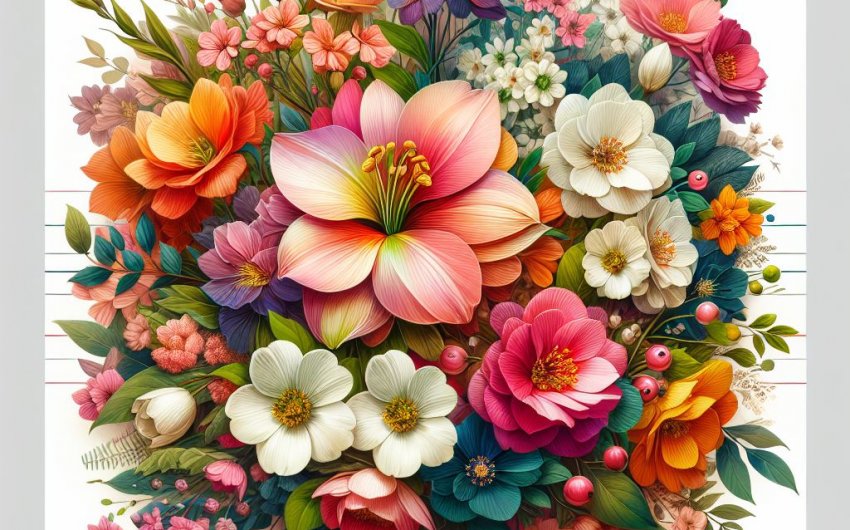
To truly make your arrangements pop, use color magic by understanding basic color theory and applying it strategically. Focusing on harmonious palettes like analogous or complementary schemes, leveraging contrast, and incorporating unexpected pops of color will transform ordinary blooms into dazzling, eye-catching displays.
What is color theory and why is it important for flower arrangements?
Color theory is a set of principles that guide how colors work together, and it's incredibly important for flower arrangements because it allows you to intentionally create specific moods, emphasize certain blooms, and ultimately make your arrangements pop. Understanding color relationships elevates a simple bunch of flowers into a thoughtful, impactful visual statement.
Key concepts of color theory for flower arrangements:
- The Color Wheel:
- Primary Colors: Red, Blue, Yellow. These are the foundation.
- Secondary Colors: Orange (red + yellow), Green (yellow + blue), Violet/Purple (blue + red).
- Tertiary Colors: Mix of primary and secondary (e.g., Red-Orange).
- Warm vs. Cool Colors:
- Warm Colors: Reds, oranges, yellows. These colors tend to be energetic, passionate, and visually "advance," making them appear closer.
- Cool Colors: Blues, greens, purples. These colors tend to be calming, serene, and visually "recede," making them appear further away.
- Hues, Tints, Tones, and Shades:
- Hue: The pure color (e.g., red).
- Tint: A hue mixed with white (e.g., pink).
- Tone: A hue mixed with gray (e.g., dusty rose).
- Shade: A hue mixed with black (e.g., burgundy).
- Impact: Using tints, tones, and shades of a single color or across a palette adds depth and sophistication.
- Impact on Mood: Colors have psychological effects. Bright colors energize, cool colors calm, dark colors add drama.
How do I use monochromatic color schemes to make arrangements pop?
Using monochromatic color schemes is a powerful way to make your arrangements pop with sophistication and depth, without relying on a riot of different hues. This technique leverages various shades, tints, and tones of a single color, creating elegant flower arrangements that are anything but boring.
Steps for a monochromatic arrangement that pops:
- Choose Your Core Color: Select a single color (e.g., pink, purple, white, green).
- Gather Variety within the Color:
- Flowers: Collect flowers that come in different shades, tints, tones, and even shades of your chosen color.
- Example for Pink: Pale pink roses, medium pink carnations, fuchsia snapdragons, dusty rose dahlias.
- Example for White: Pure white lilies, creamy white roses, green-tinged white hydrangeas.
- Foliage: Even foliage can contribute if it has hints of your chosen color (e.g., burgundy Heuchera with red arrangements, silvery Dusty Miller with white/cool-toned arrangements).
- Flowers: Collect flowers that come in different shades, tints, tones, and even shades of your chosen color.
- Vary Texture and Form:
- Crucially, since you're using one color, compensate with a variety of flower shapes, sizes, and textures.
- Example for Pink: Combine the smooth petals of a pink rose, the frilly texture of a pink carnation, the airy quality of pink Baby's Breath, and the spiky form of pink Snapdragons.
- Layer and Create Depth:
- Use taller blooms for height, mounding flowers for volume, and trailing elements to spill. This layering prevents the arrangement from looking flat.
- Use a Neutral Vessel:
- A clear glass vase, or a white, grey, or black ceramic container will let the subtle nuances of your chosen color take center stage.
- Highlight with Green:
- Even in a monochromatic scheme, green foliage provides a natural backdrop and a visual resting place, making the single color pop even more. Choose greens that complement your hue (e.g., silvery Eucalyptus with pink/purple; dark green Ruscus with reds).
How do I create vibrant arrangements using analogous color schemes?
Creating vibrant arrangements using analogous color schemes is a fantastic way to achieve a harmonious and flowing design that truly makes your arrangements pop. This approach uses colors that sit next to each other on the color wheel, resulting in a cohesive and visually pleasing display that feels natural and inviting.
Steps for analogous arrangements that pop:
- Choose Your Starting Color: Pick a primary or secondary color from the color wheel (e.g., yellow).
- Select Neighboring Colors: Choose 1-2 colors immediately adjacent to your starting color on the wheel.
- Example 1 (Warm Analogous): Yellow, Yellow-Orange, Orange.
- Example 2 (Cool Analogous): Blue, Blue-Violet, Violet.
- Example 3 (Spring Analogous): Yellow, Yellow-Green, Green.
- Gather Diverse Flowers: Collect flowers in your chosen analogous palette, ensuring a good mix of forms and textures.
- Example (Yellow, Orange, Red): Yellow Tulips, orange Roses, red Gerbera Daisies, and orange Carnations.
- Vary Heights and Depth:
- Place taller blooms (e.g., Snapdragons) to establish height.
- Use mounding flowers (e.g., Petunias, Marigolds) to build volume.
- Incorporate trailing elements (e.g., Sweet Potato Vine) to soften edges and create flow.
- Use Green Foliage as a Bridge:
- Green foliage naturally acts as a connecting element between analogous colors, enhancing the harmony. Choose greens that lean slightly warm (yellow-green) or cool (blue-green) to match your palette.
- Consider a Complementary Pop (Subtly!):
- For an extra "pop," you can introduce a tiny accent of the complementary color of your main analogous group. For example, a small touch of blue in a yellow/orange/red arrangement. Use sparingly to avoid overwhelming the harmony.
- Choose a Harmonious Vase:
- A neutral clear glass vase or a ceramic vase in one of the analogous colors will enhance the scheme.
How do complementary color schemes create dramatic, popping arrangements?
Complementary color schemes are arguably the most effective way to make your arrangements pop with dramatic intensity and vibrant contrast. By pairing colors directly opposite each other on the color wheel, you create a powerful visual tension where each color makes the other appear brighter and more intense, resulting in truly eye-catching flower arrangements.
Steps for dramatic complementary arrangements that pop:
- Identify Complementary Pairs:
- Red & Green: Classic pairing.
- Blue & Orange: Energetic and bold.
- Yellow & Purple: Bright and sophisticated.
- Choose Your Dominant Color: Decide which color you want to be more prominent, and use more of it. The other will serve as a vibrant accent.
- Gather Diverse Flowers in Both Hues: Collect a variety of flowers in your chosen complementary pair, ensuring different forms and textures.
- Example (Yellow & Purple): Bright yellow Sunflowers or Gerbera Daisies with deep purple Iris or Larkspur.
- Example (Blue & Orange): Deep blue Delphiniums with vibrant orange Roses or Tulips.
- Balance Intensity:
- If using very bright, pure complementary colors, a little goes a long way.
- You can soften the intensity by using tints (lighter versions) or shades (darker versions) of one or both colors. For example, pale yellow with deep violet.
- Integrate Green Foliage Wisely:
- Green is a natural complement to red, but it also acts as a neutral backdrop for other complementary pairs. Use it to separate colors or provide a visual resting place.
- Choose greens that don't clash; a deeper green often works best.
- Vary Heights and Textures:
- The contrast in form (spiky, round, feathery) will enhance the visual drama of the complementary colors.
- Choose a Neutral or Complementary Vase:
- A clear glass vase is always a safe bet.
- A vase in one of the complementary colors (e.g., a blue vase for blue and orange flowers) can intensify the effect.
What is a triadic color scheme, and how does it make arrangements vibrant?
A triadic color scheme is a dynamic and balanced approach to making your arrangements vibrant by utilizing three colors that are equally spaced around the color wheel. This creates a lively and cheerful effect, ensuring your flower arrangements truly pop with energetic and harmonious contrast.
Steps for vibrant triadic arrangements:
- Identify Triadic Color Sets:
- Primary Triad: Red, Yellow, Blue.
- Secondary Triad: Orange, Green, Purple (Violet).
- Choose Your Dominant Color: While all three colors are equally spaced, you can choose one to be more dominant or used in larger quantities, with the other two acting as accents.
- Gather Diverse Flowers in All Three Hues: Collect a variety of flowers with different forms and textures in your chosen triadic palette.
- Example (Red, Yellow, Blue): Bold red Geraniums, sunny yellow Daisies, and serene blue Delphiniums or Hydrangeas.
- Example (Orange, Green, Purple): Fiery orange Marigolds, vibrant green Button Poms or lush green Hosta leaves, and rich purple Asters.
- Balance the Visual Weight:
- Distribute the colors evenly throughout the arrangement, or intentionally group them for dynamic focal points.
- Use different sizes of flowers in each color to create visual interest.
- Use Green Foliage Liberally:
- Green, as a neutral and a natural element, helps to unify the three distinct colors and provides a visual resting place for the eye.
- Choose lush greenery that complements the vibrancy of the blooms.
- Vary Heights and Textures:
- The use of varied forms (round, spiky, feathery) will enhance the energy of the triadic palette.
- Choose a Neutral Vase:
- A clear glass, white, or black vase will allow the vibrant triadic colors to be the main focus.
How do warm and cool colors change the mood of flower arrangements?
The intentional use of warm and cool colors can dramatically change the mood and perception of your flower arrangements, enabling you to create specific atmospheres. Understanding this fundamental aspect of color magic is crucial for making your arrangements pop with desired emotional impact.
Mood impact of warm colors:
- Colors: Reds, Oranges, Yellows, and combinations involving these.
- Psychological Effect:
- Energy & Excitement: Warm colors are stimulating and vibrant.
- Passion & Love: Especially reds.
- Cheer & Joy: Especially yellows and bright oranges.
- Warmth & Inviting: Evoke feelings of sunshine, fire, and coziness.
- Visual Impact: They tend to visually "advance," making objects appear closer and larger.
- Best for:
- Occasions: Celebrations, birthdays, anniversaries, festive gatherings, romantic gestures.
- Settings: Entryways, dining tables (to create a lively atmosphere), rooms needing a burst of energy.
- Flower Examples: Sunflowers, red Roses, orange Lilies, yellow Zinnias, orange Tulips, red Geraniums.
Mood impact of cool colors:
- Colors: Blues, Greens, Purples (especially those leaning towards blue), Whites, and combinations involving these.
- Psychological Effect:
- Calm & Serenity: Evoke feelings of peace, tranquility, and relaxation.
- Stability & Trust: Especially blues.
- Sophistication & Elegance: Especially purples and whites.
- Coolness & Freshness: Evoke water, sky, and shade.
- Visual Impact: They tend to visually "recede," making objects appear farther away and sometimes smaller.
- Best for:
- Occasions: Sympathy, healing, creating a peaceful retreat, elegant formal events.
- Settings: Bedrooms, bathrooms, quiet reading nooks, formal living rooms, small spaces (to make them feel larger).
- Flower Examples: Blue Delphiniums, purple Asters, white Lilies, green Hydrangeas, blue Thistles.
How can I use a pop of contrasting color to make arrangements pop?
Adding a strategically placed pop of contrasting color is a simple yet incredibly effective technique to make your arrangements pop with energy and visual excitement. This technique leverages the power of unexpected color to draw the eye and create a dynamic focal point in your flower arrangements.
Steps for a popping contrasting color:
- Establish Your Main Palette:
- Start with a harmonious base, such as a monochromatic scheme (e.g., all white, all pink) or an analogous scheme (e.g., yellow, orange, red). This will be the dominant color story of your arrangement.
- Identify the Contrast:
- Choose a single color that is the direct complementary (opposite on the color wheel) of your dominant color, or a color that provides a very strong, unexpected contrast.
- Example 1 (Monochromatic Pink with Pop): Pink roses, pink carnations, pink tulips as the base.
- Pop: A few sprigs of vibrant lime green Button Poms or a single bright blue Delphinium (blue is complementary to pink's red component).
- Example 2 (Analogous Yellow/Orange/Red with Pop): Yellow Zinnias, orange Marigolds, red Salvia as the base.
- Use Sparingly:
- The "pop" works best when it's just a small, impactful accent. Don't add too much, or it will dilute the effect and become just another color in the mix.
- Use 1-3 stems of the contrasting color.
- Strategic Placement:
- Place the contrasting color where you want the eye to go—often near a focal flower or in an unexpected spot.
- You can group the contrasting elements or scatter them as small bursts.
- Consider Foliage:
- Lush green foliage provides a natural backdrop that makes any color, especially a contrasting one, stand out more.
How do different types of foliage contribute to color magic in arrangements?
Foliage is far more than just flowers; it's a vital component for adding color magic to your arrangements, even when you're focusing on blooms. Diverse foliage provides crucial contrast, harmony, and visual depth, making your arrangements pop in subtle yet powerful ways.
Foliage types and their color contributions:
- Bright Green / Lime Green Foliage:
- Examples: Creeping Jenny, chartreuse Sweet Potato Vine, 'Wasabi' Coleus, some ferns.
- Color Impact: Adds freshness, light, and a vibrant contrast. Makes dark colors richer and bright colors pop even more. Can act as a "neutral" that leans warm.
- Best with: Reds, oranges, yellows, bright pinks, purples.
- Dark Green / Forest Green Foliage:
- Examples: Ruscus, Leatherleaf Fern, Ivy, dark-leaf Hostas.
- Color Impact: Provides depth, richness, and a sophisticated backdrop. Makes bright flowers appear more vivid and creates a strong contrast with white or light-colored blooms. Can act as a neutral that leans cool.
- Best with: Whites, pinks, reds, purples, oranges.
- Silver / Grey Foliage:
- Examples: Dusty Miller, Eucalyptus, Artemisia, Dichondra 'Silver Falls'.
- Color Impact: Softens colors, adds elegance, and creates a cool, sophisticated feel. Enhances blue and purple blooms.
- Best with: Whites, blues, purples, soft pinks, and for calming down vibrant palettes.
- Burgundy / Purple / Dark Foliage:
- Examples: 'Blackie' Sweet Potato Vine, dark-leaf Heuchera, certain Coleus varieties.
- Color Impact: Adds drama, depth, and richness. Makes light or bright flowers truly pop.
- Best with: Pinks, fuchsias, oranges, yellows, lime greens, white.
- Variegated Foliage:
- Examples: Variegated Pittosporum, some Hostas, Caladiums.
- Color Impact: Adds multi-tonal interest and can bridge different colors in an arrangement.
- Best with: Enhances mixed arrangements, provides interest even without blooms.
How do lighting and vase choice influence color perception in arrangements?
The choice of lighting and vase significantly influences how colors are perceived in your flower arrangements, effectively acting as an extension of your color magic. Understanding these factors helps you make your arrangements pop and look their best in any setting.
How lighting influences color:
- Natural Light (Daylight):
- Full Spectrum: Natural daylight (especially indirect light) provides the most balanced and accurate perception of true flower colors.
- Direct Sun: Can make colors appear washed out or overly bright, and can also make flowers wilt faster. Avoid placing arrangements in direct, hot sun.
- Shade: In very dim natural light, colors (especially dark ones) can appear muted or dull.
- Artificial Light:
- Warm White (Yellowish): Common incandescent bulbs or warm LEDs. Will enhance warm colors (reds, oranges, yellows) making them appear richer, but can dull cool colors (blues, purples) or make whites appear yellowish.
- Cool White (Bluish): Some fluorescent bulbs or cool LEDs. Will enhance cool colors, making blues and purples appear more vibrant, but can make warm colors seem less intense or reds look purplish.
- Full Spectrum LED: Designed to mimic natural daylight, offering a more balanced color perception.
- Strategy: Consider the dominant lighting in the room where the arrangement will be placed and choose flowers that will look best under that light. Or, use targeted lighting to highlight the arrangement.
- Amount of Light:
- Well-lit arrangements always appear more vibrant than those in dim corners. Use accent lighting (e.g., small spotlights or fairy lights) to make your arrangement a focal point.
How vase choice influences color:
- Clear Glass Vases:
- Impact: Allows the full color of the flower stems and water to be seen. Can create a vibrant green base with healthy stems, enhancing bright blooms. Requires meticulous water cleanliness.
- Best for: Most arrangements, especially those with interesting stems or a desire for a light, airy feel.
- White Vases:
- Impact: Provides a neutral, crisp backdrop that makes all colors pop. Enhances purity and brightness.
- Best for: Monochromatic arrangements, vibrant mixes, elegant displays.
- Black / Dark Grey Vases:
- Impact: Creates dramatic contrast. Makes bright and light colors appear incredibly vivid and bold.
- Best for: Striking modern arrangements, jewel-toned flowers, monochromatic whites or reds.
- Vases in a Specific Color:
- Impact: Can intensify an analogous color scheme (e.g., a blue vase with blue and purple flowers). Can highlight a complementary color (e.g., a yellow vase with purple flowers).
- Strategy: Choose a vase that is either part of your color palette or acts as a deliberate contrasting pop.
- Textured / Patterned Vases:
- Impact: Adds an additional layer of visual interest and color.
- Strategy: Ensure the pattern or texture doesn't clash with or overwhelm the flowers themselves.
By mastering the color magic of complementary, analogous, and monochromatic schemes, leveraging the power of contrasting pops, and understanding how lighting and vase choice influence perception, you can transform your floral creations into truly stunning flower arrangements that unequivocally pop.