
How long does it take for compost to be ready for use in the garden?
Making your own compost is like magic for a gardener. You take old food scraps and yard waste, and over time, they turn into a rich, dark material that makes plants grow wonderfully. It’s a bit like turning trash into treasure. This "black gold" improves soil, helps plants get nutrients, and even keeps diseases away. Plus, it's a fantastic way to reduce waste from your home and garden. Instead of throwing things away, you're giving them a new purpose.
But if you're new to composting, one of the first questions you might ask is, "How long does this magic take?" It's not an instant process, that's for sure. The time it takes for compost to be ready can change a lot. It depends on many things, like how you build your compost pile, what you put in it, and even the weather. We're going to break down all these factors. We'll show you how to tell when your compost is perfectly ready to help your garden thrive.
What is Compost and Why is it Good for Your Garden?
Before we talk about how long it takes, let's quickly go over what compost actually is and why gardeners love it so much.
What Exactly is Compost?
Compost is simply organic matter that has broken down. Think of all the stuff that was once alive – plant parts, food scraps, leaves, grass clippings. When these things rot away naturally, they become compost. This happens thanks to tiny living things like bacteria, fungi, and worms. They eat the waste and turn it into a dark, crumbly material that smells like fresh earth. It's often called humus, which is the stable end product of decomposition.
Why is Compost So Good for Gardens?
Compost is like a superfood for your garden soil. It does many amazing things:
- Improves Soil Structure: If you have sandy soil, compost helps it hold water and nutrients better. If you have heavy clay soil, compost loosens it up, making it easier for roots to grow and water to drain. It creates a better home for plant roots.
- Adds Nutrients Slowly: Unlike chemical fertilizers that give a quick burst of nutrients, compost releases nutrients slowly over time. This provides a steady food supply for your plants. It's rich in things like nitrogen, phosphorus, and potassium, plus many important micronutrients.
- Boosts Soil Life: Healthy soil is full of tiny organisms. Compost feeds these good bugs and microbes, which in turn help your plants take up nutrients and fight off diseases. It creates a whole underground ecosystem.
- Holds Water: Because of its spongy nature, compost can hold a lot of water. This means you won't have to water your plants as often, which saves time and water.
- Balances pH: Compost helps to balance the pH level of your soil, making it more suitable for a wider range of plants. It acts as a buffer against extreme acidity or alkalinity.
- Suppresses Diseases: A healthy, biologically active soil that's rich in compost can help suppress plant diseases. The good microbes in the compost can outcompete or even attack harmful pathogens.
- Reduces Waste: Composting is a great way to recycle kitchen scraps and yard waste, keeping them out of landfills. This is good for the environment.
So, when we talk about how long it takes for compost to be ready, we're talking about the time it takes for all these benefits to become available to your garden.
What Factors Affect Compost Ready Time?
The speed at which your compost pile breaks down can swing wildly, from a few weeks to over a year. It all depends on how well you manage a few key ingredients, often called the "greens," "browns," water, and air.
What are Greens and Browns?
Think of greens and browns as the food for your tiny compost critters. They need a balanced diet!
- Greens (Nitrogen-Rich): These are materials that are generally moist and high in nitrogen. They provide the "fuel" for the rapid breakdown process.
- Examples: Fresh grass clippings, fruit and vegetable scraps, coffee grounds, tea bags, fresh manure, green plant trimmings.
- Browns (Carbon-Rich): These are drier, more woody materials that are high in carbon. They provide bulk, structure, and a slower-releasing energy source.
- Examples: Dry leaves, straw, shredded paper, cardboard, wood chips, sawdust, dry plant stalks.
The Golden Ratio: The ideal ratio is roughly 2 parts browns to 1 part greens by volume. If you have too many greens, your pile might get slimy and smelly. Too many browns, and it will break down very slowly. Getting this mix right is one of the biggest ways to speed up your compost. You can even use a Compost Ratio Calculator if you want to be very precise.
How Does Particle Size Matter?
Smaller pieces break down faster. It's that simple!
- Reason: The tiny microbes that do the composting work have more surface area to munch on when materials are cut into smaller bits.
- Action: Chop up fruit and vegetable scraps, shred leaves with a lawnmower, or use a Garden Shredder for larger branches or stalks. Aim for pieces no bigger than 1-2 inches.
Why is Moisture Important?
Compost needs to be moist, like a wrung-out sponge.
- Too Dry: If your pile is too dry, the microbes can't do their job, and decomposition will slow down or stop completely.
- Too Wet: If it's too wet, it can become squishy, anaerobic (meaning it lacks air), and start to smell bad. This is when you get slimy, foul-smelling compost.
- Action: Add water if it feels dry. If it's too wet, add more dry browns to soak up the excess moisture. Rain can also help, but if your compost bin is open to heavy rain, make sure it drains well.
How Does Air (Aeration) Help?
The composting process is aerobic, meaning it needs oxygen.
- Reason: The hardworking microbes need air to breathe and thrive. Without enough oxygen, different kinds of microbes take over, causing bad smells and slowing decomposition.
- Action: Turning your compost pile regularly is key. This mixes the materials, brings in fresh air, and helps distribute moisture. Aim to turn it every few days to once a week for fast composting. You can use a Compost Aerator Tool or a pitchfork.
What About Temperature?
Temperature is a sign of healthy composting.
- Hot Composting (Thermophilic): This is the fastest method. When the greens, browns, moisture, and air are all balanced, the microbial activity generates a lot of heat. A well-managed hot pile can reach temperatures between 130-160°F (55-70°C). This heat kills weed seeds and harmful pathogens.
- Cold Composting: If your pile is smaller, doesn't have the right balance, or isn't turned, it will still break down, but much slower and without significant heat. This is often called "lazy composting."
The ideal scenario for speed is to aim for a hot compost pile. The better you manage these factors, the quicker your compost will be ready for your garden.
How Long Does Hot Composting Take?
Hot composting, also known as "active composting" or "fast composting," is the quickest way to get finished compost. It involves creating the perfect conditions for speedy decomposition.
What Are the Key Steps for Hot Composting?
- Build a Good-Sized Pile: For a hot pile to truly heat up, it needs to be at least 3x3x3 feet (1x1x1 meter). This minimum size helps insulate the core and allows heat to build up.
- Get the Right Mix (Greens and Browns): As mentioned, aim for about 2 parts browns to 1 part greens. You ideally want to build the whole pile at once or in large layers to kickstart the process.
- Moisture Check: Ensure the entire pile is consistently moist, like a damp sponge. Add water as you build layers if materials are dry.
- Chop Everything Small: The smaller the pieces, the faster it will break down.
- Turn, Turn, Turn! This is the most crucial part of hot composting.
- Frequency: For fastest results, turn the pile every 2-4 days. This re-aerates the pile and moves outer materials to the hot core.
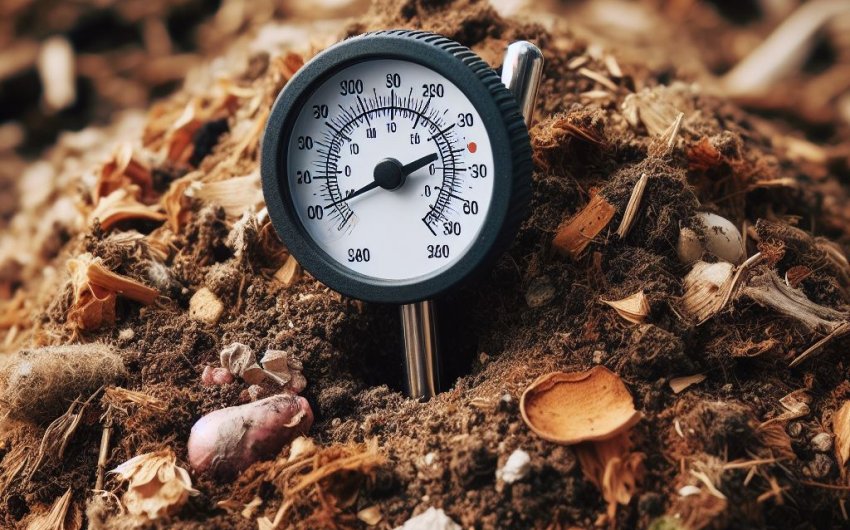
- Temperature Check: A good hot compost pile will heat up rapidly, sometimes reaching 130-160°F (55-70°C) within 24-48 hours. You can use a Compost Thermometer to monitor the temperature. When the temperature starts to drop, it's a sign that the microbes have consumed most of the readily available energy, and it's time to turn to introduce fresh oxygen.
How Long Does it Actually Take?
If you consistently follow these steps – especially the turning and maintaining moisture – you can have usable compost in as little as 3 weeks to 3 months.
- 3-4 Weeks: This is the absolute fastest for a highly dedicated composter with an ideal mix of finely chopped materials, turning every other day. You'll likely get a slightly coarser compost, but it will be rich in nutrients.
- 1-3 Months: This is a more realistic timeframe for most active home composters. You might turn it once or twice a week, and the materials are mostly broken down.
The key to achieving these fast times is the frequent turning and monitoring of the pile's moisture and temperature. If you neglect any of these factors, the process will slow down.
What are the Benefits of Hot Composting?
- Speed: Obviously, it's the fastest way to get compost.
- Kills Weeds and Pathogens: The high temperatures generated in a hot pile are effective at killing most weed seeds and harmful bacteria or fungi that could cause plant diseases.
- Reduces Volume Quickly: Materials break down rapidly, shrinking the size of your pile.
Hot composting requires more effort and attention but delivers quick results and a higher quality, weed-free finished product.
How Long Does Cold Composting Take?
Cold composting, also known as "passive composting" or "lazy composting," is the simplest method. It involves just piling up organic materials and letting nature take its course. While much less labor-intensive than hot composting, it takes significantly longer.
What are the Key Steps for Cold Composting?
- Add Materials Gradually: Instead of building a large pile all at once, you simply add kitchen scraps, yard waste, and other compostable materials as they become available. There's less focus on exact green-to-brown ratios, though trying for a general mix is still beneficial.
- No Turning Required (Mostly): You don't need to turn the pile regularly. The decomposition happens much slower, relying on natural aeration. You might occasionally give it a stir with a Compost Fork if you feel like it, but it's not essential for the process to occur.
- Moisture: Rain usually provides enough moisture for cold piles, but you might need to water it during very dry spells.
- Particle Size: While smaller pieces break down faster, with cold composting, you don't have to be as strict about chopping everything up. Larger pieces will just take longer.
How Long Does it Actually Take?
This is where the "cold" part comes in. Without active management, the process is much slower.
- 6 months to 2 years: This is the typical range for cold composting.
- 6-12 Months: If you have a decent mix of materials and some natural turning (like from earthworms or settling), you might see usable compost within this timeframe, especially if you stop adding new materials for a few months to let it finish.
- 1-2 Years: If you continuously add new materials to the top of the pile, the very bottom layers might be ready in about a year, but the top layers will still be actively breaking down. It's an ongoing process.
What are the Benefits and Drawbacks of Cold Composting?
Benefits:
- Low Effort: It requires very little work. Just add materials and wait.
- Continuous Process: You can keep adding scraps whenever you have them.
Drawbacks:
- Slow: Takes a long time to produce usable compost.
- Doesn't Kill Weeds or Pathogens: Since the pile doesn't heat up, weed seeds and disease-causing organisms may survive and be spread to your garden when you use the compost.
- Attracts Pests: If food scraps are not buried deep enough, cold compost piles can sometimes attract rodents or other pests.
- Smell: If the balance of materials or moisture is off, cold piles are more prone to generating unpleasant odors due to anaerobic conditions.
Cold composting is perfect for gardeners who have plenty of time and less immediate need for large quantities of finished compost. It's a great "set it and forget it" method, but patience is key.
What Are Some Specialty Composting Methods?
Beyond traditional hot and cold composting, there are a few other methods that can speed up or adapt the composting process for specific needs or spaces.
How Does Vermicomposting Work?
Vermicomposting uses worms, specifically red wigglers (Eisenia fetida), to break down organic matter.
- Mechanism: These special worms eat food scraps and other organic materials, digesting them and producing nutrient-rich castings (worm poop). These castings are an excellent form of compost.
- Speed: Faster than cold composting, but usually not as fast as hot composting. You can get usable worm castings in 2-6 months.
- Materials: Best for kitchen scraps (fruits, vegetables, coffee grounds, tea bags), shredded paper, and small amounts of yard waste. Avoid meat, dairy, oily foods, and citrus in large amounts, as these can harm the worms.
- Set Up: Requires a specialized Worm Composting Bin. These bins are usually layered, allowing worms to migrate upwards as they finish consuming material in lower trays.
- Benefits:
- Produces incredibly rich, finely textured worm castings.
- Excellent for indoor composting, as it's typically odor-free if managed correctly.
- Great for small spaces like apartments or balconies.
- The worms do all the turning and mixing!
What About Tumbler Composting?
A compost tumbler is a sealed, rotating drum that makes turning your compost pile much easier.
- Mechanism: You add materials to the drum, then simply spin it every few days to mix and aerate the contents.
- Speed: Faster than traditional cold composting, often producing usable compost in 1-3 months if managed well (meaning you still need a good mix of greens and browns, proper moisture, and consistent turning). It's essentially a form of accelerated hot composting.
- Materials: Can handle a wider range of materials than worm bins, but still best to avoid meat and dairy to prevent smells and pests.
- Set Up: Requires a Compost Tumbler. They come in various sizes, often with two chambers to allow one batch to finish while you start another.
- Benefits:
- Easy to turn, reducing physical labor.
- Enclosed design can help deter pests.
- Neater and less messy than an open pile.
- Can heat up well for faster decomposition.
What is Trench Composting?
Trench composting (or "pit composting") is a very simple method where you bury your organic waste directly into the garden soil.
- Mechanism: Dig a trench or hole in your garden, bury kitchen scraps, and then cover them with soil. The decomposition happens underground, directly where the nutrients will be used.
- Speed: Very slow, as there's no active turning or heat generation. Materials break down at the pace of natural soil decomposition, typically over several months to a year.
- Materials: Best for smaller amounts of kitchen scraps. Avoid large quantities of woody material.
- Benefits:
- Extremely simple and low-effort.
- Hides food waste completely, preventing smells and pests.
- Feeds the soil directly.
- Doesn't require a dedicated compost bin.
These specialized methods offer alternatives depending on your space, time, and desired speed for compost production.
How Do You Know When Compost is Ready?
This is a critical question for any composter! You don't want to use half-finished material, but you also don't want to wait longer than you need to. There are several clear signs that your "black gold" is ready for your garden.
What Does Ready Compost Look Like?
- Color: Finished compost should be dark brown or black. This uniform color means the original materials have broken down fully.
- Texture: It should be crumbly and rich, similar to healthy garden soil. You shouldn't be able to easily identify most of the original items you put in (like banana peels or coffee grounds). You might see small bits of tougher material, like twigs, but they should be few and far between.
- Smell: This is one of the best indicators! Ready compost should smell like fresh, earthy soil, like a forest floor after rain. It should NOT smell sour, rotten, like ammonia, or like trash. A bad smell means it's still breaking down or something is off (like too much nitrogen or not enough air).
What Does it Feel Like?
- Temperature: A finished compost pile should be cool to the touch, roughly the same temperature as the outside air. If it's still warm in the center, it's still actively decomposing and not quite ready.
- Moisture: It should be consistently moist, but not wet or soggy. When squeezed, a few drops of water might come out, but it shouldn't drip freely.
Are There Any Other Signs?
- No Pests: A mature compost pile should not attract flies or rodents. The active decomposition phase is over, and it's no longer a food source for them.
- Worms and Insects: While the initial heating phase of hot composting might deter them, a ready compost pile will often have plenty of beneficial earthworms and other soil insects. These are good signs of healthy, mature compost.
What if Some Materials Aren't Fully Broken Down?
It's common for some tougher materials, like large pieces of wood, avocado pits, or corn cobs, to take longer to break down completely.
- Screening: For a very fine, uniform compost, you can screen it. This involves pushing the compost through a mesh screen (like Compost Sieve or hardware cloth) with holes typically 1/2 to 1 inch in size. The fine, finished compost falls through, and the larger, unfinished pieces stay behind.
- Re-compost: You can then toss the larger, unfinished pieces back into your active compost pile to break down further. This is a great way to make sure nothing goes to waste.
Using finished compost ensures you're giving your plants the stable, nutrient-rich boost they need, without risking issues like "nitrogen tie-up" (where microbes temporarily steal nitrogen from your plants to finish breaking down woody material).
How Do You Use Finished Compost in the Garden?
Once your "black gold" is ready, it's time to put it to work! Compost is incredibly versatile and can be used in almost every part of your garden.
What is Top-Dressing?
Top-dressing is one of the easiest and most beneficial ways to use compost.
- Method: Simply spread a 1-2 inch layer of finished compost over the soil surface around your existing plants, shrubs, trees, or in garden beds.
- Benefits:
- Slow-release nutrients: As water seeps through, it carries nutrients down to the plant roots.
- Weed suppression: A layer of compost can help block weed growth.
- Moisture retention: It acts like a mulch, keeping the soil moist.
- Soil improvement: Over time, it slowly works its way into the soil, improving its structure.
This is a great ongoing way to feed your garden throughout the season.
How to Amend Garden Beds Before Planting?
When preparing new garden beds or refreshing existing ones, compost is your best friend.
- Method: Spread a 2-4 inch layer of compost over the entire bed. Then, gently mix it into the top 6-12 inches of soil using a Garden Fork or tiller.
- Benefits:
- Boosts fertility: Provides a rich, nutrient-filled environment for new plant roots.
- Improves drainage and aeration: Essential for healthy root development.
- Enhances water retention: Especially beneficial in sandy soils.
This gives your plants a fantastic head start and creates a healthy foundation for the entire growing season.
Can You Use Compost for Potting Mix?
Yes, but with caution. While compost is rich, it's generally too dense and can hold too much water to be used as 100% potting mix, especially for containers.
- Method: Mix compost with other ingredients to create your own custom potting mix. A common recipe is 1 part finished compost, 1 part Perlite (for drainage and aeration), and 1 part Peat Moss or coco coir (for moisture retention).
- Benefits:
- Provides natural nutrients for container plants.
- Reduces the need for synthetic fertilizers.
- Adds beneficial microbes to your pots.
Using compost in potting mixes is a great way to make them more sustainable and active.
What About Planting Trees and Shrubs?
When planting new trees or shrubs, compost can help them get established.
- Method: Mix compost with the soil you backfill into the planting hole. A ratio of 1 part compost to 2-3 parts original soil is usually good. Avoid adding a thick layer of pure compost around the root ball, as this can sometimes create drainage issues or discourage roots from growing into the surrounding native soil.
- Benefits:
- Provides a nutrient boost for the young plant.
- Improves the soil structure around the root zone, helping roots spread.
Can Compost Be Used to Make Compost Tea?
Yes! Compost tea is a liquid fertilizer made by steeping finished compost in water.
- Method: Place finished compost in a porous bag (like a mesh bag or old pantyhose) and submerge it in a bucket of water. Let it steep for 1-3 days, stirring occasionally. For "aerated" compost tea, you'll need an air pump and air stone to keep oxygen flowing.
- Benefits:
- Provides a nutrient boost in liquid form, easily absorbed by plants.
- Delivers beneficial microbes directly to plant leaves and soil.
- Can be used as a foliar spray (sprayed on leaves) or watered into the soil.
Always dilute compost tea to a light brown color before using.
With ready compost in hand, you'll have a powerful tool to nurture your garden, improve your soil's health, and grow more vibrant, productive plants. The time and effort you put into composting truly pays off.