
What are the best composting methods for small spaces or urban gardens?
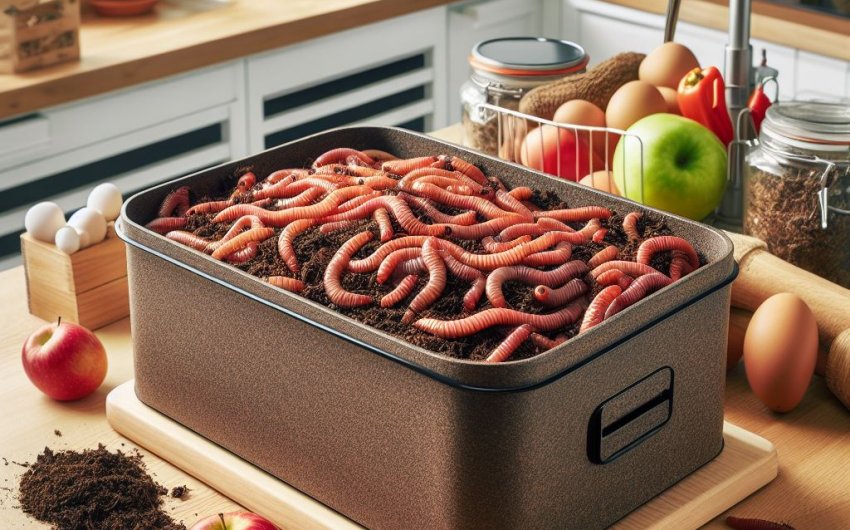
Living in a city or having a compact living space often comes with its own unique challenges, and gardening is no exception. While the dream of a sprawling backyard compost pile might be out of reach, that doesn't mean you have to miss out on the incredible benefits of composting. Every kitchen generates food scraps, and even a small balcony garden or a few houseplants can benefit immensely from the nutrient-rich "black gold" that compost provides. The good news is that composting isn't just for large properties; there are many clever and efficient methods perfectly suited for small spaces, urban dwellers, and apartment living.
From sleek indoor systems to surprisingly effective outdoor solutions that don't take up much room, you can absolutely turn your organic waste into valuable fertilizer, reduce your carbon footprint, and bring more life to your potted plants or compact garden beds. It's all about choosing the right method that fits your space, your lifestyle, and your composting goals. Let's dive into the best composting methods for small spaces and urban gardens, proving that you don't need acres to compost like a pro.
Why Should I Compost in a Small Space?
Even in a compact living situation, the reasons to compost are just as compelling, if not more so, than for those with large backyards.
1. Reduces Waste and Landfill Burden
This is a universal benefit. A significant portion of household waste is organic, meaning it can be composted. By composting your kitchen scraps and plant waste, you divert them from landfills. In a landfill, organic waste breaks down without oxygen, producing methane, a powerful greenhouse gas. Composting, especially aerobic methods, prevents this, making it a powerful environmental act no matter your space.
2. Creates Free, High-Quality Fertilizer
Why buy expensive potting mixes or chemical fertilizers when you can make your own nutrient-rich compost for free? For urban gardeners with limited budgets or those relying on container gardening, homemade compost is an invaluable resource. It enriches your soil, improves drainage, and helps your plants thrive naturally.
3. Improves Soil Health for Containers and Small Beds
Container gardens and raised beds, common in urban settings, can quickly deplete their soil nutrients. Regularly adding compost replenishes these vital elements, ensuring your plants remain healthy and productive without constantly buying new bags of soil.
4. Saves Money
Less trash means potentially smaller garbage bills (if charged by volume). More importantly, free compost means less money spent on soil amendments, potting mix, and synthetic fertilizers.
5. Connects You to Nature
Even in a concrete jungle, composting offers a tangible connection to natural cycles. It's a satisfying process that shows you the power of decomposition and recycling, right in your own home or on your balcony.
What Are My Composting Options for Small Spaces?
When space is limited, the traditional open pile might be out. Here are the top methods adapted for urban and small-space living, ranging from indoor to outdoor solutions.
1. Worm Composting (Vermicomposting): The Indoor Star
Vermicomposting uses special worms, typically Red Wigglers (Eisenia fetida), to break down organic waste. It's an excellent method for apartments, balconies, and even under kitchen sinks because it's clean, efficient, and doesn't smell if managed correctly.
How it Works:
- Worms do the work: You feed your kitchen scraps to the worms in a specially designed bin. The worms eat the organic matter and produce nutrient-rich castings (worm poop), which are essentially finished compost.
- Layered bins: Many vermicomposting systems use stacked trays. As the worms finish processing food in one tray, they migrate upwards to a new tray that you've added with fresh food scraps. This makes harvesting the finished compost (the castings) easy.
- Indoor friendly: Worm bins can be kept indoors (kitchen, closet, basement), on a balcony, or in a protected outdoor spot like a patio, as long as temperatures are moderate.
Advantages for Small Spaces:
- Compact: Worm bins are relatively small, taking up very little floor space.
- Odorless (if managed well): A healthy worm bin with proper moisture and a balanced diet of scraps (avoiding meat, dairy, oily foods) should not smell. An earthy smell means it's working!
- Fast: Worms can process food scraps quite quickly, yielding finished compost (castings) in a few months.
- High-quality compost: Worm castings are incredibly rich in nutrients and beneficial microbes, considered some of the best amendments for plants.
- Handles only food scraps: Ideal for kitchens without yard waste.
Disadvantages for Small Spaces:
- Temperature sensitivity: Worms need temperatures between roughly (55-77^\circ \text{F}) ((13-25^\circ \text{C})). Too hot or too cold can harm or kill them.
- Specific food types: Cannot handle meat, dairy, oily foods, or pet waste. Larger woody yard waste also won't break down.
- Learning curve: Requires a bit of learning initially to understand worm care and bin management.
- Initial cost: You'll need to buy a Worm Composting Bin and a supply of Red Wiggler Worms.
2. Bokashi Composting: Fermentation Powerhouse
Bokashi is a unique composting method that uses an anaerobic (oxygen-free) fermentation process. It's a great option for almost any type of food waste and is entirely indoor-friendly.
How it Works:
- Fermentation, not decomposition: Unlike traditional composting, Bokashi doesn't decompose food. Instead, it ferments it using special Bokashi bran (which contains beneficial microbes).
- Airtight container: Food scraps are layered with Bokashi bran in an airtight bucket. The microbes in the bran break down the food through fermentation.
- All food waste: This method can handle almost all food waste, including meat, dairy, and cooked food, which are typically avoided in other home composting systems.
- Two-stage process: After fermenting for 2-4 weeks, the fermented material (which looks largely unchanged but smells pickly) is then buried in a garden, mixed with soil in a container, or added to a regular compost pile for final breakdown.
Advantages for Small Spaces:
- Compact and Odor-Free: Bokashi bins are small and completely sealed, meaning they are virtually odorless during the fermentation process. Perfect for kitchen counters or under the sink.
- Handles ALL food waste: This is a huge advantage for urban dwellers who generate varied food scraps.
- Quick initial process: The fermentation process itself only takes a few weeks.
- Reduces volume: It significantly reduces the volume of kitchen waste.
Disadvantages for Small Spaces:
- Two-stage process: You still need a place to "finish" the fermented material. If you don't have a garden to bury it in, you'll need large containers of soil to mix it with, or a community composting drop-off that accepts Bokashi.
- Initial cost: Requires buying a Bokashi Compost Bin and regular supplies of Bokashi Bran.
- Pickle smell: The finished fermented material has a strong, pickly, acidic smell when opened, which dissipates once mixed with soil.
3. Tumbler Composters: Easy Outdoor Solution
Compost tumblers are enclosed, rotating bins designed to make turning the compost pile easy. They are great for balconies, patios, or small backyard areas.
How it Works:
- Enclosed system: Materials are added to a sealed barrel that rotates on a stand.
- Easy turning: Instead of using a pitchfork, you simply spin the tumbler a few times every few days. This mixes the contents and aerates the pile.
- Faster decomposition: Regular turning helps maintain oxygen and can lead to faster decomposition than a static cold pile, though usually not as fast as a perfectly managed hot pile.
Advantages for Small Spaces:
- Space-efficient: Takes up a minimal footprint.
- Rodent-proof: Being sealed and off the ground, tumblers are generally excellent at keeping out pests.
- Odor control: The enclosed design and regular turning help minimize odors.
- Clean: No mess on the ground, making them suitable for paved areas.
- Good for mixtures: Can handle most kitchen scraps and smaller yard wastes.
Disadvantages for Small Spaces:
- Initial cost: Tumblers can be more expensive upfront than basic bins. A popular option is the Compost Tumbler Dual Chamber, which allows you to have one batch breaking down while you fill another.
- Limited capacity: Can only handle a certain volume of material. If you have a lot of yard waste (like fall leaves), you might overwhelm it.
- Weight: Can become very heavy and difficult to turn when full.
- May not get "hot": While they can reach warm temperatures, smaller tumblers may not consistently achieve true "hot composting" temperatures to kill all weed seeds and pathogens.
4. Continuous Flow/Stacking Composting Bins: Vertical Efficiency
These are usually vertical bins designed for easy adding of material to the top and harvesting of finished compost from the bottom.
How it Works:
- Vertical design: Materials are added to the top chamber. As decomposition occurs, the material sinks, and finished compost can be removed from a door or hatch at the bottom.
- Good aeration: Many designs have aeration holes or internal structures to promote airflow.
Advantages for Small Spaces:
- Space-saving: Their vertical design uses less horizontal space.
- Continuous process: No need to stop adding materials to harvest.
- Relatively low effort: Less turning required than a hot pile or tumbler.
Disadvantages for Small Spaces:
- Cost: Can be more expensive than basic bins.
- Capacity: Limited by height.
- May attract pests: Depending on the design and material added, can be less pest-proof than tumblers if not completely sealed at the bottom.
5. Burying Scraps (Trench Composting/Dig & Drop): Simple and Discreet
This is one of the simplest methods if you have even a small patch of soil, such as a raised bed or a corner of a garden.
How it Works:
- Dig a hole: Dig a small trench or hole (6-12 inches deep) in your garden bed.
- Add scraps: Bury kitchen scraps (avoiding meat, dairy, oils) directly into the hole.
- Cover: Cover the scraps with soil.
- Move spots: Rotate locations each time you bury new scraps.
Advantages for Small Spaces:
- Invisible: No visible compost bin, perfect for very small or highly visible areas.
- Extremely low effort: Just dig, drop, and cover.
- Directly feeds soil: Nutrients are released directly into your garden soil.
- No cost: Uses no special equipment.
Disadvantages for Small Spaces:
- Limited capacity: Only works for small amounts of scraps. You can't bury large quantities of yard waste.
- Time: Takes time for materials to break down underground.
- Can attract pests: If not buried deep enough or if too many attractive food items are buried, it can attract rodents or other animals.
6. Community Composting: No Bin Required!
If you truly have no space, or prefer not to manage a bin yourself, community composting might be the answer.
How it Works:
- Drop-off programs: Many cities or neighborhoods have public composting drop-off sites, often at farmers' markets, community gardens, or designated collection points.
- Curbside pickup: Some municipalities offer curbside collection of food scraps and yard waste specifically for composting.
Advantages for Small Spaces:
- No effort, no space, no mess: You simply collect your scraps and take them to a drop-off or put them out for collection.
- Handles all waste: Community programs often have the capacity to compost items you can't at home, like meat, dairy, and even compostable plastics.
Disadvantages for Small Spaces:
- No free compost: You typically don't get the finished compost back for your own garden.
- Not available everywhere: Depends on local programs.
Tips for Successful Small-Space Composting
Regardless of the method you choose, a few general tips will help ensure your small-space composting efforts are successful and odor-free.
1. Balance "Greens" and "Browns"
While some methods are more forgiving than others, aiming for a good balance of nitrogen-rich "greens" (kitchen scraps, fresh grass) and carbon-rich "browns" (dry leaves, shredded paper, cardboard) is crucial. Too many greens can lead to a smelly, slimy pile; too many browns will slow down decomposition. For indoor methods, prioritize more browns to keep odors down.
2. Chop Materials Small
Smaller pieces break down much faster. Cut up your fruit and vegetable scraps, tear cardboard into small bits, and shred paper. A Kitchen Composter for Scraps with a grinding function can help with this.
3. Maintain Proper Moisture
Your compost should feel like a wrung-out sponge – damp, but not soggy.
- Too dry: Decomposition will slow or stop. Add a little water.
- Too wet: Can lead to anaerobic (stinky) conditions. Add more dry "brown" materials.
4. Provide Airflow (for Aerobic Methods)
For vermicomposting and tumblers, ensure your bin has proper ventilation. For tumblers, regular turning is essential to introduce oxygen.
5. Avoid Problematic Materials (Unless Bokashi)
For all methods except Bokashi, strictly avoid meat, bones, dairy products, and oily foods. These attract pests and cause foul odors. Also avoid pet waste, diseased plants (unless hot composting or burying deep), and chemically treated materials.
6. Control Odors
- Cover food scraps: Always cover new kitchen scraps with a layer of "browns" (like shredded paper or a thin layer of soil in a worm bin).
- Maintain balance and moisture: This is key for preventing anaerobic smells.
- Choose the right method: If odors are a major concern, Bokashi or a well-sealed tumbler are excellent choices.
7. Location Matters
- Outdoor bins: Place in a spot that's convenient for adding materials but not too close to windows, patios, or neighbors. Partial shade can help maintain moisture.
- Indoor bins: Choose a stable temperature location. Kitchens are fine for Bokashi, and a laundry room, basement, or closet can work for worm bins.
Even with limited square footage, composting is an entirely achievable and incredibly rewarding endeavor. By selecting the composting method that best suits your urban environment and dedicating a little consistent effort, you'll soon be transforming your kitchen and garden waste into rich, life-giving compost, cultivating not just healthier plants but also a more sustainable lifestyle.