
Composting in Cold Climates: Tips to Keep the Pile Active Year-Round
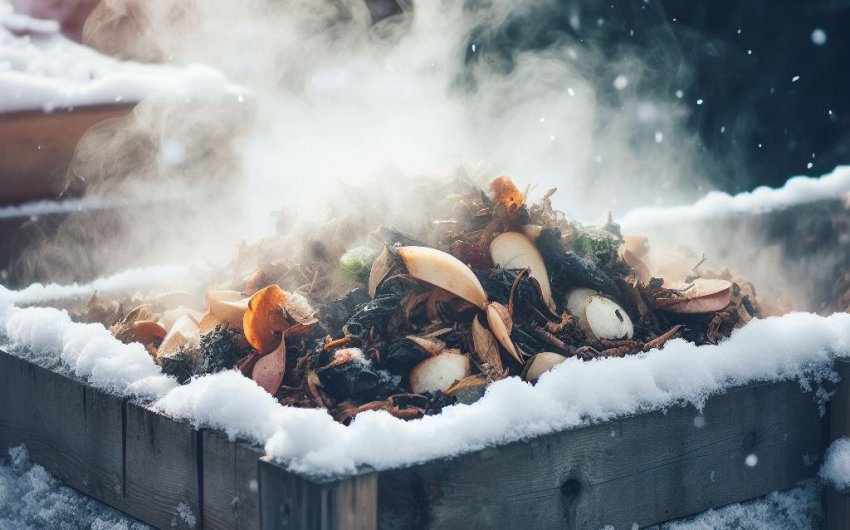
Composting in cold climates, while challenging, can be kept active year-round by focusing on insulation, maintaining a large pile size, managing moisture, and layering materials correctly. While decomposition will slow significantly in freezing temperatures, strategic preparation and management can prevent your compost pile from completely freezing solid and allow activity to resume quickly when warmer weather returns.
Why is composting more challenging in cold climates?
Composting in cold climates presents unique challenges because the microbial activity responsible for decomposition slows down dramatically, or even ceases entirely, when temperatures drop below freezing. Traditional "hot composting" relies on internal heat generated by these microorganisms, which is difficult to maintain when external temperatures are consistently cold. This can lead to longer decomposition times and a dormant pile.
What happens to a compost pile in freezing temperatures?
- Microbial slowdown: The beneficial microorganisms (bacteria, fungi) that break down organic matter become less active at colder temperatures. Below freezing (32°F or 0°C), their activity virtually stops.
- Frozen materials: The water content in the compost materials freezes, making them inaccessible to microbes. The pile essentially becomes a frozen block.
- Dormancy: The composting process effectively goes dormant during prolonged freezing periods. While some cold-loving microbes might remain active at slightly above-freezing temperatures, the rapid breakdown characteristic of hot composting stops.
What are common frustrations for winter composters?
- Longer decomposition times: Finished compost takes much longer to produce.
- Odor issues: If cold piles are not managed correctly (e.g., too many wet greens), they can become anaerobic and smelly once they thaw.
- Difficulty turning: Frozen piles are impossible to turn.
- Reduced volume: The pile may appear to stop shrinking, leading to a build-up of raw materials.
What is the best type of compost bin for cold climates?
Choosing the right compost bin can significantly impact your success when composting in cold climates. The goal is to maximize insulation and retain any heat generated by the microbes.
What kind of bins offer the best insulation?
- Enclosed bins: Plastic compost bins with lids (especially those made of darker materials to absorb solar heat) offer better insulation than open piles.
- Insulated bins: Some commercial compost bins are specifically designed with double walls or insulation layers.
- DIY insulation: You can insulate an existing bin by surrounding it with bales of straw, rigid foam insulation, or old blankets.
- Wooden bins: Thicker wooden bins can also provide better insulation than thin wire.
Should you consider a tumbling composter for winter?
Tumbling composters can be less effective for maintaining heat in very cold climates because their rotating design often means smaller volume and more exposed surface area. However, they are excellent for breaking down material quickly in warmer months and can still be used for cold composting (simply storing materials) during winter. Some specialized insulated tumblers are available, but they require consistent effort.
Why is a larger compost pile beneficial in winter?
A larger compost pile (ideally 3x3x3 feet or 1 cubic meter, or even larger) is better for cold climate composting because:
- Heat retention: A larger mass generates and retains more heat in its core, making it less susceptible to external temperature fluctuations.
- Slower freezing: It takes much longer for a large, active pile to freeze solid compared to a small one.
- Surface protection: The outer layers of a large pile act as insulation for the inner, active core.
How do you build and manage a compost pile for winter activity?
Building your compost pile strategically in the fall and managing it through winter can help keep microbial activity alive as long as possible, or at least prepare it for a rapid restart in spring.
How do you "charge" your compost pile before winter?
In late fall, before the ground freezes, aim to build or turn a large, active compost pile.
- Layer generously: Add a final, generous layer of "greens" (nitrogen-rich materials like fresh grass clippings, kitchen scraps, or a nitrogen-rich activator like compost accelerator) and "browns" (shredded leaves, straw) in the correct ratio.
- Chop materials: Shredding or chopping materials into smaller pieces increases surface area for microbes and helps generate heat.
- Moisten: Ensure the pile has adequate moisture (like a wrung-out sponge).
- Turn one last time: Give the pile a thorough turn to mix everything and introduce oxygen, helping it heat up before the deep freeze.
How do you insulate a compost pile for winter?
Once the pile is "charged" and generating heat, or when freezing temperatures consistently set in, insulate it:
- Cover with tarp/blankets: Place a dark-colored tarp over the pile to absorb solar heat and retain internal heat. You can also use old blankets or carpets.
- Bales of straw: Surround your compost bin with bales of straw on all sides. This creates an excellent insulating barrier.
- Snow cover: Once snow arrives, let it pile up on and around your compost bin. Snow itself is a fantastic insulator.
Should you still add materials to the compost pile in winter?
Yes, you can absolutely continue to add kitchen scraps and other compostable materials to your pile in winter. However, understand that active decomposition will likely have stopped.
- Layering: Continue to layer greens with browns (if available, e.g., shredded paper, sawdust, or a stash of fall leaves). This helps prevent a soggy, smelly mess when spring arrives.
- Bury scraps: Bury new kitchen scraps deep within the pile's existing mass to help prevent odors and deter pests.
- Expect dormancy: Treat the pile more like a holding bin during winter, where materials collect and "pre-freeze" for active decomposition in spring.
How do you manage moisture in a cold-climate compost pile?
Moisture management is key in cold climates, as an overly wet pile will freeze solid and become heavy, while a bone-dry pile will never restart decomposition.
What are the challenges of moisture in winter compost?
- Freezing: Excess moisture can turn the entire pile into a frozen block.
- Thawing issues: When it thaws, an overly wet, un-aerated pile can become a stinky, anaerobic mess.
- Precipitation: Snow and ice can add unwanted moisture if the pile isn't covered, leading to sogginess upon thaw.
How do you maintain optimal moisture in winter?
- Cover the pile: Use a tarp or lid to prevent excessive rain or snow from saturating the pile.
- Add dry browns: If adding wet kitchen scraps, balance them with dry brown materials to absorb excess moisture.
- Avoid overly wet greens: Try to squeeze out excess moisture from very wet kitchen scraps before adding them.
- Check upon thaw: When spring arrives and the pile thaws, check its moisture content. If too dry, add water; if too wet, turn it vigorously and add dry browns.
What strategies help restart a dormant compost pile in spring?
When spring finally arrives, your dormant compost pile will need a bit of help to kickstart microbial activity and resume active decomposition.
How do you "wake up" a compost pile in spring?
- Remove insulation: Once freezing temperatures are consistently above freezing, remove any insulation (straw bales, tarps) from the pile.
- Turn thoroughly: Give the compost pile a very thorough turn. This is crucial for:
- Introducing oxygen: Waking up aerobic microbes.
- Mixing materials: Redistributing any frozen or wet clumps.
- Releasing odors: Initially, there might be some unpleasant odors as anaerobic pockets are disturbed, but this will dissipate.
- Check moisture: Ensure the pile is moist (like a wrung-out sponge). Add water if dry, or more dry browns if too wet.
- Add a "kick-starter": A layer of fresh green material (like fresh grass clippings) or a compost activator can provide the nitrogen boost needed to reignite microbial activity.
How long until a cold-climate pile is ready for use in spring?
Even with a strong spring "wake-up," compost from a pile that went dormant over winter will take additional time to finish. Depending on how active it was before freezing and how quickly it restarts, it could take another 1-3 months in spring to become fully finished, dark, and crumbly compost. Regular turning and proper moisture will accelerate this.
What are the benefits of cold-weather composting?
Despite the challenges, composting in cold climates still offers significant benefits, ensuring that valuable organic matter is captured and prepared for future use.
How does winter composting reduce waste year-round?
Cold-weather composting ensures that you can continue to divert kitchen scraps and some yard waste from landfills throughout the entire year. Even if active decomposition stops, the pile acts as a storage system, preventing materials from going to waste and being landfilled.
How does cold composting simplify spring cleanup?
By continuing to add leaves, pruned branches (shredded), and other yard waste to your compost pile throughout fall and early winter, you essentially pre-process these materials for spring. When spring arrives, you have a head start on decomposition, and your yard is already cleaner.
Does cold composting produce different quality compost?
While hot composting kills weed seeds and pathogens more effectively due to high temperatures, cold composting still produces valuable compost. It might take longer, and you might need to be more careful about what "weedy" materials you add, but the finished product will still be a rich source of organic matter and nutrients for your garden.
What alternatives exist for composting in deep winter?
If maintaining an outdoor compost pile proves too challenging in deep winter, or for smaller amounts of food waste, there are viable alternatives that keep the composting process going.
What is "trench composting"?
Trench composting is a simple method where you dig a trench or a hole in your garden, bury kitchen scraps directly into it, and then cover with soil.
- Benefits: Requires no special equipment, hides waste, adds nutrients directly to the soil where plants will eventually grow.
- Winter use: In cold climates, you can dig trenches in areas that will be garden beds in spring, burying scraps throughout winter. The cold will pause decomposition, but it will resume once the soil thaws.
Can you use worm composting indoors?
Yes, vermicomposting (worm composting) is an excellent indoor alternative for composting food scraps, especially in cold climates. Red wiggler worms thrive indoors at room temperature and continuously break down kitchen waste into nutrient-rich worm castings.
- Benefits: Odorless (if managed correctly), produces high-quality compost (worm castings) year-round, ideal for small spaces.
- Setup: Requires a specialized worm composting bin and a supply of red wiggler worms.
Composting in cold climates presents unique challenges, but it's entirely possible to keep the process active year-round with the right strategies. By focusing on building a large, well-insulated pile, carefully managing moisture, preparing for dormancy, and taking steps to re-activate it in spring, gardeners can ensure a continuous supply of nutrient-rich compost, transforming winter waste into "black gold" for the garden.