
DIY Compost Bins: Affordable and Sustainable Designs for Every Garden
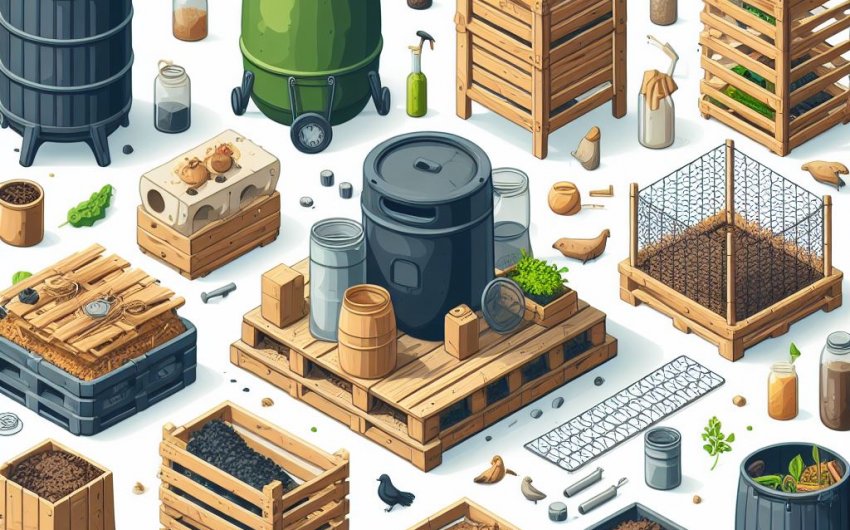
You can easily build DIY compost bins using affordable and sustainable designs to transform your organic waste into nutrient-rich soil amendment for every garden. From simple wire cages to robust pallet structures, these homemade solutions offer an eco-friendly and cost-effective way to produce "black gold" right in your backyard. This guide explores various designs to suit your space and composting goals.
Why Should I Build a DIY Compost Bin?
You should build a DIY compost bin because it offers a cost-effective, sustainable, and customizable solution for managing your organic waste, directly contributing to a healthier garden. Creating your own bin is a practical step towards becoming more self-sufficient in your gardening efforts, and choosing from many affordable and sustainable designs makes it accessible for every garden.
- Cost Savings:
- Commercial compost bins can be expensive. Building your own often uses readily available, recycled, or inexpensive materials, making it a highly affordable option.
- Compost reduces the need to buy bagged soil amendments or fertilizers, saving money on garden supplies.
- Customization to Your Needs:
- Size and Capacity: You can build a bin to perfectly match the size of your garden and the amount of organic waste you produce, from a small suburban yard to a large rural property.
- Aesthetics: You can design a bin that blends seamlessly with your garden's aesthetic, or is easily hidden.
- Functionality: Tailor the design for your preferred composting method (e.g., easy access for turning, multiple bays).
- Sustainable and Eco-Friendly:
- Waste Reduction: Diverts kitchen scraps and yard waste from landfills, reducing methane emissions (a potent greenhouse gas).
- Recycling Materials: Often utilizes reclaimed materials (pallets, wire mesh, old lumber), further reducing waste. This directly contributes to sustainable designs.
- Reduced Carbon Footprint: Less transport of waste to landfills and less need for commercially produced soil amendments.
- Healthier Garden Soil:
- Produces nutrient-rich compost, which is the best amendment for improving soil structure, water retention, drainage, and fertility.
- A healthy soil ecosystem directly supports healthy plants, reducing the need for chemical fertilizers and pesticides.
- Educational and Rewarding:
- The process of building your own bin and creating compost is deeply satisfying and teaches valuable lessons about natural cycles.
- Accessibility for Every Garden:
- With diverse DIY compost bin designs, there's a solution for virtually every garden, from small patios to sprawling yards, regardless of budget.
Building a DIY compost bin is a foundational step in creating a more sustainable and productive garden, offering immense value through affordable and sustainable designs.
What are the Best Materials for Building DIY Compost Bins?
The best materials for building DIY compost bins are often those that are readily available, affordable, durable, and allow for good air circulation, which is essential for efficient decomposition. Utilizing reclaimed or recycled materials contributes to truly sustainable designs for every garden.
Recommended Materials:
- Wooden Pallets:
- Pros: Free or very cheap, pre-built structure, robust, excellent airflow. Ideal for large, sturdy bins or multi-bay systems.
- Cons: Can be heavy, may require disassembly and reassembly. Ensure they are HT (heat-treated), not MB (methyl bromide-treated, which is toxic).
- Wire Mesh/Hardware Cloth:
- Pros: Very affordable, easy to shape into cylindrical bins, excellent airflow, lightweight, portable.
- Cons: Less sturdy for very large piles, can be sharp to work with. Choose a galvanized wire mesh (1/2 inch to 1 inch openings) for durability. You can find galvanized hardware cloth roll.
- Cinder Blocks:
- Pros: Extremely durable, long-lasting, heavy (won't blow over), modular for easy expansion or side removal.
- Cons: Can be expensive if bought new, heavy to move, limited airflow without careful stacking.
- Wood (Untreated Lumber):
- Pros: Aesthetically pleasing, customizable, can be very sturdy.
- Cons: More expensive than recycled options, requires woodworking skills, will eventually rot (though lasts many years). Use rot-resistant wood like cedar or redwood if possible, or untreated pine.
- Avoid: Chemically pressure-treated lumber, as toxins can leach into your compost.
- Recycled Plastic Lumber:
- Pros: Extremely durable, rot-proof, long-lasting, low maintenance, aesthetically pleasing.
- Cons: More expensive than wood.
- Galvanized Metal Trash Cans (for tumbling/small bins):
- Pros: Can be adapted into simple tumbling bins, durable, pest-resistant.
- Cons: Limited capacity, requires modification for drainage and aeration.
- Chicken Wire/Garden Fencing:
- Pros: Very cheap, lightweight, easy to form.
- Cons: Less durable than hardware cloth, openings can be too large, may allow small rodents. Best for very simple, temporary bins or containing fall leaves.
Essential Hardware and Tools:
- Zip Ties or Wire: For securing wire mesh or connecting pallets. You can find heavy duty zip ties for outdoor use.
- Bolts, Nuts, Hinges: For more permanent wooden bins.
- Drill: For making pilot holes or attaching hardware.
- Wire Cutters/Tin Snips: For cutting wire mesh.
- Saw: For cutting lumber or pallets.
- Gloves: Heavy-duty gardening gloves are a must for safety.
When selecting materials for building DIY compost bins, prioritize functionality (airflow, capacity) and sustainability (recycled, untreated). These choices contribute to effective composting for every garden.
How Do I Build a Simple Wire Mesh Compost Bin?
You build a simple wire mesh compost bin by forming a cylinder from hardware cloth or chicken wire, making it one of the easiest, most affordable and sustainable designs for a DIY compost bin. This design offers excellent airflow and is perfect for small to medium-sized gardens.
Materials You'll Need:
- Wire Mesh: 10-15 feet of galvanized hardware cloth (1/2 to 1-inch openings, 3-4 feet wide) or heavy-duty chicken wire. You can find galvanized hardware cloth 3ft x 15ft.
- Heavy-Duty Zip Ties or Galvanized Wire: For securing the ends.
- Wire Cutters: For cutting the mesh.
- Heavy Work Gloves: Crucial for protecting your hands from sharp wire.
- Measuring Tape: To measure your mesh.
Step-by-Step Guide:
- Measure and Cut the Mesh:
- Determine the desired circumference of your bin. A good size is about 3 feet in diameter, which requires roughly 9.5 feet of mesh. For a taller bin, use a 4-foot wide mesh. A good compost pile needs to be at least 3x3x3 feet to heat up effectively.
- Using wire cutters, carefully cut the wire mesh to your desired length. Be cautious of sharp edges.
- Form the Cylinder:
- Bring the two ends of the cut mesh together to form a cylinder shape.
- Secure the Seam:
- Overlap the cut ends by about 4-6 inches.
- Using heavy-duty zip ties or galvanized wire, securely fasten the overlapping ends together at multiple points (every 6-12 inches) along the entire seam. Ensure there are no gaps for materials to escape or pests to enter.
- Trim any excess zip tie tails or wire.
- Place in Desired Location:
- Choose a well-drained spot in your garden that is easily accessible and ideally in partial shade (to prevent the pile from drying out too quickly).
- Place the open cylinder directly on the ground.
- Add Materials:
- Begin adding your alternating layers of "greens" and "browns," ensuring each layer is moistened.
- This simple DIY compost bin provides excellent aeration and is easy to fill. When finished compost is ready, you can simply unfasten the seam, unroll the wire, and access the compost from the bottom or entire pile.
Pros of a Wire Mesh Bin:
- Very Affordable: Often the cheapest option.
- Excellent Aeration: The open mesh provides superior airflow, speeding decomposition.
- Easy to Build: Requires minimal tools and skills.
- Portable: Lightweight and easy to move if needed.
- Easy to Empty: Simply unfasten the seam to access the finished compost.
Cons of a Wire Mesh Bin:
- Less aesthetic than wooden bins.
- Can be less sturdy for very large piles.
- May allow very small rodents or pests if openings are too large.
- Can dry out quickly in hot, sunny, or windy conditions, requiring more frequent watering.
Building a wire mesh compost bin is a fantastic first step into DIY compost bins, offering an affordable and sustainable design that works for almost every garden.
How Do I Construct a Sturdy Pallet Compost Bin?
You construct a sturdy pallet compost bin by assembling four or more wooden pallets into a box or multi-bay system, creating a robust and highly efficient container for composting. This is one of the most affordable and sustainable designs for a DIY compost bin, often using reclaimed materials.
Materials You'll Need:
- Wooden Pallets:
- For a Single Bin: 4 pallets.
- For a Two-Bay System: 6-7 pallets.
- Important: Ensure pallets are HT (heat-treated), not MB (methyl bromide-treated). Look for the "HT" stamp on the side. Avoid any broken or heavily splintered pallets.
- Zip Ties or Heavy-Duty Galvanized Wire: For connecting pallets. You can find heavy duty outdoor zip ties.
- Power Drill and Long Screws/Bolts: For a more permanent and sturdy construction.
- Heavy Work Gloves: For safety when handling rough pallets.
- Saw (Optional): If you need to cut pallets down.
Step-by-Step Guide for a Single Bin (4 Pallets):
- Choose Your Location:
- Select a level, well-drained spot in your garden, easily accessible for adding materials and turning. Partial shade is often ideal to prevent rapid drying. Ensure it's not too close to your house due to potential odors (though a well-managed compost pile should not smell).
- Position the First Pallet:
- Place one pallet on its side (vertically) to form the back wall of your bin. Ensure it's stable.
- Attach the Side Walls:
- Place a second pallet on its side at a 90-degree angle to the first, forming a side wall.
- Secure: Connect the two pallets using heavy-duty zip ties, galvanized wire, or by drilling pilot holes and screwing them together with long screws or bolts. Ensure the connection is strong.
- Repeat this process for the third pallet, creating the second side wall.
- Attach the Front (Optional for Easy Access):
- Option A (Permanent Front): Attach the fourth pallet to form the front wall, just like the sides. This creates a fully enclosed box.
- Option B (Removable Front for Easy Turning/Harvesting): Instead of permanently attaching the front pallet, simply lean it against the open front. Or, attach it with hinges on one side to create a swinging door. Alternatively, attach it with removable pins or wire loops for easy lifting off. This is highly recommended for access.
- Add Materials:
- Begin layering your compost with alternating greens and browns, moistening each layer. The gaps in the pallets provide excellent aeration.
- Minimum Size: Aim for a finished bin size of roughly 3x3x3 feet for optimal heat generation.
Building a Two-Bay Pallet System:
- Use 6-7 pallets. You'll build two side-by-side bins with a shared middle wall.
- This allows you to "turn" compost from one bay to the next (active decomposition in one, curing in the other) or manage two batches simultaneously.
Pros of a Pallet Compost Bin:
- Very Affordable: Often free materials.
- Sturdy and Durable: Can hold a large volume of material.
- Good Aeration: Gaps in the pallets allow for decent airflow.
- Expandable: Easy to add more bays.
- Relatively Aesthetic: Has a rustic, natural look.
Cons of a Pallet Compost Bin:
- Pallets can be heavy and sometimes splintery to work with.
- Requires more space than a simple wire bin.
- Finding HT-stamped pallets may take some effort.
- May not be completely critter-proof without additional wire lining.
Constructing a pallet compost bin is a robust and highly sustainable design for a DIY compost bin, providing excellent composting capability for every garden that has the space.
How Can I Make a DIY Tumbling Composter?
You can make a DIY tumbling composter by repurposing a barrel or drum, creating a rotating system that efficiently mixes and aerates your compost, speeding up decomposition and reducing effort. This is an advanced DIY compost bin design but highly rewarding for every garden seeking faster compost.
Materials You'll Need:
- Barrel/Drum: A clean, food-grade plastic barrel (55-gallon, dark color is best for heat) or a sturdy, galvanized metal trash can. Ensure it has never held chemicals. You can find food grade plastic drums with lid.
- Axle: A strong metal pipe or rod (e.g., rebar, galvanized pipe) long enough to span through the barrel and extend a foot or so beyond each side for mounting.
- Frame: Sturdy wood (2x4s, 4x4s) or metal (angle iron) to create a stand for the barrel.
- Hinges and Latch: For the barrel's access door.
- Drill, Hole Saw, Jigsaw, Screws/Bolts: For construction.
- Heavy Work Gloves, Safety Glasses.
Step-by-Step Guide (Barrel-Based Design):
- Prepare the Barrel:
- Clean Thoroughly: Wash the barrel completely.
- Create Access Door: Use a jigsaw to cut a rectangular opening (approx. 12x18 inches) on the side of the barrel. This will be your access door for adding and removing materials.
- Attach Hinges and Latch: Securely attach two hinges to one side of the cut-out door and the barrel. Install a sturdy latch or hasp on the opposite side to keep the door securely closed when tumbling.
- Drill Aeration/Drainage Holes: Drill numerous (1/2 to 1-inch) holes all over the barrel for aeration. Drill a few larger holes (1-2 inches) on the bottom for drainage.
- Drill Axle Holes: Drill two larger holes directly opposite each other in the center of the barrel ends (or through the sides if mounting internally) for the axle to pass through.
- Construct the Frame:
- Build a sturdy, rectangular frame from wood or metal that will elevate the barrel off the ground and allow it to rotate freely.
- The frame needs upright supports that are tall enough for the axle to pass through, holding the barrel above the ground.
- Ensure the frame is stable and won't tip when the barrel is full and heavy.
- Mount the Axle and Barrel:
- Pass the metal pipe/rod (axle) through the holes in the barrel.
- Secure the ends of the axle into the upright supports of your frame. You might use U-bolts, sturdy pipe clamps, or drill holes and slide the axle through, ensuring it can spin.
- Ensure the barrel is securely mounted but can rotate easily.
- Test Rotation:
- Test that the barrel spins freely and the door latches securely.
- Add Materials and Tumble:
- Begin layering your compost with alternating greens and browns through the access door.
- Moisten each layer.
- Close and latch the door, then tumble the composter daily for quick, easy mixing and aeration.
Pros of a DIY Tumbling Composter:
- Faster Composting: Excellent aeration leads to quicker decomposition.
- Easy Turning: No manual turning with a pitchfork.
- Pest Resistant: Enclosed design deters rodents and scavengers.
- Contained and Tidy: Keeps compost neat and tidy.
Cons of a DIY Tumbling Composter:
- More complex to build than static bins.
- Higher material cost if buying a new barrel/frame materials.
- Limited capacity per batch (though dual-chamber designs can mitigate this).
- Can become very heavy when full, making tumbling difficult if not well-designed.
Making a DIY tumbling composter is a rewarding project for those seeking a more active and rapid composting solution with an affordable and sustainable design, bringing advanced features to every garden.
How Can I Maintain and Troubleshoot My DIY Compost Bin?
You can maintain and troubleshoot your DIY compost bin by regularly monitoring its conditions, understanding common problems like odors or slow decomposition, and making timely adjustments to its moisture, aeration, and carbon-to-nitrogen balance. Consistent care ensures efficient composting and productive compost.
Regular Maintenance for Your DIY Compost Bin:
- Monitor Moisture:
- Check Regularly: Keep the compost pile consistently moist, like a wrung-out sponge. Check moisture levels weekly, or more often in hot, dry, or windy weather.
- Add Water: If dry, add water while turning or after adding dry materials. Use a compost moisture meter.
- Cover (if needed): In very rainy climates, cover open bins with a tarp to prevent over-saturation.
- Ensure Aeration (Turning/Tumbling):
- Open Bins: Turn the compost pile with a pitchfork or a compost aerator tool every 1-3 days for hot composting, or once every few weeks for slower cold composting.
- Tumbling Bins: Rotate your tumbler daily or every few days.
- Balance Greens and Browns:
- Continuously add materials in layers, aiming for a 2-3 parts brown to 1 part green ratio by volume.
- Always cover fresh food scraps with a layer of browns to prevent odors and pests.
- Chop Materials:
- Continue to chop or shred larger materials into smaller pieces (1-2 inches) as you add them. This speeds decomposition.
- Monitor Temperature (Optional for Hot Composting):
- If aiming for hot composting, use a compost thermometer long stem to monitor internal temperatures (aim for 130-160°F).
Troubleshooting Common Compost Bin Problems:
| Problem | Symptoms | Cause (Mistake) | How to Fix |
|---|---|---|---|
| Foul Odors (Ammonia) | Strong, pungent smell like ammonia. | Too many greens (Nitrogen), insufficient browns. | Add a large amount of dry, carbon-rich materials (shredded leaves, straw, shredded paper). Turn the pile thoroughly to mix and aerate. |
| Foul Odors (Rotten Egg/Sulfur) | Strong, swampy, putrid smell. Pile may be slimy/compacted. | Too wet, insufficient aeration (anaerobic). | Add dry, chunky browns (leaves, straw, wood chips) to absorb moisture and create air pockets. Turn the pile vigorously to introduce oxygen. Ensure good drainage. |
| Compost Not Heating Up/Slow Breakdown | Pile is cool, materials aren't visibly breaking down, long time to decompose. | Too dry, too many browns (Carbon), too small a pile. | If dry, water thoroughly while turning. If too many browns, add more greens (kitchen scraps, fresh grass clippings). Ensure pile is at least 3x3x3 ft. Turn regularly to activate. Add a compost starter. |
| Pests (Rodents, Flies) | Visible pests, holes in pile, scattering of materials, strong odors. | Problematic materials added (meat, dairy, oils), exposed food scraps, smelly pile. | Remove any meat, dairy, oily foods, or pet waste. Always bury new kitchen scraps deep within the pile, covered by browns. Maintain a balanced, active, and odor-free pile. Use a sealed or critter-proof bin design. |
| Ants | Ants building nests in the pile. | Pile is too dry. | Moisten the pile thoroughly and turn it to disturb their nests. Ensure consistent moisture. |
| Weeds Sprouting in Compost | Recognizable weeds growing from the pile. | Weed seeds survived (pile didn't get hot enough). | Turn the pile frequently to try and activate hot composting. If finished compost, you might have to screen it before use, or just tolerate weeding. Avoid adding seeding weeds in the first place. |
By diligently applying these maintenance and troubleshooting techniques, you can ensure your DIY compost bin continuously produces high-quality compost, transforming what might seem like common composting mistakes into opportunities for learning and success in every garden.