
Common Composting Mistakes and How to Avoid Them
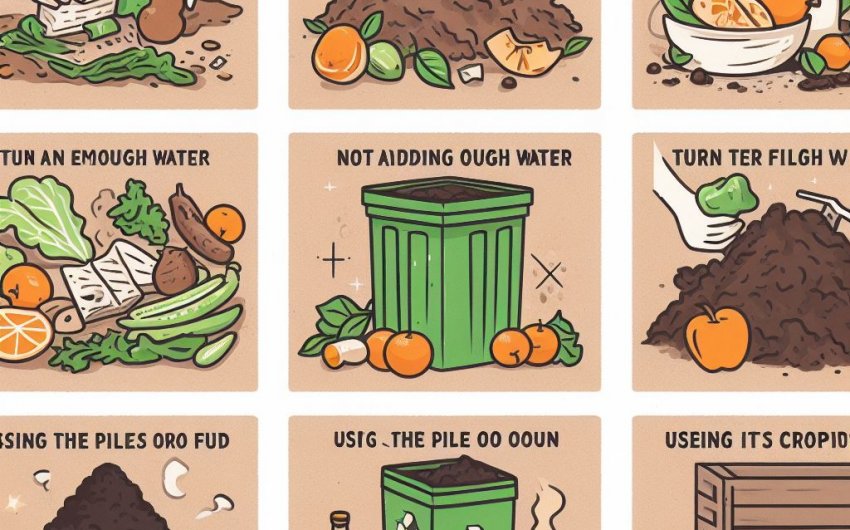
You can avoid common composting mistakes by understanding the fundamental principles of balanced organic matter, moisture, and aeration, which are crucial for successful decomposition. Many issues, from foul odors to slow breakdown, stem from simple errors that are easily corrected. This guide will help you troubleshoot and achieve rich, dark compost efficiently.
What is the Most Common Composting Mistake?
The most common composting mistake that derails many beginners is an imbalance in the carbon-to-nitrogen (C:N) ratio, usually by adding too many "greens" (nitrogen-rich materials) without enough "browns" (carbon-rich materials). This imbalance leads to a pile that is too wet and dense, quickly going anaerobic and smelly.
Why is an Imbalanced C:N Ratio a Problem?
- Foul Odors (Ammonia Smell): Too much nitrogen without enough carbon (especially from excessive fresh grass clippings or kitchen scraps) leads to excess nitrogen being converted to ammonia gas, producing a pungent, unpleasant odor. This indicates an anaerobic (oxygen-starved) pile.
- Slow Decomposition: If there's too much carbon and not enough nitrogen, the microorganisms lack the protein they need to reproduce and process materials efficiently, causing the pile to decompose very slowly and remain cool.
- Soggy Conditions: Too many moist "greens" contribute to a waterlogged pile that lacks proper aeration, further exacerbating the anaerobic problem.
- Pest Attraction: A smelly, unbalanced pile is far more likely to attract pests like flies and rodents.
How to Avoid and Correct an Imbalanced C:N Ratio:
- Understand the Ratio: Aim for roughly 25-30 parts carbon to 1 part nitrogen (25-30:1). In practical terms, this often translates to about 2-3 parts "browns" to 1 part "greens" by volume.
- Stockpile Browns: Collect and store a good supply of dry leaves, shredded cardboard, or straw. Having these readily available allows you to always add a layer of browns whenever you add greens.
- Layer Effectively: When adding materials, try to alternate layers of greens and browns. For instance, add a layer of kitchen scraps (greens), then cover them with a layer of dry leaves (browns).
- Chop Materials: Break down larger pieces of greens and browns into smaller bits (1-2 inches). This increases surface area and helps maintain the ratio by allowing better mixing.
- Turn Regularly: Frequent turning helps mix unbalanced layers and introduces oxygen, which can mitigate some of the odor from excess nitrogen.
- Correction:
- If Smells like Ammonia (too many greens): Add a significant amount of dry, carbon-rich "browns" like shredded newspaper, dry leaves, or straw. Turn the pile thoroughly.
- If Decomposition is Slow/Cool (too many browns): Add more "greens" (fresh grass clippings, kitchen scraps) and moisten the pile.
By carefully managing your carbon-to-nitrogen ratio, you address the most common composting mistake, ensuring your pile decomposes efficiently and without offensive odors.
What Materials Should Never Go into a Home Compost Pile?
Certain materials should never go into a home compost pile because they can attract pests, create foul odors, spread pathogens, or introduce harmful chemicals, undermining the very purpose of creating healthy compost. Avoiding these items is crucial for preventing common composting mistakes.
- Meat, Bones, Fish, and Dairy Products:
- Why Avoid: These materials attract rodents, raccoons, possums, and flies. They also decompose slowly and can produce strong, unpleasant odors as they break down, especially in cooler home compost piles. They can also harbor disease-causing bacteria.
- Alternative: Bury them deep in the garden away from plant roots, or dispose of them in regular trash.
- Fats, Oils, and Grease:
- Why Avoid: Attracts pests and creates anaerobic conditions as it coats other organic matter, preventing air and water penetration. It also decomposes very slowly.
- Alternative: Dispose of in regular trash.
- Diseased Plants:
- Why Avoid: Compost piles, especially smaller home piles, often don't reach temperatures high enough (130-160°F / 55-71°C consistently) to reliably kill all plant pathogens. Adding diseased plants can spread diseases back to your garden when you use the finished compost.
- Alternative: Dispose of in regular trash, or burn them if allowed in your area.
- Weeds with Seeds or Perennial Roots:
- Why Avoid: Unless your compost pile is actively hot composting (consistently reaching 130-160°F for several days), weed seeds are likely to survive and then germinate in your garden when you use the compost. Perennial weed roots (like dandelions, bindweed) can also regenerate and sprout directly from the compost.
- Alternative: Dispose of in regular trash, starve them in a black plastic bag in the sun, or burn them.
- Pet Waste (from carnivorous animals like dogs and cats):
- Why Avoid: Contains harmful pathogens (e.g., E. coli, Salmonella, Toxoplasma gondii, roundworms) that can survive composting temperatures and pose a risk to human health, especially if used on edible crops.
- Alternative: Dispose of in designated pet waste disposal systems or regular trash. Manure from herbivores (cows, horses, rabbits, chickens) is generally safe for composting after aging.
- Chemically Treated Wood or Lumber:
- Why Avoid: Treated lumber contains preservatives like arsenic, chromium, and copper that are toxic and will leach into your compost and then into your garden soil.
- Alternative: Dispose of in designated waste facilities.
- Glossy Paper, Coated Cardboard, or Colored Newspaper/Magazines:
- Why Avoid: Often contains heavy metals, dyes, and other chemicals that you don't want in your organic compost.
- Alternative: Recycle them if possible, otherwise dispose of in trash. Black-and-white newspaper and plain cardboard are fine.
- Ashes from Charcoal or Coal:
- Why Avoid: Can contain heavy metals and other toxic substances harmful to plants and soil.
- Alternative: Dispose of in regular trash. Wood ash from untreated wood is generally safe in small amounts.
By strictly avoiding these common composting mistakes, you ensure your finished compost is safe, healthy, and genuinely beneficial for your garden.
How Does Insufficient Aeration Harm My Compost Pile?
Insufficient aeration harms my compost pile by starving the beneficial microorganisms of oxygen, forcing the decomposition process to become anaerobic, which is slow, smelly, and inefficient. This lack of air is a major composting mistake that leads to frustration for many gardeners.
- Oxygen is Key for Aerobic Microbes:
- The most efficient and fastest decomposition is carried out by aerobic microorganisms (bacteria, fungi, actinomycetes) that require oxygen to respire and metabolize organic matter. This process generates heat and breaks down materials quickly.
- Shift to Anaerobic Decomposition:
- When the compost pile becomes dense and oxygen is depleted, anaerobic microorganisms (which don't need oxygen) take over.
- Slow Down: Anaerobic decomposition is significantly slower and less efficient than aerobic decomposition. The pile will remain cool.
- Foul Odors: Anaerobic microbes produce gases like methane, hydrogen sulfide (rotten egg smell), and ammonia, resulting in strong, unpleasant odors that attract pests. This is the most noticeable sign of insufficient aeration.
- Slime and Sludge: The pile may become slimy or sludgy, indicating it's too wet and dense.
- Nutrient Loss: Important nutrients like nitrogen can be lost as gases.
- Causes of Insufficient Aeration:
- Not Turning Enough: The most common cause. Regular turning or tumbling introduces fresh oxygen throughout the pile.
- Pile Too Dense/Wet: Too many "greens" (especially fresh grass clippings) or excessive moisture can compact the pile, squeezing out air pockets.
- Lack of Bulking Agents: Not enough chunky "brown" materials (straw, wood chips, shredded cardboard) to create and maintain air pockets within the pile.
- Pile Too Small/Too Large: Very small piles don't have enough mass to generate heat. Extremely large, unturned piles can become anaerobic in the center.
- How to Correct Insufficient Aeration:
- Turn the Pile: The quickest fix is to thoroughly turn the compost pile with a pitchfork or a compost aerator tool. Break up any compacted sections.
- Add Browns: If the pile is wet and dense, add more dry, chunky "brown" materials (shredded leaves, straw, wood chips) to absorb excess moisture and create more air pockets.
- Reduce Greens: Temporarily reduce the addition of very wet "green" materials.
- Improve Pile Structure: Ensure future additions include enough coarse browns to maintain good airflow.
By understanding how insufficient aeration compromises your compost, you can proactively prevent this common composting mistake and cultivate a faster, more pleasant, and productive pile.
How Does Incorrect Moisture Content Affect Composting?
Incorrect moisture content significantly affects composting, leading to either a sluggish, dry pile or a smelly, anaerobic mess. Maintaining the right moisture level, which feels like a damp, wrung-out sponge, is a critical factor often overlooked and a common composting mistake.
Too Dry (Under-Watered) Compost Pile:
- Problem: If the compost pile is too dry, microorganisms become inactive or die off.
- Symptoms:
- Slow/No Decomposition: The pile will remain cool and materials will not break down.
- Dry and Crumbly: Compost will feel brittle and powdery.
- No Heat: The pile won't heat up.
- Causes:
- Not enough moist "greens."
- Excessive dry "browns."
- Lack of supplemental watering, especially during dry weather or if the pile is exposed to sun/wind.
- Correction:
- Add Water: Thoroughly water the pile while turning it, ensuring the moisture penetrates all layers. Use a garden hose with a sprayer or a watering can.
- Add Greens: If the pile is very carbon-heavy, add some moist "greens" (kitchen scraps, fresh grass clippings) along with water.
- Cover: Consider covering the pile with a tarp during dry spells to prevent evaporation.
Too Wet (Over-Watered) Compost Pile:
- Problem: If the compost pile is too wet, water fills the pore spaces, displacing oxygen and leading to anaerobic conditions.
- Symptoms:
- Foul Odors: Smells like rotten eggs, sewage, or ammonia.
- Slime and Sludge: Materials become slimy, compact, and heavy.
- Cool Pile: Will not heat up or will cool down rapidly.
- Slow Decomposition: Even though wet, decomposition is sluggish due to lack of oxygen.
- Causes:
- Too many moist "greens" without enough absorbent "browns."
- Excessive supplemental watering.
- Heavy rainfall without proper covering or drainage in the compost bin.
- Correction:
- Add Browns: Immediately add a large quantity of dry, chunky "brown" materials (shredded newspaper, dry leaves, straw, wood chips) to absorb excess moisture and create more air pockets.
- Turn the Pile: Thoroughly turn the pile to mix in the dry browns and introduce oxygen.
- Improve Drainage/Cover: Ensure your compost bin has adequate drainage. If it's an open pile, consider covering it with a tarp during rainy periods.
Monitoring Moisture:
- Squeeze Test: The best way to check moisture is to grab a handful of compost and squeeze it. It should feel like a damp sponge and release only a few drops of water. If it crumbles dry, it needs water. If water streams out, it's too wet.
- Compost Moisture Meter: A compost moisture meter probe provides a more precise measurement.
By diligently managing the incorrect moisture content, you can effectively avoid this common composting mistake and foster an active, healthy, and odor-free decomposition process.
What Are the Dangers of Using Unfinished Compost?
The dangers of using unfinished compost can significantly harm your plants and introduce new problems into your garden, making it crucial to wait until your compost is fully mature and stable. Using immature compost is a common composting mistake with detrimental consequences.
- Nitrogen Drawdown (Nitrogen Robbing):
- Mechanism: Unfinished compost still contains materials (especially woody browns) that are actively decomposing and require a high amount of nitrogen to break down. When added to garden soil, these microbes will "steal" available nitrogen from the soil to continue their work.
- Result: This leaves your plants with a severe nitrogen deficiency, causing yellowing leaves, stunted growth, and reduced yields.
- Solution: Always use finished compost. If you must use slightly immature compost, add extra nitrogen (e.g., blood meal or a nitrogen-rich organic fertilizer) to compensate, or only use it as a top-dressing rather than mixing it into the root zone.
- Phytotoxicity (Plant Toxicity):
- Mechanism: During the early stages of decomposition, certain intermediate compounds (like organic acids, ammonia, ethanol, phenols) are produced. These compounds can be toxic to plant roots and sensitive seedlings.
- Result: Seedling death, stunted growth, leaf damage (yellowing, browning), or overall plant stress.
- Solution: Allow compost to fully cure and stabilize. The "seedling test" (planting a few fast-germinating seeds in the compost) can confirm phytotoxicity.
- Weed Seeds Germinating:
- Mechanism: If your compost pile did not reach and maintain high thermophilic temperatures (130-160°F / 55-71°C) for several days, many weed seeds will survive the composting process.
- Result: When you apply this compost to your garden, you inadvertently spread weed seeds, leading to a new weed problem.
- Solution: Ensure your compost pile is actively hot and turn it regularly. Allow compost to fully cure; a long curing phase can also reduce viability of some remaining seeds.
- Spreading Plant Pathogens:
- Mechanism: Similar to weed seeds, many plant disease pathogens (fungi, bacteria) can survive if the compost pile does not reach sufficient temperatures.
- Result: Introducing diseases to your healthy garden plants.
- Solution: Avoid composting diseased plants unless you are certain of robust hot composting. Ensure high temperatures are reached and maintained.
- Attracting Pests (if not fully broken down):
- If unfinished compost still contains recognizable food scraps, it can attract rodents, flies, and other pests to your garden beds.
- Unpleasant Appearance and Odor:
- Unfinished compost is lumpy, odorous, and unattractive, which is not what you want to incorporate into your garden beds.
Always wait until your compost is completely finished – dark, crumbly, and earthy-smelling – before incorporating it into your garden. This patience prevents the dangers of using unfinished compost and transforms a potential composting mistake into a valuable garden asset.
What Are Common Compost Pile Odors and How Do I Fix Them?
Common compost pile odors are often clear indicators of specific imbalances in your compost, signaling a composting mistake that needs correction. Each distinct smell points to a particular problem, allowing you to quickly diagnose and fix the issue.
Here’s a table outlining common odors, their causes, and how to fix them:
| Odor Type | Cause (Composting Mistake) | How to Fix (Remedies) |
|---|---|---|
| Ammonia Smell | Too much Nitrogen (Greens) - C:N ratio imbalance. Often too many fresh grass clippings or kitchen scraps. Insufficient Carbon. | 1. Add Browns: Immediately add a large quantity of dry, carbon-rich materials (shredded dry leaves, straw, shredded paper/cardboard). 2. Turn the Pile: Thoroughly turn the pile to mix in the browns and introduce oxygen. |
| Rotten Egg/Sulfur Smell | Too wet and/or insufficient aeration - Anaerobic conditions. Waterlogged, dense pile. | 1. Add Browns: Add dry, chunky "browns" to absorb excess moisture and create air pockets. 2. Turn the Pile Vigorously: Break up compacted areas to introduce oxygen. 3. Improve Drainage: Ensure your compost bin has drainage or cover open piles from heavy rain. |
| Sour/Vinegar Smell | Too wet and/or insufficient aeration - Fermentation is occurring due to anaerobic conditions. | 1. Turn the Pile: Aerate thoroughly. 2. Add Browns: Add dry, chunky browns to balance moisture and increase aeration. |
| Putrid/Decaying Meat Smell | Meat, Dairy, Fats, or Oily Foods have been added. | 1. Remove Offending Items: Dig them out immediately. 2. Add Browns: Cover remaining odorous areas with a thick layer of browns. 3. Turn: Turn the pile to introduce oxygen and cover any remaining exposed items. |
| No Smell (or very faint earthy smell), Pile is Cold, Slow Decomposition | Too Dry and/or too much Carbon (Browns) - Microorganisms are inactive or lacking nitrogen. | 1. Add Water: Moisten the pile thoroughly while turning it. It should feel like a damp sponge. 2. Add Greens: Introduce more nitrogen-rich materials (kitchen scraps, fresh grass clippings) to fuel microbial activity. 3. Turn: Mix everything well to distribute moisture and greens. |
| Earthy, Forest Floor Smell | Well-balanced and actively decomposing, or finished compost. | Congratulations! This is the smell of healthy decomposition. Keep up the good work! If the smell is consistent, it means your compost is maturing. If it's rich and dark with no recognizable items, your compost is finished. |
By recognizing these common compost pile odors and implementing the corresponding fixes, you can effectively correct composting mistakes, ensuring a productive, healthy, and odor-free composting process that embodies the best practices of the science of decomposition.
How Do I Manage Pests in My Compost Pile Organically?
You manage pests in your compost pile organically by taking proactive steps to make the pile less attractive and accessible to unwanted critters, while encouraging beneficial organisms. Most pest problems in compost piles are a sign of improper management and are easily preventable composting mistakes.
- Avoid Problematic Materials (Most Important):
- NEVER Add: Meat, bones, fish, dairy products, fats, oils, greasy foods, cooked foods (especially with sauces), or pet waste (from carnivorous animals). These are powerful attractants for rodents, raccoons, possums, flies, and other scavengers.
- Alternative: Dispose of these items in regular trash or by burying deep in the garden if appropriate.
- Bury Food Scraps Deeply:
- When adding kitchen scraps ("greens"), always bury them in the center of the compost pile, covered by at least 8-12 inches of existing compost or fresh "brown" material (dry leaves, straw). This hides the odors and makes them inaccessible to flies and rodents.
- Maintain Proper C:N Ratio and Moisture:
- Odor Control: An imbalanced or overly wet, anaerobic pile (which smells bad) is a beacon for pests. Maintaining the correct carbon-to-nitrogen ratio and moisture content prevents foul odors.
- Active Decomposition: A hot, actively decomposing pile is generally less appealing to many pests and can even kill some larvae.
- Use a Closed or Tumbling Composter:
- Physical Barrier: A fully enclosed compost bin or a tumbling composter acts as a physical barrier, making it much harder for rodents and larger animals to access the organic matter.
- Lids: Ensure your compost bin has a tight-fitting lid.
- Chop Materials into Smaller Pieces:
- Smaller pieces decompose faster, reducing the time that fresh food scraps are available to pests.
- Turn Regularly:
- Regular turning helps distribute fresh materials and keeps the pile active, burying any surface pests or eggs.
- Address Ant Problems:
- If ants become a nuisance, they often indicate the pile is too dry. Moisten the pile and turn it. A sprinkle of food-grade diatomaceous earth can also help deter them without harming the pile.
- Flies (Fruit Flies, Gnats):
- Often a sign of too many exposed kitchen scraps or too much moisture. Bury scraps immediately, cover with browns, and turn.
- Encourage Beneficial Organisms:
- A healthy compost pile will attract beneficial insects like ground beetles, mites, and centipedes, which can help manage other undesirable insect populations.
By following these organic pest management strategies, you can prevent and address most compost pile pest problems, turning a common composting mistake into a managed, successful operation.
By understanding common composting mistakes and actively implementing their solutions, you transform potential challenges into opportunities for learning and success. From balancing the carbon-to-nitrogen ratio to managing moisture and aeration, each adjustment contributes to a more efficient and pleasant composting process. Avoiding these pitfalls empowers you to consistently produce rich, dark compost, a testament to the incredible science of decomposition and your skill as a gardener.