
Cracking the Nut Compost Code: Crushing Nut Shells for Soil Success!
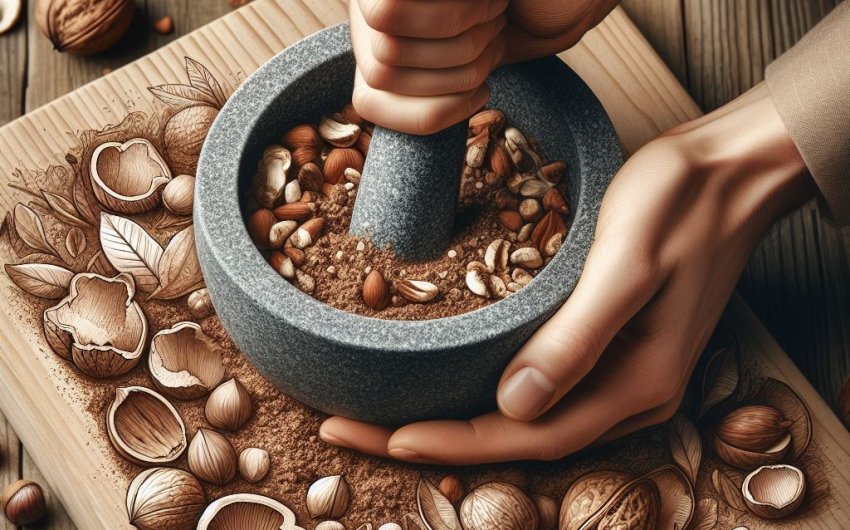
Why Compost Nut Shells? (And Why You Might Not Have Thought Of It!)
Every time you enjoy a tasty nut, you're left with a shell. For most people, these hard, seemingly useless casings go straight into the trash or a very slow-to-decompose pile. But what if those humble nut shells were actually a hidden treasure, a secret ingredient to supercharge your garden soil? Believe it or not, they can be!
Composting nut shells might not be the first thing that comes to mind when you think of garden gold. After all, they're tough, they take a long time to break down, and they don't look like much. However, integrating them into your compost pile (with a little know-how!) offers some surprising and valuable benefits for your soil's health and structure.
Why bother with nut shells in your compost?
- Excellent Carbon Source: In composting, we talk a lot about "greens" (nitrogen-rich, like food scraps and grass clippings) and "browns" (carbon-rich, like leaves and wood chips). Nut shells are a fantastic, often overlooked "brown" material. They add much-needed carbon to balance your nitrogen-heavy kitchen and garden waste.
- Long-Lasting Organic Matter: Because they break down slowly, nut shells provide a steady, long-term supply of organic matter to your soil. This improves soil structure over extended periods, contributing to aeration, drainage, and water retention.
- Improved Drainage and Aeration: The small, angular pieces of crushed nut shells act like tiny amendments in the soil. They create air pockets, preventing compaction and improving both drainage (water flows through better) and aeration (air gets to the roots). This is especially beneficial for heavy clay soils.
- Sustainable Waste Management: Instead of sending nut shells to a landfill, you're diverting waste and turning it into a valuable resource for your garden. It's a true win-win for sustainability!
- Cost-Effective: It's free! You're using something you'd otherwise throw away to improve your soil, saving money on purchased soil amendments.
So, while they might require a little extra effort to prepare, the long-term benefits of composting nut shells make them a worthy addition to any gardener's "waste-not, want-not" philosophy. It's time to crack the nut compost code!
What Kinds of Nut Shells Can I Compost? (And Which to Avoid!)
Not all nut shells are created equal when it comes to composting. Some are excellent additions, while others should be avoided due to potential problems.
The Good Guys: Compost These Nut Shells!
These are the most common and generally safest nut shells for your compost pile. The key is that they should be from nuts you've shelled yourself, not roasted or salted shells, and definitely not the nut meats themselves (as they attract pests).
- Pecan Shells: These are very common and excellent for composting. They are relatively thin and brittle, making them easier to crush.
- Walnut Shells (with caution - see below): While the shells themselves are hard, they are perfectly compostable once they are processed.
- Almond Shells: Hard and sturdy, but good for compost once broken down.
- Hazelnut Shells (Filbert Shells): Another great option.
- Brazil Nut Shells: Very hard, but suitable if crushed.
- Pistachio Shells: These are thinner and easier to crush, making them a good addition. Make sure they are unsalted if possible.
- Peanut Shells: Technically a legume, but their shells behave like other nut shells. They are much softer and break down faster. Unsalted and unroasted are best.
The "Use with Caution" Nut Shell: Black Walnut Shells
This one gets its own special category because it contains a specific compound that can be problematic.
- Juglone: Black walnut trees (and their shells, roots, and leaves) produce a natural chemical called juglone. This chemical is allelopathic, meaning it can inhibit the growth of certain sensitive plants.
- Composting with Juglone: While juglone can persist in fresh black walnut material, the good news is that it typically breaks down during a hot, active composting process. If your compost pile consistently reaches high temperatures ( (130^\circ\text{F}) to (160^\circ\F) or (54^\circ\C) to (71^\circ\C)) and is turned regularly, the juglone should break down and become harmless.
- Recommendation: If you have a well-managed, hot compost pile, you can include black walnut shells (crushed) and leaves in moderation. However, if you have a cold compost pile or are unsure, it's safer to avoid black walnut shells or use them sparingly. If you're planning to use the finished compost around highly sensitive plants (like tomatoes, peppers, blueberries, or apple trees), it's best to err on the side of caution and exclude black walnut shells or ensure your compost is thoroughly mature and hot-composted.
The Bad Guys: AVOID Composting These Materials
These should never go into your compost pile, regardless of whether they are shells or other food waste.
- Nut Meats (the actual nuts): While they contain nutrients, they are high in oils and protein. They will attract rodents (mice, rats, squirrels) and other pests to your compost pile, which you definitely don't want in your garden. Always remove any leftover nut meats.
- Salted Nut Shells: The salt (sodium) can be detrimental to soil and plant health in large quantities. Avoid adding heavily salted nut shells to your compost. A few lightly salted shells mixed in won't hurt, but don't add buckets of them.
- Roasted or Flavored Nut Shells: While not inherently harmful like salted ones, the roasting process changes the structure and the added flavors/oils might attract unwanted attention or simply not break down as efficiently. Stick to raw, unsalted shells.
- Shells from Unknown Sources: If you're not sure what kind of nut the shell came from, or if it might have been treated with chemicals, it's best to err on the side of caution and discard them.
By sticking to the "good guys" and being cautious with black walnut shells, you can safely introduce this valuable carbon source into your compost for soil success.
How to Prepare Nut Shells for Composting: The Crushing Code!
This is the most crucial step in cracking the nut compost code. Nut shells are tough, and they won't break down effectively if simply tossed into the pile whole. They need to be broken down into smaller pieces to allow microorganisms to access their materials.
Why Crushing is Essential
- Surface Area: Microbes (bacteria and fungi) are what break down organic matter. They work on the surface of the material. A whole nut shell has very little surface area compared to its volume. Crushing increases the surface area dramatically, giving the microbes more places to "eat."
- Faster Decomposition: Smaller pieces break down much, much faster. Whole nut shells could take years or even decades to fully decompose. Crushed shells will break down in months, similar to wood chips.
- Prevents Pest Hiding: Large, hollow nut shells can provide hiding spots for unwanted pests like slugs or earwigs. Crushing them eliminates these potential shelters.
- Better Integration: Smaller pieces mix more easily into the compost pile and later integrate smoothly into your garden soil, improving its structure more effectively.
Methods for Crushing Nut Shells
You have several options for crushing nut shells, from simple manual methods to power tools. Choose what works best for your volume and your equipment.
Hammer or Mallet:
- How: Place the nut shells in a sturdy canvas bag, an old pillowcase, or wrap them in an old towel. Lay the bag on a concrete surface or a very sturdy block of wood. Use a hammer or rubber mallet to pound them into smaller pieces.
- Pros: Simple, cheap, no special equipment needed.
- Cons: Labor-intensive, can be noisy, produces dust.
- Tip: Wear safety glasses to protect your eyes from flying shell fragments.
Blender or Food Processor (with caution!):
- How: For smaller batches of thinner shells (like pistachios, peanuts, or thinner pecan shells), a sturdy blender or food processor might work. Only use on powerful settings with small amounts.
- Pros: Quick for small batches, produces relatively fine pieces.
- Cons: Can be very hard on your appliance blades (don't use your fancy kitchen one!), may not work for very hard shells (like walnuts), creates dust.
- Tip: Reserve an older, less-used appliance for this task, or be prepared for blade wear.
Chipper/Shredder (for larger quantities):
- How: If you have a significant volume of nut shells (e.g., from an orchard or large-scale nut consumption), a wood chipper or garden shredder can be very effective.
- Pros: Handles large volumes quickly, produces uniform pieces.
- Cons: Expensive equipment if you don't already own one.
- Tip: Ensure the shells are dry before processing to prevent clogging.
Running Over Them with a Vehicle (for very large quantities):
- How: Spread dry nut shells in a thin layer on a gravel driveway or sturdy concrete pad. Drive over them repeatedly with a car or truck.
- Pros: Easy for huge volumes, no special tools needed.
- Cons: Can be messy, needs a suitable surface, creates dust.
- Tip: Wear protective eyewear and a dust mask.
Ideal Size for Crushed Shells
Aim for pieces that are roughly (1/4) to (1/2) inch in size. Smaller is generally better for faster decomposition, but too fine (like dust) can compact in the pile. A mix of sizes is fine.
By investing a little effort in crushing nut shells before adding them to your compost, you'll unlock their full potential as a valuable, long-lasting carbon amendment for your soil.
How Do I Incorporate Nut Shells into My Compost Pile?
Once you've diligently crushed your nut shells, integrating them correctly into your compost pile is key to achieving that rich garden gold and ensuring they break down effectively.
1. Balance with "Greens" (Nitrogen)
Nut shells are a "brown" (carbon-rich) material. A successful compost pile needs a good balance of browns and "greens" (nitrogen-rich materials).
- Ratio: Aim for a ratio of roughly 2 parts browns to 1 part greens by volume. Since nut shells are very carbon-heavy and break down slowly, you'll need to balance them with plenty of nitrogen-rich materials.
- Green Examples: Kitchen scraps (fruit and vegetable peels, coffee grounds, tea bags), fresh grass clippings, green plant trimmings, and manure.
- Why it Matters: Too many browns (like just nut shells) will make your compost pile break down very slowly. Too many greens can lead to a smelly, slimy mess. The greens provide the nitrogen that helps the microbes multiply and "eat" the carbon.
2. Layering is Your Friend
Don't dump all your crushed nut shells in one go. Layering helps distribute them evenly and promotes proper aeration.
- Alternating Layers: As you add materials to your compost pile, alternate layers of greens and browns. For example, a layer of kitchen scraps, then a layer of crushed nut shells or shredded leaves, then some grass clippings.
- Mix New Additions: Whenever you add new material, especially a batch of crushed nut shells, try to mix it into the existing active compost rather than just piling it on top. This helps incorporate the new material and kick-start its decomposition.
3. Ensure Adequate Moisture
Even though nut shells are dry, the overall compost pile needs to be moist for microbial activity.
- Like a Wrung-Out Sponge: The ideal moisture content for a compost pile is similar to a wrung-out sponge – damp but not soggy or dripping wet.
- Moisten Dry Layers: If you're adding a large quantity of dry, crushed nut shells, lightly moisten the layer with water as you add it.
- Monitor Overall Pile: Check the moisture level of your whole compost pile regularly. If it's too dry, decomposition will slow down. If it's too wet, it can become anaerobic and smelly.
4. Turn Regularly
Turning your compost pile is crucial for aeration and even decomposition.
- Aeration: Microbes need oxygen to break down organic matter efficiently and without producing foul odors. Turning introduces air into the pile.
- Mixing: Turning also mixes the newer, less decomposed materials from the outside and top of the pile into the hotter, more active center, ensuring everything breaks down evenly.
- Frequency: For a hot, active compost pile, aim to turn it every few days to once a week. For slower, cold composting, turn it once a month or whenever you add a large batch of new materials.
- Tools: Use a pitchfork or a compost aerator to make turning easier.
5. Be Patient (They Still Take Time!)
Even when crushed, nut shells are woody, fibrous materials. They will take longer to break down completely than softer greens or even shredded leaves.
- Expect Variation: Don't expect all the nut shells to disappear in a few weeks. They will be among the last materials to fully decompose, adding long-lasting structure.
- "Finished" Compost: When your compost is ready, it should be dark brown, crumbly, and smell earthy. You might still see small, identifiable fragments of nut shells in finished compost. This is perfectly normal and even desirable, as these pieces will continue to break down slowly in your garden soil, providing extended benefits. If you need finer compost for seed starting, you can sieve it using a compost sieve.
By following these simple steps, you'll successfully integrate your crushed nut shells into your compost system, turning them into valuable amendments for your garden soil.
What Are the Benefits of Using Nut Shell Compost in Your Garden?
Once your nut shells have been transformed into dark, earthy compost, they offer some unique and powerful benefits that can significantly improve your garden soil and plant health.
1. Enhances Soil Structure and Aeration
This is where nut shells truly shine as a compost additive.
- Loosens Heavy Clay: The angular, irregular pieces of crushed nut shells act like tiny amendments in heavy clay soils. They create and maintain air pockets, preventing the soil from becoming compacted and dense. This improves the flow of air to plant roots (which need oxygen to thrive) and allows water to infiltrate rather than sitting on the surface.
- Improves Drainage: For both clay and even some loamy soils, the added structure from nut shells improves drainage, preventing root rot and creating a healthier environment for plant roots.
- Better for Roots: When soil is well-aerated and has good structure, plant roots can penetrate more easily, grow deeper, and access nutrients and water more efficiently, leading to stronger, healthier plants.
2. Provides Long-Lasting Organic Matter
Unlike softer materials that decompose quickly, nut shells break down slowly, offering extended benefits.
- Slow-Release Carbon: Because they are woody and fibrous, nut shells contribute a stable form of organic matter that continues to decompose over many months or even years in the soil. This provides a continuous supply of carbon, which is the backbone of healthy soil.
- Increases Humus Content: The slow decomposition contributes to the formation of humus, the stable, dark, nutrient-rich end product of decomposition. Humus improves overall soil fertility, water retention, and microbial life.
3. Improves Water Retention in Sandy Soils
While seemingly contradictory (since they improve drainage in clay), the spongy, porous nature of decomposing nut shells (and other organic matter) also helps sandy soils.
- Acts Like a Sponge: In sandy soils, the organic matter from nut shells and other compost ingredients helps bind sand particles together and acts like a sponge, increasing the soil's capacity to hold onto water and nutrients that would otherwise quickly leach away.
- Reduced Watering: This means you'll need to water less often, saving water and time.
4. Adds Trace Nutrients
While nut shells are primarily a carbon source, they do contain small amounts of various minerals absorbed by the nut tree during its growth.
- Micronutrients: As the nut shells slowly break down, they release these trace minerals (like potassium, calcium, magnesium, and other micronutrients) back into the soil, providing a subtle but beneficial contribution to plant nutrition.
- Natural Fertilization: This contributes to the overall natural fertility of your soil, reducing the need for synthetic fertilizers.
5. Pest and Weed Suppression (Indirect)
While not a direct repellent, using nut shell compost can indirectly help.
- Weed Suppression: Using finished compost as a top dressing or mixing it into beds can help suppress weeds by providing a barrier or by fostering a healthy soil environment where desired plants outcompete weeds.
- Healthier Plants: Stronger plants grown in healthy, well-structured soil are naturally more resistant to pests and diseases.
6. Sustainable and Cost-Effective
- Waste Diversion: You're turning a waste product into a valuable resource, reducing your environmental footprint.
- Free Soil Amendment: You're getting free, high-quality soil improvement material just by processing something you'd otherwise discard.
By embracing the nut compost code and incorporating these crushed shells into your compost and then into your garden, you're not just recycling; you're actively building richer, healthier, and more resilient soil for thriving plants.